


The challenge of transitioning pet parrots from seed-heavy or pellet-only diets to fresh, nutrient-dense vegetables is a common hurdle for avian caregivers. While many owners perceive a bird’s refusal to consume produce as stubbornness or pickiness, scientific consensus in avian nutrition suggests that this behavior is rooted in the evolutionary biology of psittacines. In the wild, parrots are neophobic—naturally cautious of new food sources—to avoid the consumption of toxic plants. Consequently, a bird that ignores a bowl of broccoli or kale is not acting out of defiance; rather, it is exercising an innate survival mechanism.
The Biological Basis of Avian Dietary Habits
In their native habitats, parrots are social learners. Fledglings do not intuitively know which plants are safe; they rely on the "flock intelligence" model. By observing their parents and established flock members, young birds categorize specific plants as safe, edible, or toxic. When a bird is kept in a domestic environment, the human caregiver must step into the role of the flock leader. If the bird has spent years consuming only dry, uniform items like seeds or pellets, fresh produce—with its varied colors, textures, and moisture content—is often perceived as an environmental hazard rather than sustenance.
According to a 2022 study published in the Journal of Avian Medicine and Surgery by Cummings et al., diet conversion methods such as "Birdie’s Choice," "Slow and Steady," and "Tough Love" have proven effective for shifting birds from seed to pellets. These evidence-based principles—prioritizing choice, routine, and modeling—are now being adapted by veterinary nutritionists to address the broader goal of fresh-food integration. The primary objective is not immediate caloric intake, but the gradual development of "dietary curiosity."
Strategic Implementation: A Chronological Approach
For owners attempting to introduce fresh produce, a structured, patient timeline is essential. Abrupt changes to a bird’s diet can lead to stress, or in medically fragile birds, malnutrition.
Phase 1: The Observational Stage (Days 1–7)
The goal during the first week is to normalize the presence of fresh food without forcing consumption. Owners are encouraged to place small, bird-safe vegetables in areas where the bird typically plays, rather than solely in the food bowl. This mimics the wild experience of encountering food items in the environment.
Phase 2: Modeling and Social Facilitation (Days 8–21)
Parrots are highly social and observant creatures. By eating bird-safe vegetables in front of the bird, the owner demonstrates that the item is safe. The "happy mealtime" voice—an enthusiastic, upbeat tone—signals to the bird that the food is a positive part of the flock’s routine. During this phase, the caregiver should offer a small piece from their own hand, which often bypasses the bird’s natural suspicion of the food bowl.
Phase 3: Texture Modification and "Chop" Integration (Days 22 and beyond)
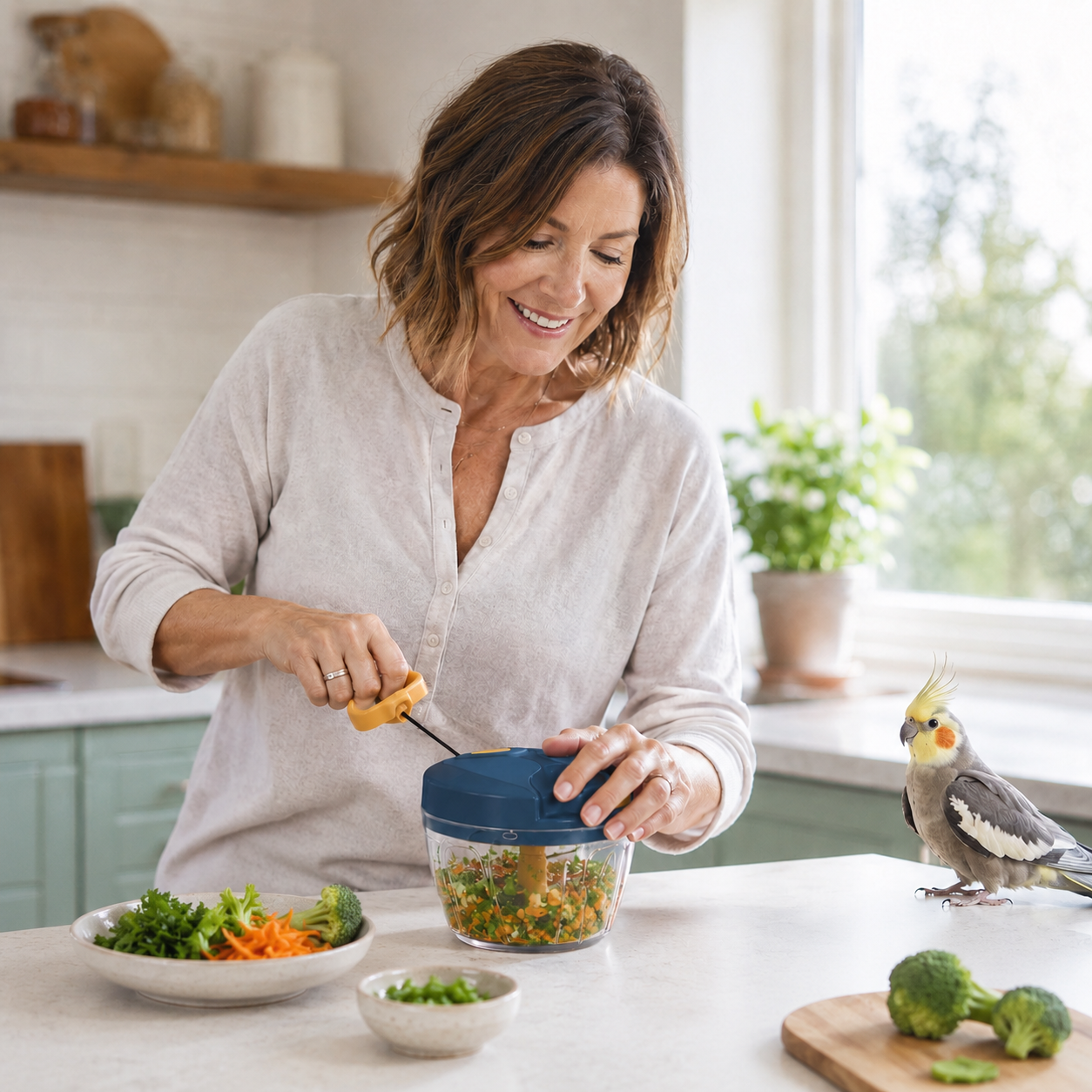
Once the bird displays curiosity—such as touching, shredding, or briefly tasting the produce—caregivers can begin serving "chop." Chop is a finely diced mixture of leafy greens, vegetables, and minimal fruit, often prepared with a manual food processor to achieve a rice-like consistency. Small beaks generally find smaller particles less intimidating than large, whole vegetables.

Supporting Data and Nutritional Rationale
The nutritional requirements of psittacines vary by species, but almost all captive birds benefit from the increased hydration and micronutrients provided by fresh vegetables. Vegetables like carrots, squash, peas, and green beans provide essential beta-carotene, Vitamin A, and fiber.
However, data indicates that the "all-or-nothing" approach—where owners suddenly replace a seed bowl with vegetables—is statistically likely to fail and can be dangerous. If a bird does not recognize the new items as food, they may enter a state of self-imposed fasting. It is imperative that owners monitor the bird’s weight and droppings throughout the process. A decrease in fecal output or a noticeable loss in muscle mass over the keel bone are clinical indicators that the bird is not consuming enough calories and requires immediate veterinary intervention.
Toppers and Enhancers: Increasing Palatability
To facilitate interest, experts often recommend the use of "toppers." These are not meant to be high-calorie treats, but rather sensory enhancers that entice the bird to investigate the bowl.
- Seed-Based Texture: Omega-rich ingredients like chia, flax, or hemp seeds can be lightly sprinkled over a chop mixture. These add a familiar "crunch" that transitions the bird from the texture of seeds to the moisture of vegetables.
- Aromatic Herbs: Dried or fresh herbs can provide an enticing scent profile that triggers a bird’s natural foraging drive.
- Natural Oils: In specific cases, a small amount of red palm oil can be utilized. Because it is highly palatable and rich in Vitamin A, it is often used as a tool to bridge the gap for particularly stubborn eaters, though it should be used sparingly as part of a larger nutritional plan.
Professional Guidance and Safety Protocols
Veterinarians specializing in avian health emphasize that this process is not a substitute for medical care. Before beginning any dietary transition, a bird should receive a wellness examination. Birds that are already underweight, egg-bound, or suffering from underlying metabolic disease cannot withstand the stress of a diet change.

"The goal is to cultivate a behavior, not to force a caloric intake," notes one avian behaviorist. "When an owner realizes that ‘shredding’ or ‘tossing’ a vegetable is actually a form of progress—a sign that the bird is interacting with the food—the pressure to succeed lifts, and the process becomes more sustainable for both the bird and the owner."
Broader Implications for Avian Wellness
The shift toward fresh, plant-based diets has profound implications for the long-term health of captive parrots. Research has linked improved diet variety to a reduction in common health issues such as obesity, hepatic lipidosis (fatty liver disease), and feather-destructive behaviors caused by nutritional deficiencies.
Furthermore, the act of foraging for vegetables provides necessary mental stimulation. By moving away from a static bowl of dry seeds and toward a dynamic, varied, and fresh-food-based diet, owners are providing an environment that honors the bird’s natural biological needs. While the transition may take weeks or even months of consistent, low-pressure effort, the cumulative health benefits—including increased longevity and improved immune function—represent a significant advancement in the standard of care for domestic psittacines.
As the industry continues to evolve, the focus remains on evidence-based methodologies. By applying the principles of habituation and social modeling, and by utilizing safe, natural toppers to encourage exploration, owners can successfully navigate the transition to a healthier, more vibrant lifestyle for their birds. The key, throughout every stage of the process, remains patience: a fundamental component of building trust between the human flock leader and the avian companion.

