


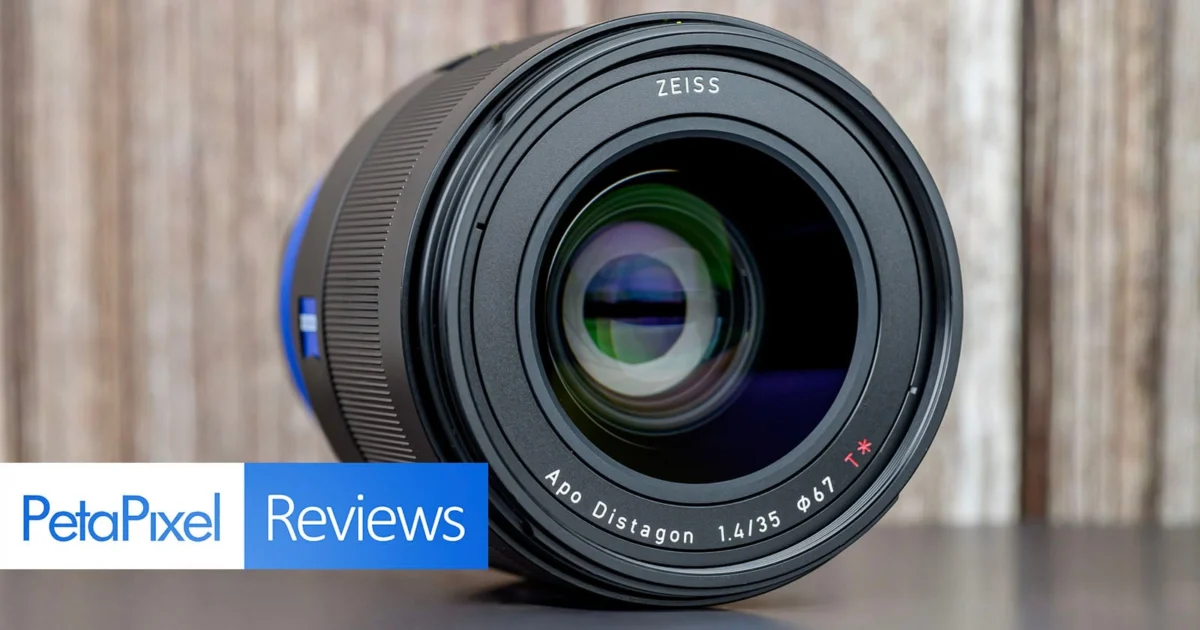
The release of the Zeiss Otus ML 35mm f/1.4 marks a significant moment for the storied German optics manufacturer as it brings its "no-compromise" philosophy to the modern mirrorless era. For decades, the name Zeiss has been synonymous with optical excellence, and the Otus line represents the absolute pinnacle of that reputation. While the broader photography industry has increasingly moved toward a hybrid model of lens design—relying on digital software profiles to correct for physical imperfections such as distortion, vignetting, and lateral chromatic aberration—Zeiss remains one of the few holdouts. The Otus ML 35mm f/1.4 is a testament to the belief that optical perfection should be achieved through glass and engineering rather than algorithms and post-processing. Priced at $2,299, this lens is not merely a tool but a statement piece, designed for a niche audience of purists, commercial photographers, and cinematographers who demand a specific look that software cannot fully replicate.
The Engineering Philosophy: Glass Over Software
To understand the Zeiss Otus ML 35mm f/1.4, one must first understand the shift in modern lens manufacturing. Over the last decade, brands like Sony, Canon, and Nikon have embraced "computational optics." By allowing a certain amount of barrel distortion or corner shading (vignetting) to exist in the raw optical design, manufacturers can produce lenses that are smaller, lighter, and cheaper. These flaws are then "fixed" automatically by the camera’s internal processor or during the import process in software like Adobe Lightroom.
Zeiss, however, views this as a compromise. The Otus ML 35mm f/1.4 is designed to be optically "flat" and "clean" from the moment light hits the sensor. This requires a complex internal arrangement of high-quality glass elements, including aspherical surfaces and special anomalous partial dispersion glass. The result is a lens that exhibits almost zero native distortion and remarkably low vignetting even at its widest aperture of f/1.4. This "old-fashioned" approach to lens making is what gives the Otus its signature "3D pop"—a high-contrast, high-resolution look that remains consistent across the entire frame.
Design, Build Quality, and Ergonomics
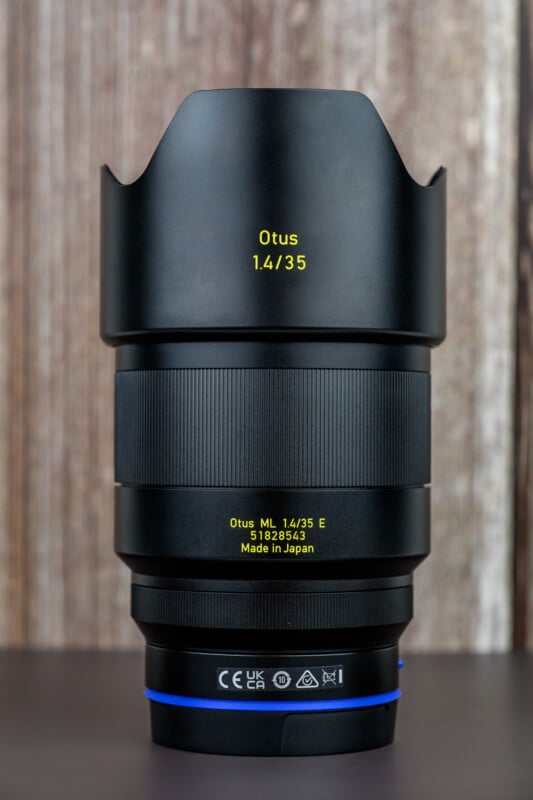
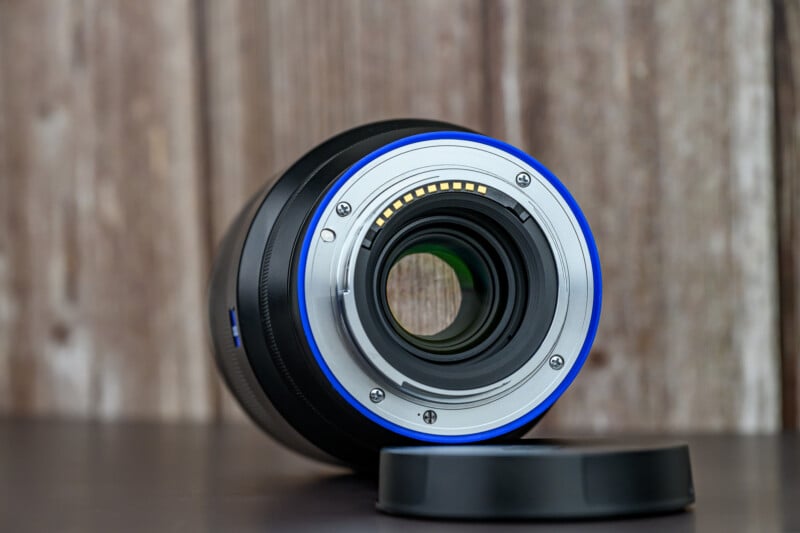
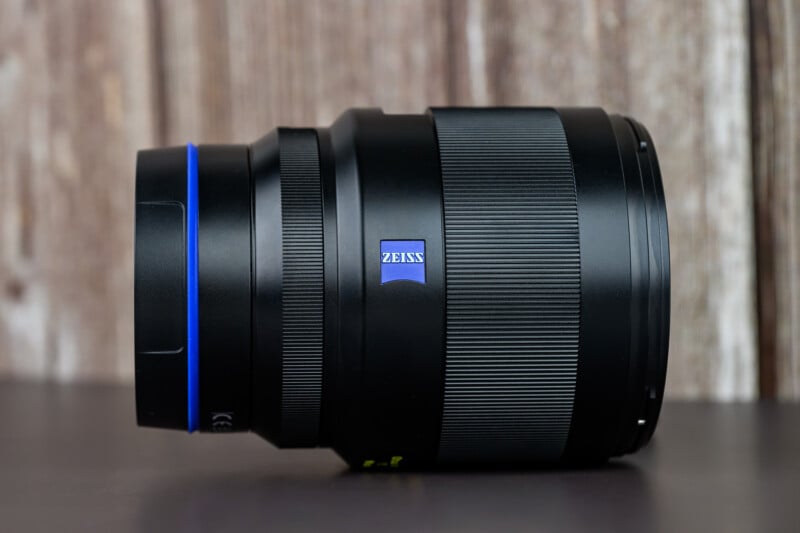
The Otus ML 35mm f/1.4 is a formidable piece of hardware. Available in Sony E-mount, Canon RF-mount, and Nikon Z-mount, it is built to survive the rigors of professional use. The lens barrel is constructed entirely of metal, finished in the sleek, matte black aesthetic that has defined the Otus series since its inception. The iconic blue Zeiss badge sits prominently on the side, signifying its status within the company’s hierarchy.
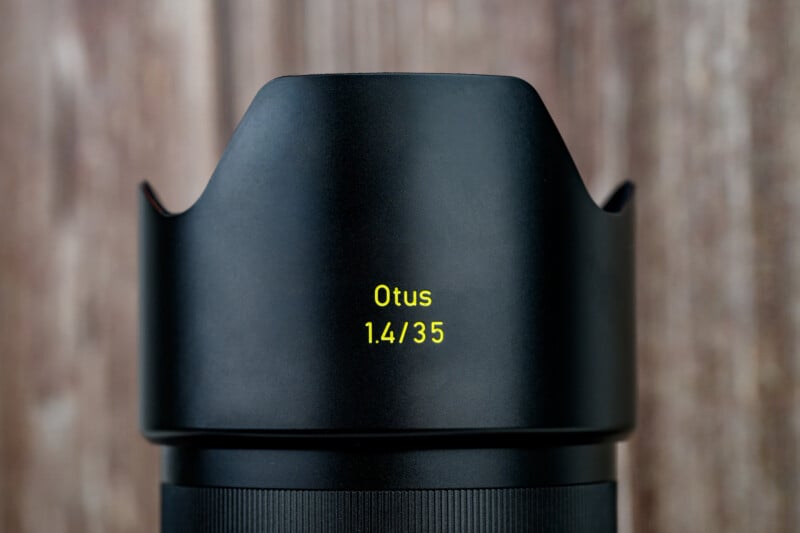
Weighing in at approximately 24.7 ounces (700 grams), the lens is substantial but balanced. While it is lighter than some of the previous DSLR-era Otus designs, it remains significantly heavier than many of its mirrorless competitors. This weight is a direct byproduct of the large glass elements required to achieve its optical goals. The lens features a 67mm filter thread, a standard size that allows for the easy attachment of polarizers and neutral density filters.
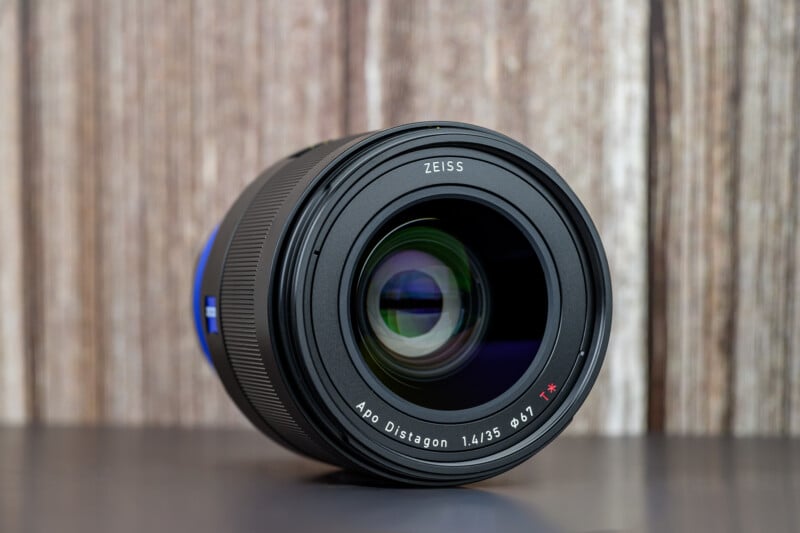
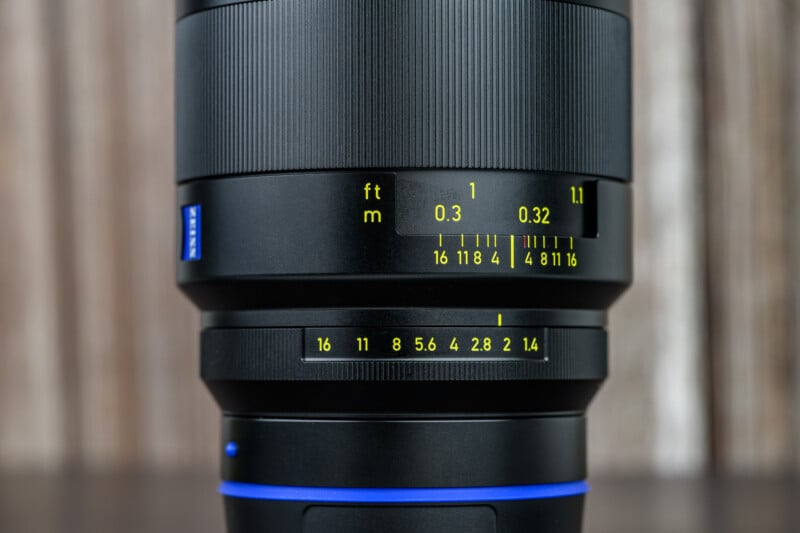
One of the defining characteristics of the Otus line is the manual focus experience. Zeiss has opted for a mechanical manual focus helicoid rather than the "focus-by-wire" systems found in most modern autofocus lenses. The focus ring is exceptionally smooth, with a very long "throw." This means that rotating the ring from the minimum focusing distance to infinity requires a significant turn, allowing for surgical precision when focusing at wide apertures. However, this long throw can be a double-edged sword; while it is a dream for studio photographers and cinematographers, it can make the lens difficult to use for fast-moving subjects or street photography.
Optical Performance: Sharpness and Coatings
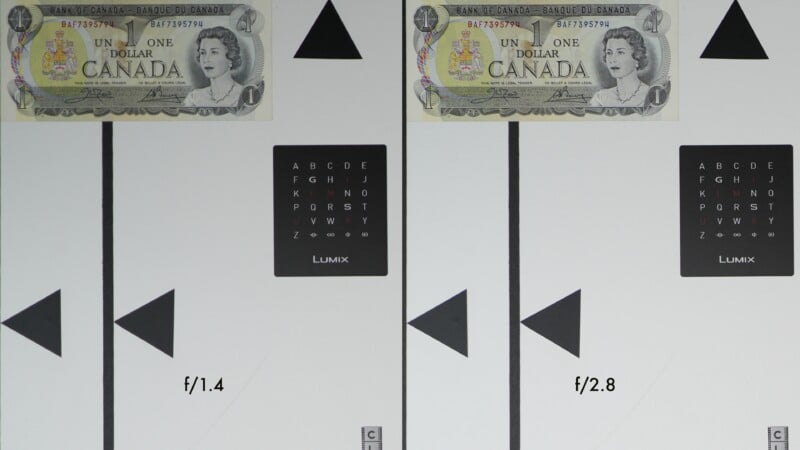
In the center of the frame, the Zeiss Otus ML 35mm f/1.4 is nothing short of spectacular. Even at f/1.4, the lens resolves a level of detail that challenges the highest-resolution sensors currently on the market, such as the 61-megapixel Sony a7R V or the 45-megapixel Nikon Z9. When stopped down to f/2.8 or f/4, the sharpness becomes bitingly crisp, extending all the way to the extreme corners of the frame.
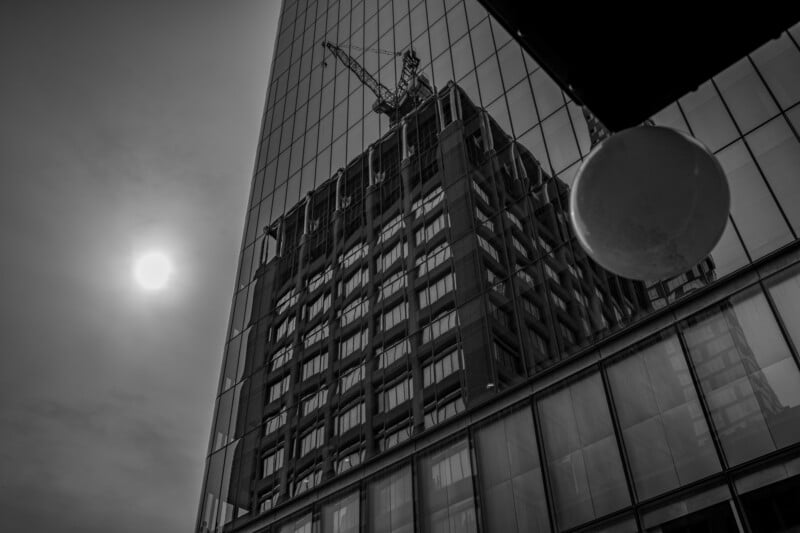
A significant factor in this performance is the Zeiss T* anti-reflective coating. This proprietary coating is legendary in the industry for its ability to minimize flare and ghosting. During testing in high-contrast lighting—such as shooting directly into the sun—the Otus maintains excellent contrast and color saturation. This makes it an ideal choice for architectural photographers and landscape artists who often deal with challenging light sources.

The bokeh, or the quality of the out-of-focus areas, is another area where the Otus shines. Transition zones are smooth, avoiding the "nervous" or "busy" look that can plague less expensive lenses. Specular highlights remain fairly round as the lens is stopped down, and there is a noticeable absence of "onion rings" (concentric circles inside bokeh balls), which is a common artifact in lenses that use lower-quality aspherical elements.

The Achilles’ Heel: Longitudinal Chromatic Aberration
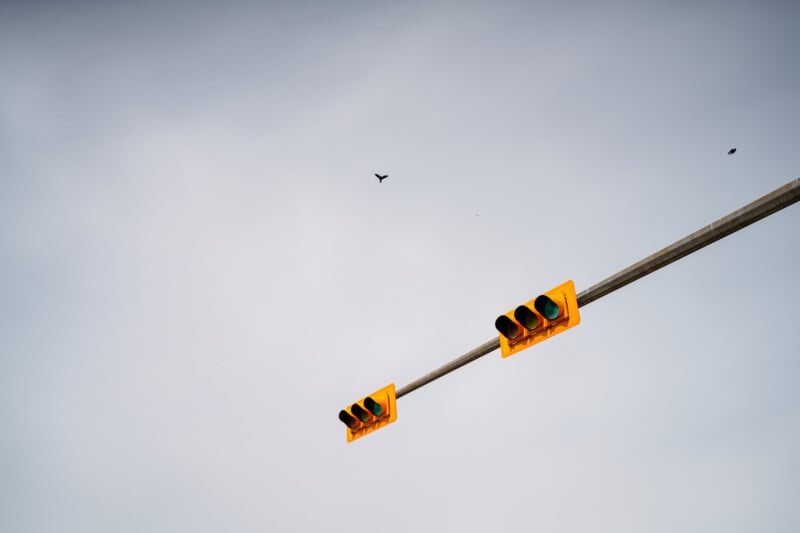
Despite its pursuit of perfection, the Zeiss Otus ML 35mm f/1.4 is not without flaws. The most prominent issue discovered during field testing is Longitudinal Chromatic Aberration (LoCA). Unlike lateral chromatic aberration, which manifests as purple or green fringing at the edges of the frame and is easily fixed in post-processing, LoCA appears as color fringing in the out-of-focus areas in front of and behind the focal plane.

In the case of the 35mm Otus, shooting at f/1.4 against high-contrast backgrounds—such as bare tree branches against a bright sky or metallic reflections—reveals noticeable magenta and cyan fringing. While this effect diminishes significantly by f/4, its presence in a lens marketed as "apochromatic" and priced over $2,000 is a point of contention. For photographers who specialize in wide-aperture portraiture or product photography, this LoCA can add a significant amount of work to the retouching process.

Market Context and Chronology
The Otus line was first introduced in 2013 with the 55mm f/1.4, a lens that arguably redefined what was possible for the full-frame DSLR format. At the time, Zeiss sought to create a "medium format look" on 35mm sensors. Following the 55mm, Zeiss expanded the line to include an 85mm f/1.4, a 28mm f/1.4, and a 100mm f/1.4.

The transition to the "ML" (Mirrorless) designation represents the latest chapter in this chronology. While the internal optical designs are often based on their "Distagon" ancestors, the ML versions are optimized for the shorter flange distance of mirrorless mounts. However, the competitive landscape has changed drastically since 2013. In the decade since the first Otus, manufacturers like Sigma have released their "Art" series, and brands like Sony have debuted their "G Master" line. These competitors often offer 95% of the Otus’s performance with the added benefit of fast, reliable autofocus and lower price points.

Competitive Analysis: Zeiss vs. Sigma and Nikon
The primary challenge for the Zeiss Otus ML 35mm f/1.4 is the existence of the Sigma 35mm f/1.4 DG DN Art. In many objective laboratory tests, the Sigma matches or even exceeds the Zeiss in center sharpness. Furthermore, the Sigma includes a sophisticated autofocus system, is lighter, and retails for approximately $899—nearly a third of the price of the Zeiss.

Nikon users also have compelling alternatives. The Nikon Z 35mm f/1.8 S is a lightweight, weather-sealed workhorse that provides exceptional value. For those seeking the ultimate in shallow depth of field, the Nikon Z 35mm f/1.2 S offers a faster aperture and modern autofocus for a price similar to the Zeiss.

The argument for the Zeiss, therefore, rests on the subjective "rendering" of the lens and its mechanical longevity. There is a tactile joy in using a fully mechanical Zeiss lens that an autofocus-driven Sigma cannot replicate. For filmmakers, the lack of "focus breathing" (the change in focal length when focusing) and the consistent color palette across the Otus range make it a viable alternative to much more expensive cinema primes.

Broader Implications and Industry Impact
The continued existence of the Otus line highlights a growing divide in the photography world between "clinical perfection" and "character." As camera sensors become more advanced, some photographers find modern lenses to be almost too perfect, lacking the soul or unique rendering of vintage glass. Zeiss attempts to occupy a middle ground: providing the resolution required for 60MP+ sensors while maintaining a physical, glass-based correction method that many feel produces a more "organic" image.

Furthermore, the Otus ML 35mm f/1.4 serves as a reminder that there is still a market for high-end manual focus tools. In an era where AI-driven eye-autofocus can track a bird through a forest, the act of slowing down and manually finding focus is seen by some as a vital part of the creative process. It forces the photographer to be more intentional with every frame.
Conclusion: Who is the Zeiss Otus ML 35mm f/1.4 For?
The Zeiss Otus ML 35mm f/1.4 is an anachronism in the best possible sense. It is a lens built with a 20th-century obsession with physical quality, updated for 21st-century digital demands. While its high price tag and lack of autofocus will immediately disqualify it for the vast majority of hobbyists and event photographers, it remains a compelling option for a specific subset of the professional market.
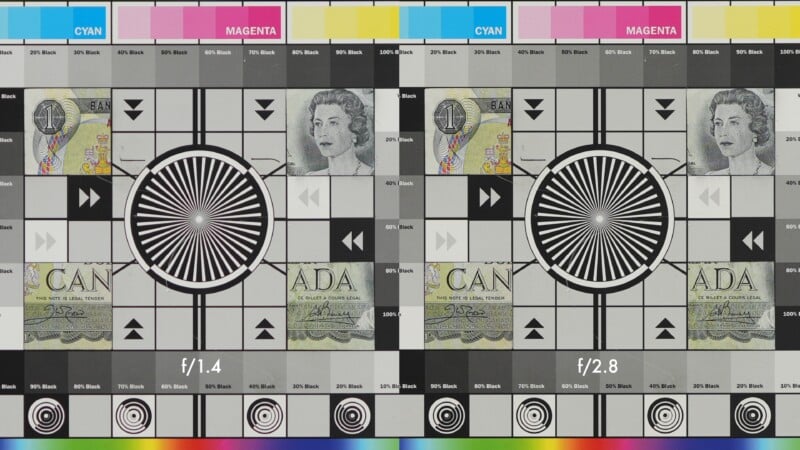
Studio photographers, architectural specialists, and landscape artists who work from a tripod will find the Otus to be one of the most rewarding lenses they have ever used. Its ability to resolve fine textures and maintain contrast in difficult lighting is world-class. However, the presence of longitudinal chromatic aberration remains a frustrating blemish on an otherwise near-perfect optical record.
Ultimately, the Zeiss Otus ML 35mm f/1.4 is for the photographer who values the journey as much as the destination. It is for those who believe that a lens should be a lifetime investment, built to outlast the camera bodies it is mounted on. While more practical and affordable options exist, the "Zeiss Look" continues to hold a unique allure that, for some, is well worth the $2,299 admission fee.

