


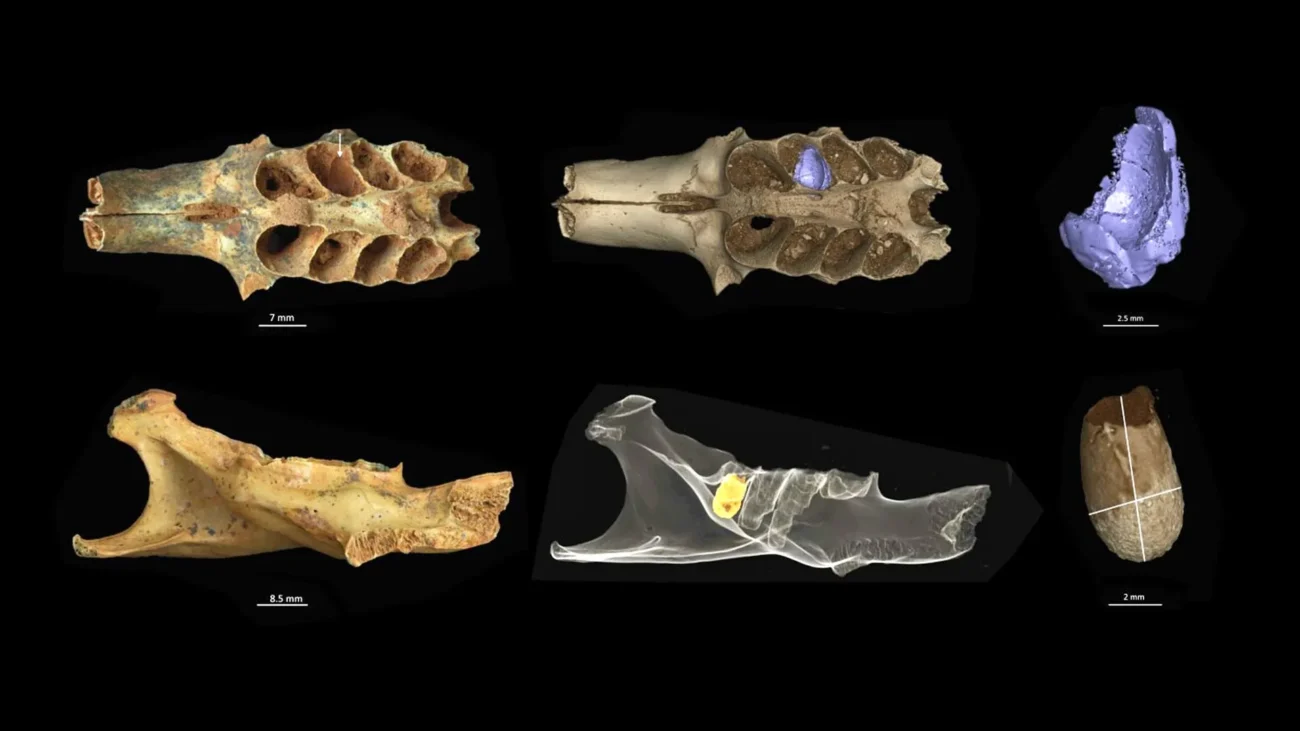
The discovery of an ancient cave on the Caribbean island of Hispaniola has unearthed a remarkable tale of natural ingenuity, where the fossilized remains of a rodent, once prey to a giant barn owl, became a repurposed nursery for burrowing bees. This extraordinary find, detailed in the prestigious journal Proceedings of the Royal Society B, challenges our understanding of insect behavior and highlights the intricate ecological connections that persist across millennia. The narrative begins with a seemingly simple riddle: a barn owl, a hutia rodent, and a burrowing bee enter a cave. Only two emerge. The one left behind is the creature incapable of flight. This riddle, however, serves as a poignant introduction to a paleontological mystery that has taken thousands of years to unravel.
The Genesis of a Fossilized Nursery
The events that led to this unique paleontological record likely unfolded thousands of years ago on Hispaniola, an island renowned for its rich biodiversity and complex geological history. The scenario as reconstructed by paleontologists suggests a dramatic scene: a formidable giant barn owl, a predator of significant size and hunting prowess, carried a hutia, a native Caribbean rodent, back to its den within the cave. This cave, a dark and secluded sanctuary, served as a hunting larder, a place where the owl would bring its prey to feed its young. The meal, as is the nature of predation, was swift and decisive. The hutia, tragically, became sustenance. Its remains, once a vibrant part of the island’s ecosystem, were scattered across the cave floor, destined to be entombed by time and sediment.
It was within this layered history of predator and prey that a new chapter began. Much later, long after the owl and its unfortunate quarry had vanished, a solitary burrowing bee arrived. Driven by the primal instinct to propagate its species, the bee was not seeking food, but a secure location to construct its nest, a vital step in ensuring the survival of its offspring. The cave, with its accumulating debris and sheltered environment, presented a promising, albeit unusual, prospect.
Ingenious Adaptation: Bees as Fossil Architects
The bee’s quest for a nesting site led it to the finer sediments that had accumulated in the cave’s less accessible, darker recesses. These clay-rich silts, washed in over centuries, offered a potential medium for excavation. However, before the bee could fully establish its burrow, it encountered a significant obstacle and, as it turned out, an unexpected resource: the fossilized remains of the hutia.
The true marvel of this discovery lies in the bee’s remarkable adaptation. The hutia’s jawbone, specifically the sockets where its teeth were once anchored – known as alveoli – provided an ideal, pre-formed cavity. Although the teeth themselves were long gone, the empty alveoli remained remarkably intact. Their size and shape proved to be a near-perfect match for the dimensions required by the burrowing bee for its nest. This natural architecture, a product of ancient biology and subsequent geological processes, offered a ready-made solution for the bee’s reproductive needs.
The implications of this discovery are profound. It demonstrates an unprecedented level of opportunistic behavior in these particular bees, showcasing their ability to utilize pre-existing, non-biological structures for nesting. This is a significant deviation from typical burrowing bee behavior, which usually involves excavating tunnels in soil or wood. The long-term consequence of this behavior was the creation of a unique fossil record, a testament to the intricate interplay between ancient fauna, geology, and the enduring drive of life to perpetuate itself.
The Unearthing of a Remarkable Discovery: A Story of Diligence
The remarkable chain of events, culminating in the preservation of these fossilized nests, might have been lost to history if not for the keen observation and meticulous work of paleontologists. Lazaro Viñola Lopez, then a doctoral student at the Florida Museum of Natural History, was the individual whose diligence led to this groundbreaking discovery. His excavation efforts at the Cueva de Mono in the southern Dominican Republic were focused on a specific species of hutia, one that was becoming increasingly rare on the island. The cave itself appeared to have been a long-term feeding ground for giant barn owls, indicated by the sheer abundance of hutia fossils recovered.
Viñola Lopez’s approach to the excavation was not one of mere collection, but of careful inspection. While the standard protocol for fossil collection often involves thorough cleaning of all sediment from cavities, Viñola Lopez was drawn to anomalies. He meticulously examined the specimens, and one particular cavity within the hutia mandibles stood out. Unlike the rough, porous texture of bone, this cavity possessed an unusually smooth inner surface. This subtle difference, overlooked by many, was the critical clue that would unravel the mystery.
From Suspected Wasps to Identified Bees: A Scientific Detective Story
The smooth interior of the cavity immediately sparked a memory for Viñola Lopez. He recalled a similar observation made in Montana in 2014 while excavating dinosaur fossils. At that time, his team had discovered wasp cocoons intermingled with fossil material. His initial hypothesis was that the structures in the Hispaniolan cave were also wasp nests. He even considered the possibility of writing a short paper documenting this occurrence.
He shared his initial findings and hypothesis with a fellow doctoral student, Mitchell Riegler. Riegler, while initially expressing some professional skepticism due to the perceived niche nature of the project, was eventually drawn into the investigation. The opportunity to collaborate arose when Riegler accepted a challenge to write a scientific paper within a week, a task that fostered intense focus and teamwork.
The initial assumption that they were dealing with wasp nests began to falter as the team delved deeper into their research. Their investigation into ichnofossils – traces of past biological activity such as footprints, droppings, or nests – revealed discrepancies. Wasp nests are typically constructed from chewed plant material mixed with saliva, resulting in rough, textured walls. The fossilized structures in the cave, however, were consistently smooth.
This is where their understanding of bee behavior became crucial. Many species of burrowing bees, when constructing their nests, apply a waxy secretion to the interior walls. This secretion not only waterproofs the nest but also creates a polished, smooth surface. This critical detail, starkly contrasting with the expected texture of wasp nests, led to a significant reevaluation: they were not observing wasp nests, but the meticulously crafted homes of bees. This correction elevated the significance of their discovery exponentially.
A Rare and Unprecedented Behavior: Redefining Nesting Paradigms
The identification of bees as the architects of these ancient nests was a pivotal moment, transforming a curious observation into a discovery of major scientific importance. The prevailing scientific literature revealed a scarcity of information regarding burrowing bees nesting within caves. In fact, only one other documented instance of burrowing bees utilizing a cave environment for nesting existed, and crucially, none where they occupied pre-existing fossil structures without any modification. Previous reports had documented bees drilling into human bones, but this was distinct from the passive occupation of natural cavities observed in the Hispaniolan cave.
Recognizing the profound implications of their findings, the research team shifted gears, dedicating more resources and time to a comprehensive study. They engaged with experts in modern bee behavior and conducted an exhaustive review of existing scientific literature. Viñola Lopez also returned to the Cueva de Mono to meticulously examine its geological strata, seeking to understand the environmental conditions that might have facilitated such unusual nesting.
The preservation of these invaluable fossils was not without its challenges. The cave faced a potential threat from a development project that aimed to convert it into a septic tank. Fortunately, the proposed development was ultimately halted. However, the researchers recognized the urgency and conducted a rapid "rescue mission" to recover as many fossils as possible before any irreversible damage could occur. This swift action ensured that a significant portion of this unique paleontological evidence was secured for further study.
Nests Across Multiple Fossil Forms: A Widespread Phenomenon
The culminating study provided a detailed chronicle of the cave’s history and the extraordinary nesting behavior of these bees. The researchers discovered that the bees’ repurposed nesting sites were not confined solely to the hutia jaws. In a striking example, one nest was found nestled within the pulp cavity of a sloth tooth. These ancient sloths, once a common sight in the Caribbean, had long since disappeared from the region following human arrival. Another nest was identified within a hutia vertebra, occupying the space that once housed the spinal cord.
Through the use of advanced CT scans, the research team was able to visualize the internal structure of these fossilized nests. The scans revealed a fascinating phenomenon: multiple layers of nests were often found within a single cavity. Rather than excavating new tunnels, certain bee species exhibited a remarkable propensity for reusing existing empty cavities. In one particularly striking instance, six distinct nests were found stacked one inside another within a single hutia alveolus, resembling the iconic Russian nesting dolls. This suggests a sophisticated understanding of resource utilization and a pragmatic approach to nest construction.
Environmental Pressures Driving Unusual Behavior
The study also proposed a compelling explanation for this unusual nesting behavior, linking it to the unique geological landscape of the region. The area surrounding the Cueva de Mono is characterized by karst topography, a terrain of sharp, porous limestone formations that is notoriously devoid of stable soil. Mitchell Riegler elaborated on this, noting the difficulty of traversing the sharp limestone, which has lost most of its natural soil cover. Any soil that does accumulate on the surface is prone to being washed away, often into the subterranean cave systems.
These cave environments, therefore, could have presented some of the only viable nesting conditions for burrowing bees in this particular region. The accumulated fine sediments within the caves, washed in from the surface, would have provided the necessary material for excavation, while the stable, sheltered environment offered protection from the elements. The pre-existing cavities within fossilized bones, such as the hutia alveoli and sloth tooth cavities, would have then served as an ideal starting point, negating the need for the bees to expend significant energy in initial excavation. This environmental pressure, coupled with the availability of suitable pre-formed cavities, created a perfect storm for this unique evolutionary adaptation.
A Cave of Untold Stories: Future Research and Broader Implications
The Cueva de Mono continues to be a treasure trove of paleontological information. The researchers are actively studying other fossils recovered from the cave, with the expectation of further significant findings being published in the future. This ongoing research promises to shed even more light on the complex ecological dynamics of ancient Hispaniola and the remarkable adaptability of its fauna.
The study, published in Proceedings of the Royal Society B, stands as a powerful testament to the unexpected ways in which life can adapt and thrive. In this instance, a cave that once served as a grim repository of predator and prey has been transformed, over millennia, into a remarkable shelter and nursery for a completely different order of life. It underscores the enduring principle of natural selection, where even the most unlikely circumstances can foster innovation and ensure the continuity of species. The story of the hutia and the burrowing bee is a vivid reminder that the natural world is replete with astonishing stories, waiting patiently to be uncovered from the depths of time. The cave, a silent witness to countless millennia, still holds many secrets, and the ongoing work of these dedicated scientists promises to bring them to light.

