


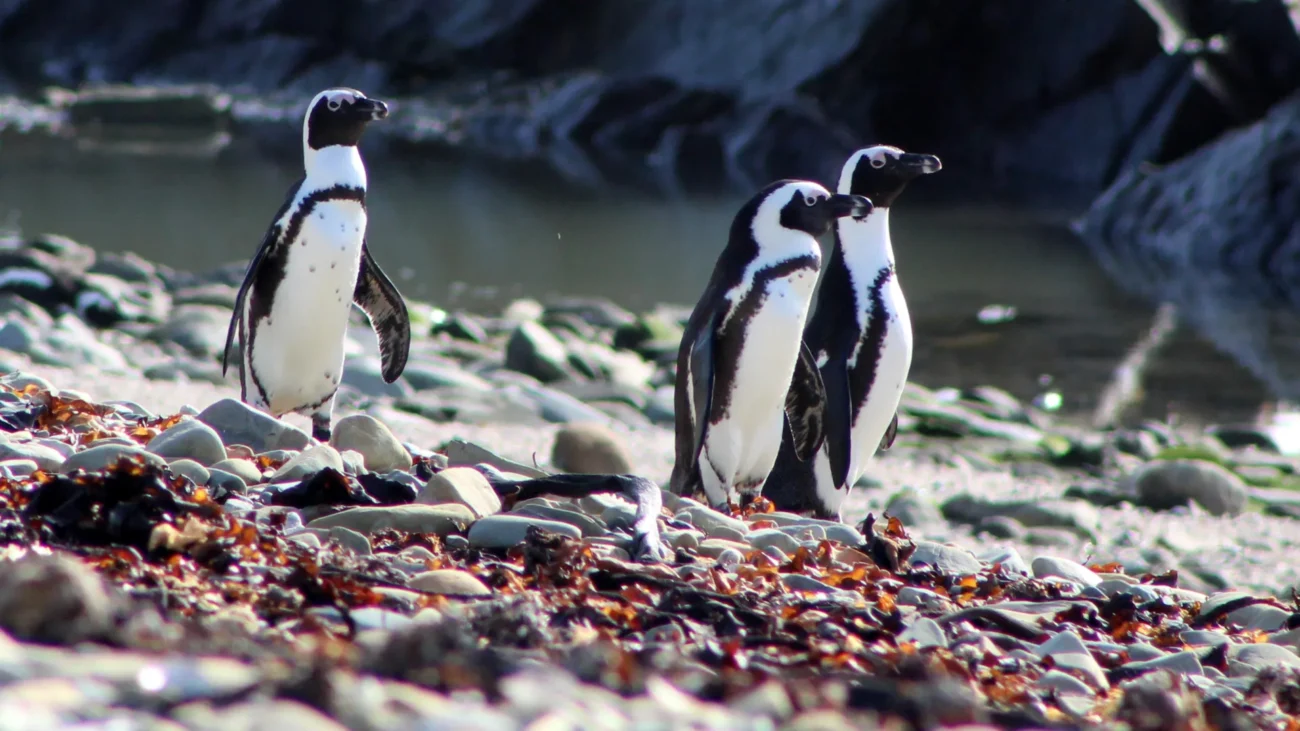
A groundbreaking study spearheaded by the University of St Andrews has unveiled a critical vulnerability for the Critically Endangered African penguin (Spheniscus demersus). The research, published on November 17 in the prestigious Journal of Applied Ecology, demonstrates that these iconic seabirds are significantly more inclined to forage in the same marine territories occupied by commercial fishing vessels during periods of scarce fish availability. This increased overlap not only escalates direct competition for vital food resources but also amplifies the perilous pressure on a species already teetering on the brink of severe decline.
The study introduces a novel metric termed "overlap intensity," a sophisticated tool designed to move beyond simply identifying shared foraging grounds. This metric quantifies the extent to which individual penguins are affected by interactions with fishing operations, offering a more nuanced understanding of the ecological impact. This development arrives at a crucial juncture for African penguins, whose populations have plummeted by an alarming 80% over the past three decades. A primary driver behind this drastic reduction is the intense competition with local fisheries, which target sardines and anchovies – the very same species that form the cornerstone of the penguins’ diet.
The Perilous Dance: Penguins and Purse-Seiners
African penguins are renowned for their distinctive braying calls and their presence along the southern African coast. Once numbering in the millions, their populations have been decimated by a confluence of factors including habitat loss, pollution, and historically, over-exploitation. However, a significant and ongoing threat is the competition posed by commercial fishing. The primary method employed by these fisheries is purse-seining, a technique that involves encircling schools of fish with a vast net, effectively trapping them. While efficient for human consumption, this method can rapidly deplete local fish stocks, leaving little for the penguins.
Dr. Jacqueline Glencross, the lead author of the study and a researcher at the Scottish Oceans Institute at the University of St Andrews, articulated the impetus behind this crucial research. "We were driven by a pressing need to develop a more accurate assessment of how many penguins are potentially impacted when fisheries operate in their vicinity – it’s not enough to just know where the overlap occurs," she stated. "Understanding the intensity of this interaction is paramount for effective conservation strategies."
Tracking Data Unveils Stark Overlap Patterns
The research team meticulously analyzed tracking data collected from African penguins residing on Robben and Dassen Islands, two significant breeding colonies off the coast of South Africa. This collaborative effort involved a consortium of esteemed institutions, including scientists from the University of Exeter, the South African Department of Forestry, Fisheries and the Environment, and BirdLife South Africa. The results of their comprehensive analysis painted a stark picture: a dramatic surge in overlap between penguin foraging areas and active fishing vessels during years characterized by diminished fish biomass.
Specifically, in 2016, a year widely recognized for its exceptionally low fish stocks, an estimated 20% of the monitored penguins were found to be foraging within the same geographical regions as active fishing operations. In stark contrast, during years with more robust fish populations, this figure receded to a mere 4%. This disparity highlights a critical ecological dynamic: the competition between African penguins and commercial fisheries intensifies considerably when prey becomes scarce. Such a scenario is particularly hazardous for penguins during their chick-rearing phase. At this critical period, adult penguins must undertake demanding foraging trips to secure enough food to sustain their rapidly growing young. The increased competition, therefore, directly jeopardizes the survival rates of the next generation.
A New Metric for Conservation and Sustainable Fisheries
The development of the "overlap intensity" metric represents a significant advancement in the field of marine conservation. By providing a quantifiable measure of the pressure exerted by fishing activities on penguin populations, this tool offers invaluable insights for assessing ecological risks. It is poised to play a pivotal role in guiding the implementation of ecosystem-based fishery management strategies. Furthermore, the findings lend robust support to the concept of dynamic marine protected areas (MPAs). These adaptable MPAs could be designed to adjust their boundaries and fishing restrictions in real-time, responding to the fluctuating movements and foraging patterns of both predators and their prey. This adaptive approach acknowledges the dynamic nature of marine ecosystems and offers a more responsive conservation strategy.
Legal Battles and the Reinstatement of Crucial Fishing Closures
The plight of the African penguin has recently been at the forefront of significant legal and policy developments in South Africa. A landmark court case challenged the perceived inadequacy of existing fishing restrictions around the penguin’s critical breeding sites. This legal action underscored the growing concern over the insufficient protection afforded to these vulnerable birds.
Earlier this year, a pivotal agreement was reached in the High Court between conservation organizations and representatives from the fishing industry. This accord formally acknowledged the imperative need for implementing effective fishing closures in proximity to penguin colonies. Following this judicial decision, the South African government took steps to reinstate more biologically meaningful no-fishing zones in areas adjacent to Robben Island, one of the very colonies that was extensively studied in the research.
Dr. Glencross emphasized the direct relevance of their findings to these policy changes. "Our research definitively clarifies why these fishing closures are so critically necessary," she asserted. "We identified previously unprotected areas that exhibited high overlap intensity, precisely where the penguins were experiencing the greatest degree of risk. The legal agreements and subsequent policy adjustments are a direct reflection of this urgent need for greater protection."
Background and Chronology of Events
The African penguin’s population decline has been a subject of scientific concern for decades. Historical records indicate that as many as two million breeding pairs existed in the early 20th century. By the late 1970s, this number had dwindled to around 150,000 pairs. The 21st century has seen a continued precipitous decline, with estimates in recent years suggesting as few as 40,000 breeding pairs remain. This trajectory has led to their classification as Critically Endangered by the International Union for Conservation of Nature (IUCN).
The primary drivers of this decline can be broadly categorized:
- Prey Availability: Overfishing of small pelagic fish, particularly sardines and anchovies, is a major culprit. These fish are the primary food source for African penguins, and their depletion directly impacts the penguins’ ability to feed themselves and their chicks. Environmental factors, such as changes in ocean currents and temperature, can also affect fish stocks, creating natural fluctuations that are then exacerbated by fishing pressure.
- Habitat Degradation: Breeding colonies have been impacted by guano extraction (historically valuable fertilizer, but also nesting material), pollution, and disturbance from human activities.
- Predation: While natural predators exist, introduced species on islands can also pose a threat to eggs and chicks.
- Climate Change: Shifting oceanographic conditions, including rising sea temperatures and altered current patterns, can disrupt the distribution and abundance of prey species.
The timeline leading to the recent legal and policy shifts is as follows:
- Early 2000s onwards: Growing scientific evidence points to the severe impact of fishing pressure on African penguin populations. Conservation organizations begin to advocate for stricter fishing regulations and the establishment of no-take zones.
- 2010s: Several studies highlight the overlap between penguin foraging areas and fishing grounds, further fueling conservation efforts. The population continues to decline.
- 2019: The IUCN lists the African penguin as Critically Endangered.
- Late 2010s – Early 2020s: Conservation groups, including BirdLife South Africa, and concerned citizens engage in legal challenges and advocacy campaigns to push for more effective fisheries management.
- Early 2023: A significant court case is brought before the South African High Court, questioning the adequacy of existing fishing restrictions.
- Mid-2023: An out-of-court settlement is reached between conservationists and the fishing industry, acknowledging the need for improved management.
- Late 2023: The South African Department of Forestry, Fisheries and the Environment reinstates and strengthens fishing closures around key penguin colonies, informed by scientific research, including the study from the University of St Andrews.
Supporting Data and Broader Implications
The findings of the St Andrews study are particularly significant when viewed against the backdrop of broader ecological trends. The reliance of African penguins on specific prey species makes them highly susceptible to disruptions in the marine food web. Sardines and anchovies are small, schooling fish that are energy-rich and crucial for the high metabolic demands of breeding seabirds. When these fish become scarce, penguins must travel further and expend more energy searching for food, often encountering the very vessels that have depleted their prey.
The "overlap intensity" metric provides a powerful tool for predictive modeling. By understanding how environmental conditions (like El Niño-Southern Oscillation events that impact fish stocks) and fishing effort correlate with increased penguin-fishery overlap, managers can proactively implement precautionary measures. For example, if an El Niño event is predicted, leading to anticipated reductions in fish populations, fishing effort in critical penguin foraging areas could be temporarily curtailed or shifted.
The implications of this research extend beyond the immediate conservation of the African penguin. It serves as a case study for the challenges faced by many marine predators globally, which are increasingly competing with human activities for dwindling resources. The study underscores the necessity of adopting an integrated approach to marine management, one that considers the intricate connections between different trophic levels and human activities.
The establishment of dynamic MPAs, as suggested by the research, could offer a more flexible and effective solution than static closures. Static closures, while important, may become less relevant as fish populations and predator movements shift. Dynamic MPAs, guided by real-time data on prey availability and predator distribution, could ensure that critical foraging habitats remain protected when they are most needed.
Reactions from Stakeholders (Inferred)
While direct quotes from all stakeholders were not provided in the initial content, the nature of the research and its findings would likely elicit varied responses:
- Conservation Organizations: Expected to welcome the study as crucial evidence supporting their long-standing calls for stronger fisheries management and increased protection for marine predators. They will likely emphasize the urgency of implementing the study’s recommendations.
- Fishing Industry: May express cautious acknowledgment of the study’s findings, potentially highlighting the economic impacts of further fishing restrictions. However, given the recent legal settlement, there may be an understanding of the need for collaborative solutions and a commitment to sustainable practices. They might advocate for management measures that balance conservation needs with the livelihoods of fishing communities.
- Government Agencies: Likely to use the research to inform policy decisions and refine existing management plans. The study provides scientific backing for regulatory actions, such as the recent fishing closures. They may also see it as an impetus to invest further in marine research and monitoring.
- Scientific Community: Expected to commend the innovative methodology and the critical insights provided. The study will likely stimulate further research into the complex interactions between marine predators and human activities.
Broader Impact and Implications for Marine Ecosystems
The findings from the University of St Andrews study carry profound implications for the health and resilience of marine ecosystems. The African penguin, as an apex predator in its environment, plays a vital role in maintaining the balance of its ecosystem. Its decline can have cascading effects, impacting fish populations, the distribution of other seabirds, and even the health of coastal habitats.
The research serves as a powerful reminder that human activities, particularly large-scale commercial fishing, can have unintended and severe consequences for wildlife. The study highlights the interconnectedness of marine life and the need for a holistic approach to resource management. By quantifying the pressure on the African penguin, the study not only aims to protect this specific species but also to foster a more sustainable and balanced relationship between humans and the ocean. The success of implementing the proposed dynamic MPAs and stricter fishing regulations could serve as a blueprint for conservation efforts targeting other threatened marine species around the globe, ultimately contributing to the preservation of biodiversity and the long-term health of our planet’s oceans.
