


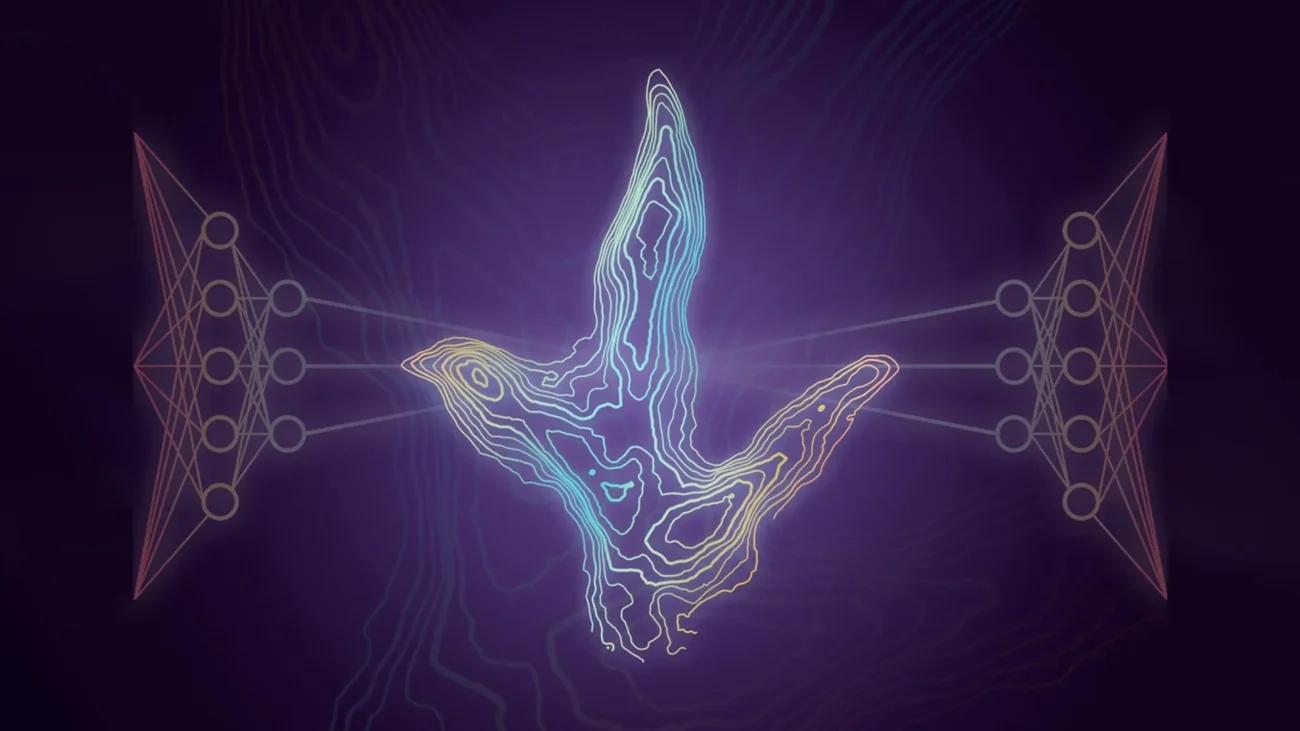
A groundbreaking artificial intelligence (AI) application, dubbed DinoTracker, is ushering in a new era of paleontological research by providing scientists and the public with an unprecedented ability to identify dinosaur footprints. This innovative technology, detailed in a recent study published in the prestigious journal Proceedings of the National Academy of Sciences (PNAS), promises to demystify fossilized tracks that have long presented formidable challenges to researchers, potentially reshaping our understanding of dinosaur evolution and behavior.
The Enduring Mystery of Fossilized Tracks
For decades, paleontologists have meticulously studied ancient imprints left in the earth, engaging in rigorous debate over their origins. These fossilized tracks are far more than mere geological curiosities; they are invaluable windows into the lives of creatures that roamed the planet millions of years ago. They offer crucial insights into locomotion, diet, social behavior, and the very pace of evolution. However, the interpretation of these tracks has often been fraught with difficulty. Over vast geological timescales, the original shapes of footprints can be significantly altered by environmental factors such as erosion, sedimentation, and subsequent geological processes. This preservation variability has led to considerable ambiguity, with some tracks attributed to formidable meat-eating predators, others to gentle herbivorous dinosaurs, and some even sparking debates about the potential involvement of early avian species.
Historically, the process of identifying dinosaur footprints was a laborious and subjective endeavor. Paleontologists relied on comparing newly discovered tracks to existing, manually compiled databases of known dinosaur footprints. These databases, while painstakingly constructed, were susceptible to inherent biases, particularly when the identity of a track was uncertain or contested by different experts. This reliance on human interpretation, while essential for scientific progress, meant that classifications could vary, and definitive answers remained elusive for many fossilized specimens. The challenge was to move beyond subjective analysis and develop a more objective, data-driven method for deciphering these ancient clues.
DinoTracker: From Photo to Paleontological Insight
The advent of the DinoTracker app represents a significant leap forward. This user-friendly application empowers both seasoned researchers and enthusiastic dinosaur aficionados to upload photographs or even drawings of fossilized footprints directly from their mobile phones. Within moments, the app’s AI engine performs an immediate and sophisticated analysis. By meticulously evaluating the intricate shape and structural characteristics of the track, the AI provides an estimated identification of the dinosaur species most likely responsible for its creation.
This capability is particularly transformative given the inherent challenges in interpreting fossilized tracks. Earlier studies consistently highlighted how the natural processes of fossilization could distort the original form of footprints. What might have been a clear imprint of a three-toed foot could, through millions of years of compression and geological metamorphosis, become a smudged or altered shape, making definitive identification a complex puzzle. DinoTracker’s AI is designed to account for these variations, learning to recognize the underlying patterns and features that persist despite these alterations.
A New Paradigm: AI-Powered Paleontology
The development of DinoTracker was spearheaded by a dedicated research team from the Helmholtz-Zentrum research centre in Berlin, in close collaboration with experts from the University of Edinburgh. Their innovative approach eschewed traditional, static databases in favor of advanced algorithms that enable computers to learn and adapt independently. This machine learning capability allows the AI to discern the subtle nuances and variations in dinosaur footprint shapes that have historically confounded human observers.
The AI system underwent a rigorous training process, being exposed to a vast dataset comprising nearly 2,000 meticulously documented real fossil footprints. Crucially, this real-world data was augmented by millions of simulated examples. These simulated tracks were not mere repetitions; they were engineered to incorporate a wide spectrum of realistic variations that occur during the preservation of footprints over geological time. Such variations included the effects of compression, where the weight of overlying sediment flattens the imprint, and edge displacement, where the material surrounding the print shifts or deforms. By training on this diverse and comprehensive dataset, the AI developed a robust understanding of how footprint morphology can change.
Deciphering the Clues: What the AI Detects
The AI’s analytical prowess lies in its ability to identify and weigh eight key features that collectively differentiate one footprint from another. These crucial discriminators include:
- Digit Spread: The degree to which the toes splayed outwards.
- Heel Position: The relative placement of the heel impression, if present.
- Surface Area Contact: The total area of the foot that pressed into the substrate.
- Weight Distribution: How the weight of the dinosaur was distributed across different parts of the foot, often indicated by the depth of the impression in various areas.
- Claw Marks: The presence, length, and shape of any claw impressions.
- Stride Length and Width: While not directly observed in a single footprint, these inferred metrics are crucial for understanding gait and posture, and can sometimes be deduced from trackway patterns.
- Symmetry: The degree of symmetry or asymmetry in the footprint, which can provide clues about the animal’s gait and foot structure.
- Presence and Depth of Interdigital Spaces: The gaps between the toes and their depth.
Once these variations are identified in a new footprint, the AI system compares them against its vast library of known fossil examples. This comparative analysis allows it to predict, with a high degree of accuracy, which dinosaur species most likely left the track. The effectiveness of this AI model was put to the test through rigorous evaluation. The results were compelling: the algorithm achieved classification accuracy rates of approximately 90 percent, even when presented with footprints from species that are considered particularly controversial or notoriously difficult to identify by human experts. This level of consistent accuracy marks a significant advancement over previous subjective methods.
Evolutionary Echoes: Unexpected Links to Avian Ancestry
Perhaps one of the most startling revelations stemming from the DinoTracker analysis pertains to ancient footprints dating back over 200 million years. The AI identified striking similarities between certain dinosaur footprints and the feet of both extinct and modern birds. This finding carries profound implications for our understanding of avian evolution.
According to the research team, this discovery could suggest that the lineage leading to birds emerged tens of millions of years earlier than previously established scientific consensus. Alternatively, it is possible that some early dinosaur species independently evolved foot structures that remarkably resembled those of birds, a fascinating example of convergent evolution. Regardless of the precise explanation, these findings necessitate a re-evaluation of the timeline for the emergence of bird-like characteristics in the dinosaurian world. This opens up exciting avenues for research into the transitional forms and early stages of avian evolution.
Unraveling Scottish Mysteries: New Insights from the Isle of Skye
The AI’s analytical capabilities have also shed new light on enigmatic footprints discovered on the Isle of Skye in Scotland. These tracks, formed on the soft mudflats of a lagoon approximately 170 million years ago during the Jurassic period, have puzzled paleontologists for decades. Their unique morphology defied easy categorization.
The DinoTracker analysis suggests that these ancient impressions may have been left by some of the earliest known relatives of duck-billed dinosaurs (hadrosaurs). If confirmed, this would position these Skye footprints among the oldest examples of this dinosaur group identified anywhere in the world, pushing back the known evolutionary history of hadrosaurs significantly. This discovery is particularly significant as hadrosaurs are a diverse and well-studied group, and understanding their origins is key to comprehending the broader diversification of ornithischian dinosaurs. The Isle of Skye, already a treasure trove of dinosaur fossils, continues to reveal its ancient secrets through the application of cutting-edge technology.
Democratizing Paleontology: Opening Research to the Public
Beyond its scientific utility, DinoTracker represents a significant step towards democratizing paleontological research. The researchers envision a future where this technology not only aids professional scientists but also empowers the general public to actively participate in the discovery and analysis of fossil evidence. By providing an accessible tool for identifying dinosaur footprints, the app fosters a greater connection between people and the natural history of our planet. This increased engagement can inspire a new generation of scientists and enthusiasts, fostering a broader appreciation for evolutionary biology and the deep past.
The study’s publication in PNAS underscores the scientific rigor and significance of this research. The project received crucial funding from a consortium of esteemed organizations, including the innovations pool of the BMBF-Project: Data-X, the Helmholtz project ROCK-IT, the Helmholtz-AI project NorMImag, the National Geographic Society, and the Leverhulme Trust. This collaborative financial support highlights the international importance and multidisciplinary nature of the research.
Dr. Gregor Hartmann of the Helmholtz-Zentrum research centre emphasized the unbiased nature of the AI’s approach. He stated, "Our method provides an unbiased way to recognize variation in footprints and test hypotheses about their makers. It’s an excellent tool for research, education, and even fieldwork." This sentiment is echoed by Professor Steve Brusatte, Personal Chair of Palaeontology and Evolution at the University of Edinburgh, who remarked, "This study is an exciting contribution for paleontology and an objective, data-driven way to classify dinosaur footprints — something that has stumped experts for over a century."
Professor Brusatte further elaborated on the broader implications: "It opens up exciting new possibilities for understanding how these incredible animals lived and moved, and when major groups like birds first evolved. This computer network might have identified the world’s oldest birds, which I think is a fantastic and fruitful use for AI."
Broader Impact and Future Implications
The development and deployment of DinoTracker have far-reaching implications for the field of paleontology and beyond.
Accelerated Discovery: The ability to quickly and accurately identify dinosaur footprints will dramatically accelerate the pace of discovery. Researchers can now analyze vast numbers of existing fossil collections more efficiently, potentially uncovering overlooked specimens or reclassifying previously ambiguous tracks. Field expeditions can also benefit from real-time analysis, allowing for immediate insights and informed decision-making on site.
Enhanced Accuracy and Objectivity: By removing subjective human bias from the initial identification process, DinoTracker offers a more objective and reliable foundation for paleontological research. This increased accuracy can lead to more robust scientific conclusions and a clearer understanding of dinosaur diversity and evolutionary relationships.
New Avenues for Evolutionary Research: The AI’s ability to detect subtle similarities and differences can reveal unexpected evolutionary connections. As demonstrated by the potential early emergence of birds, this technology can challenge existing paradigms and open new avenues of inquiry into the origins of major animal groups.
Educational and Public Engagement Tool: DinoTracker’s user-friendly interface makes it an invaluable tool for educational purposes. Students and the general public can engage directly with scientific data, fostering a deeper understanding of paleontology and the scientific process. This accessibility can inspire future generations of scientists and promote broader public interest in natural history.
Potential for Other Fossil Research: While currently focused on dinosaur footprints, the underlying AI technology could potentially be adapted to analyze other types of fossil evidence, such as coprolites (fossilized feces), bite marks on bones, or even the shape of fossilized leaves. This adaptability suggests a broader impact on the field of paleontology as a whole.
Challenges and Future Development: While DinoTracker represents a significant achievement, ongoing research and development are crucial. Continued training of the AI with larger and more diverse datasets, including footprints from different geological periods and regions, will further enhance its accuracy and scope. Addressing potential limitations, such as distinguishing between footprints of very similar species or interpreting heavily degraded specimens, will be key to its long-term success.
In conclusion, the DinoTracker application, powered by advanced artificial intelligence, is not merely a new app; it is a transformative tool that is poised to redefine how we study and understand the prehistoric world. By unlocking the secrets held within ancient footprints, it promises to illuminate the evolutionary journey of dinosaurs and their descendants, offering a compelling glimpse into a lost world and a testament to the power of technological innovation in scientific discovery. The implications for understanding the deep past, the evolution of life on Earth, and our place within it, are profound and far-reaching.
