


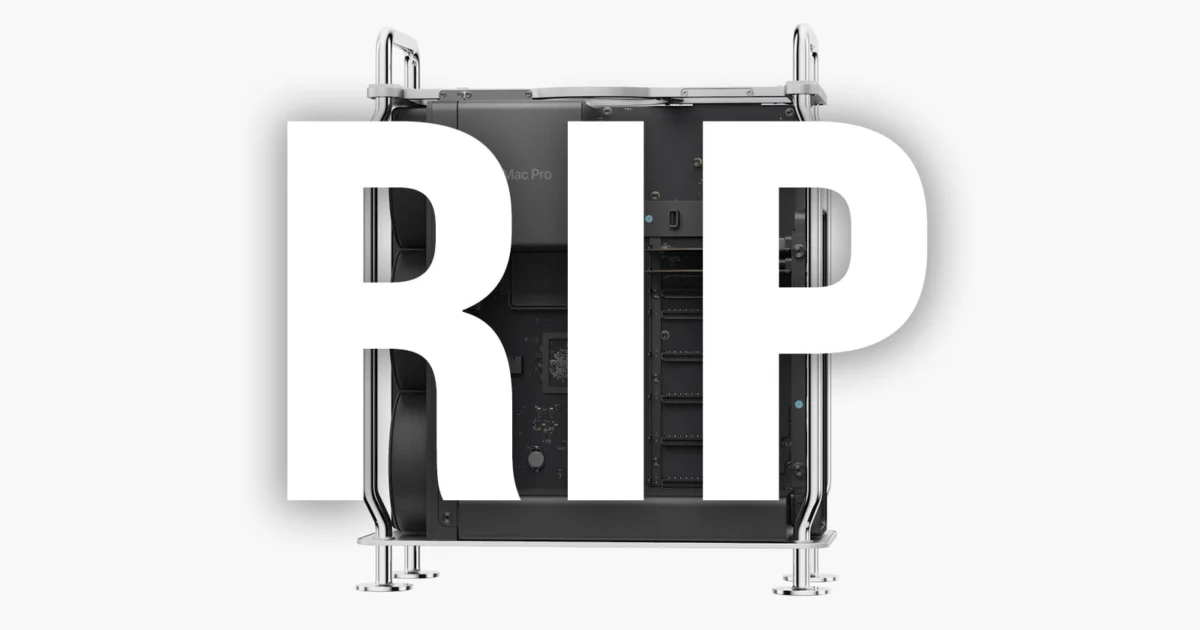
Apple has officially discontinued the Mac Pro, signaling the end of an era for the company’s most powerful and expandable desktop computer. In a statement provided to industry analysts and media outlets today, Apple confirmed that it has no plans to offer future hardware updates for the Mac Pro line, effectively retiring the product category. The move comes as the company completes its full transition to Apple Silicon, a shift that fundamentally altered the value proposition of a high-end tower workstation. Visitors to Apple’s website noted today that the Mac Pro has been removed from the primary hardware navigation menus. Direct links to the Mac Pro purchase pages now redirect users to a general Mac landing page, which highlights the Mac Studio and Mac mini as the primary desktop solutions for professional users.
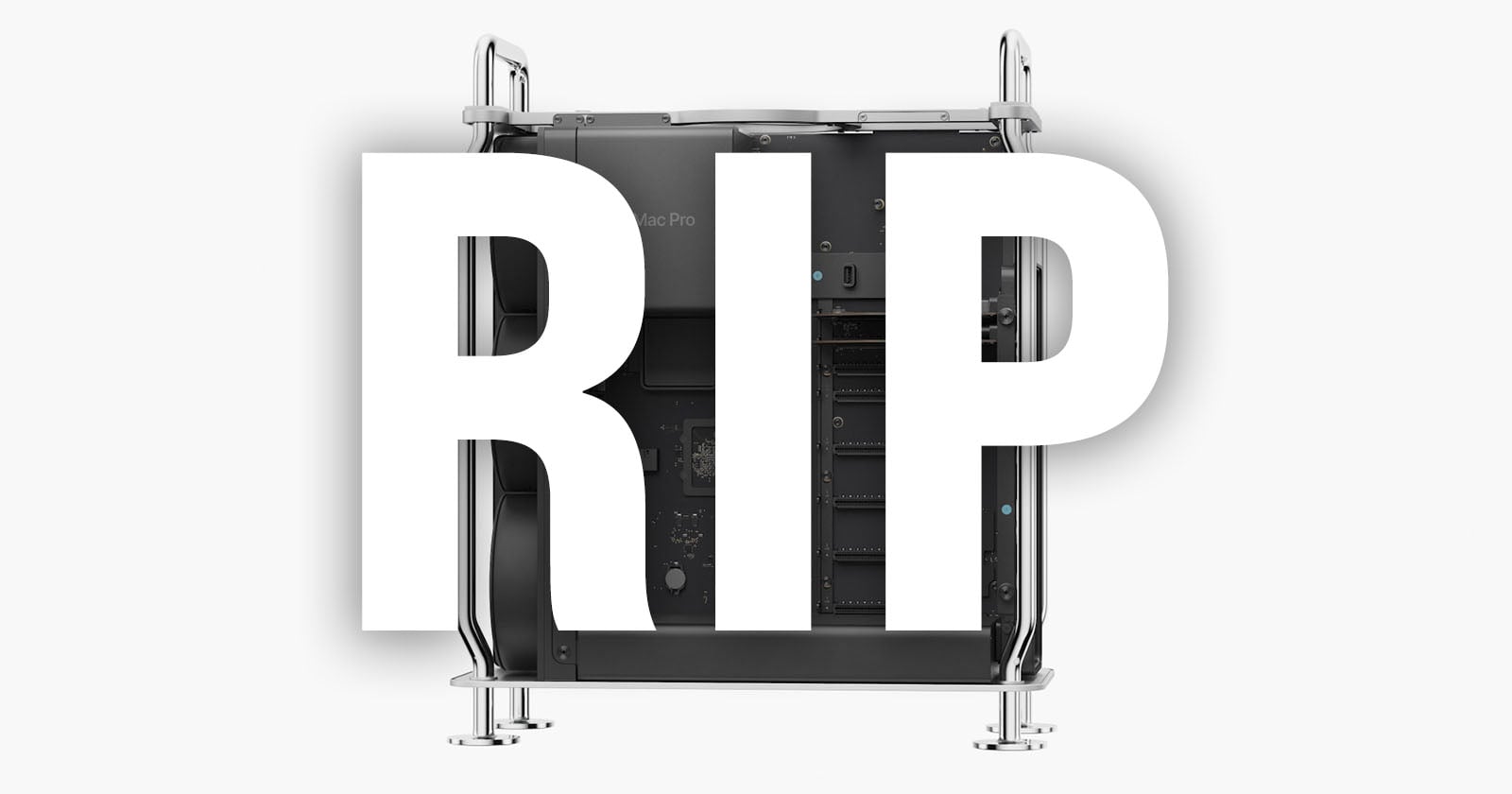
The decision to retire the Mac Pro follows years of speculation regarding the machine’s necessity in a post-Intel ecosystem. When Apple refreshed the Mac Pro in 2023 with the M2 Ultra chip, the product was met with a polarized reception. While it maintained the iconic "cheese grater" tower design introduced in 2019, it lacked the modularity that had defined the Mac Pro for nearly twenty years. The transition to Apple Silicon meant that users could no longer upgrade RAM or add internal graphics cards—features that were once the cornerstone of the Mac Pro’s appeal to the enterprise and creative sectors.
The 2023 Paradox: Mac Pro vs. Mac Studio
The primary catalyst for the Mac Pro’s decline was the introduction of the Mac Studio. During the 2023 Worldwide Developers Conference (WWDC), Apple announced the Apple Silicon-powered Mac Pro alongside a refreshed Mac Studio. Both machines featured the M2 Ultra chip, Apple’s most powerful processor at the time, which combined two M2 Max dies using UltraFusion architecture.
Because the internal architecture of Apple Silicon relies on Unified Memory—where RAM is integrated directly into the chip package for maximum bandwidth—the 2023 Mac Pro could not support user-upgradable memory. This placed it in direct competition with the Mac Studio, which offered identical processing power and memory configurations in a chassis a fraction of the size. The Mac Pro’s primary differentiator was its seven PCIe expansion slots. However, because the system did not support external GPUs (eGPUs) due to the integrated nature of the Apple Silicon GPU, these slots were limited to storage expansion, networking cards, or specialized audio/video I/O hardware.
For most professionals, the $3,000 premium for the Mac Pro tower over the Mac Studio was difficult to justify. A fully loaded Mac Studio offered the same computational throughput for significantly less money, leading many to view the 2023 Mac Pro as a niche product designed solely for a dwindling segment of the market that required internal PCIe storage arrays.
A Chronology of the Mac Pro Line
The Mac Pro was introduced in 2006 as the successor to the PowerMac G5. It served as the flagship of Apple’s professional offerings, characterized by its aluminum tower and high degree of internal accessibility. Over the last two decades, the product line underwent several radical transformations:
- 2006–2012: The Classic Tower. The original Intel-based Mac Pro utilized a massive dual-processor architecture. It was highly praised for its four internal hard drive bays, easy-access RAM risers, and multiple PCIe slots. It became the industry standard for film editing, 3D rendering, and scientific research.
- 2013: The "Trash Can" Redesign. In a radical departure, Apple released a cylindrical Mac Pro that emphasized miniaturization and a unified thermal core. While visually stunning, the design was eventually deemed a failure by the professional community. Its lack of internal expandability and thermal limitations prevented Apple from updating its internal components for years, leading to a rare public apology from Apple executives in 2017.
- 2019: The Return to Modularity. Apple pivoted back to a tower design, often referred to as the "cheese grater" due to its lattice thermal holes. This Intel-based machine was a powerhouse, supporting up to 1.5TB of RAM and multiple high-end AMD Radeon Pro GPUs. It was designed to handle the most demanding 8K video workflows and complex simulations.
- 2023: The Silicon Transition. The final iteration of the Mac Pro replaced Intel Xeon processors with the M2 Ultra. While it retained the 2019 chassis, the internal volume was largely empty space, as the integrated Apple Silicon SoC (System on a Chip) required significantly less cooling and physical footprint than the outgoing Intel components.
Technical Implications of the Apple Silicon Architecture
The discontinuation of the Mac Pro highlights a broader shift in how high-performance computing is structured. In the Intel era, performance was often achieved through modularity—adding more RAM sticks, swapping GPUs, or upgrading CPUs. Apple’s transition to its own M-series chips moved away from this "component-based" philosophy toward an "integrated" philosophy.
In an Apple Silicon system, the CPU, GPU, and Neural Engine share a single pool of high-speed memory. This reduces latency and increases power efficiency but necessitates that all core specifications be decided at the time of purchase. Industry analysts suggest that once Apple successfully integrated the "Ultra" tier of its chips into the compact Mac Studio, the functional requirement for a large tower chassis evaporated for 99% of the professional market.
Furthermore, the rise of Thunderbolt 4 and high-speed external networking has mitigated the need for internal PCIe slots. External NVMe enclosures and 10GbE adapters now provide the bandwidth necessary for professional workflows without requiring the physical volume of a 40-pound tower.
Market Reactions and Professional Impact
The professional community has expressed a mix of nostalgia and pragmatism regarding the news. For boutique post-production houses and audio engineers who rely on specialized PCIe cards (such as Avid Pro Tools HDX cards), the loss of the Mac Pro represents a shift toward external chassis solutions.
"The Mac Pro was always about peace of mind," says one senior broadcast engineer. "It was the knowledge that if you needed more storage or a specific I/O card in six months, you could just open the side panel and slide it in. With the Mac Studio, you have to plan your entire infrastructure around external cables and hubs."

However, from a financial perspective, the Mac Pro had become an outlier in Apple’s hardware portfolio. With the MacBook Pro and Mac Studio capturing the vast majority of "pro" sales, the Mac Pro’s manufacturing and engineering costs likely outweighed its strategic value. Data from market research firms indicates that Mac Pro sales accounted for less than 1% of Apple’s total Mac revenue over the last three fiscal quarters.
The Future of Apple’s High-End Desktop Strategy
With the Mac Pro removed from the lineup, the Mac Studio now stands as the definitive desktop for power users. This consolidation allows Apple to focus its engineering resources on the "Ultra" and "Max" chips without the added complexity of designing for a legacy PCIe architecture.
There are also indications that Apple may look toward "Pro" versions of other hardware to fill any remaining gaps. Speculation continues regarding a larger-screen iMac or a more robust Mac mini, though the Mac Studio remains the most logical successor for those who previously purchased Mac Pros.
The retirement of the Mac Pro also reflects a change in the competitive landscape. As creative workflows move increasingly toward cloud-based rendering and AI-assisted processing, the demand for massive local workstations has softened. Apple’s strategy appears to be focused on providing "concentrated power"—delivering maximum performance in the smallest possible footprint.
While the Mac Pro name may eventually return in a different form, the era of the expandable Apple tower has officially concluded. For twenty years, the Mac Pro served as the benchmark for what a personal computer could achieve. Its departure marks the final step in Apple’s journey to define a new standard of computing, one built on the efficiency and integration of Apple Silicon rather than the modularity of the past. As the redirecting links on Apple’s website suggest, the future of the professional Mac is no longer found in a sprawling tower, but in the compact, silver cubes of the Mac Studio.
