


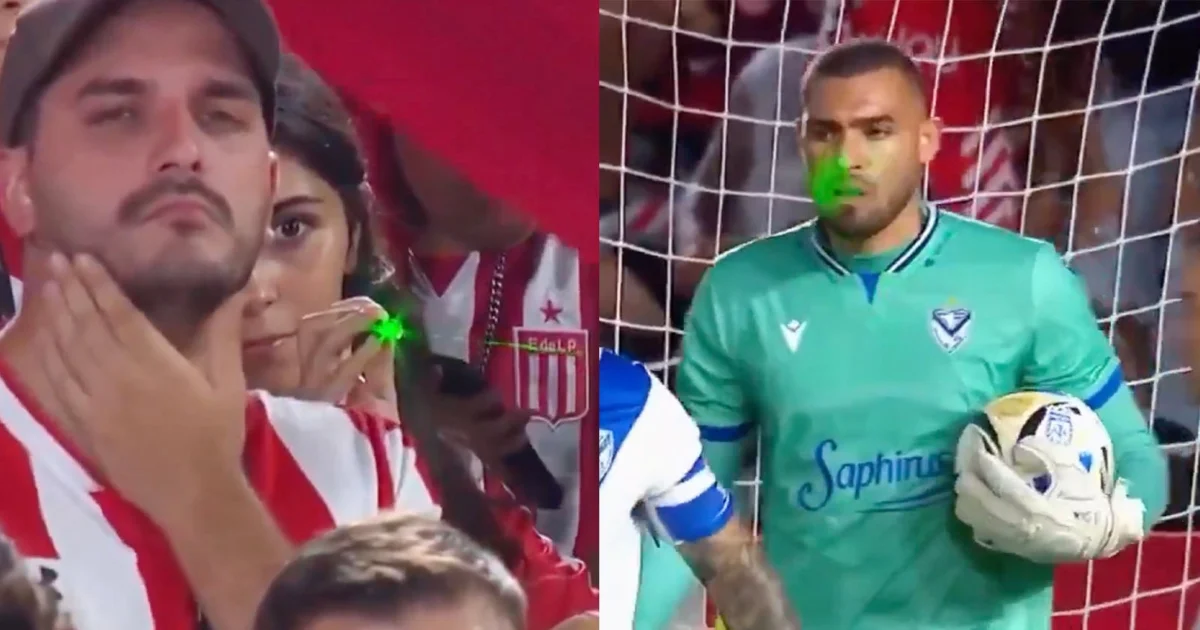
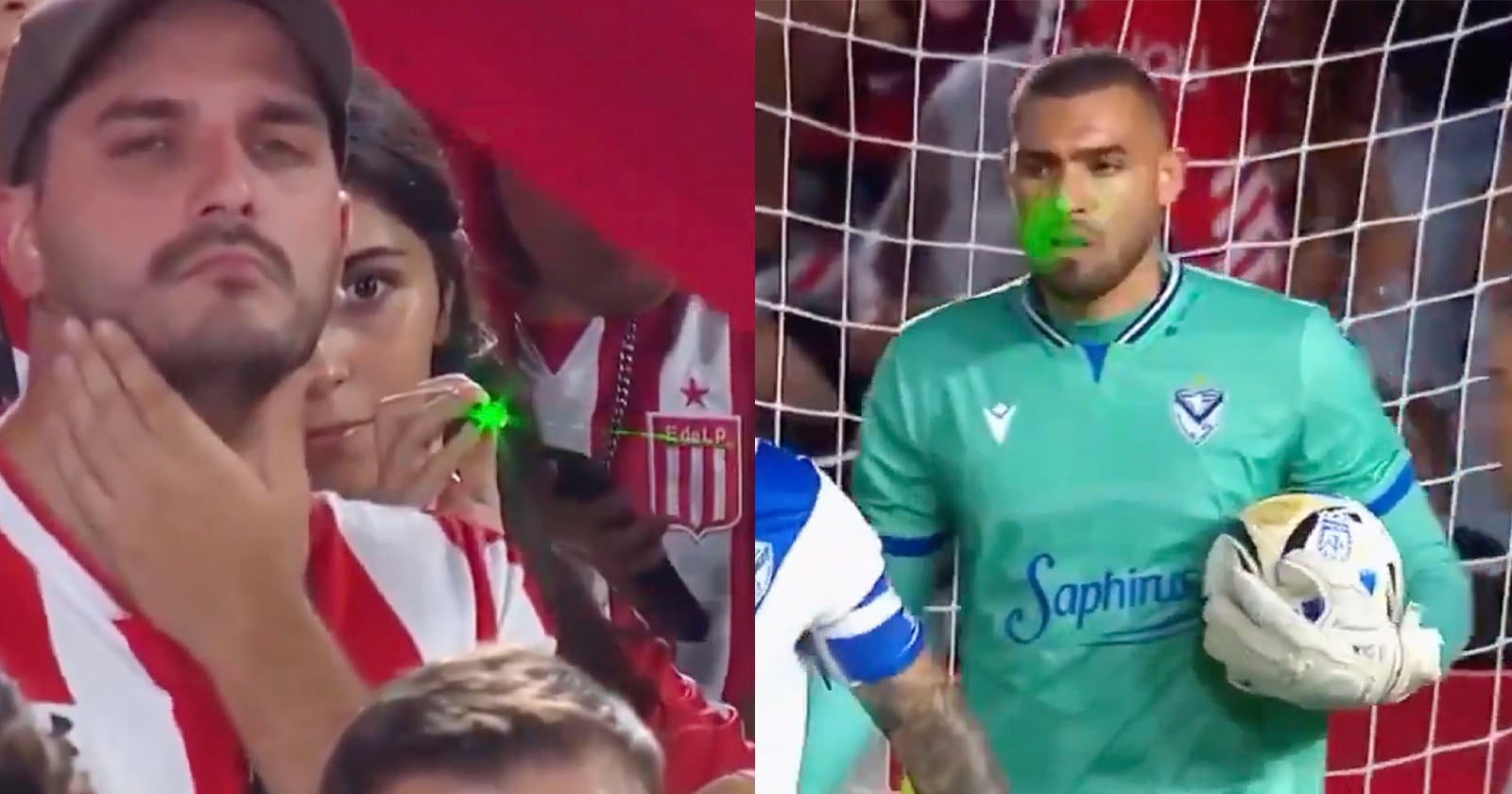
The intersection of high-stakes sports and modern broadcasting technology has led to a landmark moment of accountability in South American football, as a spectator at a recent Argentine Liga Profesional match has been officially sanctioned following a laser-pointing incident. During a highly contested fixture between Estudiantes de La Plata and Vélez Sarsfield, a female fan was captured by broadcast cameras using a high-intensity laser pointer to distract and potentially injure the opposing goalkeeper. The incident, which was documented in real-time by the television production crew, has resulted in a multi-year stadium ban and sparked a renewed global conversation regarding the safety of athletes and the technical integrity of photographic equipment in sporting environments.
The Incident: Real-Time Identification and Exposure
The event took place at the Estadio Jorge Luis Hirschi, where Estudiantes hosted Vélez Sarsfield in a match that carried significant weight for the league standings. As the game progressed into a critical phase, viewers and commentators noticed a persistent green light dancing across the face and torso of Álvaro Montero, the Vélez Sarsfield goalkeeper. Montero, who was attempting to maintain focus during a set-piece, was visibly hindered by the light, which appeared to be aimed with precision at his eyes.
Unlike previous incidents where perpetrators remained anonymous within the anonymity of a crowded terrace, the broadcast team for the match utilized high-definition zoom capabilities to track the source of the light. In a remarkable sequence of cinematography, the camera panned from the affected goalkeeper directly to a specific section of the Estudiantes supporters. The footage clearly identified a woman, later identified as Delfina Quiroa, holding a handheld laser device. The broadcast showed Quiroa intently focusing on the field, her hand stabilized to ensure the beam remained fixed on Montero’s face.
The immediate reaction from the commentary team was one of both surprise and vindication. "Here is the girl with the laser," the announcers exclaimed in Spanish, noting that the "eye in the sky" had successfully located the source of the unsportsmanlike conduct. The footage quickly transitioned from a live sports broadcast to a viral piece of evidence, circulating across social media platforms including X (formerly Twitter) and TikTok, where it garnered millions of views within hours.
Legal and Administrative Consequences
Following the match, the Argentine Football Association (AFA) and local security authorities launched an immediate investigation using the broadcast footage as primary evidence. The identification of Delfina Quiroa was swift, facilitated by stadium ticketing records and the clarity of the televised images. According to reports from the sports outlet AS, the disciplinary response has been firm: Quiroa has been issued a two-year stadium ban.
This ban falls under the "Derecho de Admisión" (Right of Admission) protocols, a regulatory framework used by Argentine authorities to curb stadium violence and misconduct. Under this sanction, Quiroa’s national identification number is flagged in the "Tribuna Segura" system, a biometric and digital database used by security forces at stadium entrances across the country. This ensures that she will be unable to purchase tickets or enter any professional football venue in Argentina for the duration of the penalty.
The swiftness of the punishment reflects a growing zero-tolerance policy toward fan interference. In addition to the individual ban, Estudiantes de La Plata may face administrative fines or warnings from the league for the failure of stadium security to intercept the prohibited device at the entry gates.
The Physical Danger: Retinal Health and Athlete Safety
The use of laser pointers in stadiums is frequently dismissed by fans as a harmless prank or a tactical distraction, but medical experts and sports officials warn that the biological risks are severe. The incident involving Álvaro Montero is part of a dangerous trend that has seen elite athletes targeted during high-pressure moments.
Research from Ohio State University and other medical institutions highlights that even brief exposure to a Class 3R or Class 4 laser—types often sold illegally or marketed as high-powered pointers—can cause permanent ocular damage. The human eye’s lens acts as a natural magnifier, focusing the laser’s energy onto the retina. This can lead to "photocoagulation," essentially burning the retinal tissue.
A documented case reported by Science Alert in 2020 involved a teenager in Ohio who suffered permanent vision loss after a brief exposure to a high-powered laser during a game with friends. The report noted that the laser "blasted away" parts of his retina, leaving him with blind spots that surgery could not repair. For a professional goalkeeper like Montero, whose career depends on millisecond reaction times and perfect depth perception, the risk of even minor retinal scarring is a career-threatening hazard.
The historical context of this issue is well-documented. One of the most prominent examples occurred during the 2022 World Cup qualifiers, where Egyptian superstar Mohamed Salah was visibly targeted by dozens of green lasers during a crucial penalty shootout against Senegal. Salah ultimately missed his shot, and the Egyptian Football Association filed an official complaint with FIFA, citing the lasers as a primary factor in the disruption of the match’s integrity.
Technical Implications: The Destruction of Camera Sensors
While the primary concern is the safety of the players, the proliferation of lasers in stadiums also poses a significant threat to the technology used to document the sport. Professional broadcast cameras and the smartphones used by thousands of fans are highly susceptible to laser damage.
The image sensors in modern cameras, particularly CMOS (Complementary Metal-Oxide-Semiconductor) sensors, are designed to be extremely sensitive to light. However, the concentrated energy of a laser beam can exceed the sensor’s physical limits. When a laser strikes a sensor, it can permanently "fry" the pixels in its path, resulting in dead pixels, vertical or horizontal lines across the frame, or total sensor failure.
Sony, a leading manufacturer of professional imaging equipment, issued an official warning in July 2021 regarding this specific danger. The company stated: "Do not directly expose the lens to beams such as laser beams. This may cause damage to the image sensor and cause the camera to malfunction." The warning emphasized that this risk exists in both indoor and outdoor environments and can even occur through indirect exposure, such as a beam bouncing off a reflective surface like a stadium scoreboard or a player’s chrome-finished equipment.
The very camera that caught Delfina Quiroa was itself at risk. Had she turned the laser toward the lens, the resulting damage could have cost the broadcast production tens of thousands of dollars in equipment repairs, further highlighting the destructive potential of these devices.
A Chronology of Fan Interference and Regulatory Evolution
The incident in Argentina is a flashpoint in a decades-long struggle to manage fan behavior in the digital age.
- 2000s-2010s: Laser pointers become a common nuisance in European and South American leagues. Fines are occasionally levied against clubs, but individual fans are rarely caught.
- 2021: During the Euro 2020 semi-final between England and Denmark, a fan pointed a laser at Danish goalkeeper Kasper Schmeichel during a penalty. UEFA fined the English Football Association £26,000 for the incident.
- 2022: The Mo Salah incident in Dakar brings global attention to the need for more stringent FIFA regulations regarding laser pointers.
- 2024-2026: Advancements in 8K broadcast technology and AI-driven facial recognition in stadiums begin to shift the tide, allowing security to identify individual perpetrators in real-time.
The Argentine case marks a shift from reactive complaints to proactive identification. The ability of a broadcast crew to act as a secondary security layer demonstrates how the "surveillance" aspect of modern sports media can be leveraged to protect the game’s integrity.
Broader Impact and the Future of Stadium Security
The two-year ban of Delfina Quiroa serves as a deterrent, but it also raises questions about the efficacy of stadium security screenings. Laser pointers are small, easily concealed, and often made of plastic, making them difficult to detect with standard metal detectors.
Moving forward, stadium authorities are considering more advanced screening techniques, including the use of optical sensors at gates that can detect the specific frequency of laser diodes. Furthermore, many leagues are advocating for harsher legal penalties beyond mere stadium bans, including criminal charges for "assault with a dangerous weapon" or "interference with a public event."
The incident also highlights the role of the "fan-cameraman" dynamic. In an era where every angle of a stadium is covered by either professional lenses or spectator smartphones, the "anonymity of the crowd" is effectively dead. For the Argentine Liga Profesional, this event is a clear message: the game is being watched, and the cameras are looking at more than just the ball.
In conclusion, the identification and subsequent banning of the Estudiantes fan represent a significant victory for player safety and sportsmanship. By combining high-definition broadcasting with strict regulatory enforcement, football authorities are beginning to close the gap on a form of cheating and endangerment that has plagued the sport for too long. As technology continues to evolve, the hope is that such incidents will move from a common occurrence to a rare and heavily penalized anomaly, ensuring that the focus remains on the skill of the athletes rather than the disruptions from the stands.
