


The modern landscape of pet ownership presents a unique paradox: while companion animals are increasingly integrated into family life, the demands of contemporary human schedules often leave owners struggling to provide the consistent mental and physical stimulation their pets require. In response to this growing need, an innovative solution has emerged from the convergence of two leading pet technology platforms: the Pet Tutor automatic treat dispenser and the PupPod high-tech puzzle game. This integration offers a sophisticated, automated system designed to keep dogs engaged, challenged, and well-adjusted, even when their owners are otherwise occupied, representing a significant stride in addressing canine welfare in busy households.
The Evolving Understanding of Canine Well-being: Beyond Basic Needs
For centuries, the primary focus of pet care revolved around providing fundamental necessities: food, water, shelter, and basic physical exercise. However, advances in animal psychology and veterinary science have dramatically expanded our understanding of canine well-being. Today, experts widely recognize that mental and physical stimulation are not mere luxuries but fundamental requirements for a dog’s overall health, happiness, and behavioral stability. Just as humans thrive on intellectual engagement and physical activity, so too do dogs. Deprivation of these elements can lead to a host of detrimental outcomes, ranging from undesirable behaviors to significant health issues.
Research consistently demonstrates a strong correlation between inadequate mental and physical stimulation and common canine behavioral problems. Dogs that are bored, under-exercised, or lacking opportunities for cognitive engagement frequently exhibit behaviors such as destructive chewing, excessive barking, digging, hyper-activity, anxiety, and even aggression. These behaviors are often misconstrued as naughtiness or disobedience when, in reality, they are manifestations of unmet innate needs. For instance, studies have indicated that up to 40% of dogs may experience some form of separation anxiety, a condition often exacerbated by a lack of stimulating activities when alone. The financial and emotional toll these issues take on pet owners can be substantial, sometimes leading to surrender to shelters or euthanasia.
Beyond behavioral issues, consistent mental engagement is crucial for a dog’s cognitive health, particularly as they age. Similar to humans, dogs can experience cognitive decline, often referred to as "doggie dementia" or Canine Cognitive Dysfunction (CCD). Symptoms can include disorientation, changes in sleep-wake cycles, altered social interactions, and house-soiling. Evidence suggests that an enriched environment and regular cognitive challenges can play a significant role in delaying the onset and mitigating the severity of CCD, preserving a dog’s quality of life into their senior years. This preventative aspect underscores the long-term health benefits of solutions like the Pet Tutor and PupPod combination.
The Modern Owner’s Dilemma: Time Constraints Versus Canine Needs
The contemporary lifestyle, characterized by demanding work schedules, family commitments, and social obligations, often leaves pet owners with limited time for dedicated, interactive play and training sessions. According to the American Pet Products Association (APPA), 66% of U.S. households, or 86.9 million families, own a pet, with dogs being the most common companion animal. While this signifies a deep bond between humans and their canine friends, it also highlights the immense challenge faced by a significant portion of the population in meeting their pets’ comprehensive needs amidst their own busy lives.
Owners frequently grapple with guilt over not being able to provide their dogs with sufficient attention and stimulation. Traditional training methods, while effective, often require direct, hands-on involvement, which can be difficult to sustain consistently. This is where the burgeoning pet technology market, valued at over $5 billion globally and projected to grow substantially, steps in, offering innovative tools designed to bridge the gap between owner availability and pet requirements. The demand for automated solutions that enhance pet well-being without constant human intervention is soaring, reflecting a societal shift towards integrating technology into all aspects of daily life, including pet care.
Technological Convergence: The Pet Tutor and PupPod Synergy
The integration of the Pet Tutor and PupPod systems represents a significant advancement in automated canine enrichment. Each device, impressive in its own right, gains exponential utility when combined, creating a seamless and adaptive learning environment for dogs.
Pet Tutor: Precision in Positive Reinforcement
The Pet Tutor, developed by Smart Animal Training Systems, is an advanced automatic treat dispenser that has revolutionized positive reinforcement training. Unlike simple treat-release mechanisms, the Pet Tutor offers precise control over reward delivery, allowing trainers and owners to reinforce desired behaviors instantly and consistently. Its remote operability via a mobile device or a separate remote control makes it an invaluable tool for shaping behaviors from a distance, aiding in separation anxiety protocols, crate training, and complex behavior chains. The device’s ability to dispense various types of kibble or small treats, coupled with its durable design, has made it a staple in professional training circles and an increasingly popular choice for proactive pet owners. Its core mission is to make training more efficient, consistent, and accessible, fostering a positive learning experience for dogs.
PupPod: Adaptive Cognitive Engagement
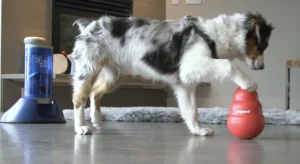
The PupPod, on the other hand, is a high-tech puzzle game designed specifically for canine cognitive stimulation. At its heart is the "Wobbler" toy, an interactive device that responds to a dog’s interaction. What sets PupPod apart is its adaptive learning algorithm. The games start simply, typically requiring a dog to touch the Wobbler with their nose or paw to earn a reward. However, as the dog masters each level, the game automatically increases in complexity, introducing new rules, requiring specific sequences of interaction, or discriminating between visual (lights) and auditory cues (sounds). This progressive difficulty ensures that dogs remain challenged and engaged, preventing boredom and continuously exercising their problem-solving skills. The PupPod system is built on the principle of continuous mental enrichment, striving to keep dogs intellectually stimulated and prevent cognitive stagnation.
The Integrated System: A New Paradigm in Automated Enrichment
The true innovation lies in the seamless integration of these two powerful tools. By pairing the Pet Tutor with the PupPod Wobbler toy via a mobile device application, owners can create an automated, interactive learning experience for their dogs. Here’s how the synergy works:
- Initial Setup: An owner connects the Pet Tutor and PupPod through a dedicated app, placing the Wobbler toy in an accessible area and the Pet Tutor treat dispenser within view, but potentially at a distance to encourage movement.
- Basic Interaction: Initially, the PupPod system detects simple interactions, such as a dog sniffing or nudging the Wobbler. Upon successful detection, the PupPod sends a signal to the paired Pet Tutor, which then automatically dispenses a treat. This immediate, positive reinforcement helps the dog quickly understand the basic premise of the game: interacting with the toy leads to a reward.
- Progressive Difficulty: As the dog consistently performs the initial task, the PupPod’s intelligent algorithm automatically advances the game to more challenging levels. This might involve requiring the dog to touch the Wobbler only when a specific light is illuminated, or when a particular sound plays, or even to avoid touching it under certain conditions. The combination of lights and sounds provides multi-modal cues that demand higher cognitive processing.
- Sustained Engagement: The adaptive nature of PupPod ensures that the dog never "solves" the game permanently. The continuously evolving challenges prevent habituation and boredom, maintaining a high level of mental engagement over extended periods. This dynamic system means the dog is always learning, always thinking, and always working for its reward.
- Unsupervised Enrichment: Crucially, this entire process can occur autonomously. Once set up, the system operates independently, allowing dogs to play, learn, and earn rewards while their owners are at work, running errands, or simply attending to other household tasks. This capability directly addresses the modern owner’s dilemma of time scarcity.
Benefits of the Integrated System: A Holistic Approach to Canine Health
The combined Pet Tutor and PupPod system delivers a comprehensive suite of benefits that extend beyond simple entertainment, contributing significantly to a dog’s overall well-being.
- Profound Cognitive Stimulation: The core benefit is the consistent, challenging mental workout provided. Dogs are natural problem-solvers, and these games tap into their innate curiosity and intelligence, promoting critical thinking, discrimination skills, and memory recall. This mental exercise is vital for preventing boredom, which is a leading cause of destructive behaviors.
- Significant Behavioral Improvement: By redirecting a dog’s energy and intellect towards constructive problem-solving, the system can dramatically reduce the incidence of undesirable behaviors. A mentally satisfied dog is less likely to engage in destructive chewing, incessant barking, or anxiety-driven actions. For dogs prone to separation anxiety, the continuous engagement can provide a valuable distraction and a sense of purpose when left alone.
- Enhanced Physical Activity: While often overlooked, the setup of the Pet Tutor and PupPod can be strategically used to encourage physical movement. By placing the Pet Tutor treat dispenser at a distance from the PupPod Wobbler toy, dogs are required to move back and forth to earn their rewards. This seemingly simple action can accumulate into significant physical activity over time. As one owner noted, "A dog can easily walk a mile in a living room going back and forth between the two devices," offering a viable form of exercise for indoor dogs, those with mobility issues, or during inclement weather.
- Lengthened Attention Span and Improved Learning Retention: Consistent engagement with the progressive games helps to build a dog’s focus and concentration. The immediate and consistent positive reinforcement from the Pet Tutor reinforces the learning process, helping dogs retain new skills and apply them to subsequent challenges. This can translate into improved performance in other training contexts.
- Boosted Confidence: Each successful interaction and solved puzzle contributes to a dog’s sense of accomplishment and self-efficacy. This confidence can radiate into other aspects of their life, making them more resilient, less fearful, and better adjusted in various environments.
- Enriched Mealtime Experiences: The system can be adapted to dispense an entire meal, transforming a routine feeding into a mentally stimulating activity. This "work-to-eat" model is highly beneficial, as it aligns with a dog’s natural foraging instincts and can slow down fast eaters, potentially aiding digestion and preventing bloat.
- Flexibility for Diverse Needs: The system’s adaptability makes it suitable for a wide range of dogs, from energetic puppies needing an outlet for their boundless curiosity to senior dogs requiring gentle cognitive exercise to maintain mental acuity. It is also beneficial for dogs recovering from injuries who need mental stimulation without excessive physical strain, or for "canine couch potatoes" who might otherwise resist engagement.
Market Context and Industry Trends
The integration of Pet Tutor and PupPod aligns perfectly with several burgeoning trends in the pet care industry. The global pet care market, valued at over $260 billion in 2022, is projected to grow to over $350 billion by 2027, driven by factors such as the humanization of pets, increased disposable income, and technological innovation. Within this, the "smart pet products" segment is experiencing rapid expansion, reflecting a consumer desire for convenience, enhanced pet welfare, and data-driven insights into their pets’ lives.
The emphasis on positive reinforcement training methods has also gained widespread acceptance among veterinarians, animal behaviorists, and ethical trainers. These methods, which focus on rewarding desired behaviors rather than punishing undesired ones, are not only more humane but also scientifically proven to be more effective in fostering a strong human-animal bond and promoting long-term behavioral change. Automated systems like Pet Tutor are instrumental in making positive reinforcement accessible and consistent for everyday pet owners.
Furthermore, the rising awareness of animal welfare, particularly concerning mental health, has spurred demand for products that offer more than just physical containment or sustenance. Owners are increasingly seeking ways to enrich their pets’ lives, prevent boredom, and address behavioral challenges proactively. The Pet Tutor and PupPod combo directly addresses this sophisticated demand.
Expert Perspectives and Company Vision
While no direct quotes were provided in the original text, the mission and functionality of both companies imply clear objectives and perspectives from their creators and industry experts.
From the perspective of Smart Animal Training Systems, the creators of Pet Tutor, the integration likely stems from a vision of making advanced training and enrichment accessible to every pet owner. One can infer a statement such as: "Our commitment at Smart Animal Training Systems has always been to empower pet owners with tools that facilitate effective, positive reinforcement training. By combining Pet Tutor with PupPod, we’re not just offering a treat dispenser; we’re providing a comprehensive, automated system for cognitive enrichment that directly addresses the challenges of modern pet ownership, ensuring dogs remain happy, healthy, and well-adjusted."
Similarly, PupPod’s developers would likely emphasize the importance of adaptive, engaging play: "PupPod was engineered to keep dogs mentally sharp through progressively challenging games. Our collaboration with Pet Tutor amplifies this mission by adding automated, consistent rewards, creating a seamless and endlessly engaging experience that truly adapts to a dog’s learning pace. We believe this partnership sets a new standard for interactive pet enrichment."
Animal behaviorists and veterinarians would likely commend such innovations for their potential to improve canine welfare significantly. A representative expert statement might be: "In my practice, I frequently encounter behavioral issues stemming from a lack of mental and physical stimulation. Tools like the integrated Pet Tutor and PupPod system are invaluable. They offer a scientifically sound method for providing consistent cognitive engagement, reducing boredom, and fostering healthier behavioral patterns, especially for dogs who spend significant time alone. This proactive approach to enrichment is crucial for a dog’s overall quality of life and can mitigate many common problems before they escalate."
Implications for Pet Owners and the Future of Canine Care
The combined Pet Tutor and PupPod system carries significant implications for both pet owners and the future trajectory of animal care. For owners, it offers unprecedented convenience and peace of mind. They can confidently leave their dogs, knowing they are not just physically safe but also mentally stimulated and engaged, thereby reducing owner guilt and enhancing the overall human-animal bond. This allows busy individuals to responsibly integrate pets into their lives without compromising on their welfare.
Furthermore, this integration sets a precedent for future innovations in pet technology. The concept of an adaptive, AI-driven learning system for pets, autonomously managing rewards and challenges, opens doors for even more sophisticated solutions. Imagine systems that not only adapt to a dog’s learning but also monitor their emotional state, provide personalized training modules, or even connect with veterinary services based on behavioral changes. The blending of hardware and software, positive reinforcement principles, and intelligent algorithms demonstrated by Pet Tutor and PupPod paves the way for a new era of truly smart pet companions.
In essence, the Pet Tutor and PupPod combination is more than just a gadget; it is a thoughtful, technologically advanced solution to a pervasive challenge in modern pet ownership. By prioritizing mental and physical enrichment through an automated, adaptive system, it empowers owners to foster happier, healthier, and better-behaved canine companions, contributing significantly to improved animal welfare across the board.
