


The Foundational Role of Perches in Avian Health
A perch is far more than a simple resting spot; it is an integral part of a bird’s environment, directly impacting its physical and psychological health. In the wild, parrots navigate complex arboreal landscapes, utilizing branches of myriad shapes, sizes, and textures. This natural variability constantly exercises different foot muscles, promotes blood circulation, and prevents the sustained pressure points that can lead to debilitating conditions in captivity. Without this natural diversity, captive birds are susceptible to a range of foot ailments, from mild discomfort to severe, chronic issues that can significantly diminish their quality of life. The right perch mitigates the risk of pressure sores, a common precursor to "bumblefoot" (pododermatitis), a painful bacterial infection of the footpads that can be notoriously difficult to treat. Moreover, the tactile stimulation from varied surfaces provides essential mental enrichment, mirroring the sensory input a wild bird receives from its natural habitat. This applies universally, whether caring for a large, intelligent parrot species like a macaw or a smaller, active bird such as a cockatiel or budgerigar.
Understanding Avian Foot Anatomy and Common Ailments
To appreciate the critical role of perches, one must understand the intricate anatomy of a bird’s foot. Parrots are zygodactyl, meaning they have two toes pointing forward and two pointing backward, an adaptation perfectly suited for gripping branches. Their feet contain numerous small bones, tendons, and muscles designed for powerful, flexible grasping. Constant pressure on a single point, or lack of varied muscular engagement, can lead to:
- Bumblefoot (Pododermatitis): This inflammatory condition, ranging from mild redness to severe ulceration and infection, is often caused by prolonged pressure on hard, unyielding surfaces or unsanitary conditions. It can lead to lameness, pain, and, if untreated, systemic infection.
- Arthritis: Repetitive strain or lack of varied movement can contribute to joint inflammation and degenerative conditions, particularly in older birds.
- Muscle Atrophy: A lack of diverse perches that challenge different muscle groups can result in weak, underdeveloped foot muscles, impairing grip strength and agility.
- Pressure Sores and Calluses: Hard, smooth perches create friction and pressure points, leading to calluses that can crack and become infected.
- Splayed Feet: In young birds, particularly those hand-reared, improper perching surfaces can contribute to splayed legs, where the legs splay outwards, making it difficult to perch or walk normally.
The goal of perch provision is to mimic the biomechanical demands of a natural environment, ensuring that the bird’s feet are constantly engaged and healthy.
Perch Materials: Navigating Safe and Stimulating Choices
The selection of perch materials is paramount. A cardinal rule is to always avoid treated, painted, or resin-coated perches, as these can contain chemicals toxic to birds if ingested. Only use bird-safe, natural materials.
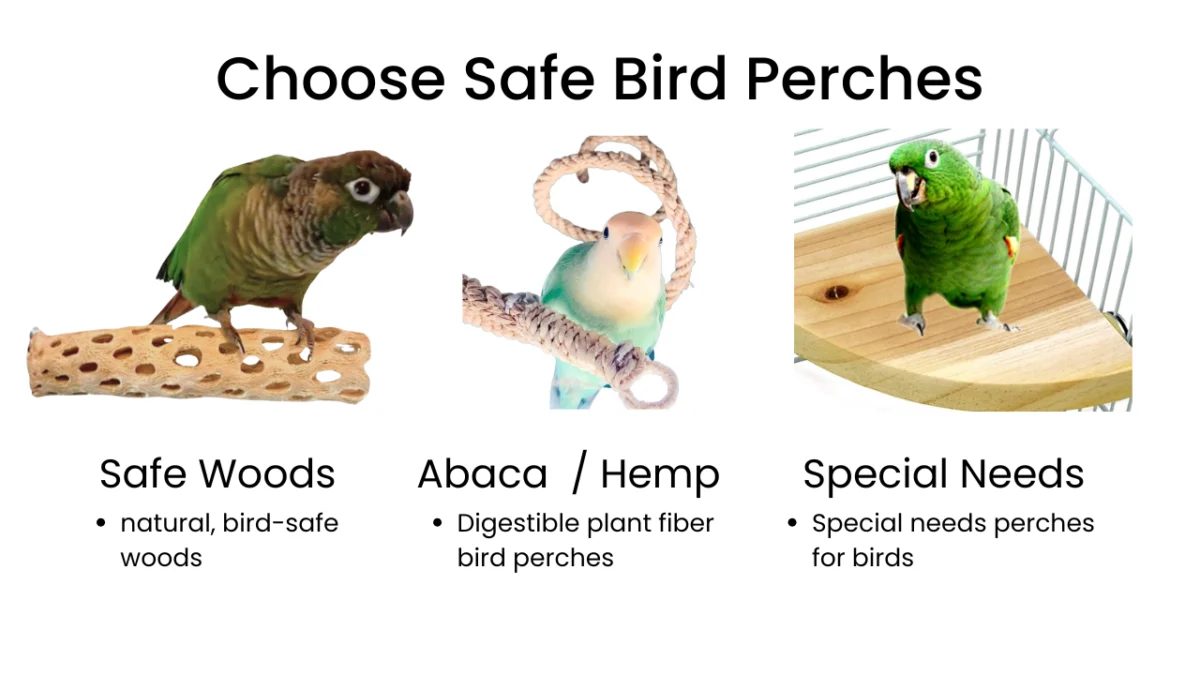
- Natural Wood Perches: These are often considered the gold standard due to their irregular shapes, varying diameters, and chewability, which provides both foot exercise and beak conditioning.
- Recommended Woods: Manzanita, Java wood, Dragonwood, Grapevine, Coffee wood, Bottlebrush, Willow, Birch, Maple, Poplar, Ash, Elm, and specific fruit woods like Apple or Pear (ensure they are free of pesticides and thoroughly cleaned). These woods are typically non-toxic, durable, and offer excellent textural variety.
- Benefits: Irregular shapes prevent pressure sores, natural textures stimulate feet, and chewing provides enrichment and beak maintenance.
- Preparation: If sourcing branches directly, they must be thoroughly cleaned (scrubbed with a safe disinfectant or a mild bleach solution, then rinsed and dried completely) and ideally baked at a low temperature to kill any parasites or bacteria. Confirm species safety before use.
- Rope Perches: While popular for climbing and play, not all rope perches are created equal.
- Recommended: Abaca (Manila hemp) or natural hemp rope perches are safer alternatives to cotton.
- Avoid: Cotton rope perches, particularly those that fray easily. Ingested cotton fibers can accumulate in a bird’s crop, forming an indigestible wad that can lead to severe impaction, infection, and often requires surgical removal. They also trap dirt and moisture, becoming unsanitary quickly.
- Maintenance: Regularly inspect rope perches for fraying and replace them immediately if damage is observed.
- Mineral and Calcium Perches: These can be beneficial for beak conditioning and supplementing mineral intake.
- Placement: Best placed in a location where the bird can chew on it, but not as a primary perching surface, as they are hard and can contribute to foot issues if used exclusively.
- Pumice Perches: Similar to mineral perches, these can help keep nails trimmed.
- Caution: Should be used sparingly and placed strategically, as constant contact can be abrasive and potentially irritate footpads. Not suitable for sleeping or primary perching.
- Plastic Perches: Generally discouraged. They offer no textural variety, are often smooth and hard, and can contribute to foot problems. Some birds may also chew and ingest plastic.
- Concrete/Cement Perches: While marketed for nail and beak conditioning, these are generally not recommended as primary perches. They are hard, cold, unyielding, and can cause pressure sores and calluses, especially if a bird spends significant time on them.
- Sandpaper Perches: Absolutely to be avoided. The abrasive surface can severely irritate and damage a bird’s delicate footpads, leading to chronic pain and infections.
How to Choose Perch Size, Shape, and Placement for Optimal Wellness
The strategic selection and placement of perches are as crucial as the materials themselves. Variety is the cornerstone of healthy foot care.
- Diameter Diversity: The most critical aspect. Perches should come in various diameters to ensure different parts of the bird’s foot are exercised and receive pressure.
- Guideline: A bird should be able to comfortably wrap its toes around approximately two-thirds of the perch diameter, with its toes slightly bent but not fully overlapping. No single perch should allow the toes to be completely flat.
- Why it Matters: This mimics the natural grip on irregular branches, preventing constant pressure on specific points and engaging a wider range of foot muscles.
- Texture Variety: Incorporate perches with different textures – smooth (but not slippery), rough, knobby, and soft.
- Examples: Smooth manzanita, rough java wood, rope, and perhaps a soft, fleece-covered platform for sleeping (if hygienic and not chewed).
- Strategic Placement: Perches should be placed throughout the cage at varying heights and orientations to encourage climbing, movement, and exploration, mirroring natural behaviors.
- High Perches: Offer a primary, comfortable perch for sleeping and resting, typically the highest point in the cage, away from food/water to minimize contamination.
- Mid-Level Perches: Positioned near food and water bowls, allowing easy access for eating and drinking.
- Low Perches: For foraging or play areas.
- Horizontal vs. Vertical: Include both horizontal perches for resting and vertical/diagonal perches for climbing and exercise.
- Avoid Obstruction: Ensure perches don’t block access to food, water, or toys, and are positioned to prevent droppings from falling directly onto other perches or bowls.
- "Highway" Effect: Create a "highway" of perches that encourages movement around the cage, rather than allowing the bird to sit stationary for long periods.
- Window Perches: If safe and secure, a window perch can offer valuable visual stimulation, but ensure it’s placed out of direct drafts and extreme temperatures.
- Rotate Perch Types: Regularly rotating and rearranging perches prevents boredom, encourages new movements, and keeps the environment fresh and stimulating. This also allows for thorough cleaning and inspection.
Safety Protocols and Cleaning Regimens

Maintaining a safe and hygienic perching environment is non-negotiable for avian health.
- Secure Perches: Always ensure perches are firmly anchored and do not wobble, spin, or come loose. Unstable perches can lead to falls, injuries, and a lack of confidence in the bird. Check all attachment hardware regularly for wear and tear. Exposed or unsafe metal hardware can pose a risk if chewed or licked.
- Regular Cleaning: Perches accumulate droppings, food debris, and bacteria.
- Frequency: Weekly cleaning is ideal, or immediately if visibly soiled.
- Method: Scrub natural wood perches with a stiff brush and hot water, using a bird-safe disinfectant (e.g., a diluted bleach solution followed by thorough rinsing and drying) for deeper cleaning. Plastic or ceramic perches can be washed in a dishwasher. Rope perches should be hand-washed with mild soap and thoroughly dried. Ensure perches are completely dry before returning them to the cage to prevent mold growth.
- Importance: Birds often clean their beaks on perches and can track fecal matter, making perches prime sites for bacterial growth. A dirty perch is as unhygienic as a week-old lunchbox.
- Inspection: Regularly inspect all perches for splintering, sharp edges, wear, or damage. Replace any compromised perches immediately.
Expert Consensus and Industry Standards
Avian veterinarians and certified avian behaviorists universally advocate for a diverse and well-maintained perching environment. Dr. Susan O’Connell, a prominent avian veterinarian, states, "The single most impactful change an owner can make for their bird’s long-term foot health is to provide a wide variety of perches. This is not just about comfort; it’s about preventing debilitating conditions that we frequently see in practice." Reputable bird supply manufacturers also offer a wide range of safe, tested perches, often crafted from sustainably sourced, bird-safe woods like Java wood or manzanita. These commercial options provide consistent quality and durability, making them a reliable choice for owners.
The Cost of Neglect Versus Investment in Wellness
The financial and emotional implications of neglecting proper perch care can be substantial. Treating advanced cases of bumblefoot, chronic arthritis, or injuries from falls due to unstable perches can lead to significant veterinary bills, often involving long courses of medication, bandages, and even surgery. Beyond the financial burden, the bird experiences pain and reduced quality of life, and the owner faces stress and heartache. Investing in a diverse selection of high-quality, safe perches is a proactive and cost-effective measure that promotes long-term health and well-being, fostering a stronger, happier bond between bird and owner.
DIY Branches: Benefits and Caveats
DIY branches, sourced from one’s own property or local natural areas, can be an excellent, cost-effective way to provide natural enrichment. However, strict adherence to safety protocols is critical.
- Safety First: Only use branches from known non-toxic tree species (refer to comprehensive lists of bird-safe woods).
- Pesticide-Free Zone: Ensure the source area is free from pesticides, herbicides, or other chemical treatments. Avoid branches from roadsides where exhaust fumes or road salts may have contaminated them.
- Thorough Cleaning: As mentioned previously, scrub thoroughly with hot water and a bird-safe disinfectant, rinse meticulously, and dry completely. Baking at a low temperature (around 200-250°F or 90-120°C for 30-60 minutes, depending on thickness) can sterilize them and kill insects, but monitor closely to prevent burning.
- Inspection: Carefully inspect branches for any signs of mold, insects, sharp points, or loose bark that could pose a risk.
Top 7 Questions About Bird Perches Answered (Expanded)
Q1: Can I use a single type of perch?
A: Absolutely not. Variety is paramount for optimal avian foot health. Using only one type of perch, especially a dowel or plastic one, can lead to chronic foot problems like bumblefoot, pressure sores, and muscle atrophy. Different diameters, textures, and shapes ensure all foot muscles are exercised, circulation is stimulated, and pressure points are avoided, mimicking a bird’s natural arboreal environment.
Q2: What diameter perch is ideal?
A: Ideal perch diameters vary with bird size, but the general rule is that your bird should be able to comfortably wrap its toes around approximately two-thirds of the perch, with each toe joint slightly bent. Avoid perches so small that toes overlap completely or so large that toes lie flat. For instance, a small bird like a budgie might need diameters ranging from 0.5 to 1 inch, while a macaw could require 1.5 to 3 inches or more. Crucially, mix diameters to promote continuous foot exercise and prevent repetitive strain.
Q3: Are natural wood perches safe?
A: Yes, natural wood perches are generally the safest and most beneficial. Prioritize bird-safe wood species such as Manzanita, Java wood, Dragonwood, Grapevine, Coffee wood, Birch, Maple, and Apple. Always ensure they are untreated, free of pesticides, and thoroughly cleaned if sourced from outside. Avoid softwoods that splinter easily and any wood known to be toxic.

Q4: How often should I clean perches?
A: Perches should be cleaned weekly as a minimum, or immediately anytime they are visibly soiled. Birds frequently clean their beaks on perches and deposit droppings, making them breeding grounds for bacteria and fungi. Regular cleaning prevents the buildup of pathogens that can lead to foot infections and other health issues. For natural wood, scrubbing with hot water and a brush, followed by a bird-safe disinfectant and thorough drying, is recommended.
Q5: Can rope perches replace wood?
A: Rope perches are excellent for climbing, play, and providing varied texture, but they should not be the sole perch type. More importantly, prioritize abaca (Manila hemp) or natural hemp rope over cotton. Cotton strings can fray, unravel, and if ingested, can form an indigestible mass in a bird’s crop, leading to impaction, infection, and often requiring emergency surgery. Regular inspection for fraying is essential, and damaged rope perches must be removed immediately.
Q6: Can I use branches from outside?
A: In most cases, yes, provided they are from non-toxic tree species and you are absolutely certain they are pesticide-free and chemical-free. Thorough cleaning is critical: scrub with hot water, potentially use a dilute bird-safe disinfectant, rinse thoroughly, and allow to dry completely. Inspect diligently for any insects, mold, or signs of disease before introducing them to the cage. Baking at a low temperature can also sterilize them.
Q7: How does modern research affect perch choice?
A: Modern avian research, particularly in biomechanics and ethology, underscores the importance of environmental enrichment. Studies show that birds actively adjust their grip and posture on different surfaces, indicating a natural need for varied sensory and physical input. Perches with diverse textures, diameters, and orientations allow for these natural foot mechanics, promote stronger muscles, improve balance, and provide crucial mental stimulation, contributing significantly to a bird’s overall psychological and physical well-being. This understanding has shifted avian care from basic dowels to complex, multi-textured setups.
Final Tips & Resources for Ongoing Avian Wellness
The journey to optimal avian wellness is ongoing, and perches are a cornerstone. Always mix perch types, continuously monitor your bird’s feet for any signs of irritation or discomfort, and prioritize safety and hygiene above all else. Remember, a perch is not merely a resting spot; it is a dynamic part of your bird’s environment that profoundly influences its physical health, mental stimulation, and overall quality of life. Proactive, informed choices in perch selection and maintenance are among the most significant investments you can make in your parrot’s longevity and happiness.
We encourage bird enthusiasts to engage with the wider avian community. Have a favorite perch your bird absolutely adores? Share your insights and experiences in the comments section below! Your shared knowledge helps enrich the lives of countless other feathered companions. If this guide has proven helpful, please spread the word on Facebook and Instagram to empower more bird owners with the knowledge they need to foster healthier, happier parrots.
Diane Burroughs, LCSW, brings over 30 years of dedicated experience helping bird lovers cultivate stronger, more fulfilling bonds with their parrots. Through her insightful books, expert behavior consultations, and the innovative UnRuffledRx parrot wellness products, she is steadfastly committed to helping birds not just survive, but truly thrive. Her expertise is widely recognized, with contributions featured in the esteemed Journal of Avian Medicine and Surgery and presentations at leading conferences like ExoticsCon. Diane’s rigorously developed products are trusted and utilized by avian veterinarians nationwide, a testament to her profound impact on avian care.
TAGS: #BirdProof #BirdCare #ParrotWellness #AvianHealth #BirdPerches #Enrichment #FootHealth
