



Birdwatching in the United States has undergone a profound transformation, evolving from a visual pursuit to an immersive auditory experience, thanks to the advent of powerful smartphone applications. These digital tools are not merely aids for identifying visually striking avian wildlife but are sophisticated instruments that allow users to record, analyze, and identify the vast spectrum of bird songs and calls that form the intricate language of the avian world. Akin to the functionality of music identification apps like Shazam, these bird song applications empower enthusiasts to decipher the complex vocalizations of feathered creatures with unprecedented ease and accuracy, making the dawn chorus and the subtle chirps of a distant warbler instantly comprehensible. This article delves into the leading bird song identification applications available today, examining their technological underpinnings, unique features, and the significant impact they are having on birding practices across the nation.
The underlying technology powering these advanced bird identification apps is a sophisticated fusion of bioacoustics, artificial intelligence, and vast, curated databases. When a user records a bird’s vocalization, the app does not simply store the audio file. Instead, it converts the sound waves into a spectrogram, a visual representation that maps the frequency, pitch, and temporal patterns of the sound. This intricate visual data is then fed into a Deep Convolutional Neural Network (CNN), a form of artificial intelligence renowned for its pattern recognition capabilities, similar to those employed in facial recognition systems and autonomous vehicles. These AI models have been meticulously trained on millions of expertly verified bird sound recordings, sourced from extensive global repositories such as the Macaulay Library at the Cornell Lab of Ornithology. Through this rigorous training, the AI learns to recognize the unique "visual fingerprint" of thousands of distinct bird species.
To further enhance identification accuracy, these applications integrate biogeographical data. By utilizing the smartphone’s GPS and the current date, the app intelligently filters potential matches, excluding species that are not geographically present in the user’s location or that have migrated away for the season. Some apps even provide a confidence score, indicating the AI’s certainty about a particular identification. This multi-faceted approach, combining advanced bioacoustic analysis, machine learning, and citizen-science contributions, enables these apps to dissect even the most complex dawn choruses, identifying individual bird songs in near real-time.
The landscape of bird song identification apps offers a range of options catering to diverse user needs, from beginner enthusiasts to seasoned citizen scientists. These applications have democratized bird identification, making it more accessible and engaging than ever before.

The Leading Bird Song Identification Apps
1. Merlin Bird ID: The All-Around Champion for All Birders
Developed by the esteemed Cornell Lab of Ornithology, Merlin Bird ID stands as a benchmark application in the birding community, lauded for its exceptional accuracy and user-friendly design, making it a preferred choice for both novice and experienced birdwatchers. Its availability across both iOS and Android platforms, coupled with its completely free access, further solidifies its position as an indispensable tool.
Key Features:
Merlin Bird ID functions as a comprehensive digital field guide, significantly enhancing the birding experience. Its most celebrated feature is the real-time Sound ID tool, which actively listens to bird songs and calls, providing instant species suggestions. This feature effectively places an ornithological expert at the user’s fingertips. The app’s capabilities are powered by an expansive global database encompassing over 2,000 species, with a particular depth of coverage for North American avifauna. Regular updates ensure the database remains current with evolving scientific knowledge. Merlin’s multi-modal approach is a significant advantage, seamlessly integrating audio recognition with photo identification and descriptive diagnostic keys, thereby facilitating highly accurate identifications whether the bird is heard or seen.
Designed with the field birder in mind, Merlin offers robust offline functionality. Users can download regional bird packs, ensuring the app remains fully operational in remote areas lacking cellular service. Beyond mere identification, Merlin serves as a powerful educational platform, offering detailed range maps and extensive sound libraries for in-depth study. It also integrates with personal life lists, allowing users to meticulously track their bird sightings. Whether identifying a common backyard visitor or a rare species on an expedition, Merlin provides the essential tools to deepen one’s connection with the natural world.
- Platforms: iOS / Android
- Price: Free
- Best For: Beginners and overall accuracy
- Key Feature: Real-time Sound ID
2. BirdNET: Bridging Global Species and Scientific Inquiry

BirdNET offers a highly specialized approach to avian acoustics, functioning as a critical link between casual birding and global conservation efforts. Developed by a consortium of researchers, it emphasizes data transparency and encourages user contributions to scientific research.
Key Features:
A hallmark of BirdNET is its provision of qualitative probability scores for each identification, ranging from "uncertain" to "very confident." This feature offers users insight into the AI’s decision-making process and the underlying confidence in its analysis. As a citizen-science tool, BirdNET empowers users to submit their recordings to the BirdNET research project, thereby contributing valuable data for scientists tracking migration patterns and species distribution on a global scale.
The app’s interface prioritizes learning by providing direct links to Wikipedia and scientific databases, offering a wealth of information regarding each bird’s habitat, behavior, and ecological significance. For advanced users, the BirdNET-Analyzer feature allows for the processing of large volumes of audio data, making it a favored tool for those interested in the technical aspects of bioacoustics. BirdNET is particularly well-suited for international travelers due to its extensive species database, which remains effective in diverse geographical regions where more localized apps might falter. It also excels at isolating specific sounds through manual selection, making it ideal for patient birders keen on identifying particular calls within complex soundscapes. It appeals to individuals who prefer a data-centric experience and wish to understand the statistical underpinnings of bird song identification.
- Platforms: iOS / Android
- Price: Free
- Best For: Global species identification and citizen science contributions
- Key Feature: AI probability scoring and contribution to research
3. Song Sleuth: Mastering Bird Songs Through Spectrogram Analysis
Developed in collaboration with renowned bird expert David Sibley and Wildlife Acoustics, Song Sleuth transcends simple identification, focusing instead on educating users about the nuances of bird vocalizations.

Key Features:
Song Sleuth’s most distinctive feature is its advanced spectrogram visualization, which transforms audio recordings into detailed sonograms. By presenting a visual representation of frequency and time patterns, users can learn to interpret the structure of a bird’s song, facilitating memorization and the distinction of subtle variations between species. This pedagogical approach is complemented by a curated library of approximately 200 common North American birds. This focused selection, developed in partnership with ornithologist David Sibley, is designed to help novice birders and learners build a solid foundation without being overwhelmed by a vast number of rare or extralimital species.
In its identification function, Song Sleuth acts as a collaborative assistant. After a recording is made, it presents multiple ranked suggestions, enabling users to compare their live recording with high-quality reference samples and Sibley’s iconic illustrations. This interactive process ensures the user remains an active participant in the identification. Furthermore, the app is fully functional offline, with all reference recordings, spectrogram tools, and species data stored directly on the device. This makes it a reliable companion for field excursions in areas without internet connectivity.
- Platforms: iOS only
- Price: Paid
- Best For: Learning bird songs and detailed spectrogram analysis
- Key Feature: Spectrogram visualization and educational focus
4. ChirpOMatic: Streamlined Sound-Only Identification
For users whose primary objective is swift and uncomplicated bird song identification, ChirpOMatic emerges as one of the most intuitive sound-only applications available.
Key Features:
ChirpOMatic offers a streamlined and user-friendly interface focused on speed and technical precision in avian acoustics. Its core functionality lies in its rapid audio identification system, which allows users to record a singing bird and receive an immediate match from a library of regional species. The app is particularly recognized for its sensitive microphone analysis, engineered to detect quieter or more distant calls that other identification tools might overlook. In challenging conditions with background noise, ChirpOMatic employs an evidence ranking system, providing a curated shortlist of the most probable species for user comparison and confirmation.
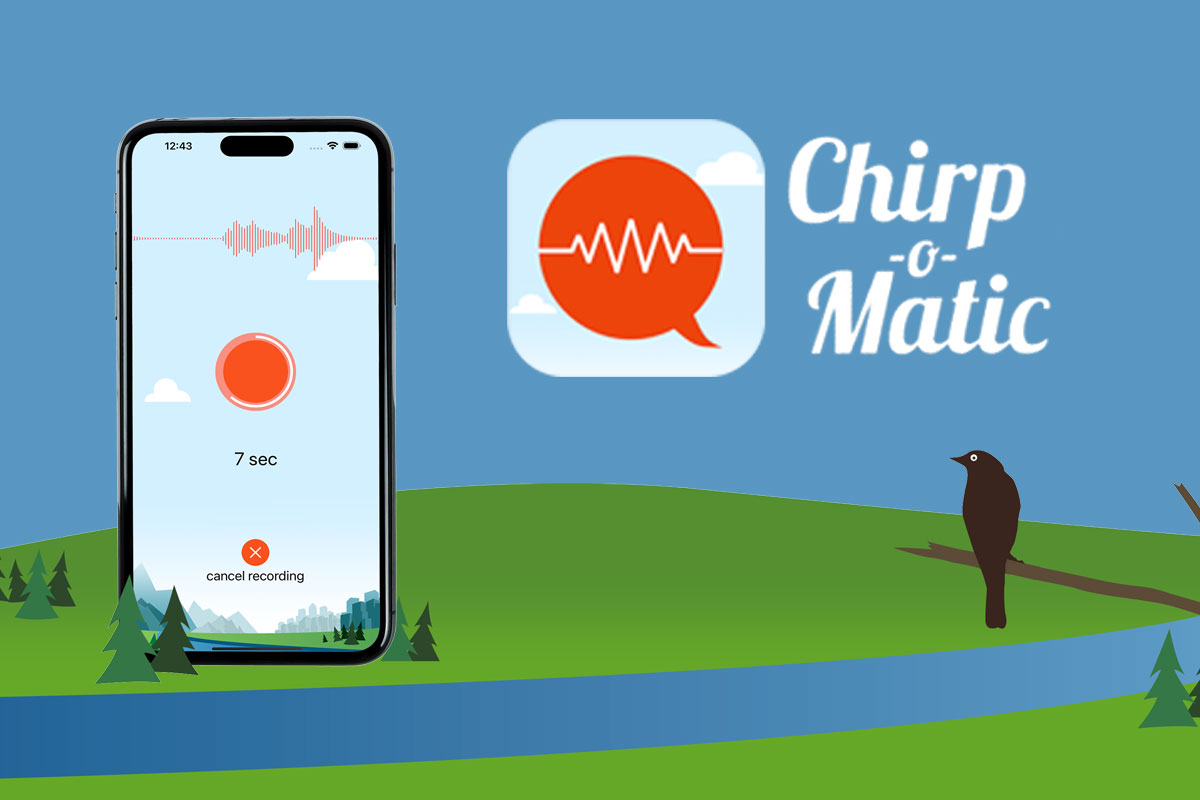
The Pro upgrade unlocks a suite of organizational and educational tools. Subscribers can save, rename, and export recordings to build a personal audio library and enhance their skills through interactive bird-call quizzes. ChirpOMatic’s integration with Apple Watch is a significant convenience for hikers and minimalist birders, allowing direct recording from the wrist, which can later be synced with a phone for identification. The app also includes a thoughtful Bird-safe Mode, which prevents loud playback from disturbing wildlife, underscoring its consideration for the natural environment.
- Platforms: iOS / Android
- Price: Paid
- Best For: Quick, on-the-go sound identification
- Key Feature: Sensitive sound detection and Apple Watch integration
The Technological Underpinnings of Bird Song Recognition
The ability of these applications to accurately identify bird songs relies on a sophisticated technological framework. At its heart is the process of bioacoustic analysis. When a sound is recorded, it is converted into a visual representation known as a spectrogram. This spectrogram is essentially a graph that illustrates the intensity of different frequencies in the sound over time. For bird songs, this visual map is incredibly informative, revealing distinct patterns in pitch, rhythm, and tonal quality that are unique to each species.
This visual data is then processed by advanced machine learning algorithms, specifically Deep Convolutional Neural Networks (CNNs). These AI models are trained on massive datasets containing millions of verified bird vocalizations. By analyzing countless examples, the CNN learns to identify the subtle acoustic features that differentiate one species’ song from another. The training data, often sourced from institutions like the Macaulay Library, represents a critical element in the accuracy and scope of these identification tools.
Furthermore, the integration of contextual data significantly refines the identification process. By leveraging the smartphone’s GPS and the current date, the apps can filter potential matches based on geographical location and seasonal migration patterns. This ensures that the suggested species are plausible for the user’s specific environment, dramatically increasing the likelihood of an accurate identification. Some applications even offer a "confidence score," providing users with an indication of how certain the AI is about its match. This multi-layered approach, combining raw acoustic data with AI analysis and contextual filtering, allows for remarkable accuracy in identifying birds, even amidst complex sound environments.
The Impact on Birding in the United States
The proliferation of bird song identification apps marks a significant evolution in how Americans engage with avian life. These tools have effectively democratized birding, transforming it from a hobby that once required extensive knowledge of visual identification and field guides into an accessible activity for a broader demographic. Individuals who may have previously found bird identification challenging due to visual impairments, or simply due to the sheer complexity of distinguishing similar species, can now readily identify birds by their songs.

This technological advancement has been particularly impactful for newcomers to birdwatching. Apps like Merlin Bird ID are frequently cited as instrumental in onboarding new enthusiasts, providing immediate feedback and fostering a sense of discovery. For experienced birders, these apps offer a complementary tool to hone their auditory identification skills and verify their observations, while also providing access to vast datasets and research opportunities. The ability to instantly identify a song can transform a casual walk in the park into an educational journey, revealing the hidden diversity of avian life present in even urban environments.
The data generated by these applications also holds immense value for scientific research. Citizen scientists using these apps contribute to a growing body of acoustic data that can be analyzed to track bird populations, migration routes, and the impact of environmental changes on avian species. This collaborative approach between amateur enthusiasts and professional researchers is accelerating our understanding of avian ecology and informing conservation strategies.
Choosing the Right App for Your Birding Style
The selection of the most suitable bird song identification app depends largely on individual preferences and birding goals:
- For Beginners: Merlin Bird ID is the unequivocal recommendation. Its intuitive interface and real-time Sound ID feature make it incredibly easy to start identifying birds immediately. The app’s comprehensive yet accessible nature ensures a positive and encouraging introduction to birding by ear.
- For Travelers and Data Enthusiasts: BirdNET is the top choice. Its extensive global species coverage and focus on scientific contribution make it ideal for exploring diverse ecosystems and for those who wish to engage with ornithological research. The probability scoring system also appeals to users who appreciate a data-driven approach.
- For Aspiring Ornithologists: Song Sleuth offers a unique learning experience. By emphasizing spectrogram analysis, it encourages a deeper understanding of the structure of bird songs, fostering a more profound and analytical engagement with avian vocalizations.
- For Convenience and Portability: ChirpOMatic excels in providing a quick and seamless identification experience. Its sensitive microphone and Apple Watch integration make it perfect for active birders who value efficiency and ease of use in the field.
Tips for Maximizing App Accuracy
To ensure the most accurate results when using bird song identification apps, several best practices should be followed:
- Record Clear Audio: Aim for recordings with minimal background noise. Move away from traffic, wind, or human conversations if possible.
- Get Close (Safely): While respecting the birds’ space, getting closer to the source of the sound generally yields a clearer recording.
- Isolate the Song: If multiple birds are singing, try to focus the recording on a single vocalization. Some apps allow for manual selection of the primary sound.
- Record Longer Segments: Longer, uninterrupted recordings can provide more data for the AI to analyze, leading to more reliable identification.
- Understand Confidence Scores: Pay attention to any confidence scores provided by the app. A lower score may indicate a less certain identification, prompting further investigation.
- Use Multiple Apps: For particularly challenging identifications, comparing results from different apps can be beneficial.
The Future of Avian Acoustic Exploration
In 2026, the integration of technology into birdwatching has reached unprecedented levels, transforming the hobby into a more accessible, informative, and engaging pursuit. The development and widespread adoption of bird song identification apps have opened new avenues for connecting with the natural world. These powerful tools, residing conveniently on our smartphones, demystify the complex symphony of bird vocalizations, turning ambient sounds into discernible species. Whether one is exploring local parks, embarking on migratory bird-watching expeditions, or simply listening to the familiar calls in their backyard, these applications offer a profound opportunity to deepen one’s appreciation and understanding of avian life. The continuous advancements in artificial intelligence and bioacoustics promise even more sophisticated and insightful tools for bird enthusiasts and scientists alike, ensuring that the language of birds will become increasingly intelligible for generations to come.
