


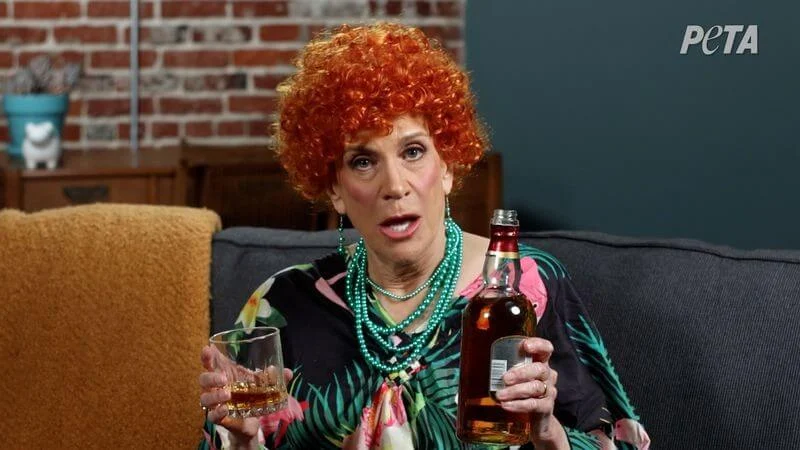
The intersection of comedy and animal advocacy has taken a sharp, serious turn as legendary writer and performer Carol Leifer partners with People for the Ethical Treatment of Animals (PETA) to confront the American Kennel Club (AKC) regarding its promotion of Brachycephalic Obstructive Airway Syndrome (BOAS) affected breeds. Leifer, an Emmy-nominated veteran of iconic television programs such as Seinfeld, Saturday Night Live, Curb Your Enthusiasm, and Hacks, is leveraging her public platform to critique the AKC’s annual "Most Popular Dog Breeds" list. The campaign specifically targets the continued popularity and breeding of French bulldogs, pugs, and English bulldogs—animals categorized by animal welfare organizations as "breathing-impaired breeds" (BIBs).
The campaign features two distinct public service announcements (PSAs) designed to highlight the physical toll taken on dogs bred for flat-faced aesthetics. In the first installment, Leifer utilizes her comedic background to portray "Aunt Doris," a character who embodies the physical struggles of a lifelong smoker. Through this satire, Leifer draws a direct parallel between the labored, audible gasping of the character and the chronic respiratory distress experienced by brachycephalic dogs. The second video shifts to a somber, factual tone, where Leifer discusses the ethics of the breeding industry and the specific health crises inherent in the physical standards set by kennel clubs.
The Scientific Context of Breathing-Impaired Breeds
At the heart of the controversy is the biological reality of brachycephaly, a condition characterized by a shortened skull shape that results in a flattened face. While these features are often prized by breeders and consumers for their "cute" or "human-like" appearance, they come with significant anatomical compromises. Veterinarians frequently diagnose these animals with Brachycephalic Obstructive Airway Syndrome (BOAS), a complex of upper airway abnormalities.
Common anatomical defects in these breeds include stenotic nares (pinched nostrils), an elongated soft palate that obstructs the windpipe, and hypoplastic trachea (an abnormally narrow windpipe). These conditions mean that many French bulldogs and pugs spend their entire lives in a state of oxygen deprivation. What many owners mistake for "snoring" or "grunting" is often the sound of a dog struggling to pull air into its lungs. This chronic struggle can lead to secondary health issues, including heart strain, gastrointestinal distress due to the pressure of labored breathing, and a high susceptibility to heatstroke, as dogs rely on efficient breathing to regulate their body temperature.
The Role of the American Kennel Club and Popularity Trends
The timing of Leifer’s campaign coincides with the AKC’s recent release of its registration data, which showed the French bulldog maintaining its position as the most popular dog breed in the United States. This marks a significant shift in the American canine landscape; for three decades, the Labrador Retriever held the top spot, valued for its athleticism and general health. The ascension of the French bulldog to the number one position has alarmed animal welfare advocates and veterinary professionals alike.
PETA and other critics argue that the AKC’s ranking system acts as a marketing tool that drives demand for breeds with known genetic defects. By celebrating these breeds without emphasizing the severe health risks associated with their physical structure, critics claim the AKC encourages a cycle of "breeding for deformity." The AKC, however, maintains that its mission is to preserve the integrity of purebred dogs and that responsible breeding practices can mitigate health issues. The organization often points to the importance of health testing and responsible ownership, though activists argue that the very "breed standard" for a flat face is inherently incompatible with basic respiratory health.
Chronology of the Brachycephalic Crisis
The debate over breathing-impaired breeds has intensified over the last decade, evolving from niche veterinary concerns to a global animal rights movement.
2012–2016: The rise of social media platforms like Instagram sees a massive surge in the popularity of French bulldogs and pugs. Their unique looks make them highly "marketable" as lifestyle accessories, leading to a spike in demand that fuels both high-end breeding and "puppy mill" operations.
2019: The British Veterinary Association (BVA) launches a campaign urging prospective pet owners to "choose health over looks," specifically discouraging the purchase of flat-faced breeds. This marks a significant turning point where professional medical bodies began taking public stances against the proliferation of BIBs.
2021: The Netherlands begins enforcing strict regulations on the breeding of dogs with short muzzles. The Dutch government establishes a "traffic light" system based on muzzle length, effectively banning the breeding of dogs whose snouts are less than a third of the length of their skull.
2022: A landmark court ruling in Norway effectively bans the breeding of British Bulldogs and Cavalier King Charles Spaniels, citing that the inherent health issues of these breeds violate the country’s Animal Welfare Act. Although the ruling was later nuanced on appeal, it set a legal precedent for treating certain breed standards as inherent cruelty.
2023–2024: The AKC confirms the French bulldog as the most popular breed in the U.S. for the second consecutive year. In response, PETA intensifies its "Stop Breeding Dogs to Suffer" initiative, enlisting high-profile figures like Carol Leifer to bring the issue into the mainstream American consciousness.
Economic and Ethical Implications for Pet Owners
Beyond the ethical concerns regarding animal suffering, the campaign highlights the practical and financial burdens placed on owners of breathing-impaired breeds. Because of their compromised anatomy, these dogs often require expensive corrective surgeries, such as soft palate resections or nares widening, to improve their quality of life.
Furthermore, the breeding of these animals is frequently fraught with complications. Many French bulldogs, for instance, are unable to mate or give birth naturally due to their narrow hips and the large heads of the puppies. This necessitates artificial insemination and nearly universal cesarean sections, adding layers of medical intervention to the reproductive process that critics describe as "industrialized suffering."
The economic impact extends to the pet insurance industry. Many insurers have begun raising premiums or excluding pre-existing respiratory conditions for brachycephalic breeds, leaving owners with substantial out-of-pocket costs. Veterinary organizations report that the high cost of care often leads to "economic surrender," where owners relinquish their pets to shelters because they cannot afford the necessary medical treatments for the dog’s chronic conditions.
Official Responses and Industry Perspectives
While the AKC has not issued a direct rebuttal to Carol Leifer’s specific PSAs, the organization has historically defended its position by emphasizing the role of the breeder. The AKC argues that the problem lies not with the breed standards themselves but with "unregulated" or "irresponsible" breeders who prioritize profit over health. They advocate for a focus on health screening and DNA testing to ensure that only the healthiest individuals are bred.
Conversely, PETA’s stance is absolute: they argue that certain physical traits are so fundamentally flawed that no amount of "responsible" breeding can make them ethical. Leifer’s second video emphasizes this point, suggesting that the industry’s focus on "purity" and "pedigree" is a primary driver of the companion animal homelessness crisis. PETA advocates for a total shift toward adoption from shelters, pointing out that for every dog bred for a specific look, a dog in a shelter loses the opportunity for a home.
Broader Impact on Animal Welfare Policy
The Carol Leifer/PETA campaign is part of a broader shift in how society views the ethics of pet ownership. As the public becomes more educated on the "hidden" suffering of popular breeds, there is growing pressure on kennel clubs and legislative bodies to reform.
In the United Kingdom and parts of Europe, there is ongoing discussion about revising breed standards to require longer muzzles and more open airways. In the United States, while legislative action has been slower, the cultural conversation is shifting. Veterinary clinics are increasingly vocal about the "normalization" of respiratory distress, urging owners to recognize that a dog panting heavily in mild weather is not "cute," but is in fact in medical distress.
The campaign also touches upon the "homelessness crisis" mentioned in Leifer’s pledge. With millions of dogs entering U.S. shelters annually, the promotion of "designer" breeds—especially those with guaranteed health issues—is seen by advocates as a failure of social responsibility. The call to "Adopt, Never Buy" serves as the foundational message of the campaign, aiming to decouple the status of pet ownership from the aesthetics of specific, troubled breeds.
Analysis of the Celebrity Advocacy Strategy
The use of Carol Leifer represents a strategic choice by PETA. By using humor through the "Aunt Doris" character, the campaign lowers the barrier to entry for a difficult conversation. Satire allows the audience to acknowledge the absurdity of the situation—that humans have intentionally bred an animal that cannot breathe properly—without feeling immediately defensive. However, by following the humor with a factual, "no punchlines" video, the campaign ensures that the gravity of the medical reality is not lost.
Leifer’s history with high-profile, critically acclaimed television gives the message a level of "prestige" and reach that traditional activism might lack. It targets a demographic that values sophisticated entertainment and may own these breeds as status symbols or lifestyle companions.
Conclusion
The collaboration between Carol Leifer and PETA serves as a high-visibility challenge to the status quo of the American canine industry. By targeting the American Kennel Club’s most popular breeds, the campaign forces a public reckoning with the costs of aesthetic-driven breeding. As the scientific community continues to document the lifelong struggles of breathing-impaired breeds, and as international legal precedents begin to shift against the breeding of "deformed" animals, the pressure on domestic organizations like the AKC is likely to mount. The message from Leifer and PETA is clear: the "joke" of the gasping, snoring dog is over, replaced by a demand for a breeding culture that prioritizes the basic biological ability to breathe over the vanity of a flattened face.
