


One of the most surprising things new birdwatchers discover is how often common birds are misnamed. This phenomenon is not exclusive to novices; even individuals with years of casual bird observation often find themselves using incorrect names for familiar species. This common pitfall doesn’t stem from a lack of attention, but rather from the inherent visual similarities between many bird species, particularly when observed briefly, from a distance, or under less-than-ideal lighting conditions. Understanding the typical sources of avian confusion is the first step toward mastering bird identification.

The challenge of distinguishing between similar species is a universal aspect of ornithology, from casual backyard birding to professional ecological surveys. The United States, with its diverse avian populations and widespread human habitation, presents numerous opportunities for such mix-ups. This article delves into some of the most frequently confused bird species in the U.S., exploring the reasons behind these common errors and offering insights to help distinguish them.
The Ubiquitous "Blackbird" That Isn’t Always a Blackbird
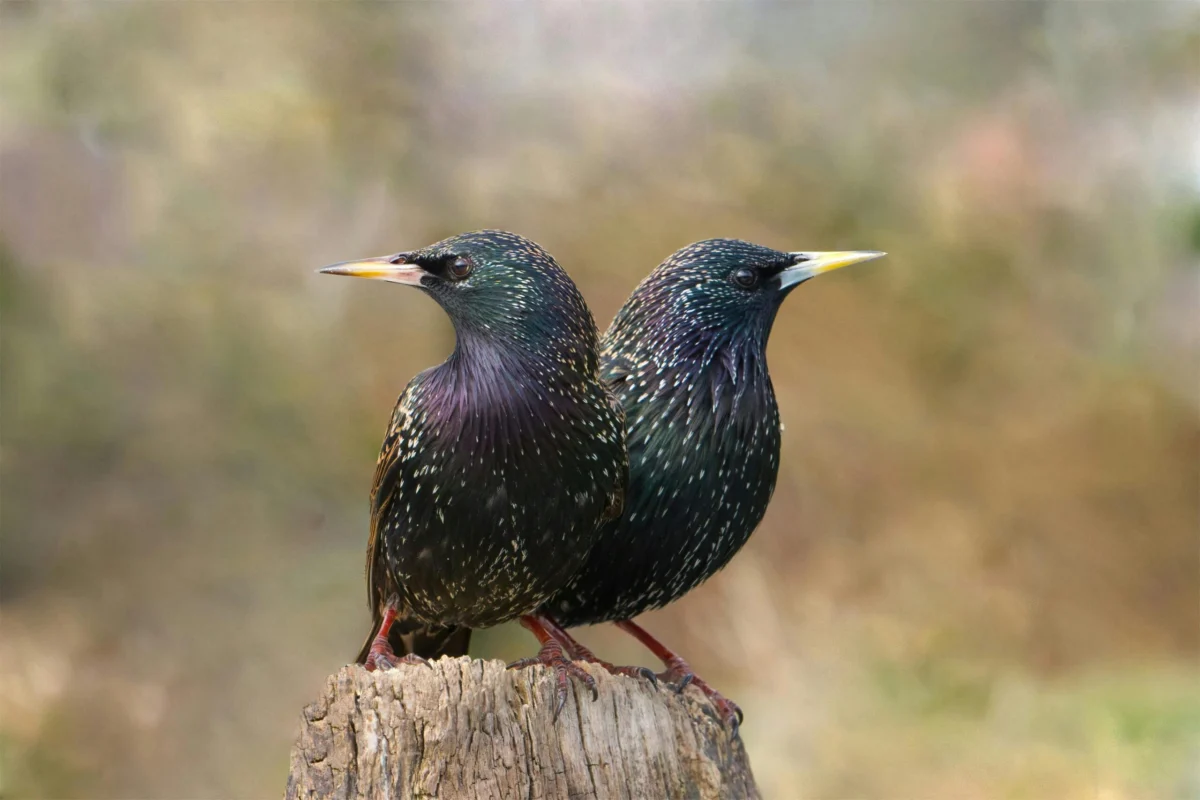
A frequent source of misidentification arises from the generalized term "blackbird," often used to describe any medium-sized dark bird. This broad categorization frequently lumps together several distinct species, including European Starlings, Common Grackles, and American Crows. European Starlings, in particular, are a primary culprit for this confusion. Their widespread presence across urban and suburban landscapes, coupled with their generally dark appearance from a distance, makes them a common subject of misidentification.

The key to differentiating these dark avians lies in observing their size, behavior, and specific vocalizations. European Starlings are relatively small and often seen foraging in noisy flocks, exhibiting quick, darting movements. Common Grackles are larger, possess iridescent plumage that shimmers with purple and green hues, and often display a more confident, upright stance. American Crows, the largest of this group, are typically observed flying overhead or heard issuing their characteristic loud "caw." While all are black or dark in color, subtle differences in size, flight patterns, and vocalizations provide crucial distinguishing features. For instance, starlings are known for their ability to mimic other birds’ songs, adding another layer of complexity to their identification.
Downy Woodpecker vs. Hairy Woodpecker: A Tale of Two Similar Slaters
The Downy Woodpecker and the Hairy Woodpecker present a classic case of "likeness" causing significant confusion for many observers. At first glance, these two species appear remarkably similar, both featuring black and white checkered patterns on their backs and wings, along with a distinctive white stripe down their backs. However, the most significant difference, and often the most overlooked, is their size.
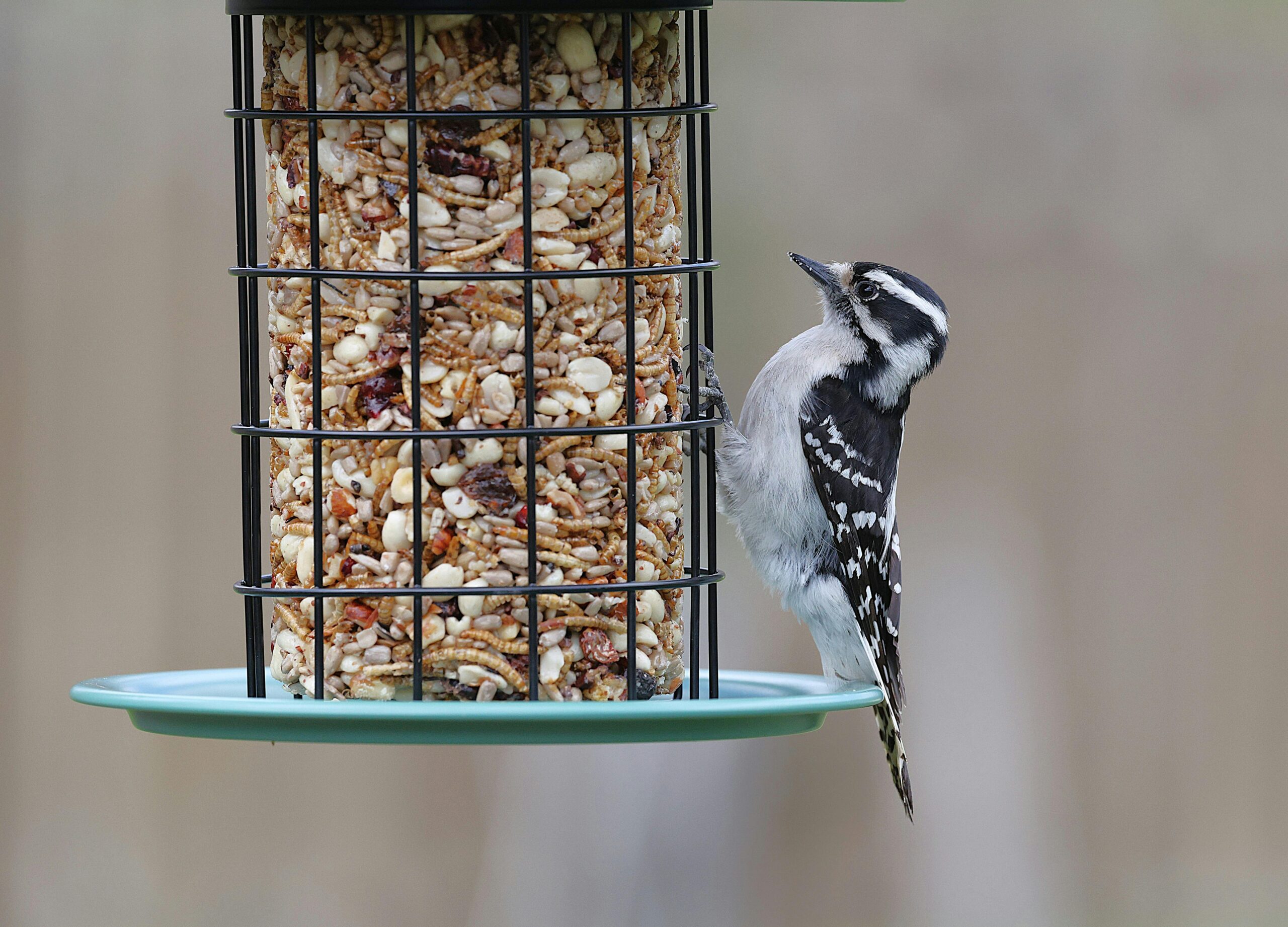
The Downy Woodpecker is the smaller of the two, typically measuring around 5.5 inches in length. It is a frequent visitor to backyard bird feeders and is commonly found in smaller trees and shrubs. In contrast, the Hairy Woodpecker is noticeably larger, often reaching lengths of 7 to 8 inches, comparable in size to a robin. Its bill is also proportionally larger and more robust than that of the Downy. The subtle difference in size can be difficult to ascertain when birds are not seen side-by-side or when the observer is not accustomed to their relative proportions.
A useful mnemonic to remember the difference is that the "Hairy" woodpecker has a hair-raisingly larger bill, while the "Downy" woodpecker is smaller and more delicate. Furthermore, the Downy Woodpecker often exhibits more black barring on its white tail feathers, while the Hairy Woodpecker’s tail is predominantly white. Observing their foraging behavior can also offer clues; Downy Woodpeckers tend to be more acrobatic and will often cling to smaller branches and stems, while Hairy Woodpeckers often forage on larger tree trunks.

American Crow vs. Common Raven: Giants of the Sky
Large black birds soaring or perched high above are frequently identified as American Crows, but the Common Raven is also a prevalent species across many parts of the United States, leading to frequent misidentification. Both are intelligent, corvid birds, sharing a similar glossy black plumage. However, several key differences can help distinguish them.
Ravens are significantly larger than crows, often appearing almost hawk-like in size. Their bills are heavier and thicker, and their throat feathers (hackles) can appear shaggier. In flight, ravens are distinguished by their tendency to soar and glide, often performing aerial acrobatics, whereas crows typically exhibit a more direct, steady flapping flight. The most striking difference, however, is their vocalization. Crows are known for their familiar "caw-caw" sound, while ravens possess a much deeper, resonant "croonk" or "gronk," often accompanied by a variety of clicks and whistles. The ability to distinguish these calls can be a crucial identifier, though it requires attentive listening.

The geographic distribution also plays a role. While crows are found in a wide array of habitats, ravens are more often associated with wilder, more open country, including mountains, deserts, and coastlines, although they can also be found in some wooded areas and even urban peripheries. When observing large black birds, paying attention to flight style, size, bill shape, and particularly their calls will greatly aid in accurate identification.
American Robin vs. Northern Mockingbird: The Lawn Dwellers
At a superficial glance, the American Robin and the Northern Mockingbird can appear surprisingly similar. Both are medium-sized birds commonly found in residential areas, often seen on lawns, fences, and open perches. Their upright posture and general body shape can lead to quick assumptions of identity, especially when viewed from a distance.

However, distinct behavioral and physical characteristics emerge upon closer inspection. The American Robin is characterized by its iconic rusty-orange breast and a relatively short, square tail. They are renowned for their habit of hopping across lawns, head cocked, in search of earthworms and other invertebrates. Their song, while pleasant, is typically a series of melodic, clear whistles.
The Northern Mockingbird, on the other hand, is a more uniformly gray bird with a longer, more distinctly notched tail. Their behavior is often more conspicuous; they are known for their bold territorial displays and their remarkable vocal abilities. Mockingbirds are exceptional mimics, incorporating the songs of other birds, insects, and even mechanical sounds into their complex and varied repertoire. They are often heard singing for extended periods, even at night, from prominent perches such as rooftops or tall trees. Associating the constant, varied singing with the mockingbird is a key differentiator.

House Sparrow vs. House Finch: Common Backyard Visitors
These two small, often brown-colored birds are ubiquitous in backyards and at bird feeders across the United States, leading to persistent confusion. Both species are well-adapted to human environments and frequently interact with our daily lives.
The House Sparrow, an introduced species from Europe and Asia, tends to be a stockier bird with a plainer, more subdued coloration. Males have a black bib, gray crown, and rufous nape. Females are uniformly streaky brown. They often exhibit a more gregarious and somewhat aggressive behavior at feeders, sometimes dominating the space.

The House Finch, native to the western United States but now established in the East, presents a more vibrant appearance, especially in males. Males display striking reddish-pink or strawberry-colored streaks on their head, breast, and rump, contrasting with their brown wings and back. Females are streaky brown but lack the red coloration. House Finches are generally slimmer than House Sparrows and tend to have a more cheerful, chirping vocalization. The presence of red coloration in males is the most obvious distinguishing feature, but even in females, subtle differences in bill shape and head pattern can be observed by experienced birders.
A detailed guide by David Sibley, a renowned ornithologist and illustrator, offers further in-depth distinctions between these two common species, highlighting subtle plumage and behavioral nuances that can aid in accurate identification. This resource underscores the ongoing effort by experts to clarify these often-confused avian neighbors.

Mourning Dove vs. Rock Pigeon: Urban Avian Companions
The Mourning Dove and the Rock Pigeon, while belonging to different families, share similar habitats and are often seen in close proximity, leading many to assume they are variations of the same bird. Both species are common in urban and suburban areas, frequently observed on rooftops, fences, and open ground.
The Rock Pigeon, also known as the Rock Dove, is a larger, bulkier bird with a wider variety of plumage colors, including iridescent grays, greens, and purples. They are highly social and often gather in flocks, particularly in areas with readily available food sources like city centers. Their flight is typically direct and powerful.

In contrast, the Mourning Dove is a more slender bird with a distinctly long, pointed tail. Their plumage is a soft, grayish-brown with delicate black spots on the wings. They are known for their gentle, quiet demeanor and their soft, mournful cooing call. Their movements are often described as more delicate and graceful. The combination of their slender build, long tail, and softer vocalizations clearly differentiates them from the more robust and gregarious Rock Pigeon.
Chickadee vs. Titmouse: Tiny Tree-Dwellers
Small, active gray birds flitting through trees and visiting feeders often fall under the general mental category of "chickadee" or "titmouse." While both are charming and common, they possess distinct features.

Chickadees, such as the Black-capped Chickadee or Carolina Chickadee (depending on region), are characterized by their small size, round heads, and striking black cap and bib, contrasting sharply with their white cheeks. Their movements are quick and energetic, and their vocalizations are high-pitched, often sounding like "chick-a-dee-dee-dee."
Tufted Titmice, on the other hand, are slightly larger and possess a prominent crest on their head, which they can raise or lower. They are uniformly gray on their upperparts and have a paler, whitish underside. Their bill is darker and more pointed than that of a chickadee. While both species are active foragers, the titmouse’s crest and larger size are key identifiers. Their calls also differ, with the titmouse often emitting a clear, whistled "peter-peter-peter." Observing the head shape and size is crucial for differentiating these delightful small birds.

Blue Jay vs. Other "Blue Jays": Regional Variations
The vibrant Blue Jay is a familiar sight in the eastern and central United States, instantly recognizable by its brilliant blue, black, and white plumage and its distinctive crest. However, the term "blue jay" can sometimes lead to confusion when encountering similar-looking species in other parts of the country.
In western North America, species like the Steller’s Jay and the California Scrub-Jay share the characteristic blue coloration but exhibit significant differences in pattern and overall appearance. Steller’s Jays, for instance, have a dark, almost black, head and neck that transitions into blue on the body, and they possess a prominent crest. California Scrub-Jays are a brighter blue on the back and wings, with a paler underside and a more subdued head marking.

The common Blue Jay is characterized by its strong black barring on the wings and tail, its black necklace, and its prominent crest. If a bright blue bird is seen with these features and is known to inhabit the eastern or central U.S., it is almost certainly a Blue Jay. Regional guides and field observations are essential for distinguishing between these different species of jays.
Why Misidentification is a Normal Part of the Learning Process
It is crucial to understand that misidentifying birds is not a sign of failure but an intrinsic and expected part of the learning process in birdwatching. Each instance of confusion presents an opportunity for deeper observation and a better understanding of avian diversity. Bird identification is fundamentally built upon repeated observation. The more time an individual spends observing a particular species, the more adept they become at recognizing subtle distinctions in plumage, size, shape, movement, and behavior.

Even seasoned ornithologists and experienced birders occasionally misidentify birds, particularly under challenging conditions such as poor lighting, inclement weather, or when observing birds at significant distances. These challenges are inherent to fieldwork and underscore the complexity of accurate identification. The process is one of continuous learning and refinement.
A Reassuring Thought for Aspiring Birders
For anyone who has ever identified a bird incorrectly, only to realize their mistake later, rest assured: you are engaging in the very practice that defines birdwatching. The journey of learning bird identification is not about achieving immediate perfection. Instead, it is a continuous process of careful observation, pattern recognition, and the gradual assimilation of knowledge about the birds that inhabit our shared environments. The very act of questioning one’s own identification is a powerful indicator that one is becoming a more astute and attentive observer. This curiosity and willingness to learn are the hallmarks of a dedicated birder.

The ongoing study of bird identification involves not just visual cues but also an appreciation for the ecological roles these species play. For example, the presence of certain species can indicate habitat health, while shifts in migratory patterns can signal broader environmental changes. Understanding common misidentifications is therefore not just about naming birds; it is about fostering a deeper connection with the natural world and contributing to citizen science efforts that monitor avian populations. As birdwatchers become more adept, they can contribute valuable data to conservation initiatives, helping to protect these diverse species for future generations.
