


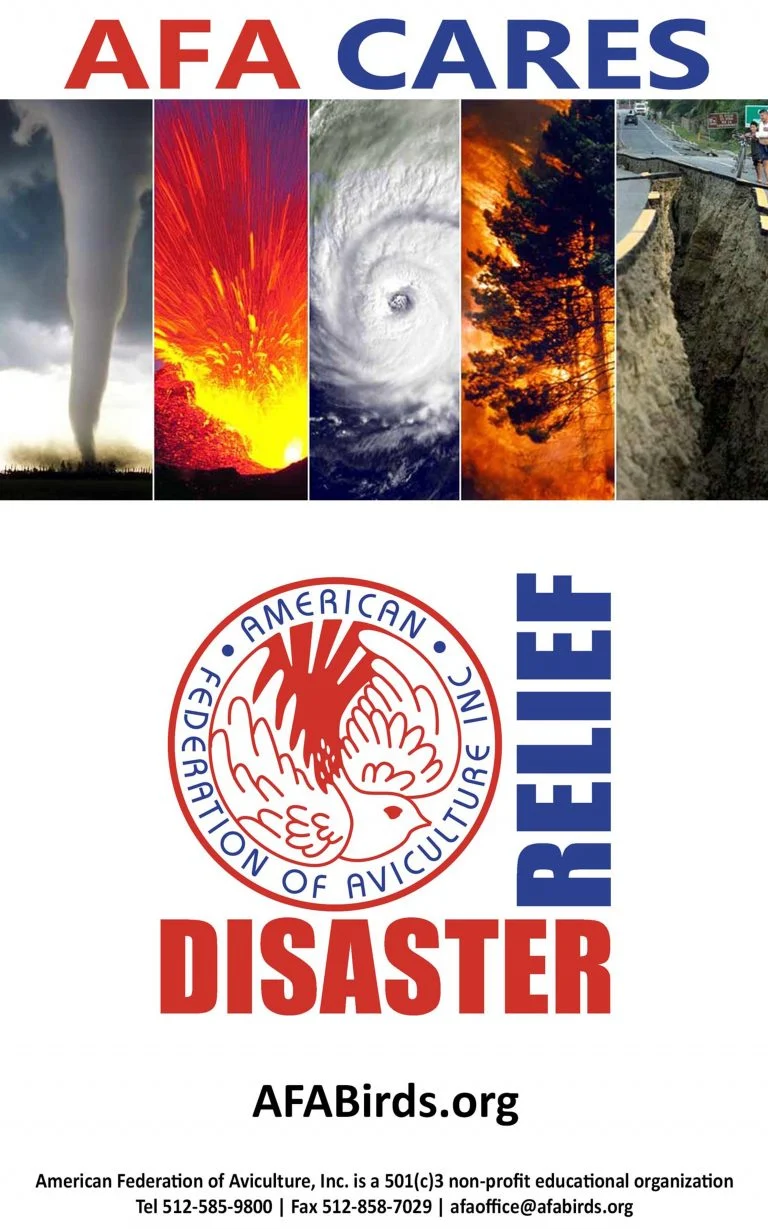
The American Federation of Aviculture (AFA) has formalized a comprehensive emergency response framework designed to safeguard avian populations during large-scale natural disasters. By utilizing a decentralized network of Regional Directors and local volunteers across the United States, the AFA Disaster Relief Team provides a specialized layer of support that traditional emergency services often lack. This initiative, developed in conjunction with insights from emergency management experts like Mary Ellen LePage, a former Fire Chief for CalFire, addresses the unique physiological and logistical challenges inherent in bird rescue. As climate-related events increase in frequency and severity, the necessity for a structured, avian-specific disaster plan has become a critical component of modern aviculture.
The Infrastructure of Avian Disaster Response
The AFA’s disaster response model is built upon the principle of rapid, localized mobilization. Unlike broader animal rescue organizations that may prioritize domesticated mammals like dogs and cats, the AFA focuses exclusively on the needs of birds, which are highly susceptible to stress, temperature fluctuations, and airborne toxins. The organization’s Regional Directors monitor weather patterns and geological threats within their specific jurisdictions, allowing them to notify local volunteers before a disaster reaches its peak intensity.
This proactive stance is essential because birds possess a highly efficient but sensitive respiratory system. In events such as wildfires, the presence of smoke can be fatal to birds long before the actual flames reach a property. By establishing a chain of command that mirrors professional emergency services, the AFA ensures that bird owners have a direct line to assistance when standard evacuation routes are compromised or when specialized equipment is required.
Chronology of a Disaster: From Warning to Recovery
Effective disaster management for bird owners follows a specific timeline divided into three distinct phases: the Preparedness Phase, the Response Phase, and the Recovery Phase.
The Preparedness Phase: Mitigating Risk Before the Event
The cornerstone of avian safety is pre-emptive planning. Experts suggest that bird owners should not wait for an official evacuation order to begin preparations. This phase involves the assembly of "go-bags" and the identification of secondary housing.
- Supply Management: Owners are encouraged to maintain a fleet of pre-assembled or collapsible carriers. These must be equipped with perches and spill-proof water dishes.
- Documentation: Proof of ownership is a frequent hurdle during post-disaster reunification. The AFA recommends maintaining duplicate records, including photographs, leg band numbers, and microchip data, stored in a cloud-based system or a remote physical location.
- Logistical Mapping: Identifying several relocation sites—such as barns, garages, or vacant commercial spaces—outside of the immediate danger zone is vital.
The Response Phase: Immediate Action and Evacuation
When a disaster is imminent, the timeline for action narrows significantly. The AFA emphasizes a "when in doubt, get out" philosophy. In this phase, the focus shifts to physical transport and navigating the complexities of emergency zones.

- Transportation Logistics: Larger avian collections require specialized vehicles with climate control and adequate ventilation. If rental vehicles are utilized, owners must ensure the cargo areas are not airtight.
- Navigation: In the event of destroyed infrastructure, street signs may be missing. Owners and rescuers are advised to know their GPS coordinates to facilitate location by emergency teams.
The Recovery Phase: Stabilization and Reunification
The period following a disaster is often the most dangerous for displaced birds. Stress-induced illnesses and the difficulty of returning birds to their original owners require a coordinated effort. The AFA assists in locating long-term temporary housing and facilitates the return of birds through its documented registration system.
Technical Requirements for Avian Evacuation
The physical requirements for moving birds during a crisis are vastly different from those of other pets. Aviculturists must account for the specific hardware needed to dismantle cages or retrieve birds from large flights. A dedicated emergency toolkit is a prerequisite for any serious disaster plan.
According to technical guides provided by the AFA, this toolkit should include wire cutters, heavy-duty nets, towels, and gloves. In cases of structural collapse or downed trees, more robust equipment like chainsaws may be necessary to access aviaries. Furthermore, the standardization of equipment is a key efficiency factor; experts recommend "keying" all cage locks to a single master key to prevent the loss of critical minutes during a fast-moving fire or flood.
Navigating the Incident Command System (ICS)
One of the primary challenges in animal rescue is gaining access to restricted areas. Major disasters in the United States are managed under the Occupational Safety and Health Administration (OSHA) Incident Command System (ICS). This standardized approach ensures that all government and volunteer agencies report to a single Incident Commander.
For AFA disaster relief volunteers, understanding the hierarchy of the ICS is essential. Police and fire departments are often instructed to deny entry to civilians once an evacuation order is in place. To bypass these restrictions, the AFA provides its volunteers with official credentials, including magnetic vehicle signs, T-shirts, and identification cards. These markings identify the carrier as a legitimate rescue operation, which can be critical when requesting permission from an Incident Commander to enter a restricted zone to save animal lives.
Data and Implications: The Scale of the Avian Community
The importance of specialized avian relief is underscored by the sheer number of birds in domestic care. Data from the American Veterinary Medical Association (AVMA) indicates that millions of households in the U.S. own birds. Unlike dogs or cats, which are often accommodated in standard emergency shelters, birds require specific environmental conditions that general shelters cannot provide.
The lack of avian-specific infrastructure in public sheltering systems means that the burden of care falls almost entirely on private organizations like the AFA and local bird clubs. Analysis of past events, such as Hurricane Katrina or the California wildfires, shows that pet owners are significantly more likely to refuse evacuation orders if they cannot take their animals with them. By providing a viable evacuation path for birds, the AFA indirectly improves the safety of human owners by encouraging timely departures from danger zones.
Instructions for Volunteer Rescuers and First Responders
For those acting in a rescuer capacity, the AFA provides strict protocols to ensure both human and avian safety. The organization stresses that volunteers should only attempt to rescue birds whose lives are under immediate threat and should never compromise their own safety to do so.
- Handling Procedures: Rescuers are encouraged to work in pairs and to seek training from local AFA-affiliated bird clubs on how to handle "wild" or non-tame birds. The use of towels and nets is preferred to minimize stress and prevent injury to the bird’s wings or respiratory system.
- Identification Integrity: Rescuers are strictly prohibited from removing leg bands. Instead, they are instructed to use markers to annotate crates with the bird’s original location and any identifying features.
- Alternative Housing: In the absence of professional carriers, rescuers may use ventilated plastic storage boxes, cardboard boxes, or even paper bags for smaller species as a last resort.
Official Responses and Broader Community Impact
The AFA’s disaster relief program has been met with support from the broader avicultural community and regional emergency planners. By creating a bridge between private owners and the official Incident Command System, the AFA has professionalized the niche field of bird rescue.
The broader implications of these efforts extend to the conservation of rare and endangered species. Many private aviculturists hold significant populations of birds that are rare in the wild. The loss of these collections during a natural disaster would represent a significant blow to global avian biodiversity. Thus, the AFA Disaster Relief Team serves not only as a humanitarian effort but also as a vital safeguard for genetic diversity within the avian kingdom.
Conclusion and Contact Information
The American Federation of Aviculture continues to refine its disaster protocols as new environmental challenges emerge. The organization remains the primary point of contact for bird owners facing emergencies. For those in immediate need of assistance or those wishing to join the volunteer relief network, the AFA maintains a dedicated business office and emergency communication channels.
Owners and rescuers can reach the AFA Disaster Relief Team via their main office at 512-585-9800 or through email at [email protected]. By fostering a culture of preparedness and maintaining a disciplined response network, the AFA ensures that the avian community remains resilient in the face of an increasingly volatile climate. The integration of expert advice, such as that from former Fire Chief Mary Ellen LePage, ensures that these protocols are not just theoretical but are grounded in the realities of emergency management and life-saving operations.
