

The largest daily newspaper in the Netherlands, De Telegraaf, has issued a formal retraction and removed a featured news story from its digital platforms after it was revealed that the report centered on a non-existent person and was supported by an AI-generated photograph. The incident, which has sparked a renewed debate regarding editorial vetting processes in the age of generative artificial intelligence, involved a fabricated account of a Dutch national named "Tamara Harema" attempting to organize a private evacuation from the Middle East. The story was published against a backdrop of escalating regional tensions, specifically a reported conflict involving the United States, Israel, and Iran, which provided the dramatic context for the supposed humanitarian crisis.
The Fabricated Narrative of Tamara Harema
The original report, published by De Telegraaf on March 5, was presented under the headline "Dutch people rent their own plane." The article detailed the harrowing efforts of Tamara Harema, described as a Dutch citizen stranded in Muscat, Oman, who was purportedly leading a grassroots initiative to charter a private Airbus A321. According to the report, Harema intended to use the aircraft to evacuate herself and a group of fellow Dutch nationals who felt "abandoned" by their government amid the regional instability.
The narrative provided a compelling human-interest angle to the geopolitical crisis, suggesting that private citizens were forced to take matters into their own hands due to a lack of clear perspective or assistance from the Dutch Ministry of Foreign Affairs. Harema was quoted as being in the process of finalizing the logistics for the flight, which was allegedly scheduled to fly directly from Muscat to the Netherlands without detours. The story gained immediate traction due to its emotional resonance and the prestige of the publishing outlet, which remains a primary source of news for millions of readers in Northern Europe.
Discrepancies and the Bellingcat Investigation
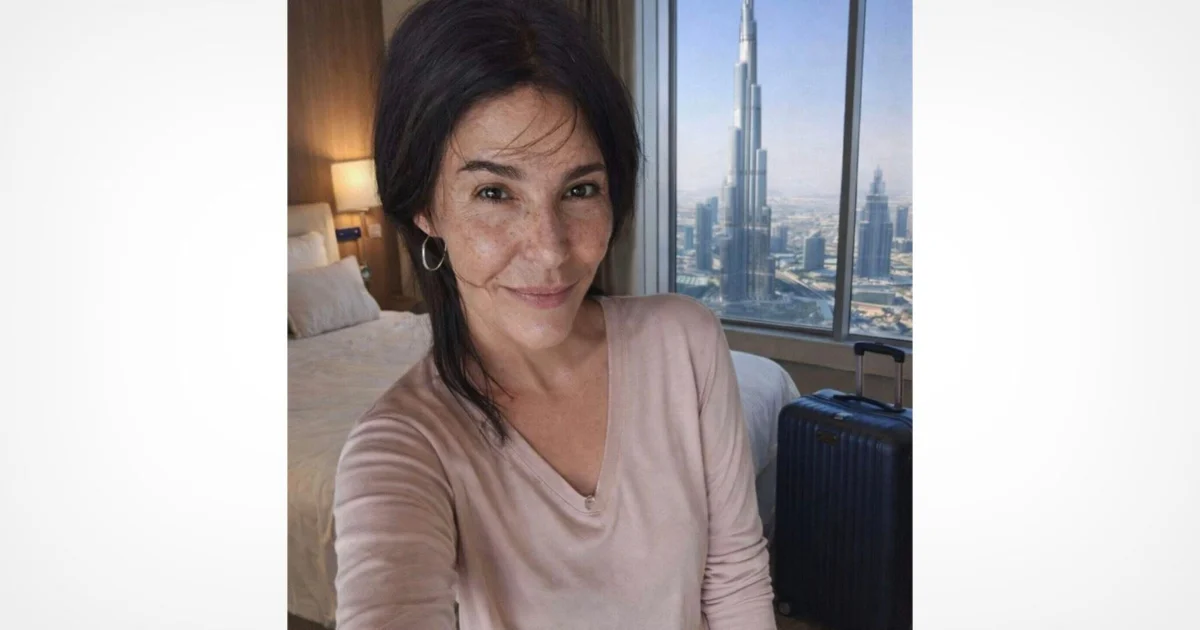
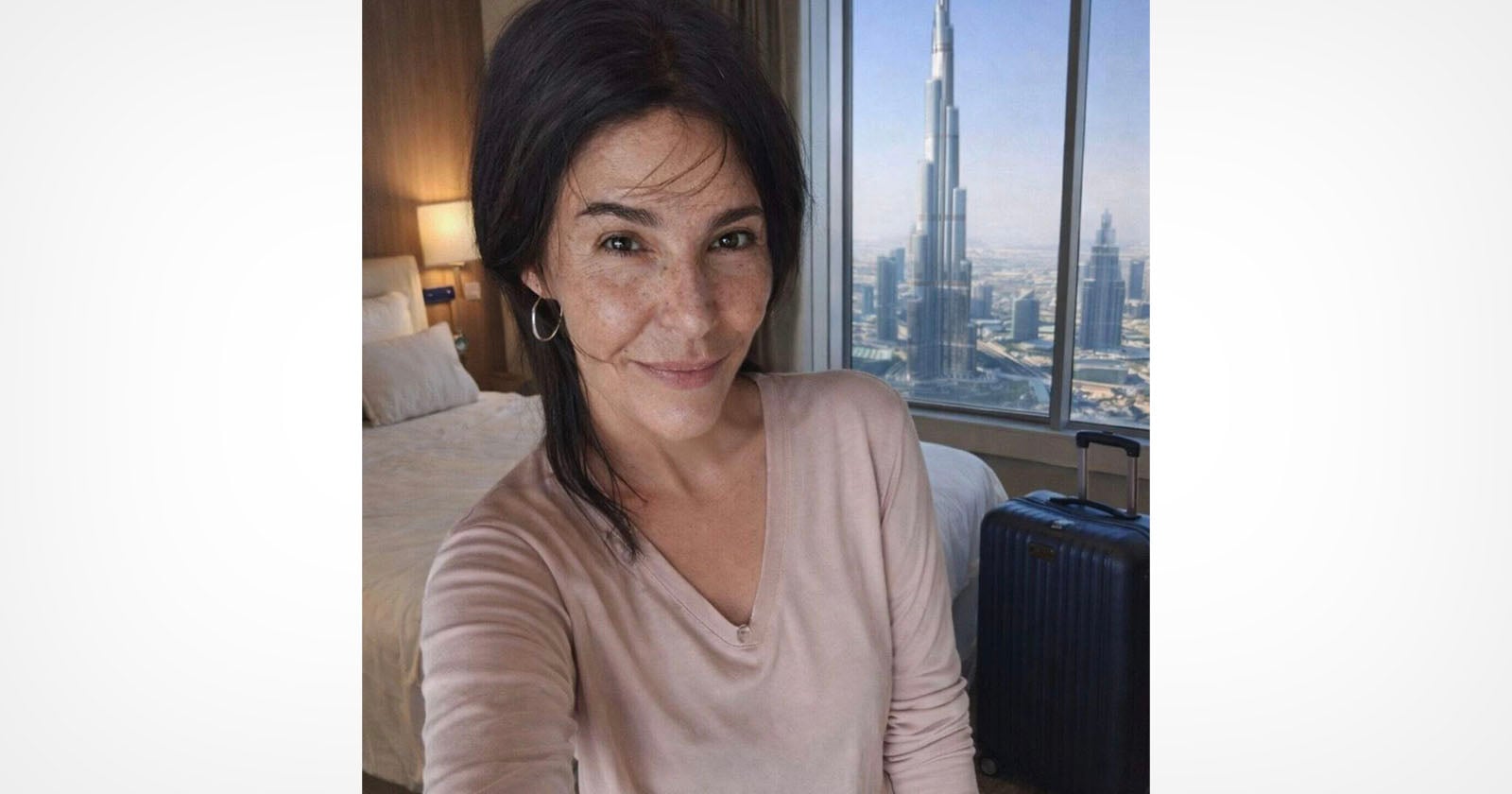
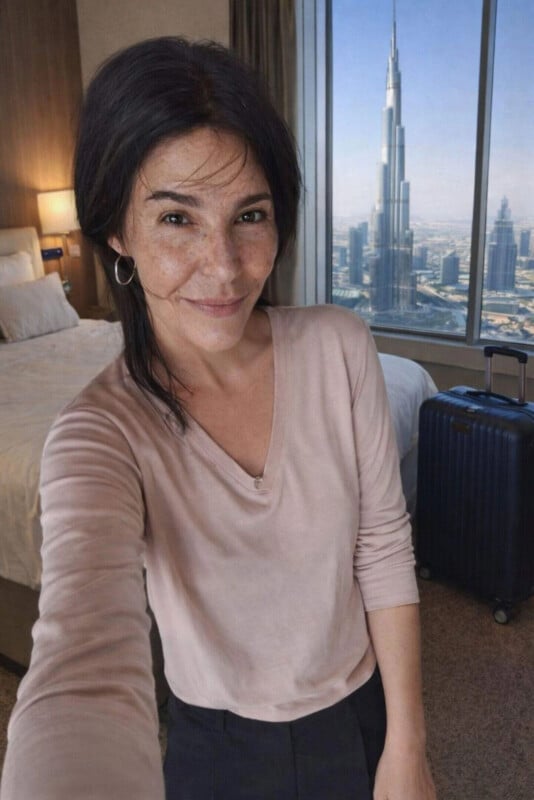
The legitimacy of the story was first brought into question by the investigative collective Bellingcat, which conducted a thorough forensic analysis of the visual and textual evidence provided in the De Telegraaf report. The investigation focused heavily on the "selfie" of Tamara Harema that accompanied the article. While the image initially appeared to be a standard smartphone photograph taken in a hotel room with the Burj Khalifa visible through the window, closer inspection revealed several hallmarks of synthetic image generation.
Forensic analysts identified numerous "AI artifacts"—structural errors often produced by large-scale diffusion models. Among the most prominent discrepancies was the rendering of a bedside lamp in the background; the stem of the lamp appeared physically disconnected or "broken" in a manner inconsistent with reality. Furthermore, the subject’s jewelry exhibited the characteristic lack of symmetry often found in AI-generated humans. Harema’s earrings did not sit naturally against her skin, and the texture of her V-neck shirt was described as "strangely blurred," lacking the defined fabric weave expected in a high-resolution photograph.
The background, while featuring a recognizable rendition of the Burj Khalifa, also contained structural inaccuracies. Despite the AI’s proficiency in recreating the skyscraper—likely due to the vast amount of training data available for the world’s tallest building—investigators noted that specific architectural details were misplaced. One of the building’s tiers was rendered lower than its actual position, and the complex water features and landscaping at the base of the tower were entirely absent.
Flight Data and Logistical Impossibilities
Beyond the visual evidence, the investigative team scrutinized the logistical claims made in the article. The report suggested that Harema was coordinating an Airbus A321 flight from Muscat to the Netherlands on specific dates. Bellingcat cross-referenced these claims with global flight tracking data and airport logs from Muscat International Airport (MCT).
The data revealed that while several Airbus A321 aircraft did depart from Muscat during the timeframe mentioned, none were bound for the Netherlands. Furthermore, the Airbus A321, while capable of mid-to-long-range travel, typically requires specific refueling stops or specialized configurations (such as the A321LR or XLR) for a direct flight of that distance under certain weather conditions. There were no records of any private charters or "repatriation flights" matching the description provided by Harema. The lack of any corresponding flight plans or civil aviation filings further suggested that the entire evacuation plan was a sophisticated fabrication.
The Source and the Breakdown of Vetting
In the wake of the exposure, De Telegraaf’s deputy editor-in-chief addressed the lapse in editorial judgment. The newspaper revealed that the story had been provided to one of its reporters by a "long-standing source" identified as Mr. Chizki Loonstein. Loonstein, a former lawyer who reportedly emigrated to Dubai after the bankruptcy of his legal firm in the Netherlands, had previously been considered a reliable contact for the outlet.
When contacted by investigators, Loonstein initially maintained that Tamara Harema was a real individual and a personal acquaintance. However, he failed to provide any verifiable contact information, social media presence, or secondary proof of her existence. Following repeated inquiries regarding Harema’s identity and the specifics of the Airbus charter, Loonstein reportedly ceased communication.
The incident highlights a significant vulnerability in modern journalism: the "trusted source" bypass. Because the information came from a known entity, the standard verification protocols—such as reverse-image searching the photograph or verifying the subject’s identity through independent channels—were apparently relaxed. This allowed a completely synthetic persona to be presented as a factual participant in a major international news event.
Timeline of the Journalistic Failure
The chronology of the event illustrates the speed at which misinformation can be codified as news by reputable institutions:
- March 5: De Telegraaf publishes the digital article "Dutch people rent their own plane," featuring the AI-generated image of "Tamara Harema."
- March 6–10: The story circulates online, contributing to public discourse regarding the Dutch government’s perceived inaction in the Middle East.
- March 11: Investigative journalists at Bellingcat begin a forensic review of the image and flight logs after noting inconsistencies in the photo’s background.
- March 12: Bellingcat publishes its findings, detailing the AI artifacts and the absence of flight data to support the story.
- March 12 (Late): De Telegraaf removes the article and the photograph from its website, replacing the content with a correction notice.
- March 13: The newspaper’s leadership issues a statement regarding the source of the misinformation and the breach of journalistic guidelines.
Official Response and Retraction
De Telegraaf has since moved to mitigate the damage to its reputation. The original URL now hosts a brief explanatory note stating: “An earlier version of this article contained a passage about renting an Airbus by the Dutch and a photo that presumably did not meet our journalistic guidelines. The passage and the photo in question have been deleted.”
While the newspaper has acknowledged the error, the incident has raised questions about the internal safeguards required to detect AI-generated content. Editorial boards across the globe are currently grappling with the reality that "eyewitness" photos can now be manufactured in seconds, requiring a new level of digital literacy among staff reporters and editors.
Broader Implications for the Media Landscape
The "Tamara Harema" case serves as a landmark example of the "liar’s dividend"—a phenomenon where the existence of AI-generated content makes it easier for bad actors to deceive the public and harder for the public to trust legitimate reporting. In this instance, the deception was not merely a fake photo but an entire fabricated narrative designed to influence public perception of a government’s foreign policy and emergency response capabilities.
The use of an AI-generated persona in a war-related context is particularly concerning for international observers. During periods of geopolitical conflict, the demand for "on-the-ground" stories is high, and the pressure to publish quickly can lead to catastrophic errors. If a major outlet like De Telegraaf can be deceived by a synthetic image of a woman in a hotel room, the potential for more malicious uses—such as faking casualties or war crimes—presents a clear and present danger to global information security.
Experts suggest that this incident will likely lead to the implementation of more rigorous "content provenance" standards. This includes the adoption of digital watermarking and metadata tracking (such as the C2PA standard) to verify the origin of photographs. However, as generative tools become more sophisticated, the "uncanny valley" signs—like broken lamp stems and asymmetrical earrings—will eventually disappear, leaving journalists with the difficult task of verifying the existence of the person behind the lens, rather than just the image itself.
The fallout from the De Telegraaf retraction continues to reverberate through the Dutch media landscape, serving as a cautionary tale for the industry. As newsrooms integrate AI into their workflows, the Harema incident underscores a fundamental truth: technology may change the medium, but the traditional journalistic pillars of skepticism and independent verification remain the only defense against a rising tide of synthetic misinformation.
