


A groundbreaking study examining exceptionally preserved dinosaur fossils, complete with intact feathers, suggests that some of these ancient creatures had already lost the capacity for flight, even though they possessed the very structures associated with it. This revelation, stemming from the analysis of rare specimens from eastern China, is reshaping our understanding of avian evolution and the intricate pathways by which flight developed and, in some cases, was abandoned. The research, led by Dr. Yosef Kiat of Tel Aviv University’s School of Zoology and the Steinhardt Museum of Natural History, in collaboration with international colleagues from China and the United States, was published in the prestigious journal Communications Biology by Nature Portfolio.
Unveiling Flightless Wonders: The Anchiornis Case
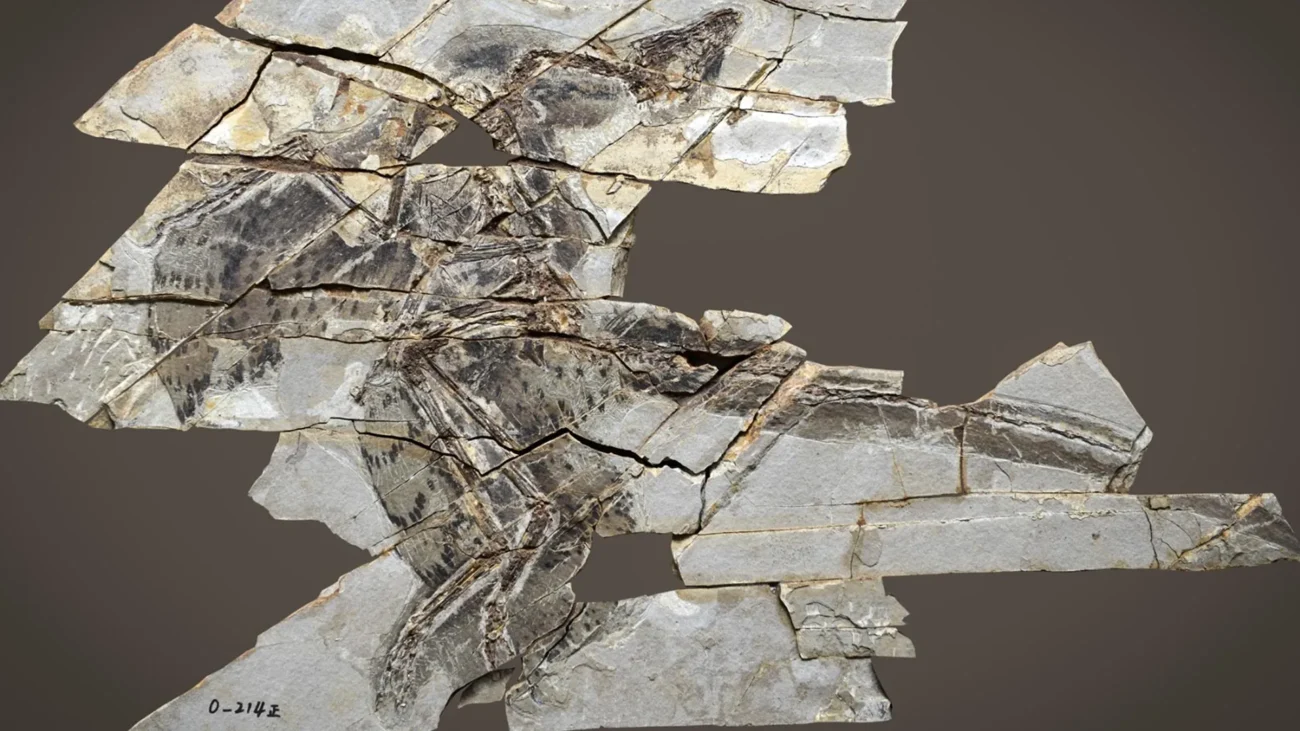
The focus of the study was nine fossil specimens of Anchiornis, a small, feathered dinosaur that roamed the Earth approximately 160 million years ago during the Late Jurassic period. These fossils are remarkably rare not only for their preservation of delicate feather structures but also for retaining their original coloration. This exceptional preservation, attributed to unique fossilization conditions in the region, allowed researchers to scrutinize the feathers with unprecedented detail. Each Anchiornis specimen displayed wing feathers that were strikingly white with a distinct black spot at their tips.
This preserved coloration provided a unique window into the functional biology of these extinct animals, offering insights beyond the skeletal remains typically found in paleontological digs. The research team leveraged this visual evidence to infer the dinosaurs’ physiological processes, particularly their molting patterns, which are intrinsically linked to flight capability in modern birds.
The Science of Molting: A Key to Understanding Flight
Dr. Kiat, an ornithologist with a specialization in feather research, elucidated the critical role of molting in deciphering the flight abilities of extinct creatures. He explained that feathers, which are lightweight, protein-based structures that evolved for a variety of purposes including flight and thermoregulation, undergo a continuous cycle of growth and replacement. This process, known as molting, is not a uniform phenomenon across all feathered animals.
"Feathers grow for two to three weeks," Dr. Kiat stated. "Reaching their final size, they detach from the blood vessels that fed them during growth and become dead material. Worn over time, they are shed and replaced by new feathers—in a process called molting, which tells an important story: birds that depend on flight, and thus on the feathers enabling them to fly, molt in an orderly, gradual process that maintains symmetry between the wings and allows them to keep flying during molting. In birds without flight ability, on the other hand, molting is more random and irregular. Consequently, the molting pattern tells us whether a certain winged creature was capable of flight."
In flight-dependent species, molting is a carefully orchestrated event. To maintain aerodynamic stability and the ability to fly, feathers are shed and replaced in a sequential, asymmetrical manner. This ensures that at any given time, the bird retains sufficient wing surface area and balance to continue flying. Conversely, flightless birds, which do not rely on their wings for locomotion, exhibit more erratic and less organized molting patterns. Their feathers are shed and replaced without the evolutionary imperative to maintain flight symmetry.
Decoding the Fossil Record: Irregular Molting in Anchiornis
The meticulous examination of the Anchiornis fossils revealed a continuous line of black spots along the edges of the wing feathers. More significantly, the researchers identified developing feathers whose black spots were visibly out of alignment with their mature counterparts, indicating that these new feathers were still in the process of growth. This observation, combined with the overall arrangement of the feathers, led to a crucial conclusion: the molting pattern observed in Anchiornis was irregular and uncoordinated.
This finding strongly suggests that Anchiornis did not rely on its wings for sustained flight. If these dinosaurs had been capable of flight, their molting process would likely have been more orderly, ensuring the continuous maintenance of their flying apparatus. The asynchronous growth and shedding of feathers indicate a lack of the evolutionary pressure to preserve flight functionality.
"Based on my familiarity with modern birds, I identified a molting pattern indicating that these dinosaurs were probably flightless," Dr. Kiat concluded. "This is a rare and especially exciting finding: the preserved coloration of the feathers gave us a unique opportunity to identify a functional trait of these ancient creatures—not only the body structure preserved in fossils of skeletons and bones."
A Complex Evolutionary Tapestry: Beyond a Linear Progression
The implications of this discovery extend far beyond the specific case of Anchiornis. It challenges the long-held assumption that the evolution of feathers directly and inevitably led to the development of powered flight in dinosaurs. Instead, it paints a picture of a much more complex and nuanced evolutionary journey.
Dinosaurs diverged from other reptiles approximately 240 million years ago. A significant evolutionary development occurred around 175 million years ago with the emergence of the Pennaraptora, a group of feathered dinosaurs considered to be distant ancestors of modern birds. This lineage is unique in that it is the only dinosaur group to have survived the catastrophic mass extinction event at the end of the Mesozoic Era, 66 million years ago. While it has been widely believed that Pennaraptora evolved feathers primarily for flight, the Anchiornis findings suggest that this was not a unidirectional or universal progression.
"Feather molting seems like a small technical detail—but when examined in fossils, it can change everything we thought about the origins of flight," Dr. Kiat emphasized. "Anchiornis now joins the list of dinosaurs that were covered in feathers but not capable of flight, highlighting how complex and diverse wing evolution truly was."
Evolutionary Reversals and Diversification
This study introduces the concept of evolutionary reversals in flight capability among feathered dinosaurs. It suggests that some species may have initially developed rudimentary flight abilities or possessed the necessary feather structures for it, only to lose that capacity later in their evolutionary history. This phenomenon is mirrored in modern avian fauna, with numerous species of flightless birds, such as ostriches, emus, kiwis, and penguins, demonstrating that flight is not a permanent evolutionary trait once feathers have appeared.
The presence of flightless feathered dinosaurs underscores the adaptive plasticity of these creatures. Feathers, beyond their role in flight, likely served other crucial functions, including insulation for thermoregulation, display for mating rituals, and potentially even for gliding or assisted leaping. The specific environmental pressures and ecological niches occupied by different dinosaur species would have dictated the ultimate evolutionary trajectory of their feathered appendages.
Supporting Data and Context: The Mesozoic Era and Feather Evolution
The Mesozoic Era, spanning from approximately 252 to 66 million years ago, was a pivotal period for the diversification of life on Earth, and particularly for the evolution of dinosaurs and birds. The Early to Late Jurassic periods, when Anchiornis lived, witnessed the rise of many feathered dinosaur lineages. Paleontological discoveries from sites in China, such as the Liaoning Province, have been instrumental in unearthing exceptionally preserved fossils that provide direct evidence of feather presence and structure in dinosaurs.
The understanding of feather evolution itself has undergone significant refinement. Initially, feathers were thought to have evolved solely for flight. However, discoveries of feathered non-avian dinosaurs, like Sinosauropteryx with its simple, filament-like feathers, have shown that feathers predated flight and likely served other purposes first, such as insulation. The Anchiornis study adds another layer to this understanding, demonstrating that even after the development of complex wing-like feather arrangements, flight was not an inevitable outcome.
Broader Impact and Implications for Paleontology
The implications of this research are profound for the field of paleontology and our understanding of macroevolutionary processes. It emphasizes the need for a multi-faceted approach to reconstructing the biology of extinct animals, moving beyond skeletal morphology to incorporate evidence from soft tissues, coloration, and inferred physiological functions.
The study reinforces the idea that evolution is not a linear march towards increasing complexity or a predetermined outcome. Instead, it is a branching, often circuitous, process driven by environmental factors, genetic variation, and selective pressures. The loss of flight in Anchiornis, despite its feathered wings, serves as a compelling example of evolutionary contingency and adaptation to specific ecological roles.
Furthermore, the ability to infer functional traits from preserved coloration opens up new avenues for research. Future studies may be able to glean information about diet, behavior, and even sensory capabilities from the fossilized pigments of ancient animals, provided such exceptionally preserved specimens are discovered.
The collaborative nature of this research, involving scientists from different institutions and countries, highlights the global effort required to push the boundaries of scientific knowledge. The publication in Communications Biology signifies the peer-reviewed validation of these significant findings, making them accessible to the broader scientific community.
Looking Ahead: Unraveling More Evolutionary Mysteries
The discovery about Anchiornis is a testament to the ongoing revelations that can emerge from meticulous study of the fossil record. As new fossil sites are explored and analytical techniques become more sophisticated, our understanding of the ancient world continues to evolve. This research not only sheds light on the origins of flight but also on the diverse evolutionary paths taken by one of Earth’s most iconic groups of animals. The complexity of wing evolution, as revealed by the flightless Anchiornis, suggests that many more surprises may await paleontologists as they continue to unearth the secrets of the Mesozoic past. The journey from feathered dinosaurs to modern birds is proving to be a far richer and more intricate narrative than previously imagined, marked by both the acquisition and, in some fascinating instances, the relinquishment of the power of flight.
