


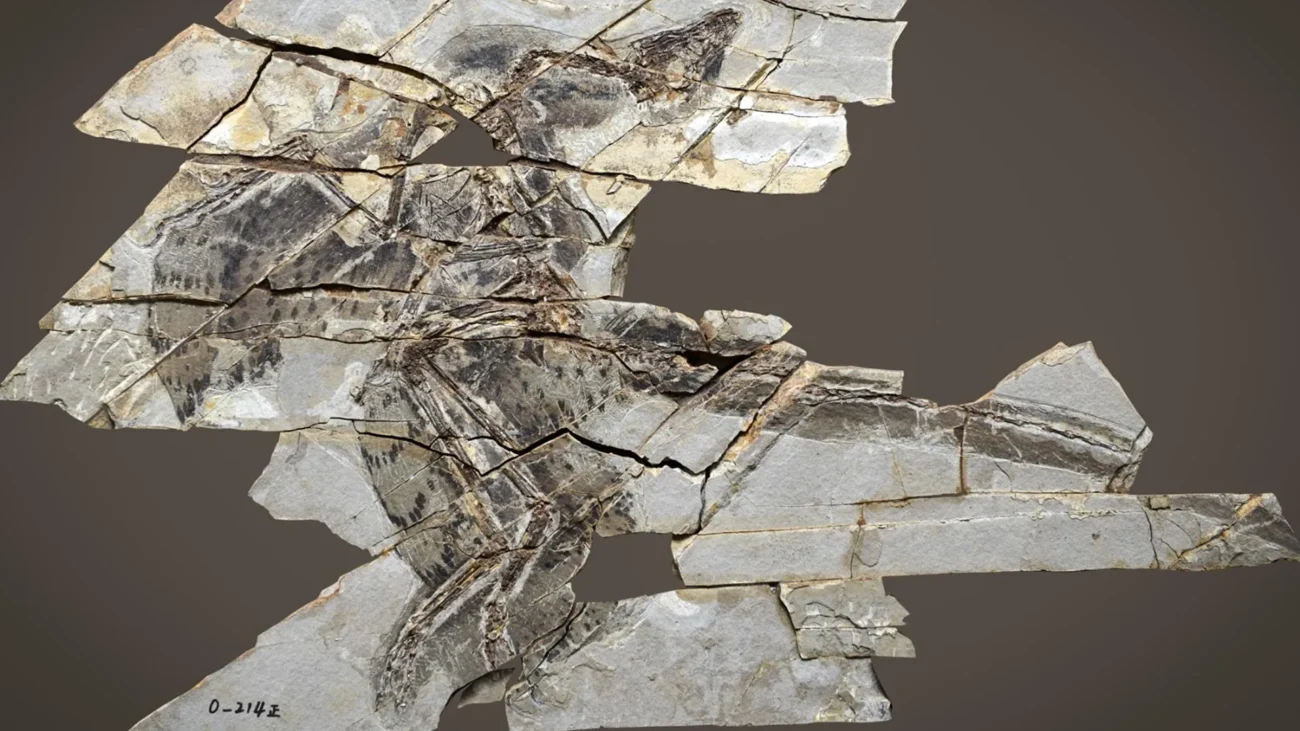
A groundbreaking new study, meticulously analyzing exceptionally preserved dinosaur fossils, suggests that some feathered dinosaurs, once thought to be pioneers of flight, may have actually lost the capacity for aerial locomotion. The research, spearheaded by Dr. Yosef Kiat of Tel Aviv University’s School of Zoology and the Steinhardt Museum of Natural History, in collaboration with international colleagues, offers a profound re-evaluation of avian evolution, emphasizing the intricate and circuitous pathways that led to the development of flight. The findings, published in the prestigious journal Communications Biology by Nature Portfolio, challenge long-held assumptions about the evolutionary trajectory of flight in dinosaurs and their avian descendants.
The study’s core revelation hinges on the detailed examination of molting patterns in the fossilized feathers of Anchiornis, a small, feathered dinosaur that roamed the Earth approximately 160 million years ago during the Jurassic period. These remarkable fossils, unearthed from the rich paleontological sites of eastern China, are extraordinarily rare due to their preservation of not only the feather structures but also their original coloration. This unique preservation, attributed to the specific geological and environmental conditions of the fossilization process in that region, has provided scientists with an unprecedented window into the biology and behavior of these ancient creatures.
A Deeper Look at Feather Evolution and the Dawn of Flight
To fully appreciate the significance of this discovery, it’s crucial to understand the evolutionary timeline of feathers and flight. Dinosaurs diverged from other reptiles approximately 240 million years ago. In the ensuing millions of years, a remarkable evolutionary innovation emerged: feathers. These lightweight, protein-based structures, initially thought to be exclusively for flight, are now understood to have served a variety of functions, including insulation and display.
Around 175 million years ago, a pivotal group of feathered dinosaurs known as Pennaraptora emerged. This lineage is considered a significant precursor to modern birds, and it is the only dinosaur group to have survived the catastrophic mass extinction event at the end of the Mesozoic era, 66 million years ago. Scientists have long theorized that Pennaraptora developed feathers as a primary adaptation for flight. However, the new research suggests a more nuanced evolutionary narrative.
Dr. Kiat, an ornithologist specializing in feather biology, explains that the evolution of flight was not a linear progression. "The development of flight throughout the evolution of dinosaurs and birds was far more complex than previously believed," he stated. "In fact, certain species may have developed basic flight abilities—and then lost them later in their evolution." This perspective suggests that the presence of feathers did not automatically equate to aerial prowess.
The Significance of Preserved Coloration and Feather Structure
The study’s focus on Anchiornis fossils was driven by their exceptional state of preservation. Each of the nine specimens examined displayed wing feathers characterized by a striking pattern: white with distinct black spots at their tips. This preserved coloration provided researchers with an invaluable opportunity to study the microstructural details and growth patterns of the feathers in a way that is rarely possible with more typical fossil finds.
Feathers, while appearing static in fossils, are dynamic structures that undergo cycles of growth and replacement throughout an animal’s life. This process, known as molting, is a key indicator of an animal’s ability to fly.
Molting Patterns: A Silent Story of Flight Capability
Dr. Kiat elaborated on the critical role of molting in determining flight ability. "Feathers grow for two to three weeks," he explained. "Reaching their final size, they detach from the blood vessels that fed them during growth and become dead material. Worn over time, they are shed and replaced by new feathers—in a process called molting, which tells an important story."
He further detailed the stark contrast in molting strategies between flying and flightless birds. "Birds that depend on flight, and thus on the feathers enabling them to fly, molt in an orderly, gradual process that maintains symmetry between the wings and allows them to keep flying during molting," Dr. Kiat said. "In birds without flight ability, on the other hand, molting is more random and irregular. Consequently, the molting pattern tells us whether a certain winged creature was capable of flight."
By meticulously examining the fossilized wing feathers of Anchiornis, the research team identified a continuous line of black spots along the wing edges. Crucially, they also observed developing feathers whose black spots were misaligned, indicating that these new feathers were still in the process of growth. The detailed analysis of these growth patterns revealed an irregular, rather than an orderly, sequence of feather replacement.
Unraveling the Mystery of Anchiornis‘s Flightless Past
The irregular molting pattern observed in the Anchiornis fossils led Dr. Kiat to a definitive conclusion: "Based on my familiarity with modern birds, I identified a molting pattern indicating that these dinosaurs were probably flightless." This finding is particularly significant because it moves beyond inferences drawn solely from skeletal morphology.
"This is a rare and especially exciting finding: the preserved coloration of the feathers gave us a unique opportunity to identify a functional trait of these ancient creatures—not only the body structure preserved in fossils of skeletons and bones," Dr. Kiat emphasized. The ability to infer functional traits from fossilized soft tissues, even coloration, represents a significant advancement in paleontological research.
The implication of this discovery is profound. Anchiornis now joins a growing list of feathered dinosaurs that, despite possessing the physical attributes associated with flight, were not capable of taking to the skies. This underscores the complexity and diversity of wing evolution. The development of flight, it seems, was not a guaranteed outcome for all feathered dinosaurs. Some may have evolved flight-enabling feathers only to later lose that capacity, perhaps due to environmental pressures, changes in lifestyle, or the evolution of alternative modes of locomotion.
Broader Implications for Understanding Avian Origins
The research has far-reaching implications for our understanding of how flight evolved in both dinosaurs and modern birds. It suggests that the evolutionary journey to flight was not a straightforward ascent but a multifaceted process involving experimentation, adaptation, and even regression.
Dr. Kiat’s statement, "Feather molting seems like a small technical detail—but when examined in fossils, it can change everything we thought about the origins of flight," highlights the power of detailed scientific inquiry. What might appear to be a minor biological process can, upon careful investigation, fundamentally alter our perception of evolutionary history.
The finding also provides a compelling parallel to flightless birds that exist today, such as ostriches, emus, and penguins. These modern species, while possessing feathers, have evolved specialized adaptations for terrestrial or aquatic life, having lost the ability to fly. The Anchiornis fossils suggest that such evolutionary trajectories were already in play among dinosaurs millions of years before the advent of modern birds.
A Timeline of Discovery and Evolution
- ~240 Million Years Ago: Dinosaurs diverge from other reptiles.
- ~175 Million Years Ago: The emergence of Pennaraptora, a group of feathered dinosaurs considered distant ancestors of birds.
- ~160 Million Years Ago: Anchiornis, a Pennaraptoran dinosaur, lived during the Jurassic period. The fossils studied in this research date to this era.
- ~66 Million Years Ago: The mass extinction event at the end of the Mesozoic era, which wiped out most dinosaur lineages, with birds being the sole surviving branch.
- Present Day: Analysis of exceptionally preserved Anchiornis fossils from eastern China reveals irregular molting patterns, suggesting the dinosaur was flightless.
Supporting Data and Future Research
The study’s reliance on nine meticulously analyzed Anchiornis specimens from eastern China provides a robust dataset. The unique fossilization conditions in this region have yielded a wealth of exceptionally preserved specimens, allowing for detailed examination of soft tissues, including feathers and their coloration. This contrasts with many fossil discoveries, which primarily consist of skeletal remains.
The research team’s expertise, combining Dr. Kiat’s ornithological knowledge with paleontological insights from collaborators in China and the United States, was crucial to interpreting the complex data. The publication in Communications Biology, a reputable journal from Nature Portfolio, signifies the scientific rigor and significance of the findings.
Future research will likely focus on expanding the analysis to other feathered dinosaur fossils, aiming to determine if the loss of flight ability was a common phenomenon among certain dinosaur groups. Further investigation into the environmental and behavioral factors that may have driven these evolutionary shifts is also warranted. The potential to extract more functional information from fossilized soft tissues, such as pigments and growth lines, could unlock further secrets of ancient life.
Expert Reactions and Broader Impact
While the article directly quotes Dr. Kiat, it is logical to infer that such a significant finding would generate considerable interest and discussion within the paleontological and evolutionary biology communities. The study challenges established paradigms and opens new avenues for research. Scientists specializing in avian evolution and paleontology would likely view this as a pivotal moment, prompting a re-examination of existing fossil evidence and a re-evaluation of evolutionary hypotheses.
The broader impact of this research extends beyond the scientific community. It underscores the dynamic and often unpredictable nature of evolution, reminding us that progress is not always linear. The story of Anchiornis serves as a compelling example of how life adapts, innovates, and sometimes, even retreats, in its enduring quest for survival. This nuanced understanding of evolutionary processes enriches our appreciation for the incredible diversity of life that has graced our planet and continues to do so. The intricate tapestry of life’s history, woven with threads of adaptation and extinction, is further illuminated by such detailed insights into the lives of creatures that walked the Earth millions of years ago.
