


In the rural expanse of Bertie County, North Carolina, a dog once known as Cinnamon endured a precarious existence defined by the cold links of a heavy chain and the suffocating grip of a neglected collar. For years, the animal existed on the periphery of human attention, a "backyard dog" relegated to a life of isolation and physical deterioration. Today, that same dog has been renamed Liora—a name meaning "my light"—symbolizing a transformation from a victim of severe animal cruelty to a cherished family companion. The story of Liora serves as a harrowing case study in the dangers of long-term tethering and the systemic issues surrounding animal welfare in rural communities, while also highlighting the critical intervention roles played by fieldworkers and law enforcement.
The Discovery and Immediate Intervention
The intervention began during a routine check by fieldworkers from People for the Ethical Treatment of Animals (PETA). These workers frequently patrol underserved areas in North Carolina and Virginia to provide basic necessities—such as insulating straw, fresh water, and sturdy doghouses—to animals kept outdoors. During a visit to a property in Bertie County, intended to prepare the resident animals for an approaching snowstorm, fieldworkers encountered the dog then known as Cinnamon.
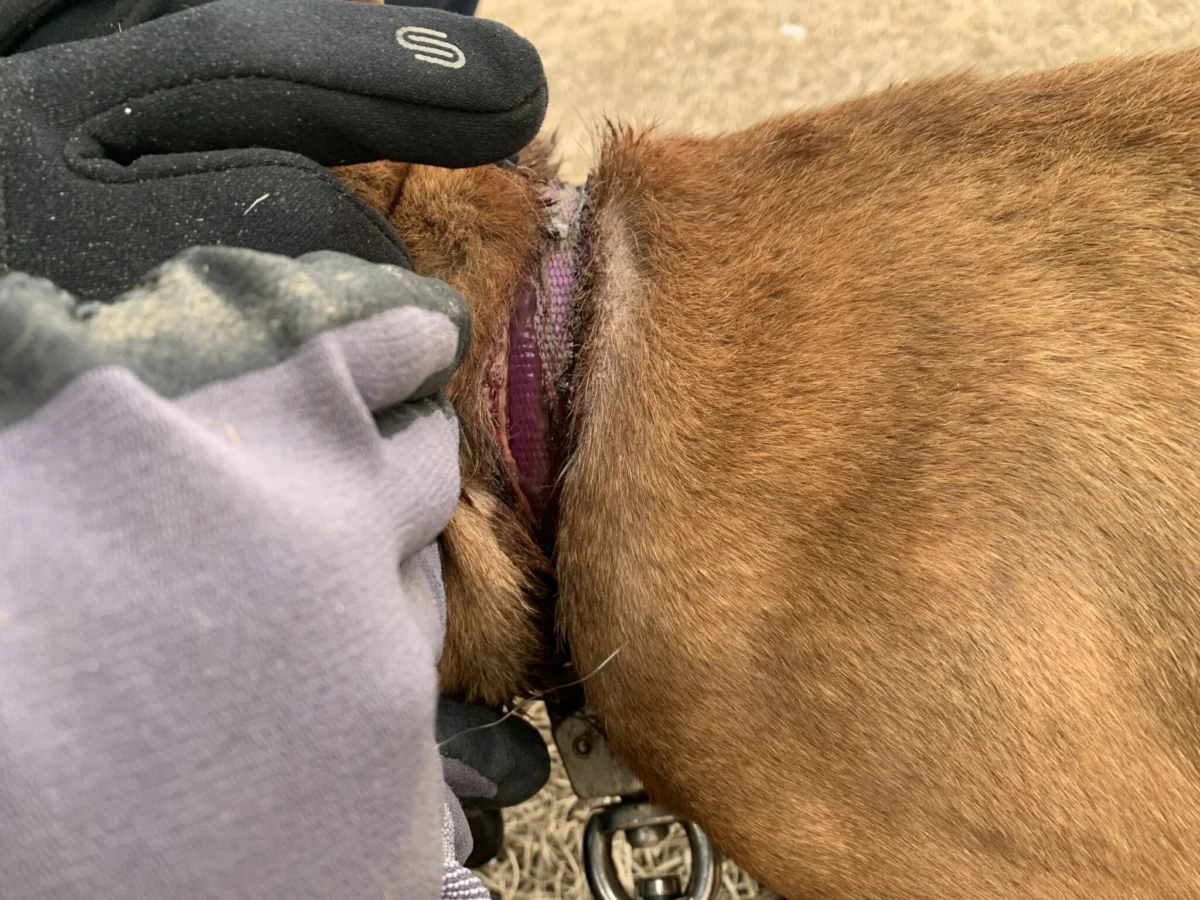
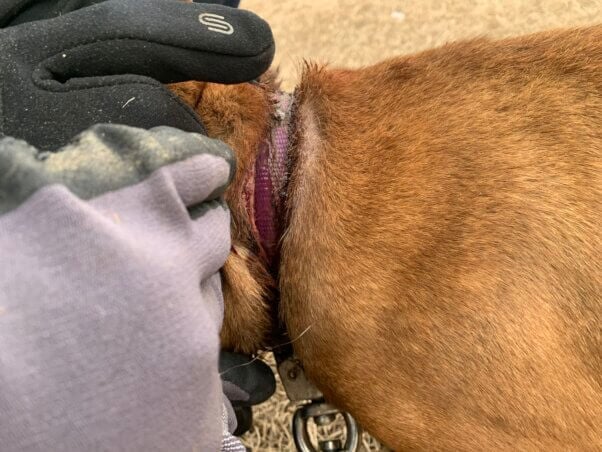
Upon approaching the animal to provide bedding and affection, the rescuers were immediately struck by a "rancid odor," a common clinical sign of necrotic tissue or advanced infection. A closer inspection revealed a catastrophic injury: a collar, likely placed on the dog when she was a puppy, had never been loosened or replaced as she grew. Over time, the pressure of the tightening band caused the nylon or leather to slice through the dermal layers of the neck. In a gruesome physiological response known as "embedding," the dog’s skin had begun to grow over and around the collar, essentially fusing the foreign object into her neck.

The medical severity of an embedded collar cannot be overstated. As the material cuts into the flesh, it severs capillaries and damages muscle tissue, leading to chronic pain, restricted breathing, and a high risk of systemic sepsis. Because no owners were present at the property during the discovery, the fieldworkers immediately contacted the Bertie County Sheriff’s Office to report a case of suspected felony animal cruelty.
Chronology of Rescue and Legal Action
The rescue of Liora moved rapidly once law enforcement was engaged. Deputies from the Bertie County Sheriff’s Office arrived on the scene to assess the situation. Under the pressure of legal scrutiny and the undeniable evidence of medical neglect, the owner agreed to relinquish custody of the dog. This surrender was a pivotal moment, allowing rescuers to bypass lengthy seizure litigations and move straight to emergency medical intervention.
Liora was rushed to a 24-hour emergency veterinary clinic. Surgeons there performed a delicate procedure to debride the necrotic tissue and surgically remove the embedded collar from her neck. The operation required cleaning deep-seated infections that had reached the sub-dermal layers. Following the surgery, the dog was placed on a regimen of high-dose antibiotics and pain management.
While Liora began her physical recovery, the legal system initiated proceedings against her former guardian. The Bertie County Sheriff’s Office officially charged the owner with cruelty to animals. In North Carolina, animal cruelty can be prosecuted as a Class 1 misdemeanor or, in cases involving intentional deprivation or extreme neglect leading to serious injury, a Class H felony. This legal response underscores a growing trend in the American judicial system to treat "passive" neglect—such as failing to adjust a collar—with the same gravity as active abuse.
The Medical and Behavioral Reality of Embedded Collars
Liora’s condition is a recurring tragedy in the world of animal rescue, particularly in regions where dogs are viewed more as property than as family members. Veterinary experts note that embedded collars are almost exclusively a byproduct of the "chained dog" lifestyle. When a dog is tethered and rarely handled, owners fail to notice the gradual tightening of collars.
The physiological impact includes:
- Dermal Necrosis: The constant pressure cuts off blood flow to the skin, causing the tissue to die.
- Infection and Myiasis: Open wounds in outdoor environments frequently become infected with bacteria or infested with fly larvae (maggots), exacerbating the animal’s suffering.
- Tracheal and Esophageal Damage: Chronic pressure on the throat can lead to permanent respiratory issues or difficulty swallowing.
Behaviorally, the transition for a dog like Liora is equally complex. Dogs are social pack animals; being "forced to live outside alone since she was a puppy," as Liora was, often results in severe psychological trauma, including heightened anxiety or extreme social withdrawal. However, rescuers noted that Liora’s "sweet spirit" remained intact, a testament to the resilience of the species.
Transition to Adoption and a New Life
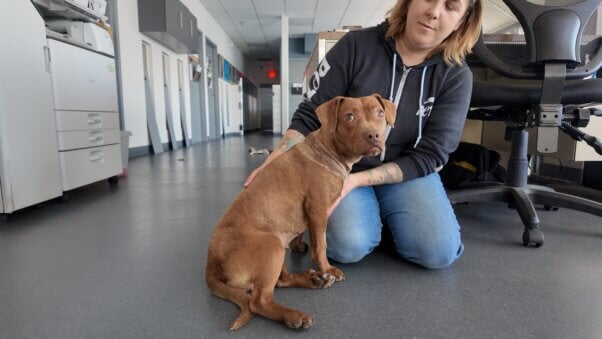
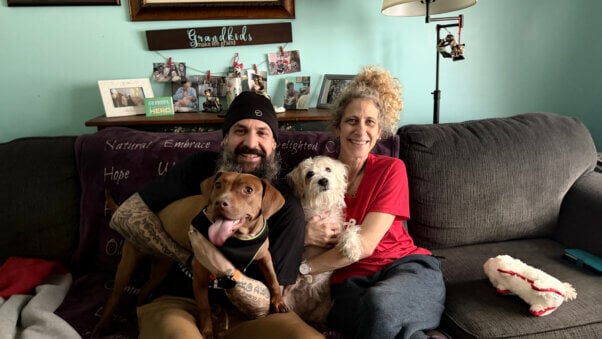
After her surgical recovery and a period of rehabilitation at PETA’s Norfolk, Virginia, headquarters, Liora was cleared for adoption. Her story reached a successful conclusion when she was adopted by a family already familiar with the needs of rescued animals. Interestingly, the family had previously adopted another PETA-rescued dog named Ruthie, providing Liora with an immediate peer and a stable environment.
Reports from her new home indicate a complete behavioral 180-degree turn. Once a dog restricted by a few feet of chain, Liora is now described as a "furry torpedo," known for sprinting through her home at full speed. Her owners describe her as a "Velcro dog," a term used for pets that remain in constant physical proximity to their humans—a behavior likely stemming from her years of forced isolation.
Broader Implications: The Crisis of Tethering in the United States
Liora’s case is not an isolated incident; it is a symptom of a broader crisis regarding animal tethering in the United States. According to data from various animal welfare organizations, hundreds of thousands of dogs spend their entire lives on chains.
The Dangers of Chaining:
- Physical Vulnerability: Chained dogs cannot escape predators, extreme weather (like the snowstorm Liora faced), or malicious humans.
- Increased Aggression: Studies show that continuously tethered dogs are nearly three times more likely to bite than untethered dogs. This is due to the "fight or flight" instinct; when an animal cannot flee, it becomes hyper-aggressive to protect its small territory.
- Public Safety Risk: Chained dogs are often the primary culprits in serious dog-bite incidents involving children who unknowingly wander into the dog’s "reach" zone.
Legislative Trends:
In response to cases like Liora’s, an increasing number of municipalities and states are passing "Tethering Bans" or restrictive ordinances. As of 2024, over 20 states and hundreds of individual counties have implemented laws that either ban the tethering of dogs entirely or limit it to specific timeframes and weather conditions. North Carolina remains a state where tethering laws are largely handled at the local (county or city) level, leading to a patchwork of protection that often leaves dogs in rural areas like Bertie County vulnerable.
Analysis of the Impact of Fieldwork
The rescue of Liora highlights the indispensable nature of "boots on the ground" fieldwork. In many rural communities, animal control resources are stretched thin, often responding only to reports of aggressive animals or public nuisances. PETA’s fieldworkers, and similar groups, fill a critical gap by providing proactive monitoring.
Without the intervention of the fieldworkers who noticed the "rancid odor" during a routine straw delivery, Liora likely would have succumbed to infection or strangulation within months. This case demonstrates that animal rescue is often a collaborative effort between non-profit organizations, local law enforcement, and the veterinary community.
Conclusion and Call to Action
The story of Liora, from the end of a chain in North Carolina to a loving home where she "wags her tail like she won the lottery," serves as both a warning and an inspiration. It warns of the silent suffering occurring in backyards across the country where dogs are treated as inanimate objects. It inspires by showing that even after years of neglect and physical trauma, animals possess a remarkable capacity for recovery and companionship.
For the public, the implications are clear: vigilance is the first line of defense against animal cruelty. Animal welfare advocates suggest that if a neighbor’s dog is seen tethered 24/7 without adequate food, water, or medical attention, it should be reported to local authorities immediately. Furthermore, supporting legislative efforts to ban or restrict chaining can prevent the "embedded collar" phenomenon from occurring in the first place. Liora’s light now glows bright, but her story remains a reminder of the countless others still waiting in the dark for their own moment of rescue.
