


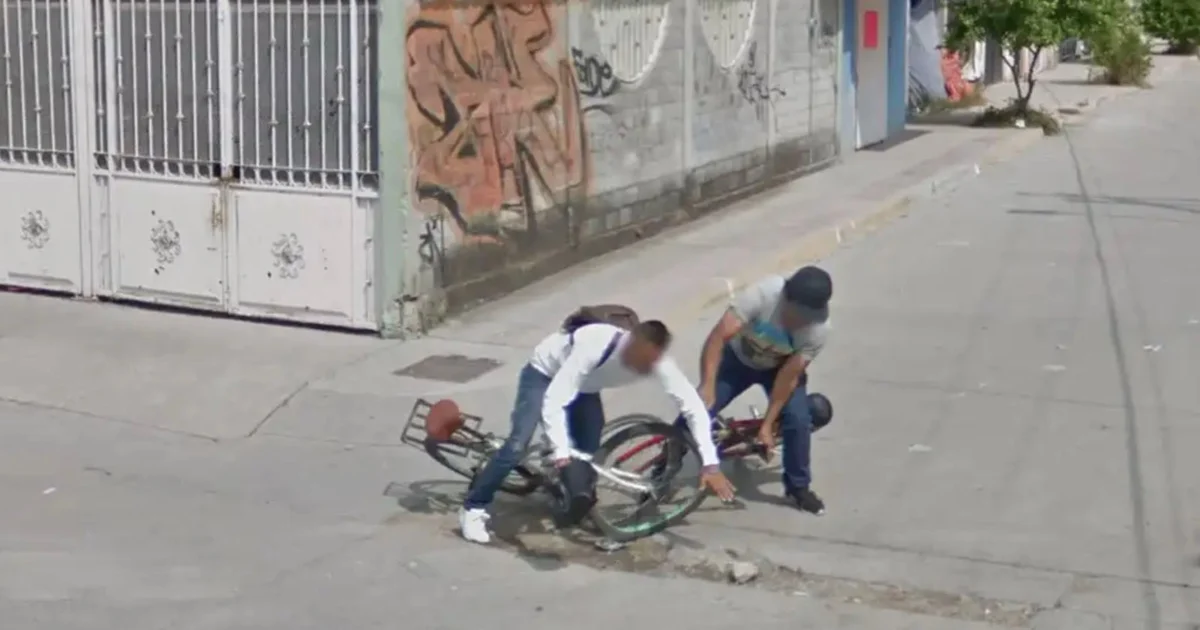
The intersection of technology and everyday life often yields unexpected results, as evidenced by a 2018 bicycle accident in León, Mexico, which has recently resurfaced and achieved viral status across global social media platforms. The incident, captured by a Google Street View vehicle, provides a candid look at how the presence of recording technology can inadvertently influence the very environment it intends to document. While the accident itself was minor, the surrounding circumstances and the subsequent handling of the imagery by Google offer a compelling case study in digital preservation, privacy, and the unintended consequences of the "observer effect" in the age of mass surveillance.
The Incident in León: A Chronology of a Collision
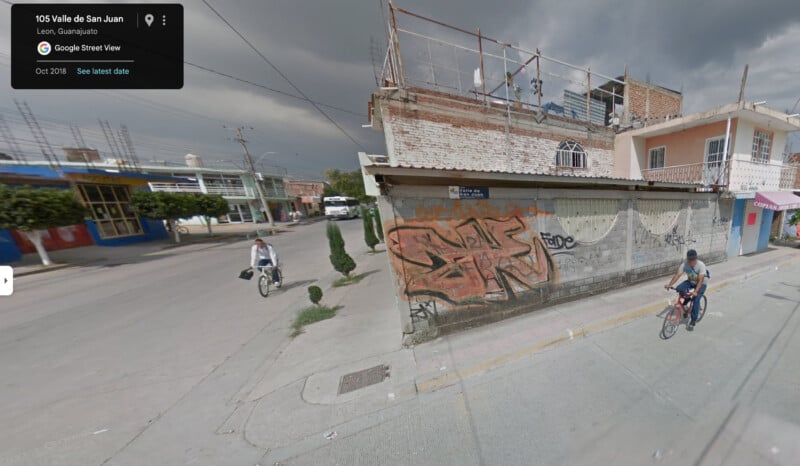
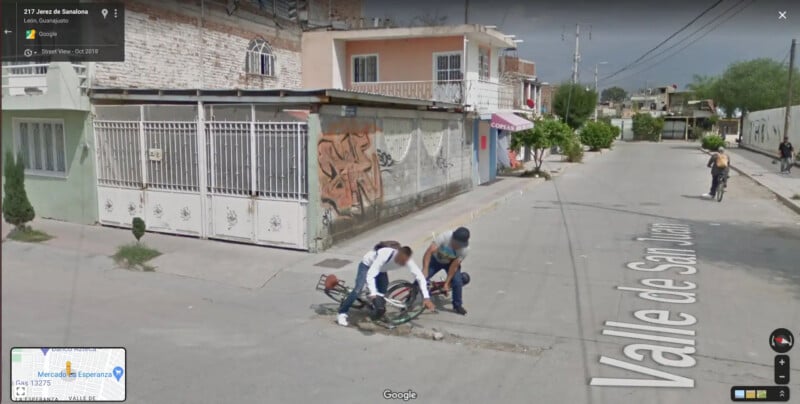
The event took place in the Campestre de Jerez neighborhood of León, Guanajuato, a city in central Mexico known for its industrial heritage and residential sprawl. In 2018, a Google Street View car was navigating the quiet residential streets of the outskirts of León, systematically capturing 360-degree panoramic images at regular intervals. As the vehicle approached a four-way intersection, it encountered two cyclists approaching from different directions.
The visual evidence suggests that both riders were momentarily distracted by the sight of the Google vehicle, which is often topped with a distinctive, high-mounted camera rig. As the cyclists focused their attention on the car, they failed to maintain awareness of each other’s trajectory. The Google car’s cameras, which trigger every few yards, documented the sequence with clinical precision.
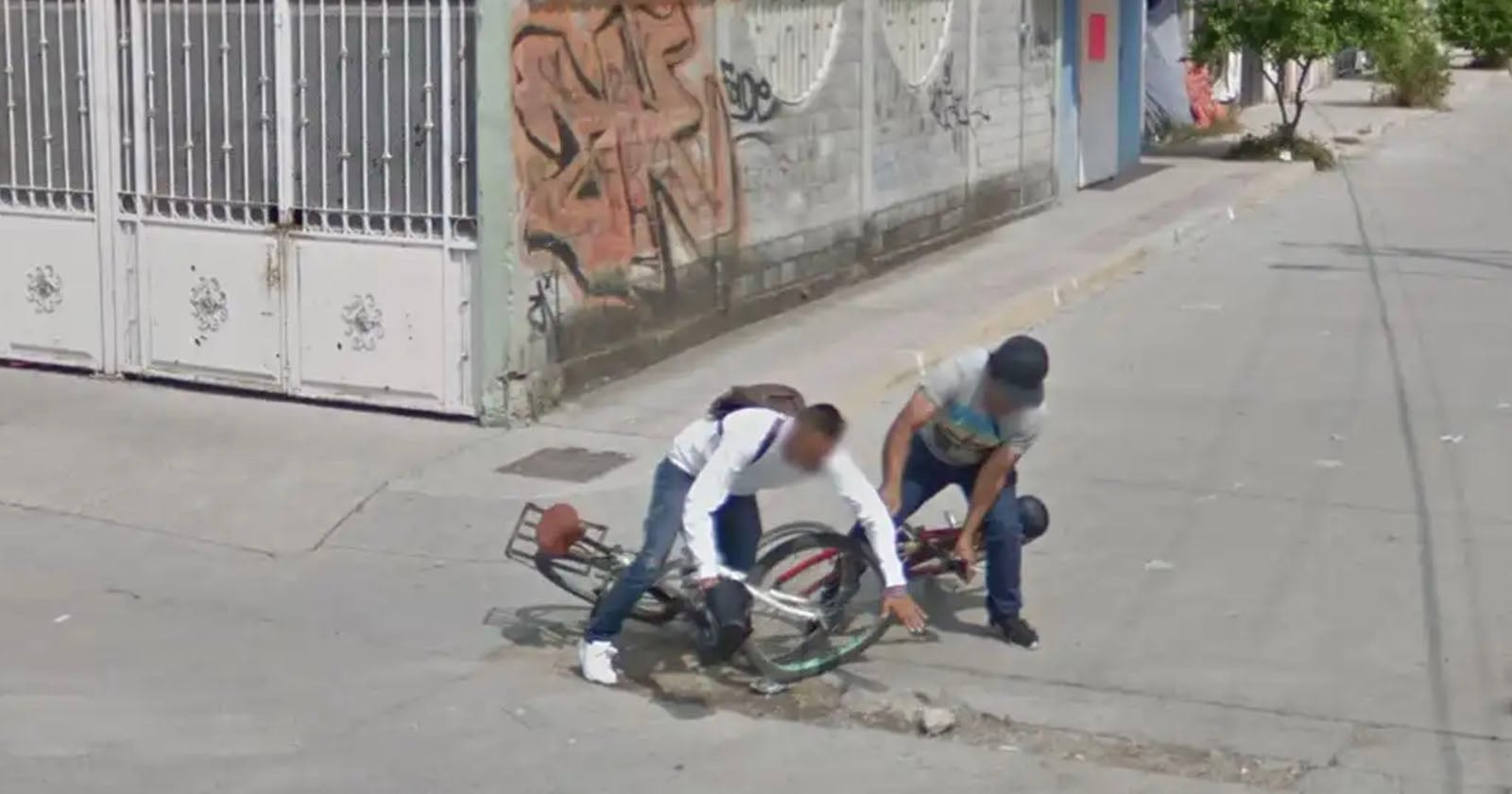
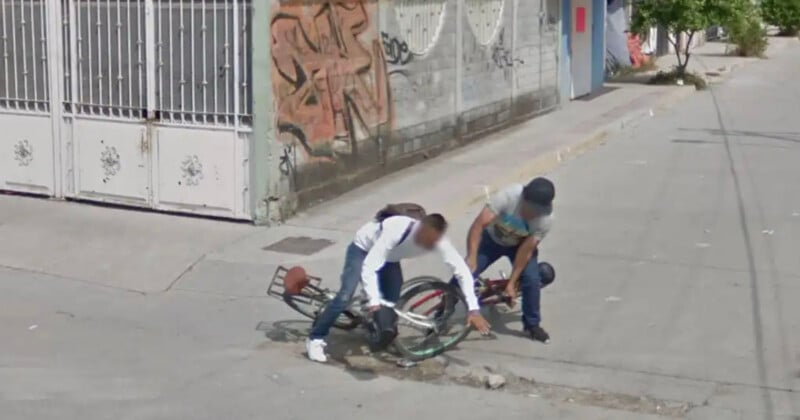
In the first relevant frame, the riders are seen converging toward the center of the intersection. One cyclist, wearing a white shirt and a backpack, and another, wearing a hat and a gray shirt, appear to be looking directly at the camera. In the subsequent frame, the impact occurs. The collision appears to be a low-speed "T-bone" style impact, exacerbated by a visible pothole in the asphalt that likely compromised the riders’ ability to maneuver at the last second. One of the cyclists is shown tumbling toward the pavement.
However, the narrative captured by the technology also provides a resolution. The following frame, captured seconds later as the car continued its path, shows both individuals standing upright and engaging in conversation. The presence of the Google car, while a likely catalyst for the distraction, also served as the sole witness to the peaceful resolution of the minor traffic mishap.
The Digital Erasure and the Search for Permanence
While the incident has been available in Google’s archives for years, it only recently gained significant traction on platforms like Reddit and X (formerly Twitter). Interestingly, as the images went viral, users noted that the specific frame depicting the actual moment of the collision appeared to have been removed or "scrubbed" from the live version of Google Maps.
Currently, users navigating to the address—Campestre de Jerez, 37538 León, Guanajuato—can still access historical imagery by utilizing the "See more dates" feature, which allows a look back at the 2018 data set. However, the direct evidence of the fall is conspicuously absent in the latest iterations of the interface. This has led to speculation that Google’s automated privacy filters or manual moderation teams may have flagged the content following the surge in traffic.
Google’s policy regarding Street View imagery allows individuals to request the blurring or removal of images that depict "sensitive" content, including accidents, violence, or identifiable personal information. While the company has not issued a formal statement regarding this specific case, the removal of the crash frame aligns with their standard operating procedure to mitigate the "spectacle" of human misfortune on their platform.
Google Street View as a Historical and Forensic Tool
Since its launch in 2007, Google Street View has evolved from a simple navigational aid into what many sociologists and historians call a "digital time capsule." With over 10 million miles of roadway mapped across more than 100 countries, the platform provides a near-continuous record of the world’s changing urban and rural landscapes.
The Leon bicycle accident is far from the first time the platform has captured significant or strange human moments. The "Nine Eyes" project by artist John Rafman has spent over a decade curating bizarre, beautiful, and sometimes tragic images found on Street View. Rafman’s work highlights the "uncanny" nature of the Google camera—an impartial, non-human eye that records without judgment, capturing everything from wild animals to public disputes.
Beyond art and viral curiosity, the platform has increasingly served as a tool for law enforcement and humanitarian efforts. The source material for the León story points to several high-profile cases where Street View imagery provided critical evidence:
- The Case of Paulette Landrieux: In Belgium, an 83-year-old woman with Alzheimer’s went missing from her home. Despite extensive police searches, she was not found until a neighbor, browsing Street View images of their street, spotted a figure matching Landrieux’s description walking away from her property. This digital footprint eventually led authorities to her location, though tragically, she had passed away.
- Crime Scene Documentation: In Spain, a chilling image surfaced showing what appeared to be a body being loaded into the trunk of a car. This image was later utilized by the Civil Guard as a lead in a murder investigation. Similarly, in various jurisdictions, Street View has been used to verify the presence of vehicles at specific locations during the commission of crimes.
Technical Mechanics: How the "Observer Effect" Manifests
The Leon accident illustrates a classic example of the "observer effect" in social science—the theory that the act of observing a phenomenon inevitably changes that phenomenon. The Google Street View car is not a discreet vehicle; its roof-mounted camera array is a clear indicator of surveillance.
Technically, the Street View car uses a variety of sensors to build its maps. These include:
- High-Resolution Cameras: Multiple lenses capturing overlapping images that are later stitched together using sophisticated software to create a seamless 360-degree panorama.
- LiDAR (Light Detection and Ranging): Laser pulses that measure the distance to objects, allowing Google to create 3D models of buildings and terrain.
- GPS and IMU: Sensors that track the vehicle’s exact location, speed, and orientation to ensure the images are placed accurately on the map.
Because the car must move at a speed conducive to safe driving while capturing high-quality images, it often becomes a point of interest for pedestrians and cyclists. In the case of the León collision, the very technology designed to map the road became a hazard by diverting the attention of those using the road.
Privacy, Ethics, and the Right to be Forgotten
The viral nature of the 2018 crash brings renewed attention to the ethical implications of permanent digital records. In many jurisdictions, particularly under the European Union’s General Data Protection Regulation (GDPR), individuals have a "right to be forgotten." This allows people to request the removal of personal data that is no longer necessary or is causing undue distress.
In Mexico, privacy laws are also robust, though the application to public street photography is often a gray area. Google’s proactive blurring of faces and license plates is an automated attempt to balance the utility of the service with individual privacy. However, when an event like a bicycle crash becomes a meme, the "privacy" of the individuals involved is compromised not by the original capture, but by the secondary distribution of that capture across the internet.
Analysis of Broader Impact
The fascination with the León bicycle accident reflects a broader cultural trend: the desire to find "glitches in the matrix" or unscripted human moments in an increasingly curated digital world. As cities become more saturated with cameras—from CCTV and Ring doorbells to dashcams and mapping vehicles—the expectation of privacy in public spaces continues to erode.
From a journalistic perspective, the Leon incident is a reminder that the most significant data points in our digital archives are often the ones captured by accident. While Google continues to refine its AI to filter out "sensitive" content, the sheer volume of data ensures that these fleeting moments of human error will continue to surface, serving as a reminder of our collective vulnerability in the face of an all-seeing digital eye.
In conclusion, the 2018 León collision is more than just a viral clip; it is a testament to the power of Google Street View as a global witness. Whether used for art, investigation, or simple navigation, the platform remains one of the most comprehensive records of human existence ever created, capturing our triumphs, our mundanity, and occasionally, our uncoordinated turns at a quiet street corner in Mexico.
