

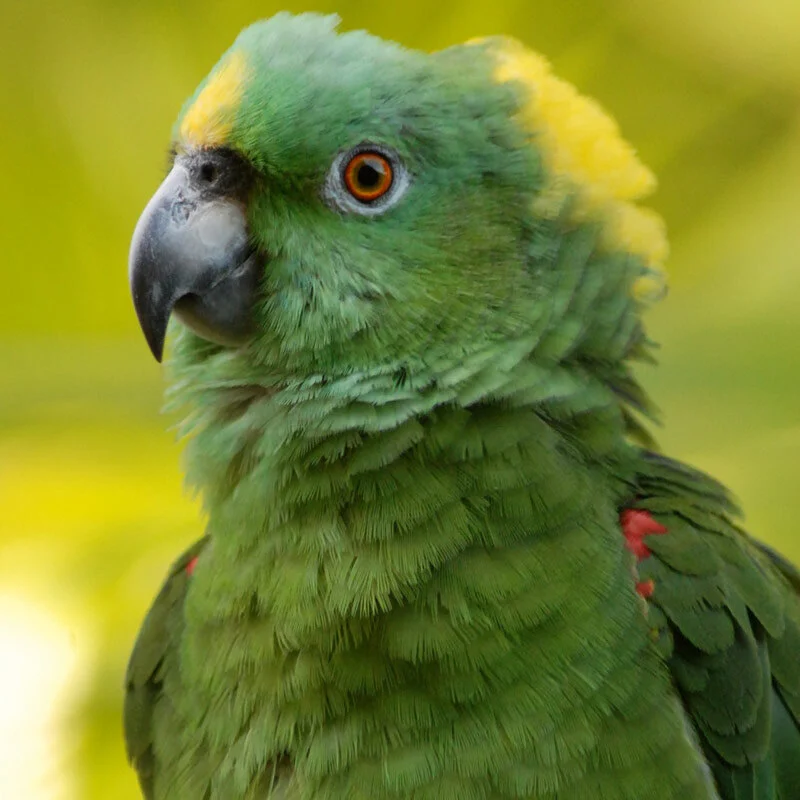
Parrots have long captivated human observers with their remarkable capacity for vocal mimicry, often replicating human speech with astonishing accuracy. However, new scientific inquiry suggests that their intrinsic communication systems are equally, if not more, sophisticated, hinting at parallels with human language. A comprehensive study on yellow-naped Amazon parrots (Amazona auropalliata) has unearthed an intricate vocal landscape, revealing that mated pairs engage in complex "warble" duets comprising an impressive 36 distinct call types. These vocalizations are not random but are arranged in structured, rule-governed sequences, contributing significantly to a growing body of evidence that avian species, particularly parrots, possess highly organized and perhaps syntactical communication systems.
The groundbreaking research, spearheaded by Dr. Christine R. Dahlin, a distinguished professor of biology at the University of Pittsburgh, in collaboration with five esteemed colleagues, proposes that yellow-naped Amazon parrots communicate through a learned system of vocalizations that functions remarkably similarly to human language. Their findings, which promise to redefine our understanding of animal cognition and the evolution of language, are slated for publication on February 12, 2026.
Unveiling the "Warble" Duets: A Symphony of Structure
The essence of Dr. Dahlin’s team’s discovery lies in the structural patterns embedded within the parrots’ duets. These patterns adhere to discernible "rules," echoing the syntactic principles observed in complex human speech. The researchers meticulously analyzed thousands of vocal interactions, identifying not only the sheer number of distinct call types but also the predictable arrangements in which these calls were deployed. This rule-governed sequencing moves beyond mere mimicry or simple alarm calls, suggesting a more advanced form of information transfer.
Further deepening the complexity, the study also uncovered a significant sex bias in many of these calls. Between 75% and 99% of the identified call types were found to be predominantly used by either males or females. Even more striking was the identification of certain calls that were entirely sex-specific, produced exclusively by one sex. This differentiation hints at specialized roles within pair communication, potentially relating to courtship, territorial defense, or coordinated foraging, and adds another layer of sophistication to their vocal repertoire.
The calls of yellow-naped Amazon parrots are broadly categorized into two groups: primary calls and warble calls. Primary calls are the most frequently heard vocalizations, serving a variety of general communication purposes. In contrast, the warble calls, which form the core of the study, are characterized by their rapid delivery and a more diverse range of notes. These duets are primarily utilized by mated pairs, often functioning as alerts or warnings, coordinating their movements, or reinforcing pair bonds. The distinction between these call types underscores the functional specificity within their communication system, where the warble calls appear to convey more nuanced or urgent information due to their complex structure and rapid tempo. In total, the researchers identified 36 distinct call types that were regularly employed, alongside an additional 11 calls that were heard only once, suggesting an even broader, albeit rarer, vocabulary.
The Architects of Avian Language: Dr. Dahlin’s Research
The methodology employed by Dr. Dahlin and her team was rigorous, combining extensive field observations with sophisticated acoustic analysis. Studying wild populations of yellow-naped Amazon parrots in their natural habitats allowed the researchers to capture authentic interactions, free from the biases that can arise in captive environments. This approach is crucial, as, in Dr. Dahlin’s own words, "natural pressures shape communication in ways that cannot be replicated in captivity." The team spent countless hours observing the parrots, recording their vocalizations, and correlating specific call sequences with observed behaviors.
The acoustic analysis involved using specialized software to dissect the sound waves, identifying parameters such as frequency, duration, and amplitude, which allowed them to differentiate between individual call types. This painstaking process enabled the identification of the 36 distinct call types and the subsequent analysis of their sequencing patterns. The University of Pittsburgh, a leading institution in biological and cognitive sciences, provided the ideal environment for such interdisciplinary research, blending field ecology with advanced computational analysis. The challenges of studying wild populations are immense, requiring patience, adaptability, and a deep understanding of the species’ ecology, but the rewards, as this study demonstrates, are profound.
Sex-Biased Calls: Unraveling Social Dynamics
The discovery of sex-biased and sex-specific calls in yellow-naped Amazon parrots opens intriguing avenues for understanding their social dynamics. In many avian species, males and females often have distinct roles in breeding, territorial defense, and parental care. The specialization of certain calls by one sex could reflect these differing responsibilities. For instance, males might primarily use calls related to territorial advertisement or warning off rivals, while females might employ specific calls for nest vigilance or communication with offspring.
The existence of entirely sex-specific calls, used exclusively by one sex, is particularly noteworthy. This level of vocal specialization suggests that certain pieces of information or communicative functions are solely relevant to one gender, or that the message is intended only for members of the opposite sex within a pair context. Such findings provide valuable insights into the intricate social structures of these highly intelligent birds and could inform future research into the division of labor and cooperative strategies within mated parrot pairs. It underscores that communication in these parrots is not a monolithic system but a finely tuned network where different vocalizations serve specific purposes for different members of the social unit.
A Historical Lens on Animal Communication
The current study builds upon decades of research into animal communication, a field that has consistently challenged anthropocentric views of language. Historically, human language was considered a unique cognitive ability, setting our species apart. However, studies on various animal groups have progressively chipped away at this notion.
Early pioneers like Irene Pepperberg’s work with Alex, an African Grey Parrot, demonstrated a remarkable capacity for cognitive abilities, including associating words with objects, understanding concepts like ‘same’ and ‘different,’ and even performing simple arithmetic. While Alex’s abilities were impressive, they largely focused on human-taught vocabulary and concepts. The research on yellow-naped Amazons, conversely, delves into the intrinsic communication systems developed by the parrots themselves in their natural environment.
Beyond parrots, other species have provided compelling evidence of complex communication. Dolphins and whales, for instance, communicate through intricate clicks, whistles, and songs, some of which are thought to have regional dialects and even specific "names" for individuals. Primates, particularly great apes, have shown abilities to learn sign language or use lexigrams, indicating a capacity for symbolic thought and intentional communication, though their natural vocalizations are often less structurally complex than those of birds. Even within birds, songbirds are renowned for their complex learned songs, which can vary regionally and serve functions in mate attraction and territorial defense. What distinguishes the parrot study is the explicit identification of rule-governed sequences, a hallmark often associated with syntax in human language.
Yellow-Naped Amazons: A Critically Endangered Species
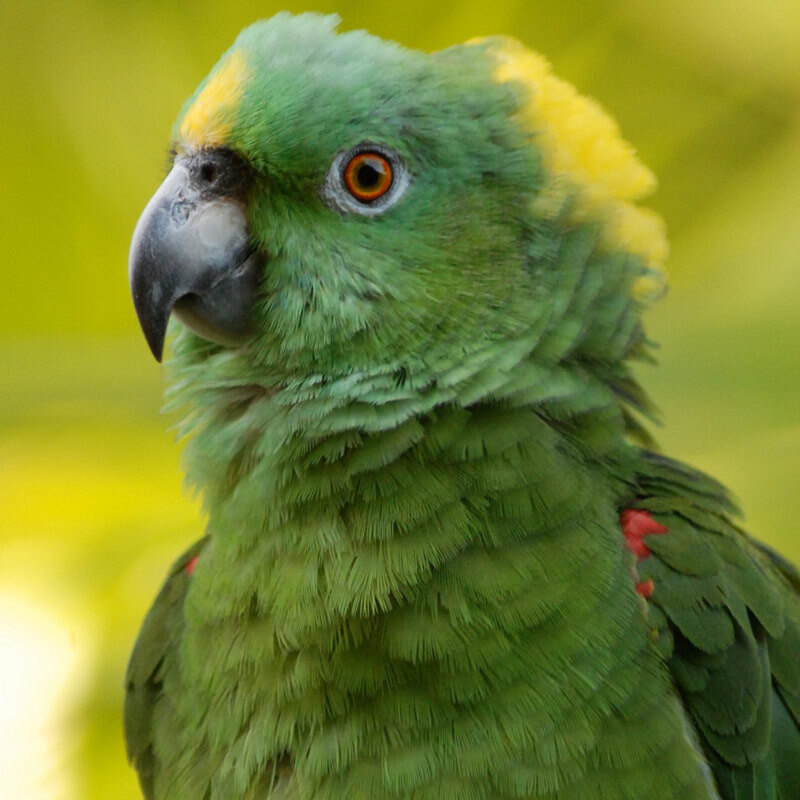
The significance of this research extends far beyond avian linguistics; it holds crucial implications for the conservation of the yellow-naped Amazon parrot, which is currently classified as critically endangered in the wild by the IUCN Red List. Native to the Pacific coast of Central America, from southern Mexico to northern Costa Rica, these vibrant green parrots with their distinctive yellow nape patch inhabit tropical dry forests and mangroves. Their natural lifespan can exceed 50 years, and they are known for forming strong, lifelong pair bonds, making their sophisticated duet communication particularly vital to their social structure and reproductive success.
The primary threats to Amazona auropalliata are severe and multifaceted. Habitat destruction, driven by deforestation for agriculture, cattle ranching, and human settlement, has decimated their natural environment. Additionally, the illegal pet trade poses an enormous threat. Their intelligence, beauty, and ability to mimic human speech make them highly desirable in the exotic pet market, leading to rampant poaching of chicks and adult birds. This illicit trade not only reduces wild populations directly but also disrupts their social structures and breeding success. Understanding their complex communication system, including how pairs coordinate and warn each other, could provide invaluable data for developing more effective conservation strategies, such as protecting critical communication hubs or understanding population health through vocal monitoring.
Regional Dialects: Echoes Across Landscapes
The observation that yellow-naped Amazon parrots possess regional dialects across the entirety of their calls adds another fascinating layer to their linguistic complexity. Regional dialects are a well-documented phenomenon in many species, particularly birds, demonstrating local cultural transmission of vocalizations. For these parrots, it means that groups in different geographical areas may have subtly or significantly different pronunciations, inflections, or even specific call types within their overall repertoire.
The existence of dialects suggests that parrot communication is not entirely innate but involves a significant learned component, passed down through generations within specific populations. This cultural learning is a powerful indicator of advanced cognitive abilities and social learning. For conservationists, understanding these dialects could be vital. It might indicate distinct population groups, highlight barriers to genetic flow, or even provide insights into the historical movements and fragmentation of populations. If specific calls are vital for survival or reproduction, then the loss of a dialect could equate to the loss of critical information for a particular group, further endangering an already vulnerable species.
Implications for Conservation and Cognitive Science
The findings from Dr. Dahlin’s study have profound implications across several scientific disciplines. For conservation, the research underscores the urgent need to protect these highly intelligent and socially complex birds. Recognizing their communication as a sophisticated, language-like system elevates their perceived value and highlights the irreversible loss incurred when a species with such unique cognitive abilities faces extinction. Conservation efforts can now be informed by a deeper understanding of how these parrots communicate, potentially leading to better strategies for habitat protection, anti-poaching measures, and even rehabilitation programs that consider the integrity of their vocal learning.
For cognitive science, this study offers critical insights into the evolution of complex communication and intelligence. The presence of rule-governed vocal sequences in a non-primate species challenges long-held assumptions about the prerequisites for syntax and language. It suggests that the cognitive machinery necessary for such complex communication may have evolved convergently in different lineages, driven by similar social and ecological pressures. This could lead to a re-evaluation of models for the evolution of human language, suggesting that some foundational elements might be far older and more widespread in the animal kingdom than previously thought. The study reinforces the idea that understanding animal communication is not just about translating calls but about uncovering the underlying cognitive processes that shape them.
Looking Ahead: Breaking the Code of Avian Speech
As Dr. Dahlin and her colleagues eloquently state, "If we hope to eventually break the code of their vocal communication system, it will likely take a sustained mix of conservation efforts, field observations, and playback experimentation." This forward-looking statement outlines the roadmap for future research. Conservation efforts are paramount to ensure there are still wild populations to study. Continued field observations will allow researchers to refine their understanding of call contexts and behavioral correlations. Playback experimentation, where recorded calls are played back to parrots to observe their reactions, will be crucial for testing hypotheses about the meaning and function of specific call types and sequences.
Ultimately, this work stands as a testament to the immense value of investigating vocal complexity and syntactic organization in wild animal populations. It is in these natural settings, under the relentless pressures of survival and reproduction, that communication systems are honed and refined in ways that cannot be replicated in a laboratory. The yellow-naped Amazon parrot, with its vibrant plumage and even more vibrant vocal intelligence, serves as a powerful reminder of the deep mysteries that still lie hidden within the natural world, waiting to be understood, and urgently needing to be preserved. The upcoming publication promises to be a landmark moment in the study of animal communication, urging humanity to listen more closely to the intricate languages spoken by our fellow inhabitants of Earth.
