

Migratory birds connect landscapes, countries, and even continents through their incredible long-distance journeys. As they travel to and from their breeding grounds, birds use routes known as flyways. A new series highlights the vital work of conservationists along these global pathways, with the first installment focusing on Iceland’s pivotal role in safeguarding the African-Eurasian Flyway. This extensive route spans from the Arctic to the southern tip of Africa, and Iceland’s wetlands are a critical stopover and breeding ground for countless species.

The African-Eurasian Flyway: A Vital Artery for Avian Life
The African-Eurasian Flyway is one of the most significant migratory routes globally, utilized by an estimated 3.5 billion birds annually, encompassing over 250 species. This vast network of routes is essential for the survival of numerous bird populations, facilitating their annual cycles of breeding and overwintering. These birds, ranging from tiny waders to large waterfowl, undertake journeys that can span thousands of kilometers, facing immense challenges from weather, predators, and increasingly, habitat loss and degradation.
The RSPB (Royal Society for the Protection of Birds), BirdLife’s partner in the UK, in collaboration with Fuglavernd (BirdLife Iceland) and supported by the Ecological Restoration Fund (ERF), has launched an ambitious project to protect this crucial flyway. The initiative underscores the interconnectedness of global ecosystems and the necessity of international cooperation for effective conservation. The ERF, dedicated to protecting biodiverse hotspots, rejuvenating degraded landscapes, and promoting local environmental activism, plays a critical role in funding such vital projects.

Iceland’s Wetlands: A Threatened Haven for Migratory Birds
Iceland, strategically positioned between Greenland and mainland Europe, serves as an indispensable staging post for many migratory birds traversing the African-Eurasian Flyway. The island’s unique geographical location offers a vital resting and refueling point. However, these critical habitats face significant threats.
Hólmfríður Arnardóttir, Executive Director at Fuglavernd, elaborates on the historical context and current challenges. "Because Iceland lies between Greenland and mainland Europe, it is a natural stopover for many migratory birds travelling along the African-Eurasian Flyway," she explains. "Birds stop here to rest and refuel, and many species also breed in Iceland. Historically, a large proportion of Iceland’s lowlands were wetlands. However, following government-subsidised drainage efforts between 1940 and 1990, around 90% of these wetlands were affected as land was converted for agricultural use."

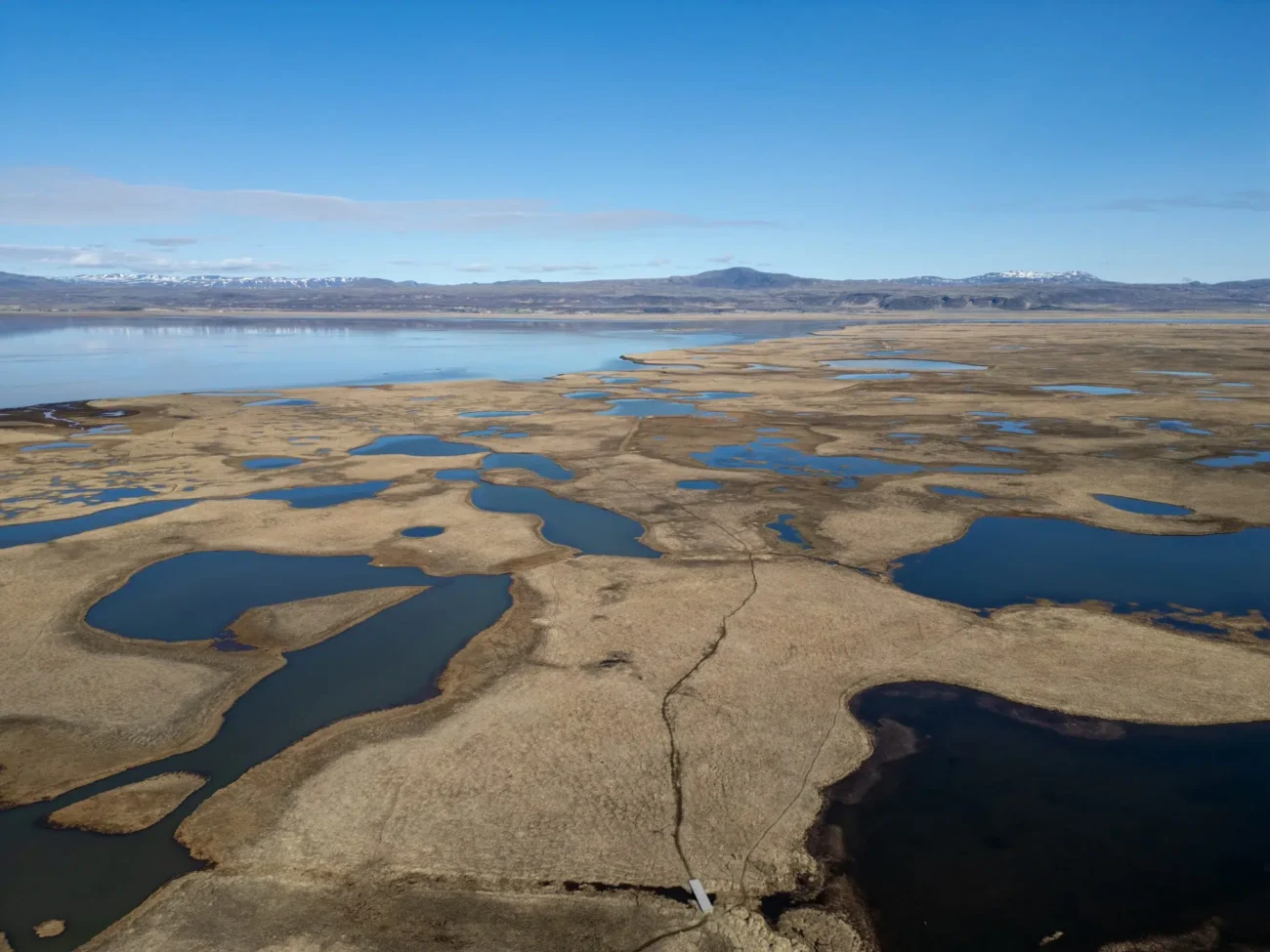
This dramatic loss of wetland habitat has had profound consequences. Today, only an estimated 3% of wetlands in southwest Iceland remain undisturbed. Further pressures arise from the introduction of alien tree species, which can alter wetland ecosystems, and habitat fragmentation caused by the development of new roads and wind energy infrastructure. Despite these losses, Iceland’s remaining lowland wetlands, shallow lakes, and river deltas continue to be of international importance, particularly for waders and wildfowl. The extended daylight hours during the Icelandic summer, coupled with relatively low levels of human disturbance in many areas, make the island an exceptionally valuable breeding ground.
Project Highlights: Restoration and Protection in Key Icelandic Sites
The ERF-supported project focuses on a significant area in southwest Iceland, a region that has experienced the most severe wetland drainage. This area, despite past alterations, remains a vital breeding site for waterfowl and shorebirds, largely consisting of agricultural land, some of which is no longer actively farmed.

Two key sites within this landscape, Flói and Oddi, are designated as Important Bird Areas (IBAs), recognized globally for their ornithological significance. Fuglavernd manages the Flói Reserve, a protected area where wetland rewetting efforts have been ongoing since 1997 and continue under the current project. Within this reserve, approximately 170 hectares are actively being restored through rewetting measures. This restoration is designed to benefit an expansive 455 hectares of bird breeding habitat, supporting substantial populations of key species.
These include the Dunlin (Calidris alpina), with an estimated 1,000 breeding pairs, the Black-tailed Godwit (Limosa limosa), numbering up to 500 breeding pairs, and the Common Redshank (Tringa totanus). These figures highlight the critical role Iceland plays in supporting the breeding success of these species, which will then migrate to wintering grounds across Europe and Africa.

At Oddi, Fuglavernd is collaborating with the Icelandic Forest and Land Agency to create an educational trail focused on birds and wetland restoration on government-owned land. This direct restoration area covers 82.2 hectares, much of which was previously drained for agriculture, with 10.8 kilometers of drainage ditches. Restoration activities are projected to improve 219.7 hectares of peatland habitat, crucial for many ground-nesting birds.
A Vision for Global Connectivity: Towards UNESCO Recognition
A forward-thinking aspect of the project involves exploring the potential for linking these restored Icelandic areas with wetland sites on England’s east coast that are already seeking UNESCO World Heritage status. This ambitious vision aims to establish a network of connected "pearls on a string" along the flyway. Such designation would not only elevate the international profile of these sites but also foster greater collaboration and commitment to their long-term protection. While acknowledging the lengthy process involved, Arnardóttir emphasizes the importance of initiating such visionary projects: "That would be a long process but if no one starts it, it will never happen!"

Alongside direct restoration, Fuglavernd has launched a campaign to raise public awareness about migratory birds and the importance of flyway conservation. Efforts are also underway to strengthen existing protections for the targeted areas and to continue wetland rewetting initiatives. Despite facing some delays due to new regulatory standards, the research mandated by these standards has proven invaluable in engaging with individuals who may be skeptical about the necessity of wetland restoration.
The Challenges and Triumphs of Conservation
Arnardóttir candidly discusses the significant challenges faced in conservation work. "One of the biggest challenges is time. Nature doesn’t change overnight, and meaningful restoration takes years, sometimes decades," she states. "Another challenge is perception. Many people have misconceptions or suspicions about conservation work, so a lot of effort goes into helping others understand why restoring wetlands and protecting habitats is important."

Navigating bureaucratic processes with government agencies and institutions, while not overwhelming in Iceland, can present internal restrictions and delays that slow project implementation. Furthermore, a perceived lack of urgency or motivation among some stakeholders can be a hurdle, requiring persistent effort and advocacy to maintain momentum.
Despite these obstacles, Arnardóttir finds solace and motivation in the collaborative nature of conservation. "What helps me keep going is working with others in the same field. Having a shared purpose is extremely meaningful; you can borrow optimism from others, or lend it to them in return," she shares. She also draws strength from acknowledging "small victories," recognizing that progress in conservation is often incremental, built through numerous actions rather than single grand gestures. "Resilience is the key word in nature conservation," she concludes.

The Unseen Journeys and the Shared Responsibility
The extraordinary resilience of migratory birds, undertaking arduous journeys across vast oceans and continents, underscores the fragility of their existence. Arnardóttir vividly describes the perilous nature of these flights: "Birds make some of the most extraordinary journeys on Earth. For those that come to Iceland, that journey means flying over the Atlantic Ocean. And unless you’ve been out on the open sea, it’s hard to understand just how brutal it can be – relentless winds, towering storms, and freezing rain that cuts to the bone."
This harsh reality highlights the critical importance of intact flyways. Birds depend on specific habitats at precise moments in their life cycles to survive. Protecting and restoring these places is not merely an act of wildlife preservation; it is an investment in ecosystems that ultimately support human well-being. Arnardóttir articulates a profound sense of shared responsibility: "These birds do not belong to one place or one nation. While they are here, they are in our care. We must welcome them to their breeding grounds, protect the sites they rely on, and make sure that these places – which they have defied such incredible odds to reach – are not destroyed."

The Black-tailed Godwit: An Emblem of the Flyway
When asked to choose a single species to represent the African-Eurasian Flyway, Arnardóttir selects the Black-tailed Godwit (Limosa limosa), or ‘Járrakan’ in Icelandic. While acknowledging the significance of other species like the Common Snipe and Dunlin, she believes the Black-tailed Godwit embodies the essence of a waterbird. Its physical adaptations – a long neck and bill perfectly suited for probing for food in wetlands and mudflats – are striking. Furthermore, its visual appeal, with a rich red neck and a distinctive black tail, makes it both iconic and emblematic of the flyway it depends upon. The Black-tailed Godwits that breed in Iceland migrate south to spend their winters in locations such as the UK, Ireland, and other parts of Western Europe, underscoring the interconnectedness of the flyway.
Anecdotes from the Field: Resilience and Humour
Arnardóttir shares engaging anecdotes from her fieldwork, illustrating the challenges and occasional humour encountered in conservation. One memorable experience involved ringing European Storm Petrels and Leach’s Petrels on Bjarnarey island in the Westman Islands. Handling these small, delicate birds at night, often accompanied by their defensive spewing, was a visceral experience. The eerie calls of Manx Shearwaters from nearby burrows added to the atmospheric, almost ghostlike, ambiance.

Another anecdote recounts a less successful attempt at handling Puffins (Lundi) during ringing. Her fear of being bitten led to an overly tight grip, prompting the researcher to reassign her to a different role. These stories, while lighthearted, reveal the hands-on nature of conservation work and the learning process involved.
Looking Ahead: A Commitment to Resilience
The commitment to safeguarding migratory birds and their habitats is a long-term endeavor. The work of Fuglavernd, supported by organizations like the RSPB and the ERF, represents a crucial step in a global effort to ensure that these incredible journeys can continue for generations to come. By restoring degraded landscapes, raising awareness, and fostering international collaboration, conservationists are building a future where the vital arteries of the flyways remain open and thriving, allowing the natural rhythm of migration to persist. The dedication and resilience of individuals like Hólmfríður Arnardóttir are the driving force behind these critical conservation initiatives, offering a beacon of hope for the future of avian biodiversity.
