

A groundbreaking study spearheaded by a researcher at the University of Hawaiʻi at Mānoa has uncovered a sobering reality for the archipelago’s unique avian populations: nearly every forest bird species in Hawaiʻi possesses the capability to transmit avian malaria. This pervasive ability to spread the debilitating disease offers a compelling explanation for its ubiquitous presence in virtually every mosquito-inhabited forest across the islands, posing an unprecedented challenge to conservation efforts.
The findings, meticulously detailed in the February 10th issue of the esteemed journal Nature Communications, paint a stark picture of the disease’s reach. Researchers detected avian malaria at an astonishing 63 out of 64 meticulously surveyed locations statewide. These diverse sampling sites encompassed forest ecosystems with vastly different compositions of bird species, underscoring the broad susceptibility and transmission pathways of the parasite. The illness, caused by the adaptable and widespread parasite Plasmodium relictum, has been a primary driver behind the precipitous declines and outright extinctions of Hawaiʻi’s critically endangered native honeycreepers.
"Avian malaria has exacted a devastating toll on Hawaiʻi’s native forest birds, and this study elucidates precisely why the disease has proven so formidable to contain," stated Christa M. Seidl, a leading figure in mosquito research and control coordination for the Maui Forest Bird Recovery Project. Seidl conducted this pivotal research as a cornerstone of her doctoral dissertation at the University of California, Santa Cruz. "When such a broad spectrum of bird species can quietly sustain transmission, our options for safeguarding native avian populations become severely narrowed, rendering mosquito control not merely beneficial, but absolutely essential for their survival."
The Devastating Impact of Avian Malaria on Native Avifauna
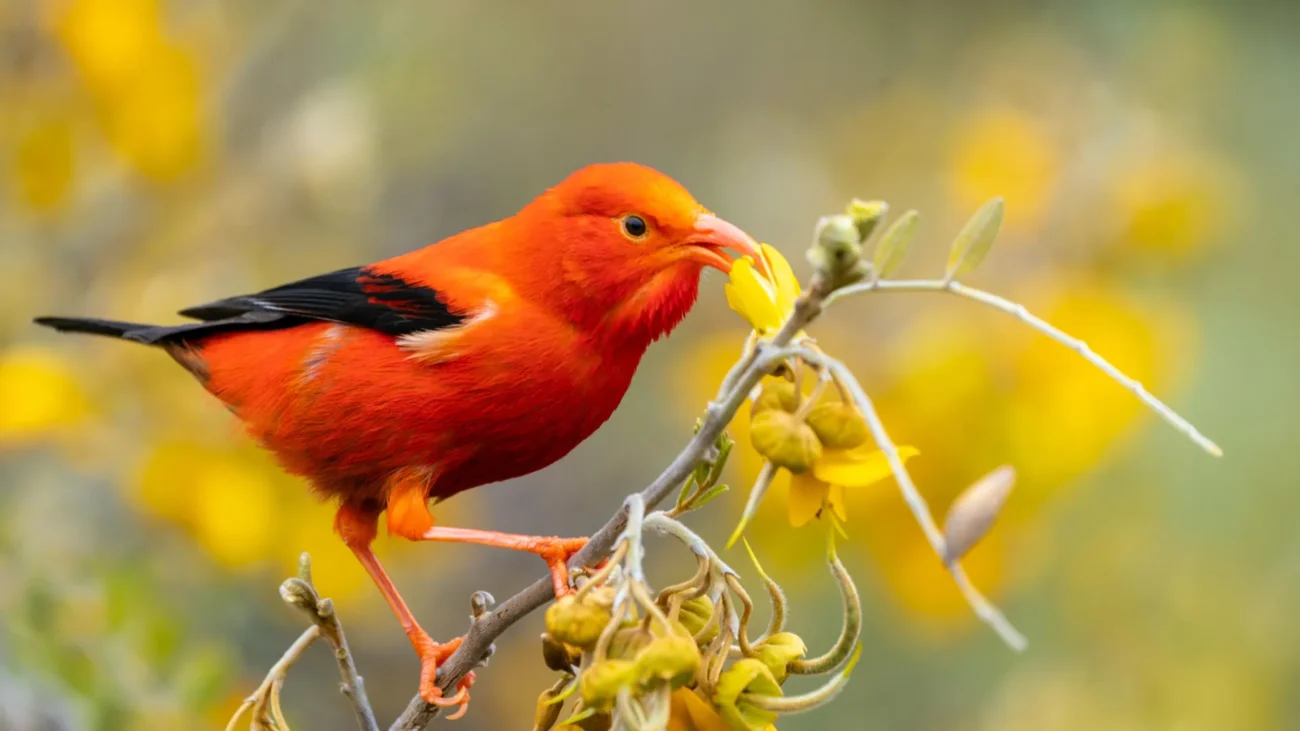
Avian malaria, a parasitic disease, directly targets the red blood cells of birds. This parasitic assault can trigger a cascade of severe health issues, including debilitating anemia, organ failure, a significant reduction in survival rates, and in numerous instances, outright death. The consequences for Hawaiʻi’s iconic and irreplaceable native bird species have been nothing short of catastrophic. Scientific studies have consistently demonstrated the grim prognosis for infected birds. For the ʻIʻiwi, also known as the scarlet honeycreeper, a species once abundant and culturally significant, the mortality rate following infection with avian malaria hovers around a staggering 90 percent. The ʻAkikiki, a small honeycreeper endemic to the island of Kauaʻi, has been pushed to the brink of extinction, with its wild population now considered functionally extinct, largely due to the relentless pressure of this disease.
Many infectious diseases depend on a limited number of reservoir species to maintain their transmission cycles. However, this groundbreaking research reveals a fundamentally different modus operandi for avian malaria within the Hawaiian ecosystem. The study demonstrates that a vast majority of forest birds, irrespective of whether they are native or introduced species, exhibit at least a moderate capacity to infect the southern house mosquito (Culex quinquefasciatus), the primary vector responsible for transmitting the disease. Even birds harboring remarkably low levels of the malaria parasite were found to be capable of infecting mosquitoes, a finding that has profound implications for disease dynamics. This broad transmissibility means that a diverse array of bird communities, often coexisting in the same habitats, can collectively sustain ongoing and persistent transmission of the parasite.
"We frequently, and understandably, focus our concerns on the birds when we discuss avian malaria. However, it is crucial to remember that the parasite is entirely dependent on mosquitoes for its reproductive cycle. Our work unequivocally highlights how adept Plasmodium relictum has become at infecting these vectors through a wide array of avian hosts," Seidl elaborated, emphasizing the critical role of the mosquito vector.
Chronic Infections Fuel Persistent Transmission Cycles
The comprehensive research involved the meticulous examination of blood samples collected from over 4,000 individual birds. These samples were gathered across four of the main Hawaiian Islands: Kauaʻi, Oʻahu, Maui, and the Island of Hawaiʻi. The extensive field data was then synergistically combined with rigorous laboratory experiments designed to precisely quantify the ease with which southern house mosquitoes became infected after feeding on these birds. The results were unequivocal: both native and introduced bird species exhibited remarkably similar levels of infectiousness, indicating that both groups play a significant and interconnected role in perpetuating the spread of the malaria parasite.
Furthermore, the study uncovered a critical factor contributing to the disease’s endemic nature: the capacity for birds to harbor chronic infections for extended periods, often spanning months or even years. During these prolonged phases, birds may exhibit only subtle or subclinical signs of infection, yet they remain capable of transmitting the parasite to feeding mosquitoes. The researchers’ estimations suggest that this protracted stage of low to moderate infectiousness is the primary engine driving the vast majority of avian malaria transmission across the Hawaiian Islands. This means that even seemingly healthy birds can act as silent reservoirs, continuously seeding new infections within the mosquito population.
Climate Change: Eroding Vital Sanctuaries for Native Birds
The parasite’s remarkable ability to infect a wide array of bird species is strongly implicated as the key factor behind the pervasive distribution of avian malaria throughout Hawaiʻi. The study’s conclusions strongly suggest that very few mosquito-infested habitats remain entirely free from the risk of transmission. The situation is further exacerbated by the relentless march of climate change. Accelerating warming temperatures are enabling both mosquitoes and the avian malaria parasite to expand their ranges into higher elevation areas. These higher altitudes have historically served as crucial, disease-free refuges for many vulnerable native bird species, offering them a sanctuary from the ravages of the parasite. As these elevated areas become increasingly compromised, the available safe havens for native birds are rapidly diminishing.
The Maui Forest Bird Recovery Project, of which Seidl is a key member, is an integral part of "Birds, Not Mosquitoes," a vital collaborative initiative. This coalition comprises a diverse array of academic institutions, state and federal agencies, non-profit organizations, and industry partners, all united by a common goal: to advance effective mosquito control strategies in direct support of critical Hawaiian bird conservation efforts.
The operational framework for the Maui Forest Bird Recovery Project is provided by the Pacific Cooperative Studies Unit, housed within the College of Natural Sciences at the University of Hawaiʻi. It is important to note that all birds involved in this extensive study were humanely captured and expertly handled by highly trained ornithologists, operating under strict state and federal permits, ensuring the highest ethical standards and scientific integrity.
Historical Context and Evolutionary Adaptations
The introduction of avian malaria to Hawaiʻi is widely attributed to the arrival of introduced mosquitoes and infected birds in the late 19th and early 20th centuries. Prior to this, Hawaiʻi’s isolation had allowed its native bird species to evolve in the absence of many common avian diseases, including malaria. This lack of natural immunity has made them exceptionally vulnerable to the parasite. The rapid spread of Plasmodium relictum and its vector, Culex quinquefasciatus, across the islands following their introduction, led to dramatic population crashes among native honeycreepers. Species like the ʻOʻu, Poʻouli, and ʻAkikiki, which once thrived, have been driven to extinction or critically endangered status.
The current study builds upon decades of research and conservation efforts that have grappled with the multifaceted challenge of avian malaria. Previous studies had identified specific bird species as significant reservoirs, but this latest research broadens that understanding considerably. The identification of nearly all forest bird species as potential transmitters implies that conservation strategies must adopt a more holistic approach, considering the complex interactions within the entire avian community and its environment.
Broader Implications for Conservation and Ecosystem Health
The implications of this study extend far beyond the immediate threat to Hawaiian forest birds. The findings highlight the potential for similar dynamics to play out in other island ecosystems or isolated environments where novel pathogens are introduced and encounter naive host populations. The interconnectedness of species, where even seemingly minor players can contribute significantly to disease transmission, underscores the importance of comprehensive ecological assessments.
The study’s emphasis on chronic infections also presents a challenge for monitoring and management. Traditional methods of assessing disease prevalence often rely on detecting active infections, which might miss individuals in long-term carrier states. This necessitates the development of more sophisticated diagnostic tools and surveillance strategies that can account for these chronic carriers.
The collaborative nature of the "Birds, Not Mosquitoes" initiative is a testament to the complexity of the problem and the recognition that no single entity can tackle it alone. This partnership model, involving diverse stakeholders, is becoming increasingly crucial for addressing large-scale conservation challenges that transcend jurisdictional boundaries and require integrated solutions.
Future Directions and Mitigation Strategies
The research by Seidl and her colleagues provides a critical foundation for refining existing and developing new mitigation strategies. These may include:
- Targeted Mosquito Control: While complete eradication of mosquitoes is often impractical, localized and strategic control efforts in critical habitats can significantly reduce transmission pressure. This could involve the use of innovative methods like the release of sterile or gene-drive mosquitoes, which are currently under development and consideration in Hawaiʻi.
- Habitat Restoration and Connectivity: Enhancing the resilience of native bird populations through habitat restoration and ensuring habitat connectivity can help them better withstand disease outbreaks and access remaining disease-free areas.
- Assisted Colonization and Genetic Rescue: For critically endangered species, assisted colonization to higher, cooler elevations or even captive breeding programs may become necessary as a last resort. Exploring genetic interventions to enhance disease resistance is also a long-term possibility.
- Continued Monitoring and Research: Ongoing, sophisticated monitoring of both bird and mosquito populations, coupled with continued research into parasite biology and host-parasite interactions, will be essential for adaptive management.
The stark reality illuminated by this study serves as a potent reminder of the fragility of island ecosystems and the profound impact of anthropogenic changes, including the introduction of invasive species and the effects of climate change. The fate of Hawaiʻi’s unique avian heritage hinges on our collective ability to understand, adapt, and implement effective conservation measures in the face of these formidable challenges. The work of Christa M. Seidl and her collaborators offers a vital, albeit sobering, roadmap for the urgent actions required to safeguard these irreplaceable natural treasures.
