


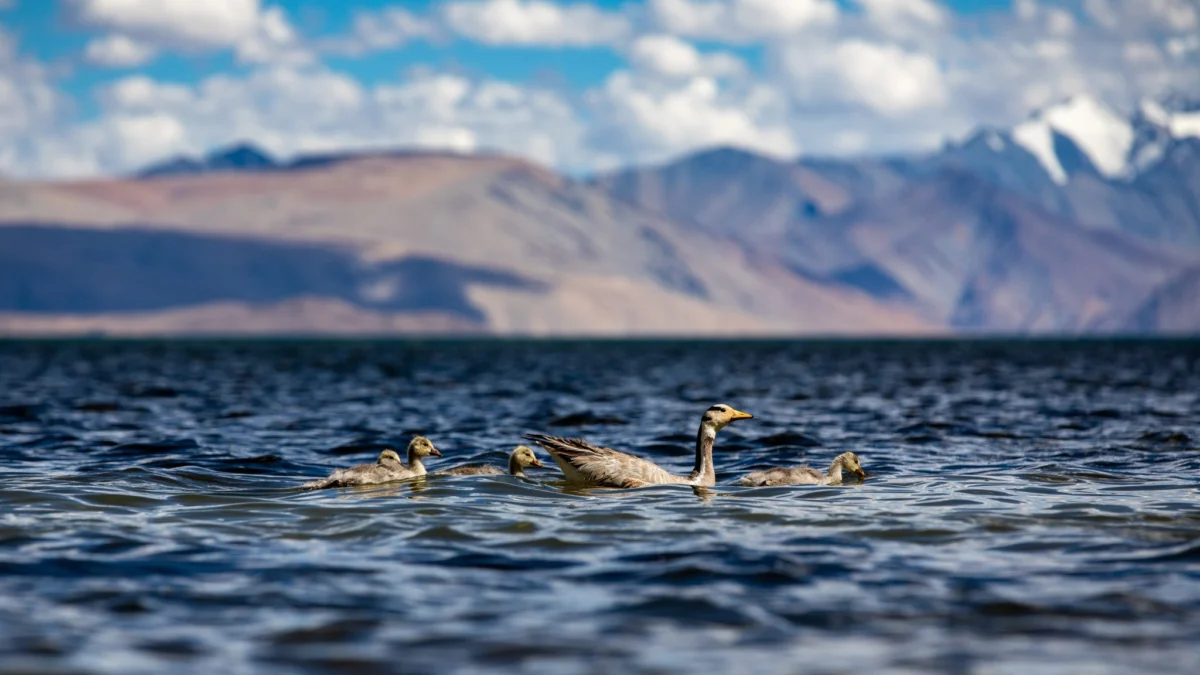
The dramatic collision of the Indian subcontinent with the Eurasian continent over 60 million years ago not only sculpted the world’s most formidable mountain range, the Himalayas, but also created a unique hydrological system that sustains an astonishing array of life. Nestled within these towering peaks, at elevations often exceeding 8,000 meters, vast reserves of snow and ice have accumulated over millennia, forming the majestic glaciers that feed a network of rivers and lakes. These glacial meltwaters are far more than just a source of sustenance for the human populations of the region; they are critical habitats for a select group of avian species uniquely adapted to this harsh yet life-giving environment. This World Water Day, we turn our attention to three such iconic Himalayan birds – the Brown-headed Gull, the Bar-headed Goose, and the Black-necked Crane – whose existence is inextricably linked to the health of these pristine glacial waters, and whose future is increasingly imperiled by the accelerating impacts of climate change.
The Genesis of Himalayan Glacial Ecosystems
The formation of the Himalayas, a geological event of immense scale, set the stage for the development of these high-altitude freshwater ecosystems. The intense cold at extreme altitudes prevented the seasonal melting of snow and ice, allowing for the gradual accumulation of glacial masses. These glaciers, acting as colossal natural reservoirs, release meltwater gradually, providing a consistent and vital water supply to the lower-lying regions. This steady flow nourishes the agricultural lands that support millions of people and drives hydroelectric power generation, contributing significantly to the economic and social fabric of countries like India, Nepal, Bhutan, China, and Pakistan.
Beyond their direct benefits to human societies, these glacial meltwaters are instrumental in creating and maintaining the unique habitats essential for specialized wildlife. High-altitude lakes, often referred to as "mirror lakes" due to their serene surfaces reflecting the towering peaks, and the intricate network of rivers and marshes that emanate from them, become vibrant ecosystems. These environments are characterized by their cold, clear waters and are often rich in aquatic life, providing crucial food sources for birds adapted to such challenging conditions.
Avian Architects of the High Himalayas
The Brown-headed Gull: A Migrant of the Tibetan Plateau
While often associated with coastal environments, the Brown-headed Gull ( Larus brunnicephalus) presents a compelling exception, demonstrating a remarkable adaptation to inland, high-altitude freshwater systems. These gulls undertake significant migrations, spending much of their lives on the vast and arid Tibetan Plateau, where they congregate in large colonies, sometimes numbering over 100 individuals. Their reliance on these high-altitude lakes and rivers stems directly from the glacial meltwater that sustains them.

The slow, consistent release of water from Himalayan glaciers forms and replenishes these vital aquatic habitats. For the Brown-headed Gull, these pristine environments offer an abundant food supply. The cold, oxygen-rich waters are teeming with fish, which form the primary component of their diet. The stability of these lake ecosystems, directly dependent on glacial melt, allows for the reliable presence of these food sources, supporting the large congregations of gulls observed across the Himalayas and Tibet. The breeding grounds of these gulls are often found on islands within these lakes, providing a degree of protection from terrestrial predators. The presence of these gulls, in turn, contributes to the biodiversity of these fragile ecosystems, playing a role in the local food web.
The Bar-headed Goose: Masters of the Stratosphere
Perhaps no other avian species embodies the spirit of the Himalayas quite like the Bar-headed Goose (Anser indicus). These remarkable birds are renowned for their extraordinary migratory capabilities, undertaking one of the most challenging and awe-inspiring journeys in the avian world. Unlike many other migratory birds that navigate around the colossal mountain range, Bar-headed Geese are known to fly directly over the Himalayas, a feat that continues to captivate and mystify ornithologists and physiologists alike.
Their migratory routes traverse the Central Asian Flyway, and their ability to ascend to altitudes of nearly 7,000 meters, where the oxygen levels are a mere fraction of those at sea level, is a testament to their unparalleled physiological adaptations. Scientists are still unraveling the precise mechanisms that allow these birds to thrive in such hypoxic conditions. It is believed to involve highly efficient respiratory systems, specialized hemoglobin with a high oxygen-binding capacity, and an exceptional tolerance for carbon dioxide.
This incredible ability to conquer the world’s highest peaks allows the Bar-headed Goose to access vital high-altitude lakes and marshes that dot the landscape along their migratory path. These watery havens serve as crucial stopover points, offering essential opportunities for rest and refueling. Here, they forage on grasses and roots, replenishing their energy reserves before continuing their arduous journey. The availability of these high-altitude wetlands, sustained by glacial melt, is therefore paramount to the success of their annual migrations, which can span thousands of kilometers. Their presence in these remote regions highlights the critical role of glacial meltwater in maintaining these specialized ecological niches.
The Black-necked Crane: A Majestic Sentinel of the Wetlands

The Black-necked Crane (Grus nigricollis) is another magnificent inhabitant of the Himalayan region, characterized by its striking appearance and graceful presence. With a wingspan that can reach up to two meters, the flight of these large birds is a breathtaking spectacle. Despite their impressive size, their migratory patterns are relatively short compared to other long-distance travelers. They primarily undertake altitudinal migrations, moving between lower and higher elevation wetlands within the Himalayan region.
These cranes are omnivorous, feeding on a diet that includes roots, tubers, and small animals found in and around the wetlands. The availability of these food sources is directly tied to the health and extent of these wetland habitats, which are, in turn, dependent on the continuous supply of glacial meltwater. The slow, steady melt of glaciers ensures that these wetlands remain inundated, providing the necessary conditions for the cranes to forage and breed.
The Looming Shadow of Climate Change
While glacial meltwater has historically been a reliable lifeblood for these avian species and the ecosystems they inhabit, the accelerating pace of climate change poses an unprecedented threat. Global warming is causing Himalayan glaciers to melt at an alarming rate. This rapid melting, while offering a short-term advantage in some areas by temporarily increasing wetland availability, carries profound long-term consequences.
Implications for the Black-necked Crane: For the Black-necked Crane, the current accelerated glacial melt has led to an expansion of wetland habitats in the short term. This has allowed them to find more food resources and potentially expand their breeding ranges slightly. However, this is a precarious and temporary benefit. As climate change intensifies, the glaciers that feed these wetlands are projected to shrink significantly, and in some cases, disappear entirely within the coming decades. The eventual vanishing of these glaciers would lead to a monumental reduction in high-elevation wetland habitats, severely impacting the Black-necked Crane’s ability to find sustenance and suitable breeding grounds.
Broader Ecological Ramifications: The impact extends beyond these three species. The entire high-altitude ecosystem, intricately linked to glacial meltwater, is vulnerable. Changes in water availability can affect vegetation patterns, insect populations, and fish stocks, creating a cascade of effects throughout the food web. This disruption threatens not only the unique avian biodiversity of the Himalayas but also the ecological balance of the entire region. Furthermore, the altered flow of glacial meltwater can have significant downstream effects on human populations, impacting agriculture, water security, and energy production.
A Call for Conservation and Sustainable Practices
The interconnectedness of glacial health, water resources, and biodiversity in the Himalayas is undeniable. Organizations and researchers are increasingly highlighting the urgent need for conservation efforts. BirdLife International, for instance, is actively involved in initiatives aimed at protecting habitats and promoting biodiversity. Their efforts extend to advocating for nature-safe renewable energy solutions, recognizing that reducing carbon emissions is paramount to mitigating climate change and preserving these vital ecosystems.

The vision articulated by such organizations is one where glaciers continue to sustain the flow of rivers and streams, supporting thriving communities of both wildlife and people. This necessitates a global commitment to reducing greenhouse gas emissions and implementing robust conservation strategies at regional and local levels.
Supporting Data and Scientific Projections:
- Glacial Retreat Rates: Numerous scientific studies have documented alarming rates of glacial retreat in the Himalayas. For example, a 2020 study published in Nature Climate Change indicated that Himalayan glaciers are melting at a rate of about 10 billion tons of ice per year, and that the rate has accelerated significantly since the year 2000. Projections suggest that if current warming trends continue, the region could lose up to two-thirds of its glaciers by the end of the century.
- Biodiversity Impact: The loss of high-altitude wetlands due to glacial melt is directly linked to population declines in species reliant on these habitats. For the Black-necked Crane, their wintering grounds in Tibet are particularly vulnerable to changes in water levels and vegetation availability, which are dictated by glacial melt.
- Physiological Adaptations: Research into the Bar-headed Goose’s migratory prowess has revealed extraordinary adaptations, including a highly efficient respiratory system and blood chemistry that allows for oxygen transport at extreme altitudes. However, these adaptations are optimized for existing environmental conditions, and rapid, unprecedented changes could still push their physiological limits.
Timeline of Concern and Action
- Geological Epochs: The formation of the Himalayas and their glaciers over millions of years.
- Mid-20th Century Onward: Increasing scientific observation and documentation of glacial retreat, with growing concerns over climate change impacts.
- Late 20th to Early 21st Century: Intensified research into Himalayan ecosystems and the specific vulnerabilities of species like the Bar-headed Goose and Black-necked Crane to environmental changes. Increased advocacy for conservation.
- Present Day (World Water Day): A critical juncture where the urgent need for action is underscored by scientific evidence and observable environmental changes. This year’s observance serves as a reminder of the interconnectedness of water, climate, and biodiversity.
- Future Projections: Scenarios ranging from significant biodiversity loss and water scarcity to a more optimistic future dependent on aggressive global climate action and localized conservation efforts.
Official Responses and Broader Implications
While specific governmental responses vary across the Himalayan nations, there is a growing recognition of the threat posed by glacial melt. International collaborations and research initiatives are underway to monitor glacial health and assess the impact on water resources and biodiversity. However, the scale of the challenge requires a more concerted and unified global effort to reduce emissions.
The implications of glacial melt in the Himalayas extend far beyond the survival of these three iconic bird species. The downstream consequences for millions of people in South Asia, reliant on glacial meltwater for drinking water, agriculture, and hydroelectric power, are profound. Potential impacts include increased flood risks in the short term due to more rapid melt, followed by severe water scarcity in the long term as glacial reserves diminish. This could lead to widespread displacement, economic instability, and increased regional tensions.
The story of the Brown-headed Gull, the Bar-headed Goose, and the Black-necked Crane serves as a poignant microcosm of a larger environmental crisis. Their dependence on the pristine, life-giving waters originating from Himalayan glaciers highlights the fragility of these unique ecosystems. As climate change continues to exert its influence, the fate of these magnificent birds, and indeed the future well-being of the entire Himalayan region, hinges on our collective ability to act decisively to protect our planet’s vital water resources and mitigate the drivers of global warming. The call for action is clear: preserve the glaciers, protect the habitats, and ensure a future where these extraordinary species, and the human communities that share their landscapes, can continue to flourish.
