

The majestic Himalayas, born from a colossal geological collision over 60 million years ago, stand as a testament to Earth’s dynamic forces. Within their towering embrace, ancient layers of snow and ice have accumulated, forming vast glaciers that serve as critical reservoirs of fresh water. For the nations that share this formidable mountain range, these glacial meltwaters are not merely a scenic wonder but a fundamental life force, sustaining agriculture, powering energy production, and crucially, providing essential habitats for a unique array of wildlife. On this World Water Day, we turn our attention to three iconic avian species whose very existence is inextricably linked to these cool, pristine glacial waters, and the growing threat posed by a warming planet.
The Delicate Balance: Glacial Meltwater and Himalayan Biodiversity
The slow, steady melt of Himalayan glaciers nourishes a network of high-altitude lakes and rivers, creating environments teeming with life. These aquatic ecosystems are the lifeblood of a specialized fauna, and among the most visible beneficiaries are the birds that have adapted to these challenging yet resource-rich landscapes. Their reliance on these waters underscores a broader ecological dependency that is increasingly vulnerable to the impacts of climate change.
Brown-headed Gull: An Unlikely Nomad of the Tibetan Plateau
While many associate gulls with coastal environments, the Brown-headed Gull ( Larus brunnicephalus) presents a striking exception. These birds are predominantly found inland, congregating in significant numbers on the vast, high-altitude lakes of the Tibetan Plateau. The glacial meltwater that feeds these lakes creates expansive, oxygen-rich environments that support abundant fish populations, providing a reliable food source for congregations that can number over a hundred individuals.

The Brown-headed Gull’s life cycle is intricately tied to the seasonal availability of these glacial-fed lakes. During the breeding season, they establish colonies on islands or shorelines, relying on the consistent water levels and food availability. Their migratory patterns, though not as dramatic as some of their avian counterparts, are still influenced by the thawing and freezing cycles of these high-altitude aquatic systems. Scientific observations suggest that the presence of large gull populations can also play a role in the local food web, preying on smaller aquatic organisms and thus contributing to the ecological balance of these fragile ecosystems. The health of these lakes, therefore, directly impacts the survival and reproductive success of the Brown-headed Gull.
Bar-headed Goose: Masters of the High-Altitude Migration
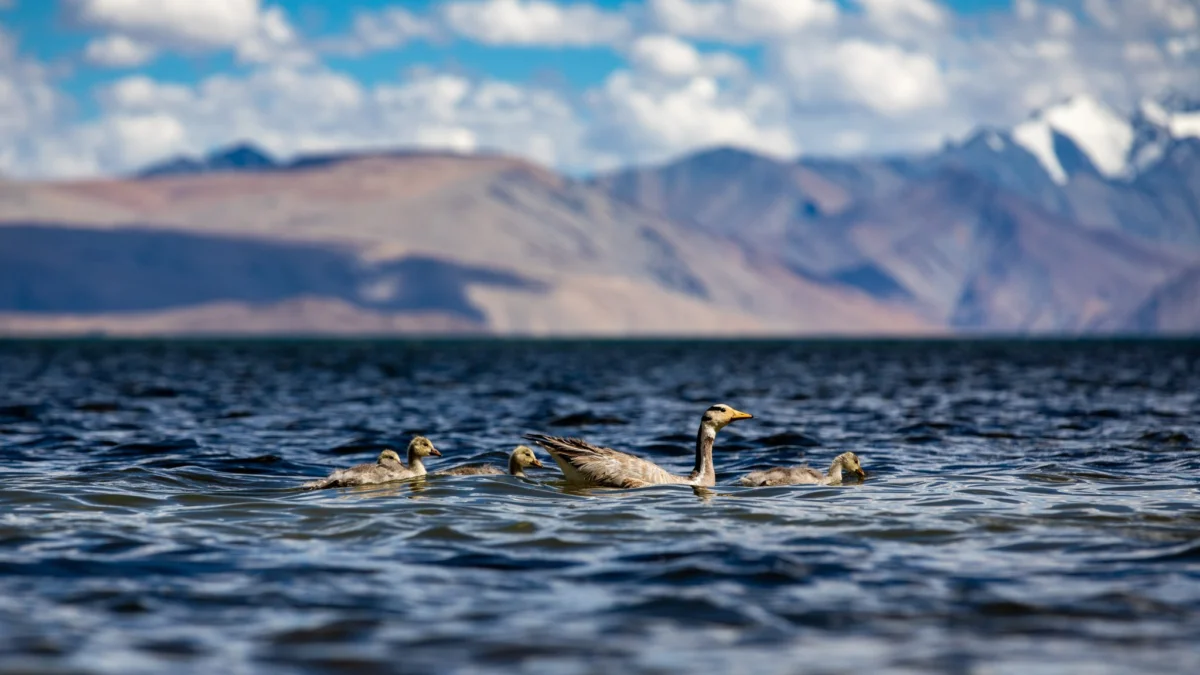
The Bar-headed Goose (Anser indicus) is perhaps the most renowned for its extraordinary relationship with the Himalayas. These geese are not merely inhabitants of the region; they undertake one of the most astonishing migratory feats in the avian world. While many migratory birds navigate the mountain passes, Bar-headed Geese famously fly directly over the formidable peaks, reaching altitudes of nearly 7,000 meters. The physiological mechanisms that allow them to survive and thrive in such low-oxygen environments remain a subject of intense scientific study, a testament to their remarkable evolutionary adaptations.
Their migratory routes are strategically planned to utilize the high-altitude lakes and marshes that are sustained by glacial meltwater. These aquatic havens serve as crucial refueling stops, providing essential nourishment in the form of grasses and roots before the arduous journey continues. The ability of the Bar-headed Goose to access these remote, oxygen-scarce environments highlights the critical role of glacial water in enabling unique ecological niches. Their breeding grounds are typically found in Central Asia, near mountain lakes, where they form colonies that can number in the thousands, further emphasizing their dependence on these specific habitat types. The timing of their migration is often synchronized with the availability of meltwater, underscoring the delicate temporal link between the geese and their environment.
Black-necked Crane: A Majestic Symbol of Wetland Health
The Black-necked Crane (Grus nigricollis) is an imposing figure in the Himalayan skies, its two-meter wingspan a breathtaking sight. Despite their size, these cranes undertake relatively short migrations, typically moving between lower and higher elevation wetlands within the Himalayan region. Their diet consists primarily of roots and small aquatic animals found in these wetland environments.

In recent years, a complex dynamic has emerged concerning the Black-necked Crane and climate change. The accelerating melt of mountain glaciers, driven by rising global temperatures, has, in some instances, led to a short-term increase in wetland habitat. This has provided a temporary boon for the cranes, offering more foraging grounds. However, this is a precarious advantage. Scientists warn that the current rate of glacial melt is unsustainable. If glaciers continue to shrink and eventually disappear, the long-term implication for the Black-necked Crane will be catastrophic. The reduction and potential loss of these high-elevation wetland habitats would severely diminish their available territory, threatening their populations with a monumental decline.
The Looming Threat: Climate Change and Glacial Recession
The overarching threat to all these species, and indeed to the entire Himalayan ecosystem, is climate change. The accelerated melting of glaciers is not an abstract future possibility; it is a present reality. Studies from institutions like the International Centre for Integrated Mountain Development (ICIMOD) have documented significant glacial retreat across the Himalayas, with some projections indicating a potential loss of up to two-thirds of Himalayan glaciers by the end of the century under high-emission scenarios.
This recession has profound implications:
- Altered Water Availability: While initial melting might temporarily increase water flow, the long-term consequence is a drastic reduction in water availability for downstream communities and ecosystems. Rivers could become seasonal, and high-altitude lakes could shrink or disappear entirely.
- Habitat Loss: The wetlands, marshes, and lakes that are vital for the survival of the Brown-headed Gull, Bar-headed Goose, and Black-necked Crane are directly threatened by the disappearance of their glacial water sources.
- Ecological Disruption: Changes in water temperature, flow, and availability will disrupt food webs, impacting fish populations, insect life, and the plant species that form the base of the avian diet.
- Increased Extreme Weather Events: Climate change is also linked to an increase in the frequency and intensity of extreme weather events, such as droughts and floods, which can further devastate fragile wetland habitats and impact bird populations directly.
A Call to Action: Protecting the Lifeline
The fate of these iconic Himalayan birds is a stark indicator of the broader ecological crisis unfolding in the region. Organizations like BirdLife International are actively engaged in efforts to mitigate the impacts of climate change and protect biodiversity. Their work focuses on several key areas:

- Habitat Protection: Conserving and restoring crucial habitats, particularly wetlands and important stopover sites along migratory routes, is paramount. This involves working with local communities and governments to establish protected areas and implement sustainable land-use practices.
- Biodiversity Monitoring: Continuous monitoring of bird populations and their habitats provides vital data to understand the extent of climate change impacts and to inform conservation strategies.
- Promoting Nature-Safe Renewable Energy: Advocating for and supporting renewable energy projects that are designed with ecological considerations in mind, minimizing their impact on wildlife and habitats. This includes ensuring that hydropower projects, for instance, are developed in ways that do not disrupt river flows critical for downstream ecosystems.
- Climate Change Mitigation: Ultimately, addressing the root cause requires global efforts to reduce greenhouse gas emissions. BirdLife and its partners advocate for policies that limit global warming and slow the rate of glacial melt.
The vision for the future is one where the towering glaciers continue to feed the life-giving streams, where the vibrant wetlands remain intact, and where the majestic flight of the Bar-headed Goose and the elegant presence of the Black-necked Crane are not relegated to history. A future where communities of birds and people can flourish side by side, sustained by the invaluable resource of clean, abundant water. The World Water Day serves as a critical reminder of this interconnectedness and the urgent need for collective action to safeguard these precious natural resources and the extraordinary biodiversity they support. The continued survival of these three avian ambassadors of the Himalayas hinges on our ability to act decisively and collaboratively to address the escalating climate crisis.
