

The social media landscape has witnessed a significant shift in content management as Instagram officially begins the rollout of a feature that allows users to rearrange the sequence of photos and videos within a carousel post after it has been made live. This update addresses a long-standing grievance among the platform’s diverse user base, ranging from casual hobbyists to professional photographers and digital marketing agencies. By providing the ability to modify the internal structure of a multi-image post without necessitating its deletion, Instagram is effectively decoupling the creative presentation of content from the permanence of its engagement metrics.
For years, the sequence of a carousel post—often referred to as a "photo dump" or a multi-slide gallery—was immutable once the user hit the share button. If a creator realized that the third slide would have served better as the cover image, or if a brand discovered a narrative inconsistency in their visual storytelling, the only recourse was to delete the entire post. This process was inherently destructive, as it resulted in the immediate loss of all accumulated likes, comments, shares, and saves. In the data-driven world of social media, where engagement serves as the primary currency for reach and algorithmic favor, such a trade-off was often seen as too costly, forcing users to leave suboptimal content on their profiles.
Technical Implementation and User Interface
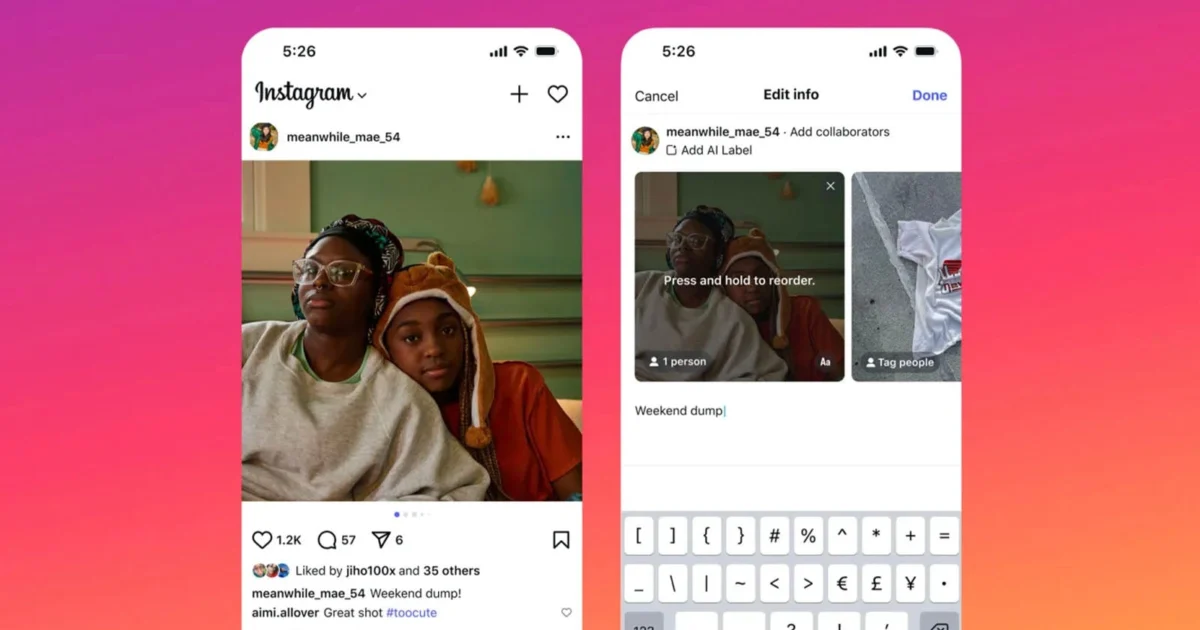
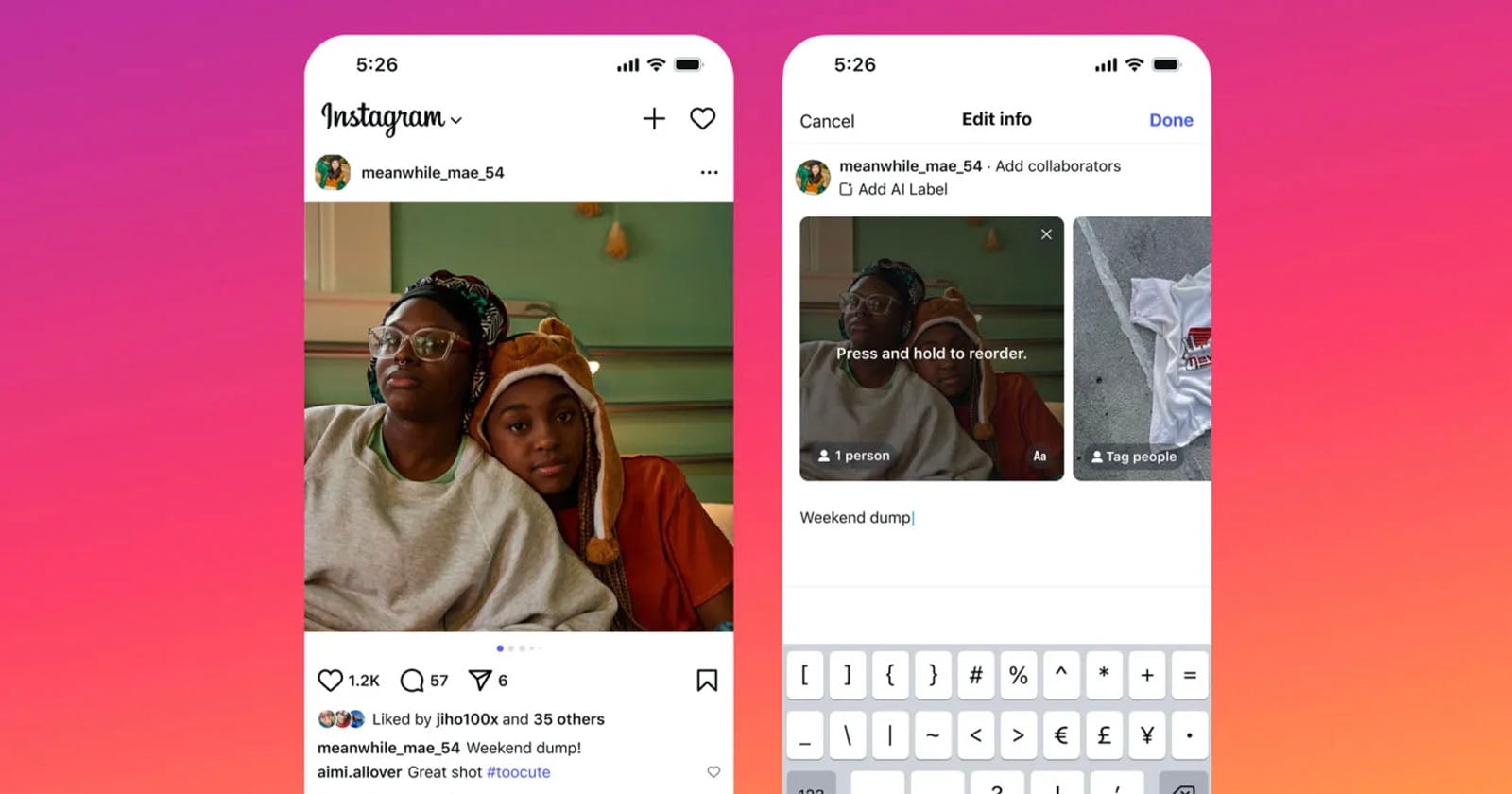
The new functionality is designed to be intuitive, integrating seamlessly into the existing "Edit" menu found within the three-dot ellipsis on any individual post. To utilize the feature, a user must navigate to their published carousel, select the edit option, and then interact directly with the media slides. By long-pressing on a specific image or video, the user can drag the thumbnail into a new position within the sequence. This drag-and-drop interface mirrors the pre-publishing workflow, providing a consistent user experience.
Once the desired order is established, the user saves the changes, and the post is updated across the global feed and the user’s profile grid. Crucially, this update does not reset the post’s engagement data. The likes, comments, and analytics remain intact, allowing for "live" curation of content. However, early technical assessments and official documentation indicate certain limitations. While the order of existing media can be shuffled, the current iteration of the update does not allow users to add new images or videos to a post that has already been published. Furthermore, the feature appears to be rolling out primarily for newly created carousels, with some legacy posts still restricted to the older "delete only" functionality for individual slides.
A Chronology of Instagram’s Carousel Evolution
The introduction of post-publish reordering marks the latest milestone in the nearly decade-long evolution of the carousel format. Understanding the significance of this update requires a look at the feature’s chronological development:
- February 2017: Instagram officially launches carousels, allowing users to share up to 10 photos or videos in a single post. At the time, all content was required to fit a square 1:1 aspect ratio.
- August 2017: The platform expands the format to support landscape and portrait orientations, though all images in a single carousel still had to share the same aspect ratio.
- November 2021: Instagram introduces the ability to delete a single image from a carousel after it has been posted, providing the first hint of post-publication media management.
- August 2024: The platform significantly increases the capacity of carousels, allowing users to include up to 20 slides in a single post, effectively doubling the previous limit.
- October 2024: Further updates allow for mixed aspect ratios within the same carousel, ending the requirement for visual uniformity across all slides.
- March 2026: The current update is released, enabling the reordering of slides post-publication, fulfilling one of the most persistent user requests in the app’s history.
This timeline illustrates a clear trajectory toward giving users more control over how they archive and present their digital lives. What began as a rigid tool for sharing multiple photos has transformed into a sophisticated, flexible gallery system.
Supporting Data and Engagement Metrics
The push for more flexible carousel tools is driven by the format’s superior performance in the Instagram ecosystem. According to a 2024 comprehensive study by social media analytics firm Metricool, carousel posts consistently outperform single-image posts in terms of reach and engagement. The study found that carousels encourage users to spend more time on a single post as they swipe through the content, which signals to the Instagram algorithm that the content is high-value.
Separate findings from the social media management platform Buffer indicate that carousels generate approximately 12% more engagement on average compared to static single-image posts. This "swipe-through rate" is a critical metric for influencers and brands. Interestingly, the Instagram algorithm is known to "re-serve" carousel posts to followers who did not interact with them the first time. If a user scrolls past a carousel without swiping, the app may show that same post to the user a second time later in the day, but starting on the second or third slide. The ability to reorder these slides allows creators to strategically place their most "thumb-stopping" content at the beginning or in these secondary "re-serve" positions to maximize the chances of interaction.
Official Responses and Strategic Vision
The update was confirmed through Instagram’s official "Creators" account and echoed by Adam Mosseri, the Head of Instagram. In various communications, the platform has emphasized that these changes are part of a broader effort to make Instagram a "home for creativity" rather than just a place for snapshots.
"We want to give creators more power over their work even after it’s been shared," a spokesperson for Meta noted during a recent briefing. "We understand that creative vision can evolve, and the way a story is told through a series of images might need adjustment based on how the community is responding to it."
Mosseri has frequently spoken about the need for Instagram to compete with the rapid-fire content cycles of TikTok and the curation-heavy nature of Pinterest. By allowing users to curate their profile grids more effectively through carousel reordering, Instagram is strengthening its position as a primary portfolio tool for visual artists.
Broader Implications for Photographers and Brands
The implications of this update are particularly profound for professional photographers who use Instagram as a digital portfolio. On a user’s profile, only the first slide of a carousel is visible in the 3×3 grid. This "cover image" is vital for maintaining a specific aesthetic or color palette on the profile page. Previously, if a photographer felt a different image from the set would better suit the grid’s visual flow, they were forced to choose between profile aesthetics and post engagement. With the new reordering tool, they can update their grid’s look instantly without sacrificing the social proof (likes and comments) of the original post.
For brands and digital marketers, the update offers a safety net for storytelling. Sequential storytelling—such as "how-to" guides, product reveals, or event recaps—relies heavily on the logical flow of information. If a mistake is made in the sequence, it can confuse the consumer and diminish the brand’s professional image. The ability to fix these errors post-publication ensures that brand messaging remains clear and effective.
Furthermore, this feature opens the door for a form of "live A/B testing." A brand could potentially post a carousel with one cover image, monitor its performance for 24 hours, and then switch the order to see if a different image generates a higher click-through or engagement rate during the remainder of the post’s lifecycle.
Analysis of Future Directions
While the ability to reorder is a significant step forward, it highlights the remaining gaps in Instagram’s content management system. The most notable omission remains the inability to add new content to an existing post. Users frequently request the ability to "update" a live post with new information—for example, adding a "Sold Out" slide to a product carousel or adding more photos to an ongoing event gallery.
There is also the question of how this will affect the platform’s transparency. As content becomes more fluid, the distinction between a "moment in time" and a "curated gallery" blurs. However, in the context of Instagram’s current pivot toward becoming a more versatile media platform, this update is a logical and necessary progression. It acknowledges that digital content is rarely "finished" the moment it is uploaded and that providing users with the tools to refine their work is key to long-term platform retention.
As the rollout continues globally, users can expect to see a more dynamic profile experience. The shift from static uploads to editable galleries represents a fundamental change in how we interact with our digital archives, prioritizing the longevity and flexibility of content over the rigid "post and forget" models of the past. For the millions of users who rely on Instagram for business and creative expression, the ability to reorder carousels is not just a minor UI tweak—it is a significant enhancement to the platform’s utility as a professional creative tool.
