


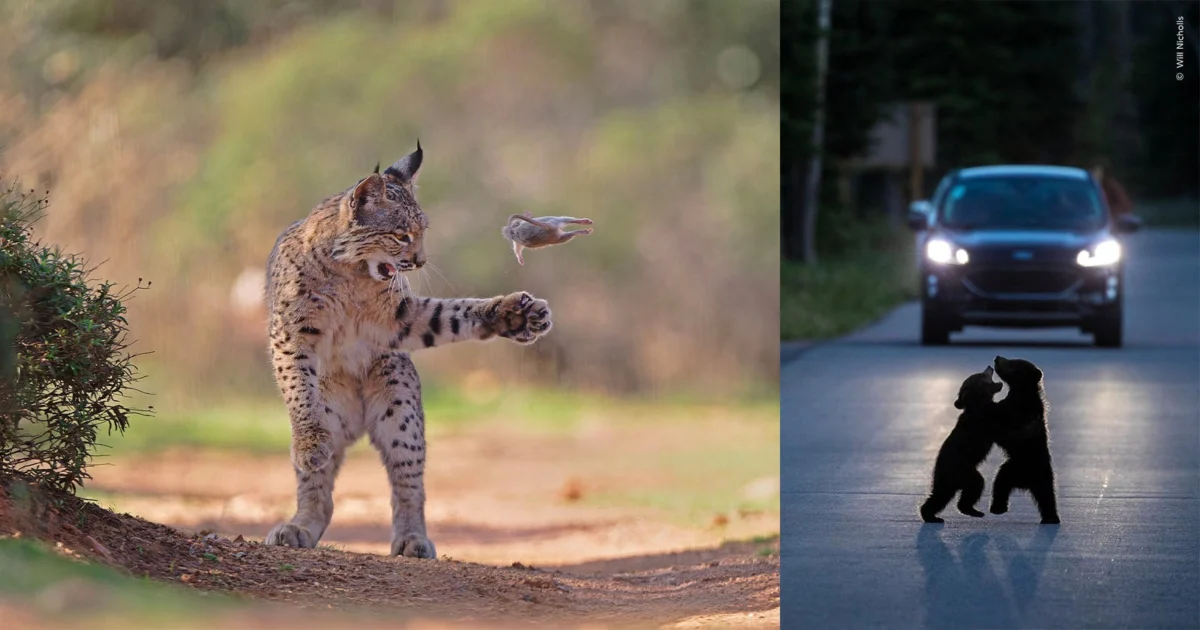
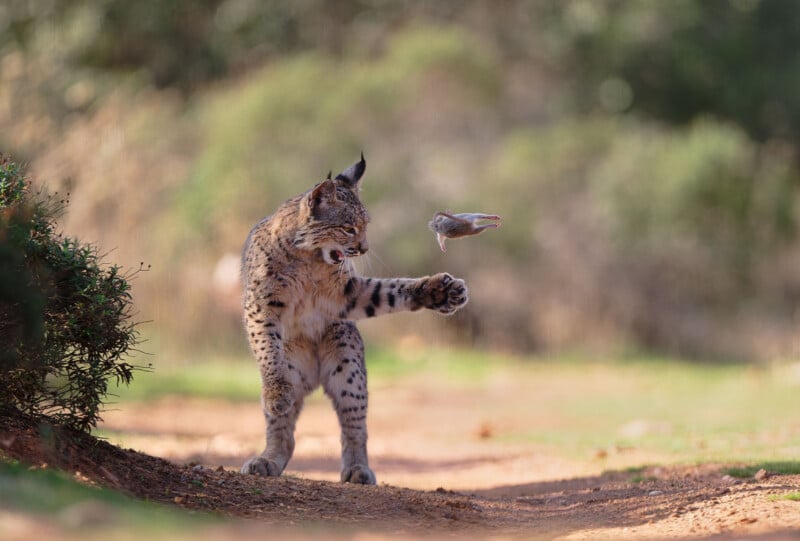
Austrian photographer Josef Stefan has been named the winner of the Wildlife Photographer of the Year Nuveen People’s Choice Award 2026 for his striking image of a young Iberian lynx in a moment of predatory play. The winning photograph, titled "Flying Rodent," emerged as the favorite following a record-breaking public vote that saw 85,917 nature photography enthusiasts from around the world cast their ballots. Captured in the rural landscape of Torre de Juan Abad, Spain, the image provides a rare and intimate glimpse into the developmental behavior of one of the world’s most elusive feline species.
The photograph was the result of significant dedication and patience, as Stefan spent a two-week period observing the local lynx population from a specialized photographic hide. The winning frame captures a young lynx mid-action, playfully tossing a rodent into the air before eventually consuming it. While the scene may appear whimsical to the casual observer, it represents a critical biological behavior known as "play-hunting," which allows young predators to refine the coordination and reflexes necessary for survival in the wild. According to Stefan’s observations, the interaction lasted approximately 20 minutes before the lynx retreated behind a nearby bush to finish its meal.
Competition Statistics and Global Reach
The Nuveen People’s Choice Award serves as a public-facing extension of the main Wildlife Photographer of the Year competition, which is owned and produced by the Natural History Museum in London. The 2026 edition of the competition saw an unprecedented level of global participation. A total of 60,636 entries were submitted from 113 different countries and territories, highlighting the universal appeal of wildlife documentation and conservation storytelling.
From this vast pool of professional and amateur submissions, an international judging panel consisting of experts in photography, science, and conservation collaborated with the Natural History Museum to curate a shortlist of 24 images. It was from this elite selection that the public chose Stefan’s "Flying Rodent" as the definitive winner. The scale of the voting—nearly 86,000 individual participants—underscores the growing public interest in wildlife issues and the power of photography to engage a global audience.
Detailed Analysis of the Winning Image: Flying Rodent
The technical and narrative merit of "Flying Rodent" lies in its timing and the conservation context of its subject. The Iberian lynx (Lynx pardinus) was once considered the most endangered feline species in the world. At the turn of the 21st century, the population had dwindled to fewer than 100 individuals due to habitat loss, a decline in its primary prey (rabbits), and accidental deaths. However, intensive conservation efforts, including captive breeding and habitat restoration projects like Life+ Lynx-Connect, have seen the population rebound to over 2,000 individuals in recent years.
Stefan’s choice of location, Torre de Juan Abad, is situated in the Castilla-La Mancha region, an area that has become a stronghold for the species’ recovery. By documenting a young lynx engaging in natural behavior, Stefan contributes to a broader narrative of hope and ecological resilience. The image utilizes a shallow depth of field to isolate the lynx and its airborne prey against a soft, natural background, emphasizing the kinetic energy of the "toss" and the focused expression of the young predator.
Highly Commended Winners: A Global Perspective on Biodiversity
In addition to the top prize, four other images were recognized as "Highly Commended" by the voting public. These photographs span the globe, from the industrial coastlines of Namibia to the frozen expanses of the Canadian Arctic, each telling a unique story of the intersection between wildlife and the modern world.
Industrial Contrast in Walvis Bay
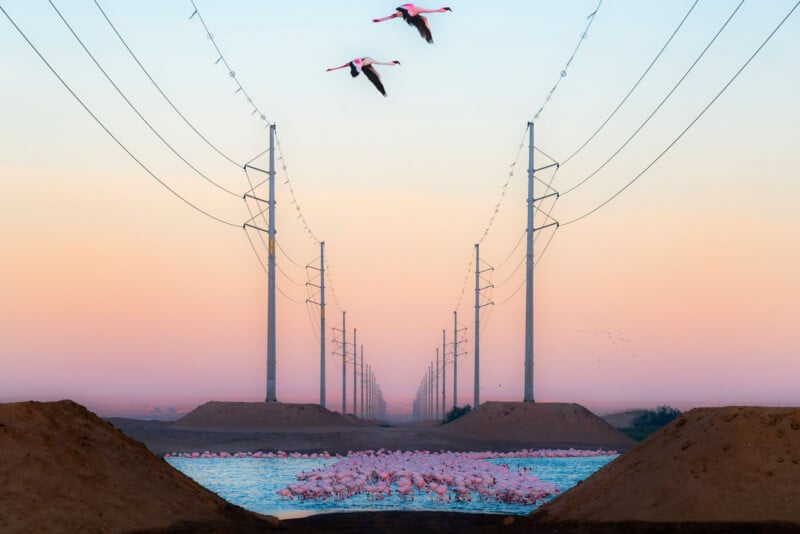
Swiss photographer Alexandre Brisson received high commendation for his image of a flock of flamingos in Walvis Bay, Namibia. The photograph is notable for its juxtaposition of natural beauty and human infrastructure. The flamingos are framed against a stark, geometric backdrop of power lines and utility poles. This image serves as a powerful visual metaphor for the encroachment of industrial development on migratory pathways and coastal wetlands, challenging viewers to consider how wildlife adapts to increasingly fragmented landscapes.
Arctic Serenity Amidst Rising Temperatures
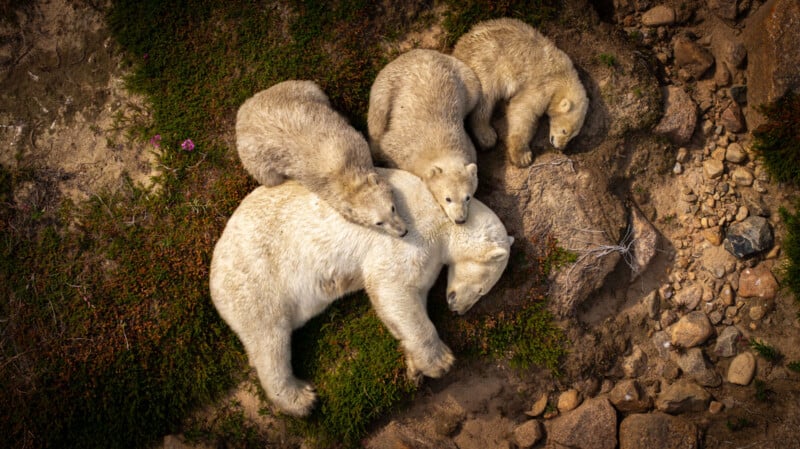
Canadian photographer Christopher Paetkau captured a poignant moment of a mother polar bear and her three cubs resting on the Hudson Bay coast. Unlike the traditional imagery of polar bears on sea ice, this photo depicts the animals on mossy, rocky terrain during the summer heat. The image highlights the "walking hibernation" phase that polar bears undergo when the ice melts, but it also subtly points toward the lengthening ice-free seasons caused by climate change, which forces these apex predators to spend more time on land with limited access to food.
The Human-Wildlife Interface in Jasper
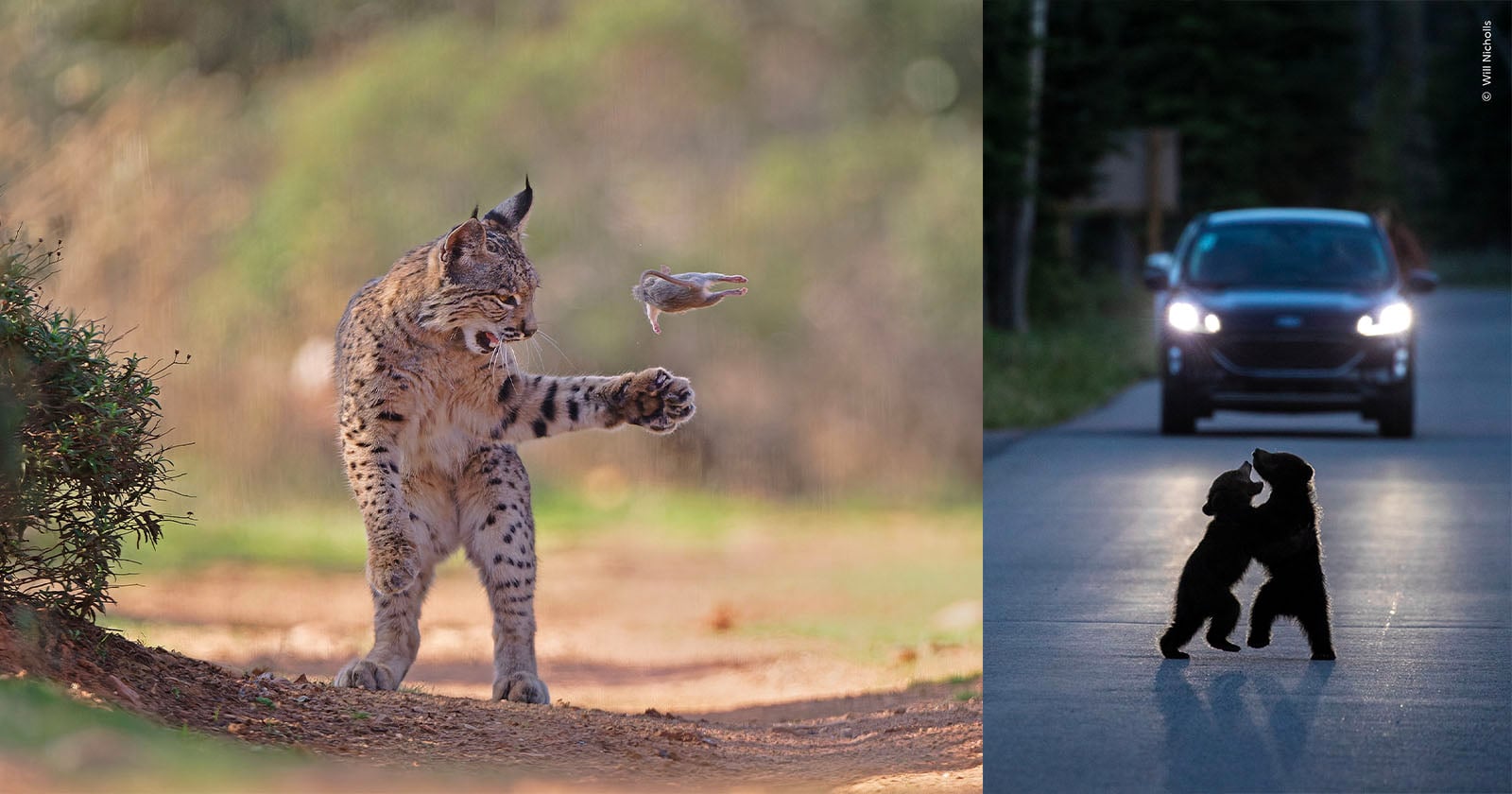
British photographer Will Nicholls was recognized for his silhouetted portrait of two young bear cubs play-fighting in the middle of a road in Jasper National Park, Canada. The image is both charming and cautionary; while it showcases the playful nature of bear siblings, the presence of the road and the silhouette of a nearby vehicle highlight the constant risks of vehicle collisions and the habituation of wildlife to human infrastructure in protected national parks.
The Brutal Reality of Nature
Japanese photographer Kohei Nagira provided one of the most visceral entries in the competition. His photograph depicts a sika deer on the island of Hokkaido carrying the interlocked, severed head of a rival male. The rival had likely died after their antlers became inextricably tangled during a rutting battle—a phenomenon that often leads to the death of both animals. In this rare instance, one male survived, forced to carry the weight of his opponent until decomposition or natural wear released the macabre burden. The image is a stark reminder of the uncompromising Darwinian struggles that define life in the wild.
Institutional Response and the Role of the Natural History Museum
The Natural History Museum, London, which hosts the competition, views these awards as a critical bridge between scientific research and public awareness. Dr. Douglas Gurr, Director of the Natural History Museum, emphasized the importance of the public’s involvement in the selection process.
"It’s been wonderful to see all the votes coming in to choose the photograph set for display in our flagship exhibition here at the Natural History Museum," Dr. Gurr stated. "Whether showcasing fascinating behavior or platforming a powerful story, this year’s selection of images was truly exceptional. These photographs do more than just capture a moment; they spark a conversation about our relationship with the natural world and the urgent need to protect it."
The Wildlife Photographer of the Year competition has evolved significantly since its inception in 1964. What began as a magazine-led contest with 600 entries has transformed into a global platform that influences conservation policy and public perception. The inclusion of the People’s Choice Award ensures that the exhibition remains grounded in the emotional and visual connections that everyday people feel toward nature.
Chronology of the 2025–2026 Competition Cycle
The path to Josef Stefan’s victory followed a rigorous year-long timeline:
- Late 2024: Submissions opened to photographers worldwide across various categories, including behavior, photojournalism, and portraiture.
- Summer 2025: An international jury of experts met at the Natural History Museum to judge the tens of thousands of entries based on creativity, originality, and technical excellence.
- Fall 2025: The winners of the main competition categories were announced, with the "Grand Title" winner taking center stage.
- Winter 2025/2026: The Natural History Museum revealed the 24-image shortlist for the People’s Choice Award, opening the digital voting platform to the public.
- February 2026: Voting concluded, and Josef Stefan was officially announced as the Nuveen People’s Choice Award winner.
Broader Implications for Wildlife Photography and Conservation
The recognition of Stefan’s work highlights a trend in wildlife photography toward documenting the "unseen" moments of common or recovering species. While "trophy" shots of rare animals remain popular, images that display complex behavioral traits—such as the play-hunting of the lynx—are increasingly valued for their educational contribution.
Furthermore, the success of photographers like Alexandre Brisson and Will Nicholls suggests that the public is becoming more receptive to "conservation photography"—a genre that does not shy away from showing the impact of humans on the environment. By placing flamingos next to power lines or bears on a highway, these photographers move beyond aesthetic perfection to provide a more honest and urgent documentation of the Anthropocene.
Exhibition and Public Access
Josef Stefan’s "Flying Rodent," along with the four Highly Commended images, will be integrated into the primary Wildlife Photographer of the Year exhibition at the Natural History Museum in South Kensington. The exhibition is scheduled to remain open to the public until July 12, 2026.
For the duration of the show, the winning People’s Choice image will be given a prominent place on the gallery walls, while the runners-up will be featured on interactive digital displays. Following the London residency, the exhibition will embark on a global tour, visiting dozens of countries and reaching an estimated audience of over one million people. This international reach ensures that the stories of the Iberian lynx, the polar bears of Hudson Bay, and the sika deer of Japan continue to inspire a global commitment to biodiversity.
