

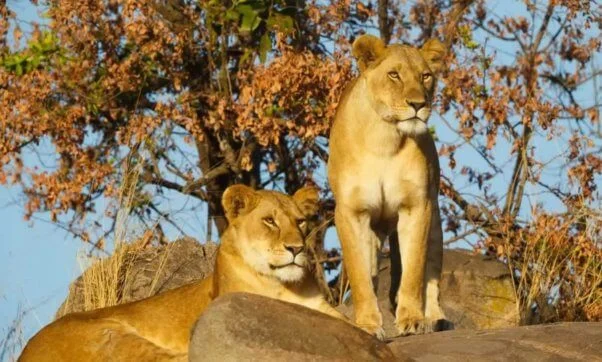
A 10-year-old girl narrowly escaped a fatal encounter at the Shantou Zhongshan Park Zoo in Guangdong province, China, after a lioness reached through the bars of her enclosure and latched onto the child’s leg. The incident, which occurred during a supervised feeding session, has ignited a firestorm of criticism regarding safety protocols at municipal wildlife facilities and the ethics of close-contact animal encounters. While the child sustained only minor injuries, the event serves as a stark reminder of the inherent risks involved when wild predators are kept in proximity to the public, particularly in facilities that bypass standard safety barriers.
Detailed Chronology of the Incident
The event unfolded during a routine visit to the Shantou Zhongshan Park Zoo, a long-standing public park that houses a variety of wildlife in traditional barred enclosures. According to eyewitness accounts and subsequent reports, the incident began when a zookeeper allegedly permitted the 10-year-old girl to move behind the primary safety barrier. This barrier is designed to maintain a significant distance between visitors and the heavy-gauge steel bars of the lion enclosure.
The intent of the breach was to allow the child to feed the lions directly through the cage. As the girl approached the bars with meat, a lioness inside the enclosure reacted with predatory speed. Rather than merely taking the food, the feline extended her paw through the gap in the bars, hooking her claws into the girl’s leg and attempting to pull her toward the cage.
The zookeeper and the child’s guardians immediately intervened. Video footage of the incident captured the girl’s screams of terror as the zookeeper struggled to maintain a grip on her, essentially engaging in a tug-of-war with the apex predator. After several tense seconds, the lioness released her hold. The child was rushed to a local medical facility where she was treated for lacerations and bruising on her leg. Medical officials confirmed that while the physical injuries were not life-threatening, the psychological trauma of the event was significant.
Institutional Response and Safety Failures
In the aftermath of the attack, the management of Shantou Zhongshan Park Zoo announced a formal investigation into the breach of protocol. Preliminary statements from the zoo suggest that the staff member involved may have exercised poor judgment in an attempt to provide a "memorable experience" for the visitor. The zoo has temporarily suspended the feeding program and reinforced the secondary safety barriers to prevent visitors from approaching the bars.
However, wildlife safety experts argue that the fault lies not just with a single employee, but with a systemic failure in the facility’s design and operational philosophy. In modern zoological standards, "protected contact" is the minimum requirement for handling dangerous carnivores. This means that at no point should there be a possibility of physical contact between the animal and the public or untrained staff. The fact that the enclosure’s bars were wide enough for a lioness to extend her limb fully through them indicates a design flaw common in older, "roadside-style" zoos.
The Psychological Impact of Captivity: Understanding Zoochosis
The behavior of the lioness, while described by some as an "attack," is viewed by biologists as a combination of natural hunting instincts and the stresses of confinement. Lions in the wild are wide-ranging apex predators that roam territories spanning hundreds of square miles. In a captive environment—especially one described by observers as "barren"—these animals are denied the ability to engage in natural behaviors such as hunting, social restructuring, and territorial patrolling.
This chronic deprivation often leads to a condition known as "zoochosis." Signs of zoochosis include repetitive, purposeless behaviors such as pacing, bar-biting, and self-mutilation. In high-stress environments, big cats can become hyper-reactive to external stimuli. The presence of a small human in close proximity, combined with the scent of raw meat, can trigger a predatory lunge that the animal would otherwise not have the opportunity to execute. Critics of the Shantou facility point out that the lack of environmental enrichment—such as climbing structures, hidden food puzzles, or varied terrain—likely exacerbated the lioness’s frustration and aggression.
Global Context: Safety Standards and Public Risk
The incident in China is far from an isolated occurrence. Historically, the "roadside zoo" industry has relied on close-contact encounters, such as cub petting and photo opportunities, to generate revenue. These practices are increasingly being banned or heavily regulated worldwide due to the danger they pose to both humans and animals.
Data from various wildlife advocacy groups indicate that since 1990, hundreds of dangerous incidents involving big cats have occurred in captive settings globally. These range from minor injuries to fatalities involving both keepers and members of the public. In many cases, these incidents occur at facilities that lack accreditation from recognized bodies like the World Association of Zoos and Aquariums (WAZA) or the Association of Zoos and Aquariums (AZA), which mandate strict "no-contact" policies for dangerous species.
The Legislative Battle in the United States
The attack in Shantou has resonated particularly strongly in the United States, where the regulation of big cats has undergone a massive shift in recent years. For decades, the U.S. was a hub for the private ownership of lions and tigers, often outnumbering those found in the wild. This led to a high frequency of escapes and attacks, often involving children.
In December 2022, the United States passed the Big Cat Public Safety Act (BCPSA). This landmark legislation prohibited the private ownership of big cats and, crucially, ended the practice of "cub petting" and other direct-contact encounters. The law was a direct response to the safety and welfare concerns highlighted by the "Tiger King" phenomenon and decades of advocacy.
However, the BCPSA is currently facing challenges. Various interests, including owners of roadside attractions and traveling animal acts, have begun lobbying Congress to roll back these protections. They argue that the regulations harm small businesses and limit educational opportunities. Proponents of the law, however, point to the Shantou incident as exactly the type of tragedy the BCPSA is designed to prevent. They argue that "educational" value does not justify the risk of a child being mauled or the lifelong confinement of a wild animal in a substandard enclosure.
Analysis of Implications for the Zoo Industry
The Shantou lion attack is likely to accelerate the move away from traditional barred cages toward "landscape immersion" exhibits. In modern zoo design, glass partitions and wide moats replace bars, providing a safer barrier for the public while allowing the animals a more naturalistic environment.
Furthermore, the incident highlights a growing rift in the global zoo community. On one side are conservation-focused institutions that prioritize animal welfare and scientific education. On the other are commercial enterprises that prioritize entertainment and visitor interaction. As public sentiment shifts toward animal rights and safety, facilities that continue to offer hands-on encounters with dangerous predators face increasing legal and reputational risks.
The financial implications are also significant. Lawsuits stemming from animal attacks can be catastrophic for municipal parks. In the Shantou case, while the injuries were minor, the liability associated with a zookeeper actively facilitating a breach of safety protocols could lead to significant legal settlements and a total overhaul of the park’s management structure.
Conclusion: A Call for Higher Standards
The survival of the 10-year-old girl in China was a matter of seconds and luck. Had the lioness secured a better grip or had the zookeeper been less responsive, the outcome would have likely been fatal. This event serves as a definitive case study in why wild animals, regardless of how "tame" they may appear in a captive setting, must be treated with the respect and distance their biology demands.
As the investigation into Shantou Zhongshan Park Zoo continues, the international community is being urged to support stricter regulations on wildlife captivity. Whether through the maintenance of the Big Cat Public Safety Act in the U.S. or the implementation of stricter municipal codes in China, the goal remains the same: ensuring that the "entertainment" of the public never again comes at the cost of human life or animal welfare. The transition from "menagerie-style" exhibits to high-standard sanctuaries is no longer just an ethical preference; it is a public safety necessity.
