



The Giorgi Companies, Inc., a prominent leader in the global mushroom cultivation and food processing industry, has officially announced a comprehensive ban on all animal testing across its various subsidiaries. This landmark decision follows a series of extensive discussions with People for the Ethical Treatment of Animals (PETA) and marks a significant shift in the corporate social responsibility profile of one of the largest mushroom producers in the United States. The policy change affects the company’s entire portfolio, including the Giorgi Mushroom Company, Giorgio Foods, Inc., and Giorgio Fresh Co., effectively terminating all direct and indirect involvement in animal experimentation.
The transition comes after PETA scientists identified specific "loopholes" in the company’s previous regulatory and ethical frameworks. These gaps had historically allowed the organization to provide support for, or participate in, experiments involving animals to substantiate nutritional or health-related claims for their products. By closing these loopholes, The Giorgi Companies has committed to a future where product development and scientific validation are conducted through non-animal methodologies.
Corporate Profile and Industry Context
Headquartered in Blandon, Pennsylvania, and maintaining a significant presence in Wilmington, Delaware, The Giorgi Companies, Inc. is a titan in the agricultural sector. Founded in 1928, the company has grown from a small family operation into an integrated powerhouse that oversees everything from mushroom growing and harvesting to canning, freezing, and fresh distribution. Giorgio Fresh, in particular, is a household name in American supermarkets, providing a vast array of white button, cremini, portabella, and exotic mushroom varieties.
Given the company’s substantial market share, its decision to pivot away from animal testing carries weight across the agricultural industry. For decades, food and beverage corporations have utilized animal models to investigate the "superfood" properties of their products. Mushrooms, often cited for their high antioxidant content and potential medicinal benefits, have frequently been the subject of such studies. The move by Giorgi signifies a growing recognition within the private sector that the ethical costs of animal testing often outweigh the perceived scientific benefits, especially when modern, cruelty-free alternatives are increasingly available.
A History of Controversial Methodologies
The decision to implement a total ban was prompted by the revelation of several specific experimental protocols that the company had previously supported or funded. These experiments were designed to explore the health benefits of mushrooms on various human-analogous conditions but drew heavy criticism for their treatment of animal subjects.
Among the most controversial practices were studies involving genetically modified mice. In these experiments, mice were specifically bred to be immunodeficient and were subsequently injected with human cancer cells to observe tumor growth. The animals were then fed various mushroom extracts to determine if the fungi possessed anti-carcinogenic properties. At the conclusion of these studies, the mice were routinely bled, killed, and dissected for internal analysis.
Furthermore, the company had been linked to research involving the Morris water maze, a common but contentious behavioral test. In these trials, mice were bred to exhibit pathologies associated with Alzheimer’s disease. They were forced to swim in a tank of opaque water to find a hidden platform, a process intended to measure cognitive function and memory. After being fed white button mushrooms to see if the diet improved their navigation skills, the animals were euthanized for brain dissection.
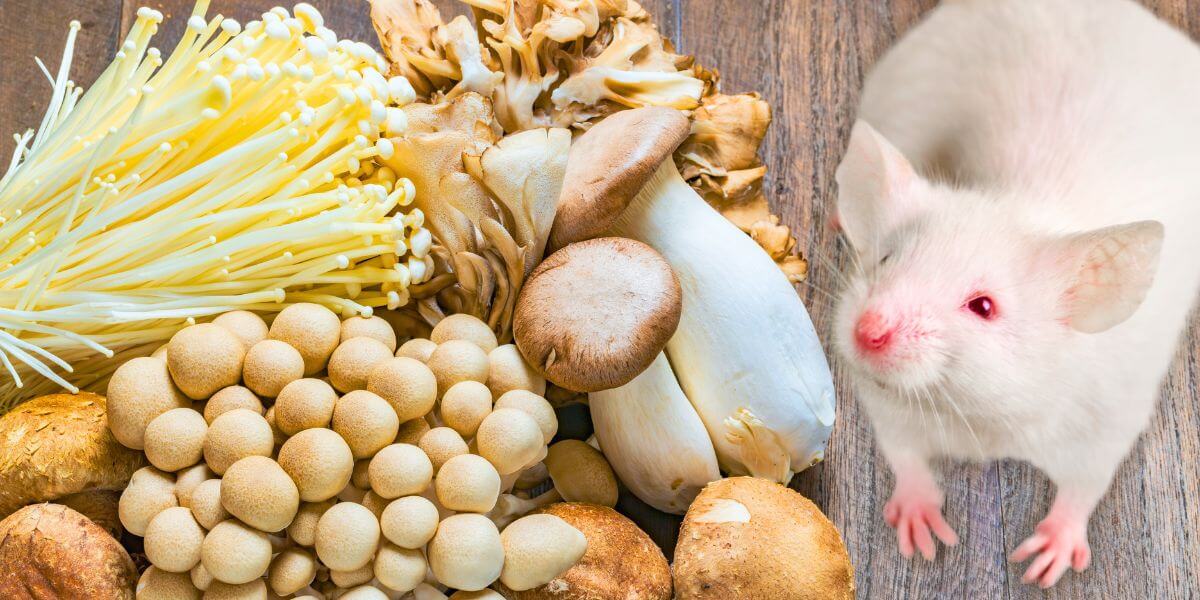
Other documented tests included studies on metabolic health, where mice were subjected to periods of starvation followed by glucose injections to monitor blood sugar responses. These animals, too, were ultimately killed to facilitate the collection of physiological data. PETA’s intervention focused on the premise that such tests are not only cruel but often fail to produce results that are accurately translatable to human biology.
The "Eat Without Experiments" Initiative
In addition to updating its internal policies, The Giorgi Companies has joined PETA’s "Eat Without Experiments" program. This initiative is designed to provide consumers with a transparent roadmap for identifying brands that do not engage in animal testing. By joining this program, The Giorgi Companies has issued a formal pledge: "The Giorgi Companies, Inc. (including Giorgi Mushroom Company, Giorgio Foods, Inc., and Giorgio Fresh Co.), does not conduct, commission, or fund animal or human research or testing."
The "Eat Without Experiments" program serves as a certification of sorts for the food and beverage industry. It requires companies to maintain a strict "no-testing" policy for all purposes, including the validation of health claims, the testing of ingredients, and the development of new products. For Giorgi, this membership acts as a public-facing guarantee that their mushrooms—from the common white button to the gourmet shiitake—are produced without the shadow of laboratory experimentation.
A Chronology of Corporate Shifts in the Food Sector
The move by The Giorgi Companies is part of a broader, decade-long trend in the food industry. As consumer awareness regarding animal welfare continues to rise, major corporations are re-evaluating their scientific strategies.
In recent years, several global food giants have preceded Giorgi in making similar commitments. Mondelēz International, the parent company of brands such as OREO and Ritz, famously dropped its animal testing requirements after a long-standing campaign by animal rights advocates. Similarly, the Campbell Soup Company and the Kellogg Company have moved toward more ethical research practices.
The timeline of these shifts suggests a cascading effect:
- Early 2010s: Initial pressure from PETA and other organizations begins to target the "health claim" testing of common ingredients like tea, cocoa, and fruit extracts.
- 2015-2020: Major beverage and snack companies begin adopting formal bans on animal testing that is not specifically required by law.
- 2021-Present: Agricultural leaders and specialized producers, such as The Giorgi Companies, join the movement, signaling that the "cruelty-free" standard is becoming a baseline expectation for the industry rather than an outlier.
Scientific Implications and Alternative Methods
The shift away from animal testing in the food industry is bolstered by the advancement of New Approach Methodologies (NAMs). Scientists are increasingly turning to in vitro testing (using human cell cultures), in silico modeling (computer simulations), and sophisticated organs-on-chips to study the effects of nutrients on human physiology.
Critics of animal testing in the food sector argue that the biological differences between rodents and humans often lead to "false positives" or misleading data regarding the efficacy of food products. For instance, the way a mouse metabolizes a mushroom extract can differ significantly from how a human processes the same substance. By adopting non-animal methods, companies like Giorgi may actually achieve more accurate and human-relevant data, which can be more effectively used for consumer health education and marketing.

Official Responses and Public Sentiment
While The Giorgi Companies has focused its formal statement on the policy update itself, PETA has been vocal in its praise for the firm’s decision. PETA’s leadership characterized the move as a "life-saving win" and a victory for corporate compassion.
Industry analysts suggest that this move will likely enhance Giorgi’s brand reputation, particularly among Millennial and Gen Z consumers who prioritize ethical sourcing and animal welfare in their purchasing decisions. A 2023 market study indicated that over 60% of consumers are more likely to buy from a brand that has a certified cruelty-free or animal-friendly policy.
However, the pressure continues for other players in the supply chain. Following the Giorgi announcement, PETA has intensified its calls for other major entities, such as Wegmans Food Markets, to follow suit. Wegmans, a prominent East Coast grocery chain, has been urged to join the "Eat Without Experiments" program and to stop funding any external research that involves animal subjects.
Broader Impact on the Agricultural Landscape
The decision by The Giorgi Companies is expected to resonate throughout the mushroom industry and the broader agricultural sector in Pennsylvania and Delaware. As a major employer and a central figure in the regional economy, Giorgi’s policy sets a new standard for local agricultural business practices.
Furthermore, this policy change highlights the evolving role of corporate-nonprofit dialogue. The fact that the ban was achieved through "discussions" rather than purely through litigation or hostile public campaigns suggests a maturing relationship between activist groups and the private sector. It demonstrates that when provided with scientific evidence and a clear path toward ethical alternatives, large-scale producers are willing to adapt.
Conclusion: The Future of Ethical Food Science
The Giorgi Companies’ decision to terminate animal testing marks a pivotal moment in the alignment of food production with modern ethical standards. By closing the loopholes that allowed for the use of animal models in cancer, Alzheimer’s, and metabolic research, the company has positioned itself as a forward-thinking leader in the mushroom industry.
As the global food market continues to move toward transparency and ethical accountability, the total ban on animal testing is likely to become a standard operating procedure for any company wishing to maintain consumer trust. For the thousands of animals that would have otherwise been subjected to laboratory conditions for the sake of mushroom research, this policy change represents a definitive end to a controversial chapter in agricultural science. The Giorgi Companies has proven that the path to innovation does not have to be paved with animal experimentation, setting a clear example for the rest of the food world to follow.
