


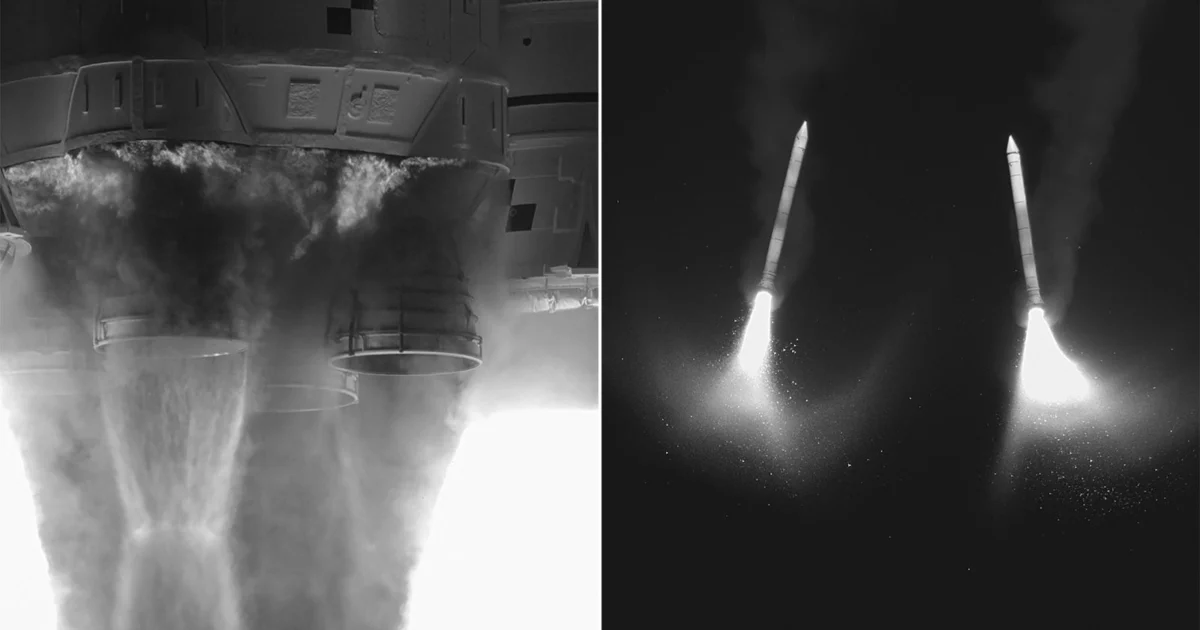
NASA has officially released a comprehensive collection of new media documenting the successful liftoff of Artemis II, the first crewed mission of the agency’s lunar exploration program. The latest batch of imagery includes striking infrared still frames and high-speed video sequences that offer a unique perspective on the Space Launch System (SLS) rocket’s ascent. While these visuals serve as breathtaking documentation for the public, they provide critical thermal and structural data for NASA engineers as they evaluate the performance of the world’s most powerful rocket during its most demanding phase of flight.
The Artemis II mission launched from Launch Complex 39B at the Kennedy Space Center in Florida at 6:35 p.m. EDT on Wednesday, April 1, 2026. Carrying a crew of four, the mission marks a pivotal moment in human spaceflight, representing the first time humans have traveled toward the Moon since the conclusion of the Apollo program in 1972. The newly released imagery highlights the immense scale of the SLS and the sophisticated technology required to propel the Orion spacecraft out of Earth’s atmosphere.
The Science and Utility of Infrared Observation
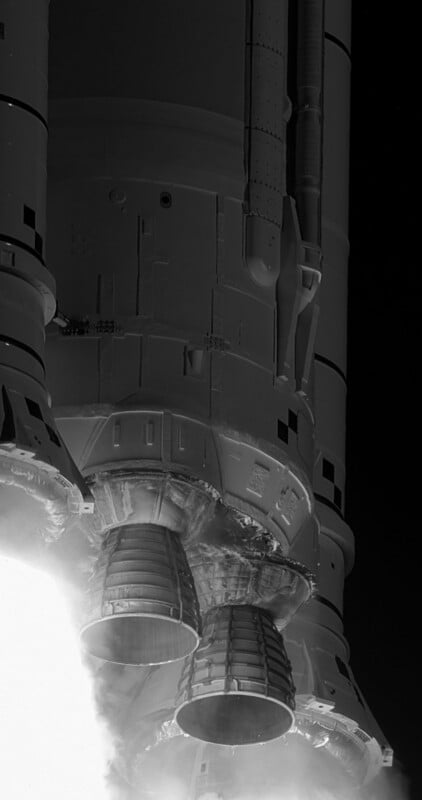
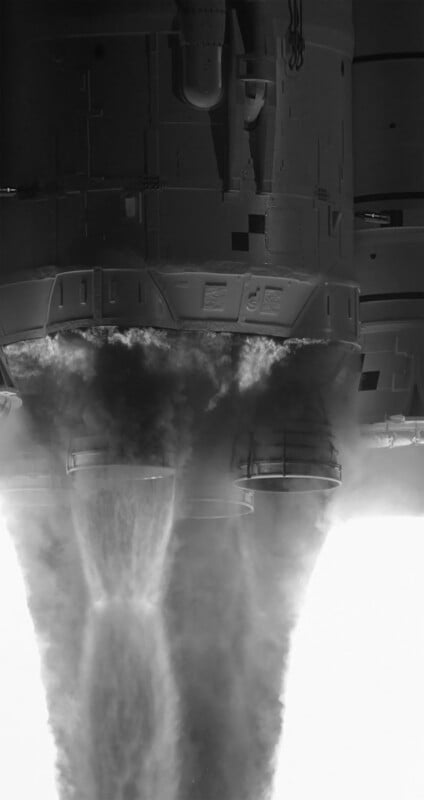
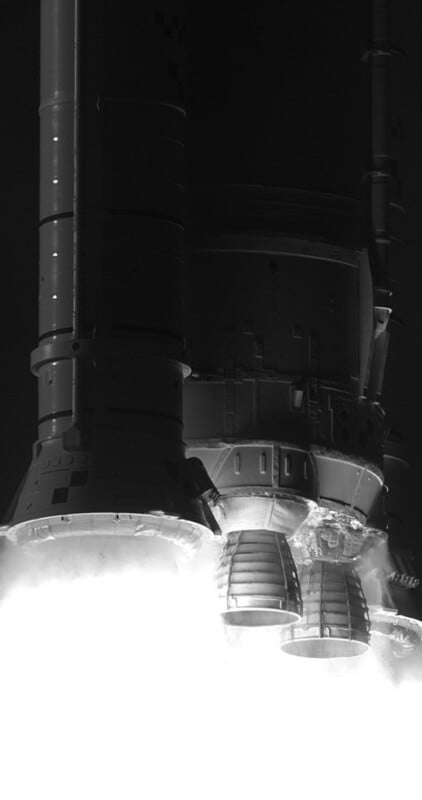
One of the most compelling aspects of the recent data release is the set of black-and-white infrared (IR) images. Capturing a launch in the infrared spectrum allows scientists to see through the "visual noise" of a standard launch. Because the Artemis II liftoff occurred in the early evening under clear skies, visible light cameras had to contend with the bright blue glare of the atmosphere. Infrared cameras, however, operate on different wavelengths, where the atmosphere scatters significantly less light.
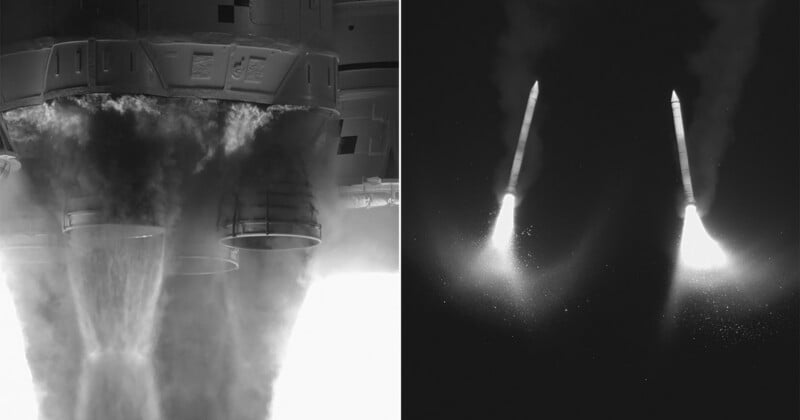
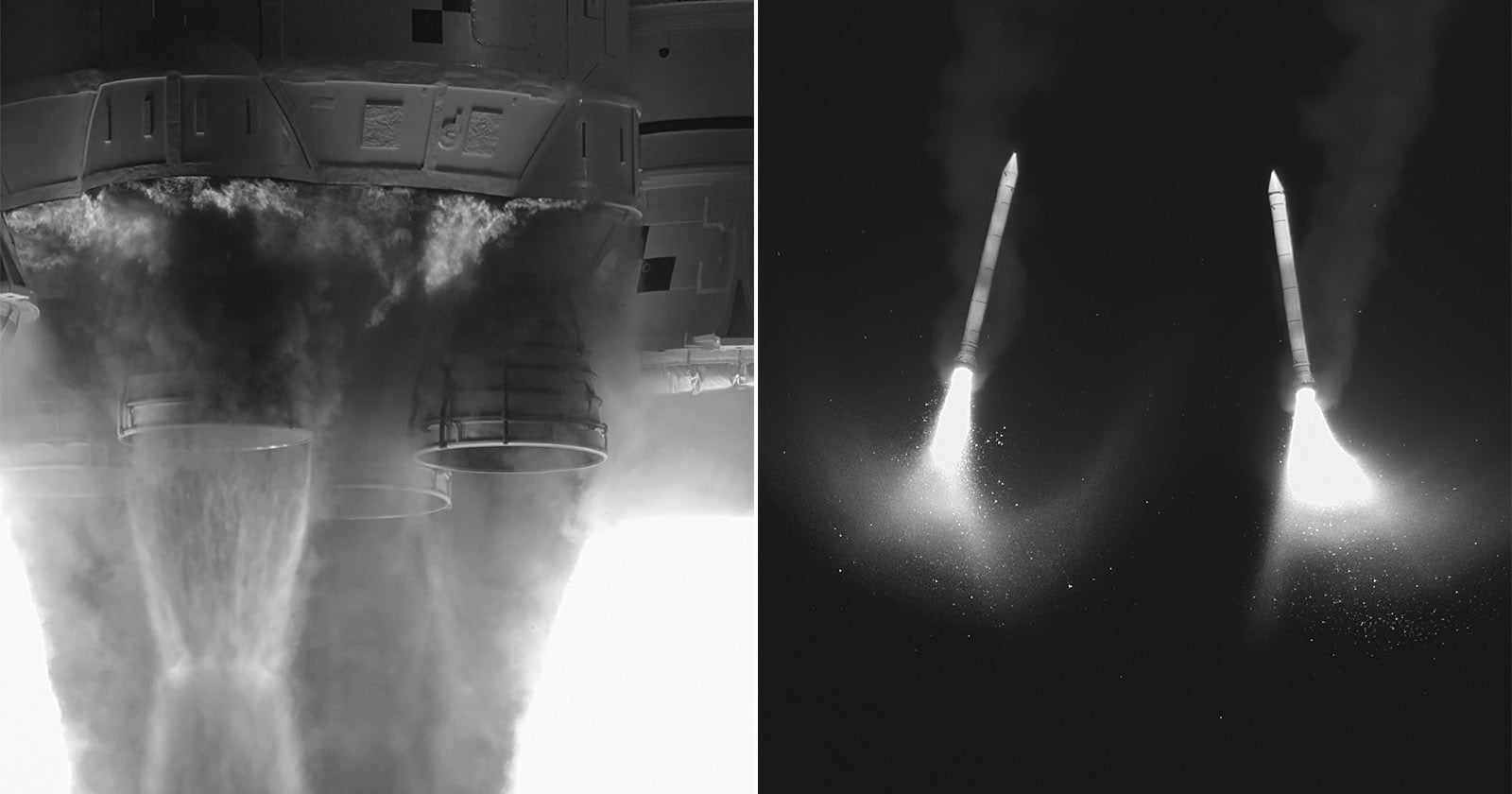
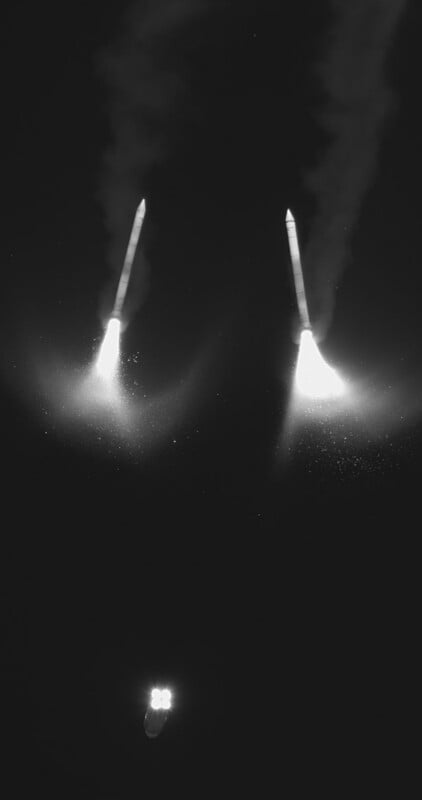
In these IR frames, the Florida sky appears almost entirely black, providing a high-contrast background that makes the thermal signatures of the rocket engines exceptionally clear. This clarity is vital for analyzing the exhaust plumes and the separation of the twin Solid Rocket Boosters (SRBs). One specific image released by NASA shows the SRBs falling away from the SLS core stage; in infrared, the materials and superheated gases spewing from the boosters are visible in minute detail, allowing engineers to track the dispersion of heat and debris that might otherwise be obscured by smoke or atmospheric haze in a standard photograph.
Furthermore, infrared imaging provides a "heat map" of the vehicle’s exterior. By monitoring how heat radiates from the four RS-25 engines and the SRBs, NASA can ensure that the thermal protection systems are performing within their design parameters. This data is essential for the safety of future missions, including Artemis III, which aims to land the first woman and the first person of color on the lunar surface.
High-Resolution Documentation and Hardware Protection
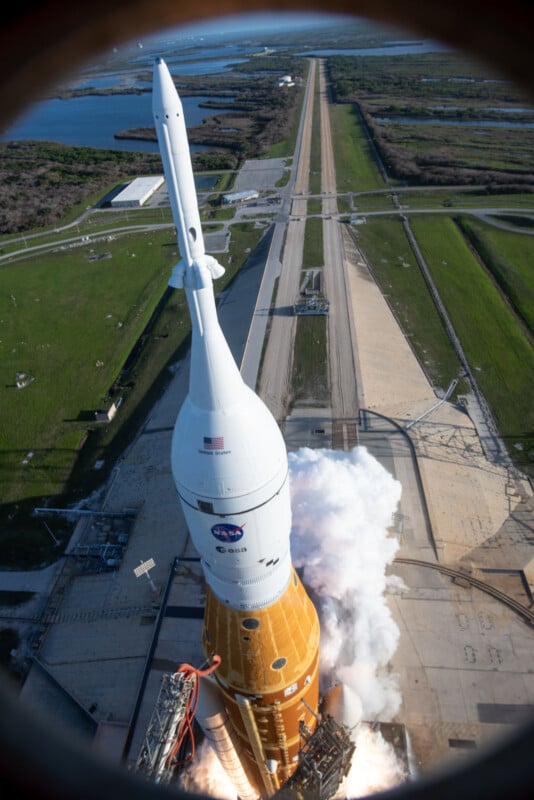
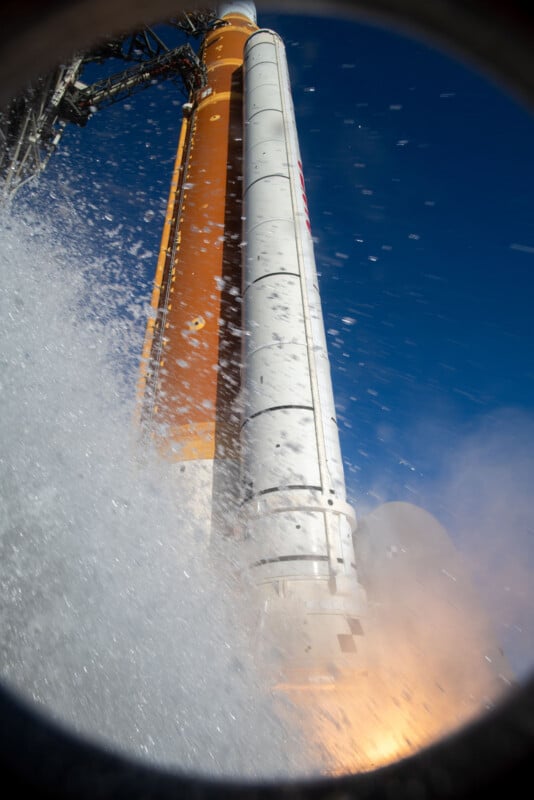
In addition to the specialized infrared sensors, NASA utilized a fleet of Nikon D850 DSLR cameras to capture the launch in high-resolution visible light. These cameras, equipped with Nikkor AF-S 20mm f/1.8G lenses, were strategically placed at various vantage points around Launch Complex 39B. Given the extreme proximity to the launch pad, the cameras were housed in specialized, blast-resistant protective casings.
The imagery from these remote units provides a visceral look at the moment of ignition. Some frames show a slight circular obstruction, a result of the heavy-duty protective ports required to shield the glass lenses from the intense heat and acoustic vibration of the SLS. The choice of the Nikon D850—a 45.7-megapixel full-frame camera—allows for extreme cropping and detail retrieval, which is necessary for identifying any small pieces of foam or ice that might shed from the rocket during the first few seconds of flight.
Mitigating Extreme Forces: The Water Deluge System
Among the most impressive photos in the collection is an aerial view of the water deluge system in action. To protect the mobile launcher, the flame deflector, and the rocket itself from the catastrophic heat and sound energy produced at liftoff, NASA employs a massive "Ignition Overpressure Protection and Sound Suppression" system.
As the SLS engines ignited, approximately 450,000 gallons of water were released across the launch pad in less than a minute. This system serves two primary functions:
- Thermal Protection: The exhaust from the SLS engines reaches temperatures of approximately 6,000 degrees Fahrenheit (3,315 degrees Celsius). Without the cooling effect of the water, the steel structures of the launch pad could suffer significant structural damage.
- Acoustic Suppression: The sound energy produced by the SLS is powerful enough to damage the rocket’s delicate internal components and the Orion spacecraft. The water creates a "cushion" that absorbs the acoustic shockwaves, preventing them from reflecting off the pad and back into the vehicle.
The new photographs capture the deluge as a massive cloud of white vapor, distinct from the darker, more turbulent smoke produced by the solid rocket boosters.
The Artemis II Crew and Mission Objectives
The imagery released by NASA also serves to celebrate the four individuals currently aboard the Orion spacecraft. The Artemis II crew consists of:
- Commander Reid Wiseman (NASA): A veteran of the International Space Station, Wiseman is leading the mission’s flight operations.
- Pilot Victor Glover (NASA): Glover, who previously piloted the SpaceX Crew-1 mission, is the first person of color to participate in a lunar mission.
- Mission Specialist Christina Koch (NASA): Koch holds the record for the longest single spaceflight by a woman and is the first woman to fly to the Moon.
- Mission Specialist Jeremy Hansen (CSA): Representing the Canadian Space Agency, Hansen is the first non-American to travel to deep space, highlighting the international nature of the Artemis program.
The mission is a 10-day flight test designed to prove that Orion’s life-support systems and communication arrays are ready for long-duration deep-space travel. Rather than landing on the Moon, the crew is performing a "lunar flyby," using the Moon’s gravity to "slingshot" the spacecraft back toward Earth. This trajectory ensures that the crew can return safely even if the spacecraft’s primary propulsion system were to fail.
Chronology of a Historic Launch
The path to the Artemis II launch involved years of rigorous testing and the successful completion of the uncrewed Artemis I mission in 2022. The timeline for the April 1 launch followed a precise sequence:
- L-Minus 6 Hours: The "cryogenic loading" process began, filling the SLS core stage with liquid oxygen and liquid hydrogen.
- T-Minus 10 Minutes: The crew completed final communications checks with Mission Control in Houston and the launch team at Kennedy Space Center.
- T-Minus 0: Ignition of the four RS-25 engines, followed by the twin SRBs.
- T-Plus 2 Minutes 12 Seconds: Solid Rocket Booster separation. The IR cameras captured this moment with unprecedented clarity, showing the boosters peeling away from the core stage at an altitude of approximately 142,000 feet.
- T-Plus 8 Minutes: Main Engine Cutoff (MECO) and core stage separation.
- T-Plus 2 Hours: Trans-Lunar Injection (TLI). The Orion spacecraft successfully fired its engines to break Earth’s orbit and begin its journey toward the Moon.
Broader Impact and Future Implications
The success of the Artemis II launch and the high-quality data retrieved from the mission’s imagery are vital for the future of the "Moon to Mars" architecture. By documenting the stresses placed on the SLS and Orion in such detail, NASA can refine its manufacturing processes for the upcoming Artemis III, IV, and V missions.
The Artemis program is not merely a repeat of the Apollo missions; it is designed to establish a sustainable human presence on the Moon. This includes the construction of the Lunar Gateway—a small space station that will orbit the Moon—and the development of the Artemis Base Camp at the lunar south pole. The data from Artemis II will help determine the requirements for the Gateway’s shielding and the landing precision needed for future lunar modules.
Furthermore, the participation of the Canadian Space Agency in this mission underscores a new era of space diplomacy. Unlike the 20th-century "Space Race," the 21st-century return to the Moon is a collaborative effort involving the European Space Agency (ESA), the Japan Aerospace Exploration Agency (JAXA), and various commercial partners like SpaceX and Blue Origin.
As the Artemis II crew continues their 10-day journey, NASA will likely release even more imagery, including high-definition views of the lunar far side and the "Earthrise" as seen from Orion. For now, the infrared and DSLR photos from the launch pad stand as a testament to the engineering marvel that is the Space Launch System and the bravery of the four astronauts currently venturing into the deep-space frontier. These images do more than just record history; they provide the roadmap for the next generation of explorers who will one day set foot on the Red Planet.
