


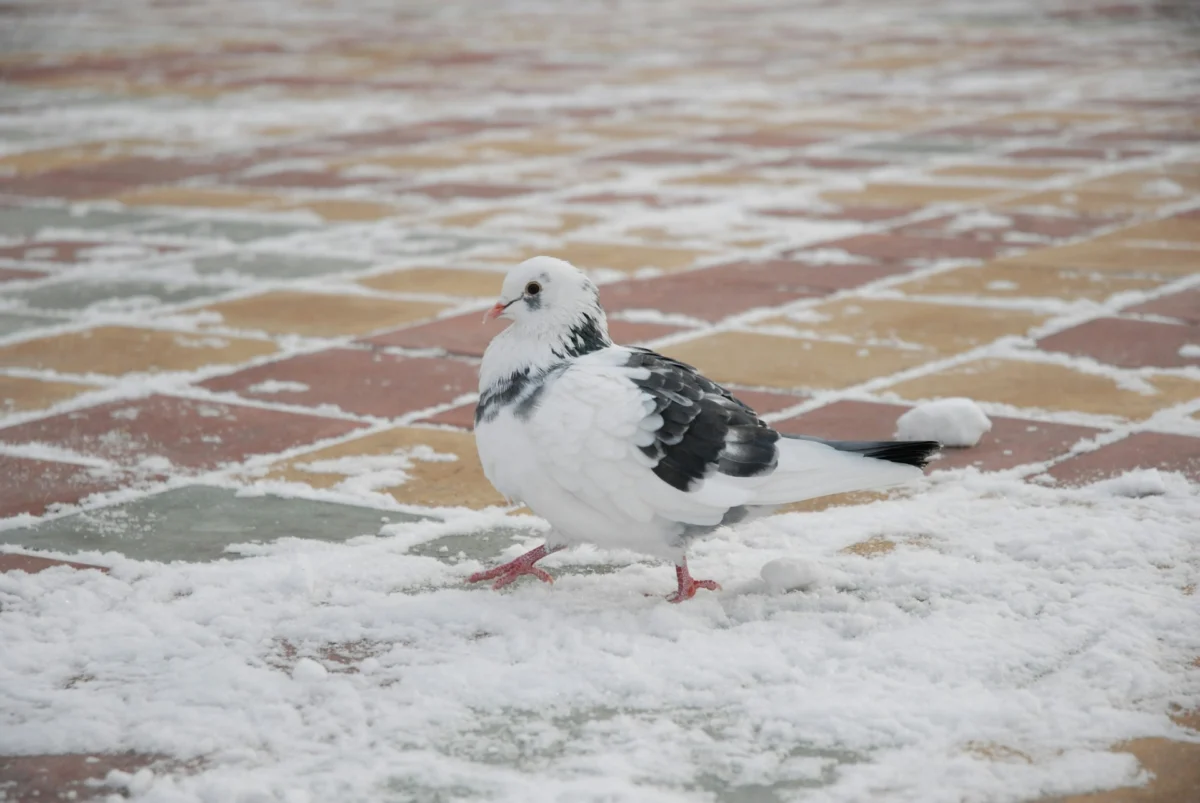
Watching a gull stand with stoic indifference on a sheet of ice, or a duck glide with effortless grace through water that would inflict immediate frostbite on a human, presents one of winter’s most enduring and perplexing spectacles. For months, these avian creatures navigate a world perpetually on the brink of freezing, yet their extremities remain functional, unblemished, and remarkably warm. The secret behind this extraordinary resilience lies not in some magical insulation, but in a sophisticated physiological mechanism honed by millennia of evolution: countercurrent heat exchange. This intricate biological system represents a pinnacle of natural engineering, allowing birds to thrive in environments that would be utterly inhospitable to most other vertebrates.
The architectural design of a bird’s legs is fundamental to its ability to withstand extreme cold. Unlike mammals, a bird’s legs are conspicuously devoid of substantial muscle mass. The primary musculature responsible for leg movement is strategically located higher up on the body, nestled within the warmth of the feathered torso. This leaves the exposed portion of the leg largely composed of bone, sinew, and a densely interwoven network of blood vessels. This specialized anatomy is not merely a matter of reduced appendage size; it is a critical adaptation that facilitates a level of cold tolerance far surpassing that of mammals.
At the heart of this adaptation is the ingenious principle of countercurrent heat exchange. This biological process operates by juxtaposing warm arterial blood flowing away from the body’s core with cold venous blood returning from the extremities. As the warm arterial blood descends towards the feet, it encounters the cooler venous blood ascending from the ground or water. Through a process of direct thermal conductivity across the vessel walls, heat is efficiently transferred from the outgoing warm blood to the incoming cold blood. The result is a remarkable thermal gradient: by the time the venous blood reaches the bird’s core, it has been significantly pre-warmed, thereby safeguarding the vital internal body temperature. Concurrently, the arterial blood arriving at the feet has been considerably cooled. This deliberate reduction in the temperature of the blood reaching the extremities minimizes the thermal gradient between the bird’s foot and the frigid environment, drastically reducing the rate of heat loss to the ice or water.
The avian foot itself undergoes further biochemical and structural modifications to cope with the reduced temperature. Tissues in the extremities are adapted to tolerate temperatures that would cause ice crystal formation and cell damage in mammals. This adaptation involves a reduction in the proportion of freezable water within the cells and a recalibration of cellular biochemistry to resist the damaging effects of extreme cold. Birds also possess the ability to dynamically regulate blood flow to their legs. In particularly harsh conditions, they can constrict blood vessels, reducing circulation to the extremities. This deliberate conservation of blood flow is a calculated risk, carefully managed to minimize heat loss without jeopardizing tissue viability, thus preventing frostbite.
Species such as mallards and gulls exemplify the remarkable capacity of this system. These birds are frequently observed standing for extended periods on icy surfaces or swimming in waters that remain well below freezing. Their ability to maintain activity and foraging in such conditions is a testament to their highly evolved physiological defenses. Diving birds like loons, grebes, and certain duck species face even more extreme challenges, often submerging themselves in frigid waters for prolonged periods. Their legs, despite constant immersion in sub-zero temperatures, remain fully functional, enabling them to dive, swim, and maneuver with precision.
The role of feathers, while not directly warming the feet, is crucial in the overall thermoregulation strategy. Feathers provide a dense, insulating layer around the bird’s body, drastically minimizing heat loss from the core. This insulation ensures that the body can maintain its internal temperature with relative ease, freeing up metabolic resources that can then be allocated to the specialized countercurrent system in the legs. Without this robust insulation of the torso, the energy demands of keeping the feet warm would be prohibitively high, potentially compromising the bird’s overall survival.
Behavioral adaptations further complement this physiological marvel. Many bird species will deliberately alternate their weight between legs, allowing one foot to be slightly warmer than the other at any given time. Another common behavior is tucking one foot up into the warmth of their belly feathers. This simple action reduces the surface area exposed to the cold, further minimizing heat loss. These combined strategies—sophisticated internal physiology and opportunistic behavioral adjustments—create an exceptionally effective and elegant solution for survival in frigid environments.
The countercurrent heat exchange system found in birds is widely regarded by biologists as one of the most elegant and refined examples of evolutionary engineering in the natural world. It is a system that has enabled birds to not only survive but to thrive, exploiting ecological niches and food sources in snowy landscapes and on frozen lakes, enduring conditions that would prove incapacitating or fatal for the vast majority of other animal life.
A Deeper Dive into the Physiology of Avian Cold Tolerance
The effectiveness of countercurrent heat exchange is directly proportional to the length of the heat exchanger and the temperature difference between the two fluid streams. In birds, the arterial and venous vessels in the leg are positioned in extremely close proximity, often running parallel and tightly bundled together within the tarsometatarsus and tibiotarsus. This arrangement maximizes the surface area for heat transfer and minimizes the distance that heat has to travel from the warm artery to the cold vein.
Recent research, including studies published in journals like the Journal of Experimental Biology, has quantified the efficiency of this system. Data indicates that the venous blood returning from the feet of birds in sub-zero environments can be warmed by as much as 80-90% of the temperature difference between the core body and the foot. For instance, if a bird’s core body temperature is 40°C and its feet are at 0°C, the returning venous blood might be warmed to approximately 32-36°C. This significantly reduces the thermal load on the bird’s core.

Furthermore, the metabolic rate of birds plays a crucial role. Birds generally have higher metabolic rates than mammals of comparable size, meaning they generate more internal heat. This elevated metabolic rate provides a greater supply of warm blood to fuel the countercurrent exchange system. However, it also necessitates efficient heat conservation strategies, which the countercurrent system expertly provides.
Evolutionary Timelines and Diversification
The development of this remarkable adaptation is not a singular event but a gradual evolutionary process. Fossil evidence suggests that early bird ancestors, likely evolving from theropod dinosaurs, would have already possessed some degree of cold tolerance. However, the refinement of the countercurrent heat exchange system likely accelerated with the diversification of birds into various ecological niches, including those with prolonged cold seasons.
The Pliocene epoch, roughly 5.3 to 2.6 million years ago, saw significant global cooling and the expansion of glacial ice sheets. This period would have exerted strong selective pressures favoring individuals and species with enhanced cold-survival capabilities. Avian lineages that successfully adapted to these changing conditions, likely through improvements in thermoregulation and foraging strategies in colder climates, would have gained a significant survival advantage.
The wide array of bird species that exhibit this adaptation today—from small songbirds to large waterfowl—suggests that the underlying genetic and physiological mechanisms have been successfully passed down and perhaps further refined within different lineages. Comparative studies across various avian families continue to reveal subtle differences in the efficiency and control of their countercurrent systems, reflecting their specific environmental pressures and evolutionary histories.
Expert Insights and Scientific Perspectives
Dr. Eleanor Vance, a leading ornithologist specializing in avian physiology at the Cornell Lab of Ornithology, commented on the significance of this adaptation. "The countercurrent heat exchange system in birds is a textbook example of how evolution shapes organisms to fit their environment. It’s not just about preventing freezing; it’s about optimizing energy expenditure in the face of extreme thermal challenges. The intricate vascular architecture and the biochemical adaptations of the tissues are truly remarkable."
She further elaborated, "While we often focus on the feet, it’s important to remember that this system is part of a larger thermoregulatory network. The bird’s ability to control its metabolic rate, its insulating plumage, and its behavioral strategies all work in concert with the countercurrent exchange to ensure survival. The energy saved by not having to constantly reheat cold blood returning from the extremities is substantial and allows birds to allocate more energy towards essential activities like foraging, reproduction, and escaping predators."
Broader Implications and Future Research
The study of avian countercurrent heat exchange holds implications far beyond ornithology. Understanding these highly efficient biological systems can inspire advancements in human engineering, particularly in areas such as biomimicry for thermal management in materials and devices. For example, the principles of countercurrent exchange are being explored in the design of more efficient heat exchangers for industrial processes, as well as in medical applications aimed at protecting tissues from cold injury.
Future research may delve deeper into the genetic underpinnings of this adaptation, potentially identifying specific genes that regulate vascular development and tissue composition in response to cold. Understanding these genetic pathways could offer insights into human diseases related to circulatory issues or cold sensitivity.
The ongoing observation of bird populations in changing climates also provides a dynamic laboratory for studying the resilience and adaptability of these natural systems. As global temperatures fluctuate and extreme weather events become more frequent, the ability of birds to maintain their physiological functions in challenging conditions will continue to be a critical factor in their survival. The marvel of the bird’s warm feet in the frigid winter landscape serves as a constant reminder of the profound and ingenious solutions that nature has devised to overcome environmental adversity.
