

A groundbreaking study led by a researcher at the University of Hawaiʻi at Mānoa has unveiled a startling reality for Hawaii’s native forest birds: almost every species possesses the ability to transmit avian malaria. This pervasive capability to spread the deadly parasite, Plasmodium relictum, is now understood to be a primary driver behind the disease’s ubiquitous presence across the islands, wherever mosquitoes are found. The findings, published on February 10 in the prestigious journal Nature Communications, paint a grim picture for the future of these unique avian populations, which have already suffered catastrophic declines and extinctions.
The research team meticulously sampled avian blood at 63 out of 64 tested locations statewide, encompassing diverse forest ecosystems with varying bird species compositions. The consistent detection of avian malaria across these sites, regardless of the specific bird communities present, highlights the extraordinary reach of this devastating pathogen. Plasmodium relictum is a generalist parasite, meaning it can infect a broad range of hosts, and its devastating impact on native Hawaiian honeycreepers has been a central factor in their precipitous decline.
Dr. Christa M. Seidl, the mosquito research and control coordinator for the Maui Forest Bird Recovery Project, spearheaded this crucial research as part of her doctoral dissertation at the University of California, Santa Cruz. "Avian malaria has taken a devastating toll on Hawaiʻi’s native forest birds, and this study shows why the disease has been so difficult to contain," Dr. Seidl stated, emphasizing the profound implications of her team’s findings. "When so many bird species can quietly sustain transmission, it narrows the options for protecting native birds and makes mosquito control not just helpful, but essential."
The Devastating Impact of Avian Malaria on Native Hawaiian Birds
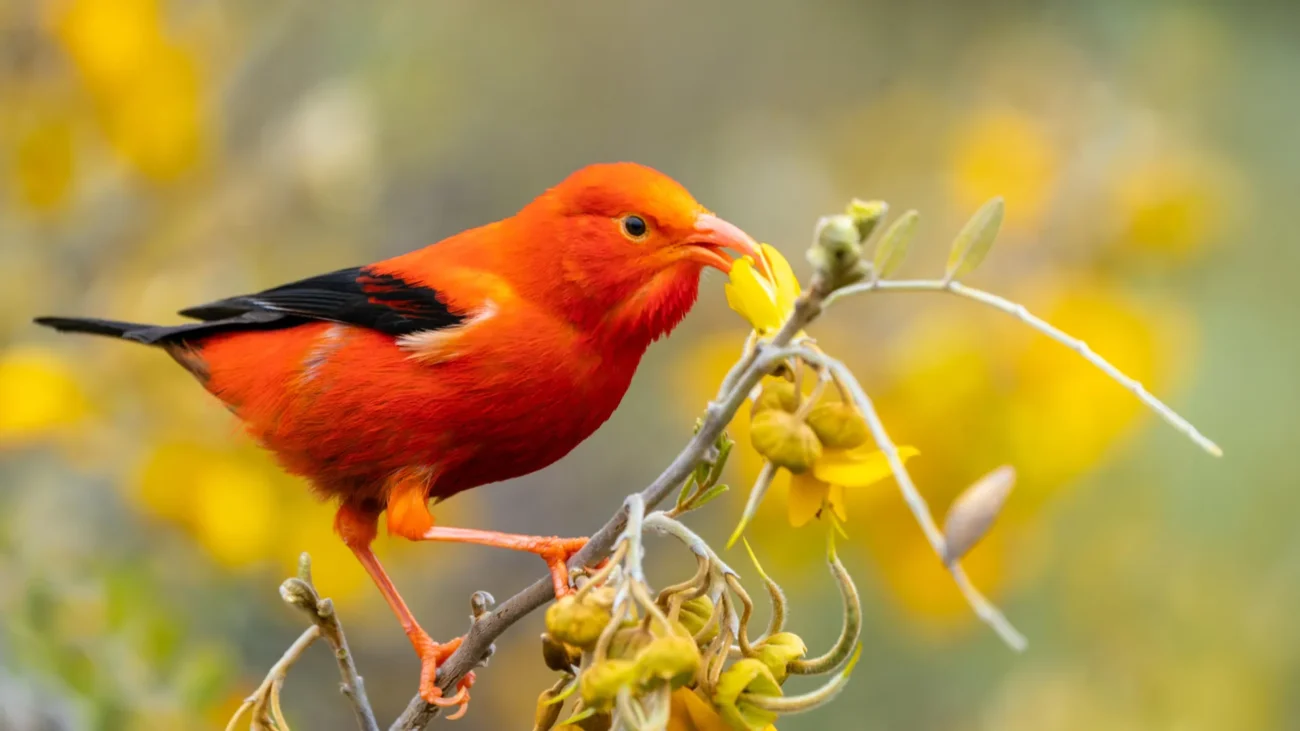
Avian malaria, a parasitic disease that targets red blood cells, inflicts severe damage on its avian hosts. The consequences can range from debilitating anemia and organ failure to significantly reduced survival rates and, in many cases, death. For Hawaii’s iconic native birds, the impact has been particularly catastrophic. Scientific studies have documented mortality rates as high as 90% for infected ʻiʻiwi, also known as the scarlet honeycreeper. The ʻakikiki, a honeycreeper endemic to Kauaʻi, is now critically endangered and teetering on the brink of extinction in the wild, with avian malaria cited as the primary culprit.
Historically, many infectious diseases rely on a limited number of primary host species to maintain their spread within an ecosystem. However, this new research demonstrates that avian malaria operates on a fundamentally different, and far more insidious, principle in Hawaii. The study reveals that most forest birds, irrespective of whether they are native or introduced, possess a moderate to significant capability to infect the southern house mosquito (Culex quinquefasciatus), the principal vector of the disease. Crucially, even birds found to be carrying minuscule amounts of the parasite were still capable of transmitting it to mosquitoes. This broad-spectrum infectivity means that a vast array of bird communities can act as reservoirs, facilitating continuous and widespread transmission of the parasite.
"We often understandably think first of the birds when we think of avian malaria, but the parasite needs mosquitoes to reproduce and our work highlights just how good it has gotten at infecting them through many different birds," Dr. Seidl elaborated, underscoring the dual nature of the threat posed by the parasite and its vector.
Chronic Infections: The Unseen Engine of Transmission
The comprehensive research involved the analysis of blood samples from over 4,000 birds sampled across the islands of Kauaʻi, Oʻahu, Maui, and Hawaiʻi Island. These extensive field data were meticulously integrated with laboratory experiments designed to quantify the ease with which mosquitoes became infected after feeding on birds. The consistent results indicated that both native and introduced bird species exhibited comparable levels of infectiousness, underscoring the shared responsibility of both groups in perpetuating the parasite’s life cycle.
A particularly concerning revelation from the study is the finding that birds can harbor chronic infections for extended periods, sometimes spanning months or even years. During these prolonged phases, birds may exhibit only mild symptoms of infection, yet they remain capable of transmitting the parasite to feeding mosquitoes. The researchers estimate that this enduring, low-to-moderate infectious stage is the predominant driver of avian malaria transmission across the Hawaiian archipelago. This chronic carriage effectively creates a persistent reservoir of infection, making eradication efforts exceptionally challenging.
Climate Change: Shrinking Safe Havens and Amplifying Threats
The pervasive ability of the avian malaria parasite to infect a wide array of bird species offers a compelling explanation for the disease’s widespread distribution throughout Hawaii. The study’s findings strongly suggest that very few mosquito-infested habitats remain free from the risk of malaria transmission. The situation is further exacerbated by the escalating impacts of climate change. Rising global temperatures are facilitating the expansion of both mosquito populations and avian malaria into higher elevation areas. These higher elevations have historically served as vital refuges for many native bird species, offering a degree of protection from the disease due to cooler temperatures that inhibit mosquito activity. As these areas become warmer, they are increasingly becoming susceptible to malaria transmission, effectively shrinking the available safe havens for vulnerable endemic birds.
This phenomenon aligns with broader scientific projections regarding the impact of climate change on disease vectors and host-pathogen dynamics. As habitats shift and ecological pressures intensify, species that are already struggling with disease may find their last remaining refuges compromised.
Collaborative Efforts and the Path Forward
Dr. Seidl and the Maui Forest Bird Recovery Project are active participants in "Birds, Not Mosquitoes," a significant collaborative initiative. This partnership unites a diverse range of academic institutions, state and federal agencies, non-profit organizations, and industry stakeholders. The collective goal of Birds, Not Mosquitoes is to advance the development and implementation of effective mosquito control strategies, thereby providing crucial support for the conservation of Hawaii’s native birds.
The Maui Forest Bird Recovery Project operates under the auspices of the Pacific Cooperative Studies Unit within the College of Natural Sciences. It is important to note that all birds involved in this groundbreaking study were humanely captured and handled by highly trained ornithologists, operating under strict state and federal permits, ensuring the highest ethical standards were maintained throughout the research process.
Broader Implications and Scientific Context
The implications of this study extend far beyond the islands of Hawaii. It provides a critical case study for understanding how generalist parasites can devastate isolated and naive ecosystems when introduced alongside competent vectors. The widespread ability of multiple bird species to sustain transmission challenges conventional epidemiological models and highlights the need for novel conservation strategies.
The research also underscores the importance of integrated pest management and disease control. While the focus has often been on eliminating mosquitoes, the findings emphasize that a multi-pronged approach, including understanding and potentially mitigating the role of various bird species in transmission, may be necessary for long-term success.
The historical context of avian malaria in Hawaii is one of ecological tragedy. Introduced to the islands in the late 19th century, likely via ships carrying infected mosquitoes, avian malaria rapidly spread and decimated native bird populations. The elevation at which native birds could survive became increasingly limited by mosquito presence and temperature. This "sky island" phenomenon, where higher elevations became the only viable habitats, has been a hallmark of Hawaiian avian conservation challenges for over a century. This new study adds a critical layer of complexity by revealing the extensive role of the avian hosts themselves in perpetuating the disease within these shrinking ecological niches.
Future Research and Conservation Strategies
Moving forward, researchers will likely focus on several key areas. Understanding the precise mechanisms of chronic infection and identifying potential treatments or preventative measures for individual birds will be paramount. Furthermore, continued monitoring of mosquito populations and the efficacy of control methods will be essential. The study’s findings also necessitate a re-evaluation of habitat restoration and management strategies, potentially incorporating the creation of mosquito-free zones or employing novel methods to reduce mosquito breeding grounds.
The scientific community is keenly observing the situation in Hawaii, as it represents a critical bellwether for the impacts of invasive species and climate change on biodiversity. The lessons learned from this extensive study on avian malaria have the potential to inform conservation efforts for threatened bird populations worldwide. The urgency of the situation is amplified by the ongoing decline of species like the ʻakikiki, serving as a stark reminder of what is at stake and the critical need for immediate and sustained action. The interconnectedness of the parasite, the vector, and the diverse avian community has created a complex ecological puzzle, and solving it is vital for the survival of Hawaii’s irreplaceable natural heritage.
