


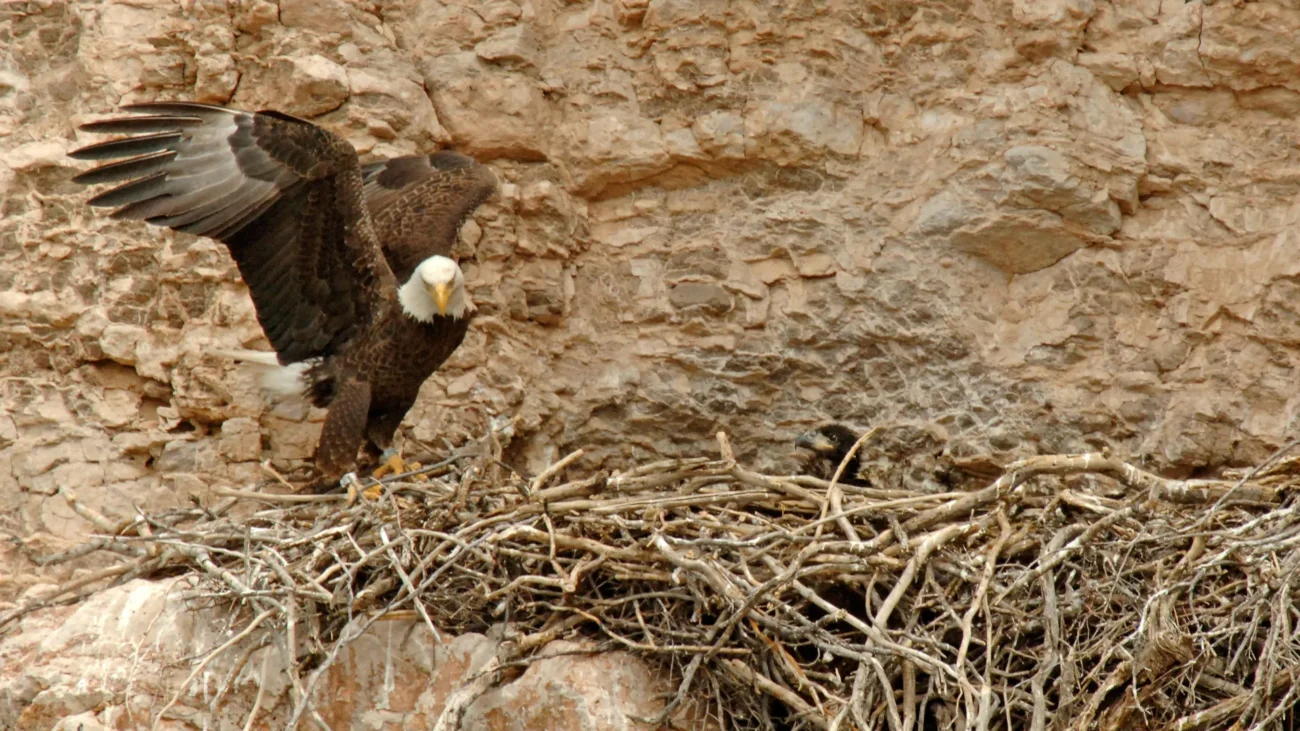
A groundbreaking study published in the Journal of Raptor Research is challenging long-held assumptions about avian migration, revealing that Arizona’s Bald Eagles are not adhering to the typical southward journeys expected of temperate-zone birds. Instead, these majestic raptors are exhibiting a surprising propensity for northward exploration, a behavior that offers crucial insights into their adaptability in a rapidly changing world. The research, titled "Northward Migrations of Nonbreeding Bald Eagles from Arizona, USA," details how these birds, rather than seeking warmer climes, are venturing into northern territories, a stark contrast to the prevailing migratory patterns observed in many species. Furthermore, the study highlights an instance of significant emigration, with one eagle leaving its native Arizona to establish a new life and potential breeding territory in California, a finding that prompts a re-evaluation of population dynamics and dispersal strategies within the species. Researchers posit that this highly exploratory nature is likely driven by the eagles’ need to locate ephemeral food resources, a critical survival tactic in a landscape increasingly shaped by environmental shifts. The findings underscore the vital importance of tracking wildlife movements to inform effective conservation strategies and safeguard essential migratory corridors for vulnerable populations.
The seven-year study, conducted between 2017 and 2023, employed sophisticated satellite transmitters to meticulously map the movements of 24 newly fledged Bald Eagles and two nonbreeding adults originating from Arizona. This innovative approach has provided an unprecedented look into the dispersal patterns of these birds, both within and beyond the state’s borders. While breeding Bald Eagles in Arizona are generally understood to maintain a relatively sedentary existence, remaining close to their established nesting sites for significant portions of the year, considerably less was known about the migratory habits of their nonbreeding counterparts. Understanding the distinct movement patterns and survival rates of nonbreeding eagles in comparison to their breeding counterparts is essential for a comprehensive assessment of the species’ overall health and the factors influencing population-level processes. This detailed understanding is paramount for conservation efforts, as different life stages can face unique challenges and require tailored protective measures.
A Different Kind of Winter: Unraveling the Northern Pull
A fundamental tenet of avian migration in North America dictates that birds from temperate regions undertake southward journeys during the nonbreeding season, typically coinciding with the Northern Hemisphere’s winter. This southward movement is primarily driven by the pursuit of milder weather conditions and more reliable food availability. However, the Arizona Bald Eagles present a fascinating anomaly. Their breeding season commences during the winter months, meaning their nonbreeding period falls during the summer and autumn. This temporal inversion of migratory cues intrigued lead author Dr. Caroline D. Cappello, who noted, "Northward migratory behavior raises interesting questions about the recent and historical pressures that shape these movement strategies." This unique seasonal timing suggests that the eagles are responding to environmental cues and resource availability that differ significantly from those influencing more conventionally migratory species.
The research team meticulously followed individual eagles for extended periods, with tracking devices functioning for up to four years within the seven-year study window. This long-term data collection has allowed for a nuanced understanding of individual journeys and the development of migratory behaviors over time. The conventional wisdom regarding bird migration, deeply ingrained in both the public consciousness and scientific understanding, typically points towards a southward flight as winter approaches. However, the Arizona Bald Eagles are demonstrating that this paradigm is not universally applicable, particularly for species whose life cycles are intricately tied to specific regional environmental conditions. Their northward movement during their nonbreeding season could be an adaptation to exploit seasonal resource pulses in higher latitudes, or perhaps a strategy to avoid competition in their breeding grounds during their off-season.
Historic Stopover Sites and Enduring Eagle Habitats
A remarkable finding of the study is the significant overlap between the stopover sites used by the tracked eagles and those identified in a seminal study from the 1980s. This consistent utilization of specific lakes and rivers across decades provides compelling evidence that these aquatic environments have remained critically important gathering points and refueling stations for multiple generations of Bald Eagles. This continuity suggests a deep-seated reliance on these historical habitats, underscoring their enduring ecological significance. The research confirms a strong connection to the Intermountain Flyway, a major avian migratory route, and a pronounced dependence on the network of lakes and rivers that punctuate these pathways.
The study’s observation that eagles of various age classes are migrating to the northern United States and southern Canada is particularly noteworthy. Coauthor Dr. Javan M. Bauder, a USGS researcher and Assistant Professor at the University of Arizona, emphasized the broader implications of this discovery: "Managing and conserving wildlife populations requires that we understand the movement patterns of individuals of all age classes within those populations." This holistic perspective is crucial, as neglecting the movements and needs of nonbreeding or younger individuals can lead to incomplete conservation strategies. A particularly fascinating trend emerged: as the eagles matured, their migratory pathways became more defined and precise. A majority of the birds tracked for at least two years exhibited a pattern of returning to Arizona in the fall of their hatch year, following extensive summer explorations in more northerly regions. The researchers hypothesize that these young eagles might be capitalizing on seasonal peaks in food availability, such as the spawning runs of salmon, the nesting periods of waterfowl, or the carcasses of large mammals. Further research is necessary to definitively confirm these food-source hypotheses, but the observed patterns strongly suggest a strategic exploitation of ephemeral resources.
Long Journeys and Lethal Threats to Young Raptors
The lives of young Bald Eagles, like those of many other raptors, are fraught with peril in a world increasingly shaped by human activity. The study documented one eagle’s extensive travels, crossing ten U.S. states and four Canadian provinces before appearing to settle in northern California, where she seemed poised to establish a breeding territory. Tragically, at the age of four, this promising young eagle succumbed to electrocution, a disturbingly common cause of mortality for large birds of prey. Dr. Cappello expressed her deep concern over this loss, stating that it "underscored the ongoing risks these birds face" and highlighted the profound difficulty in accurately measuring emigration, a critical yet often elusive aspect of population dynamics. The apparent decision of this eagle to disperse and potentially breed in California represented a rare opportunity to glean insights into the frequency of dispersal among Arizona-hatched Bald Eagles.
Beyond electrocution, young raptors face a litany of other threats, including poisoning from lead ammunition and rodenticides, collisions with wind turbines, habitat degradation and loss, and the pervasive uncertainty introduced by a changing climate. The cumulative impact of these factors can significantly influence population numbers and the long-term viability of species. By meticulously studying raptors across all stages of their lives, particularly the exploratory forays of young birds, scientists can develop evidence-based recommendations for conservation. These recommendations can identify the most critical stopover sites requiring protection and inform modifications to infrastructure, such as electrical systems, to enhance survival rates for eagles and other large raptors. Understanding the full spectrum of threats is essential for creating effective, multi-faceted conservation plans.
Future Research and Conservation Priorities
The research team has outlined several key areas for future investigation, emphasizing the importance of studying "route fidelity." As Dr. Cappello points out, "if consistent patterns exist it could help focus conservation efforts on specific, high-use areas along their migratory route." Identifying and protecting these critical corridors is paramount to ensuring the continued success of migratory species. Furthermore, the researchers advocate for comparative studies, contrasting the migratory strategies of these Arizona Bald Eagles with other wildlife populations that exhibit northward migration from the southern edges of their ranges. Such comparisons would provide a more profound understanding of the trade-offs, costs, and benefits associated with this seemingly counterintuitive migratory behavior.
The broader implications of this research extend beyond the specific case of Bald Eagles. It serves as a powerful reminder that nature often defies simple explanations and that species are remarkably adept at adapting to environmental changes. The study’s findings on northward migration challenge established migratory paradigms and highlight the need for flexible and adaptive conservation approaches. As climate change continues to alter landscapes and resource availability, understanding how wildlife responds through altered movement patterns will be increasingly crucial for predicting population trajectories and implementing effective conservation measures. The dedication of researchers like Dr. Cappello and Dr. Bauder, coupled with the advancement of tracking technologies, is providing the vital data needed to navigate these complex environmental challenges and ensure the survival of iconic species like the Bald Eagle. The long-term success of conservation hinges on our ability to continuously learn and adapt our strategies in light of new scientific discoveries.
