


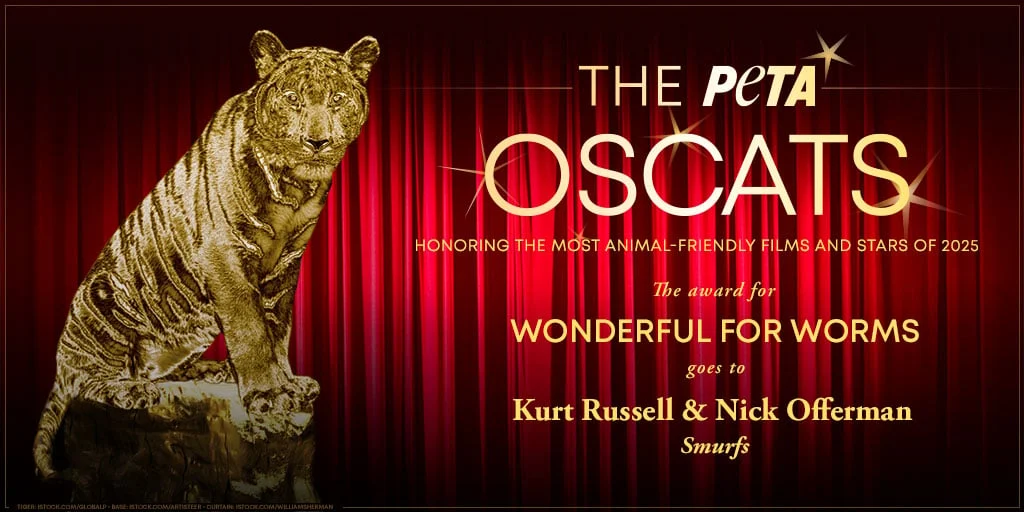
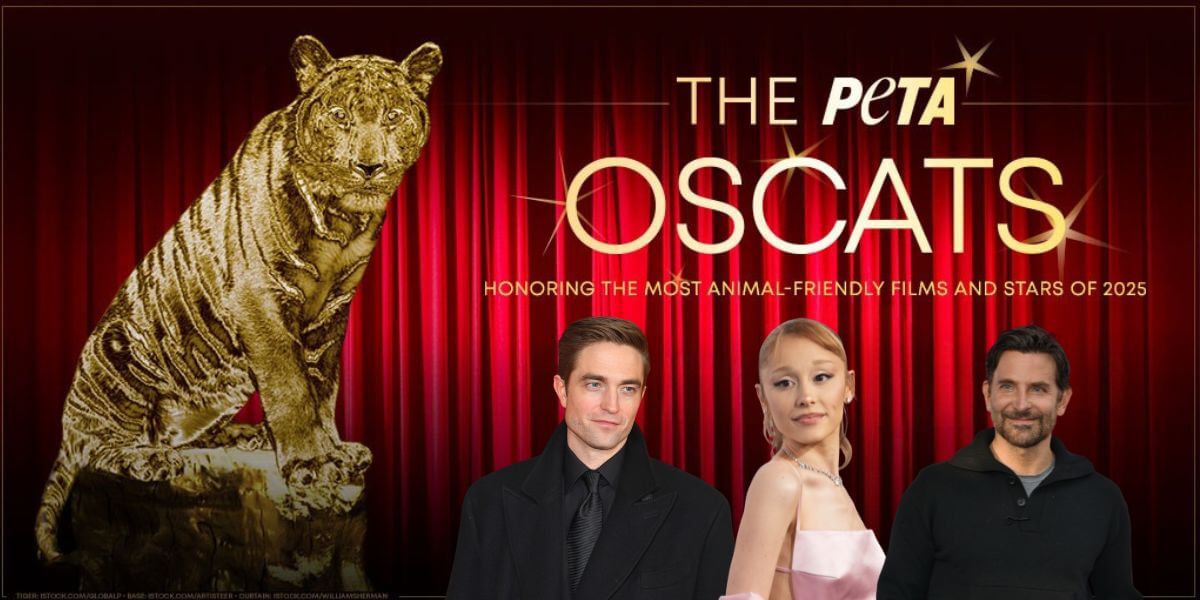
PETA has officially released the winners of its ninth annual Oscat Awards, a specialized honors program designed to recognize films, actors, and directors who prioritized animal welfare and utilized innovative technology over live animal exploitation during the 2025 cinematic year. Timed to precede the 98th Academy Awards, the Oscats serve as a counter-narrative to traditional ceremonies, highlighting the growing industry shift toward computer-generated imagery (CGI), sophisticated animatronics, and narrative themes that promote compassion toward non-human species.
Since its inception nearly a decade ago, the Oscat Awards have evolved from a niche advocacy tool into a recognized benchmark for ethical production in Hollywood. The 2026 winners reflect a diverse array of genres, from high-budget superhero epics and psychological thrillers to independent comedies and animated features. The selection criteria emphasize the replacement of live wild animals with digital alternatives, the promotion of animal adoption, and the inclusion of vegan or animal-rights-themed dialogue within screenplays.
Technical Innovation and the Displacement of Live Animals
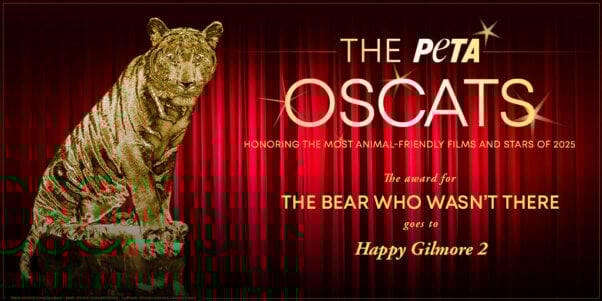
One of the most significant trends highlighted in the 2025 film season is the total displacement of large predators in major productions. In the Netflix sequel Happy Gilmore 2, director Kyle Newacheck and star Adam Sandler opted for a combination of a practical bear suit and visual effects (VFX) for a pivotal dream sequence. Historically, bears used in the film industry were often sourced from captive breeding programs, separated from their mothers at infancy, and subjected to rigorous training regimens. PETA’s recognition of Happy Gilmore 2 underscores the viability of digital and practical alternatives in maintaining comedic timing without the ethical costs associated with captive wildlife.
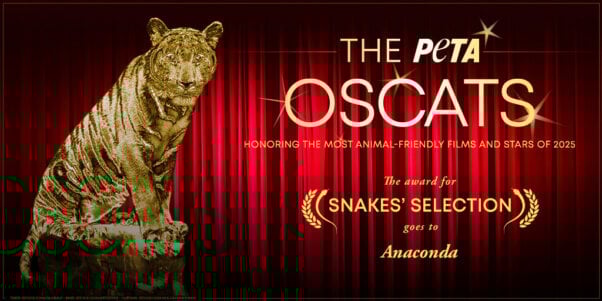
Similarly, the horror-adventure Anaconda—a modern reimagining of the 1990s cult classic—received accolades for its exclusive use of CGI and props to depict its titular reptiles. Snakes are particularly sensitive to the vibrations and lighting of film sets, which can induce significant physiological stress. By utilizing a digital serpent, the production avoided the logistical and ethical complications of handling live constrictors. The film also included a meta-commentary on the dangers of live animal handling through a scene involving a fictional snake trainer, played by Paul Rudd, which highlighted the inherent risks of forcing wild animals into human environments.
In the realm of prop design, Steven Soderbergh’s espionage thriller Black Bag was awarded "Best Prop" for its use of a motorized silicone fish. The scene in question features a dish involving a live, moving fish—a culinary practice that is illegal in several jurisdictions, including the United Kingdom, due to animal welfare concerns. The production team’s decision to engineer a lifelike mechanical substitute demonstrated that high-stakes realism does not require the sacrifice of living creatures.
Narrative Advocacy and the "Superman Effect"
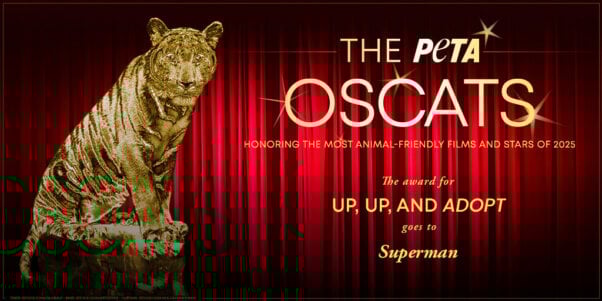
The 2025 awards season also saw a significant intersection between blockbuster storytelling and real-world animal welfare outcomes. James Gunn’s Superman was a primary beneficiary of this trend. The director utilized his own adopted dog, Ozu, as the primary inspiration for the CGI-rendered Krypto the Superdog. This choice had a documented impact on public behavior; following the film’s premiere, animal shelters reported a 500% surge in interest regarding dog adoptions.

This phenomenon, often referred to by sociologists as the "media-induced adoption spike," has historically been observed with breeds like Dalmatians or Huskies following specific film releases. However, Gunn’s emphasis on Krypto being a "rescue" dog shifted the focus from breed-specific trends to the broader crisis of animal overpopulation. The film’s narrative further reinforced these values by depicting the Man of Steel as a character who actively protects smaller species, such as squirrels and cows, aligning the superhero archetype with modern animal rights philosophy.
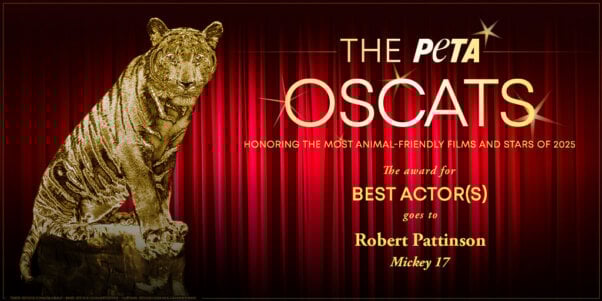
In the acting categories, Robert Pattinson was named "Best Actor" for his performance in Bong Joon-ho’s Mickey 17. The film, which explores the ethics of human experimentation through a science-fiction lens, features a subplot where Pattinson’s character protects extraterrestrial creatures known as "Creepers." Analysts have noted that the film serves as an allegory for the millions of animals used in laboratory testing annually. By portraying a character who sacrifices his own safety to prevent the extinction of a misunderstood species, Pattinson brought mainstream attention to the concept of speciesism.
The Cultural Impact of Wicked: For Good
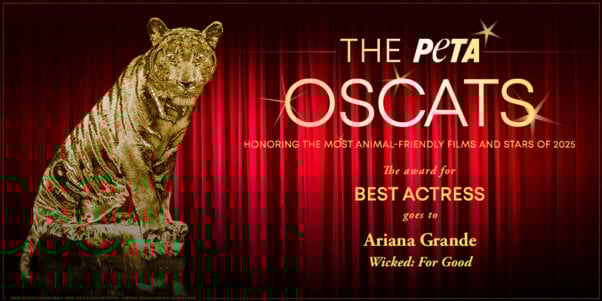
The musical adaptation Wicked: For Good secured multiple Oscat wins, including "Best Actress" for Ariana Grande and "Best Adapted Screenplay" for Dana Fox and Winnie Holzman. The film’s narrative arc, which focuses on the silencing of talking animals in the Land of Oz, mirrors historical and contemporary movements for animal liberation. Grande’s portrayal of Glinda—transitioning from a passive participant in a discriminatory system to an ally of the oppressed—was cited as a powerful representation of ethical growth.
The production’s influence extended beyond the screen. Reports indicate that cast member Jeff Goldblum transitioned to a plant-based diet following his involvement in the film. This internal cultural shift within the production reflects a broader trend in Hollywood where "green sets" are increasingly adopting vegan catering and sustainable practices to align with the themes of the projects they are producing.
Ethical Directing and Sound Design
The 2026 Oscats also introduced recognition for "nepawtism"—the practice of filmmakers casting their own domestic companions rather than hiring animals from commercial training agencies. Director Ben Leonberg was named "Goodest Director" for his work on the horror-comedy Good Boy, which starred his own dog, Indy. By filming over a three-year period to accommodate Indy’s comfort and using "quacking" sounds to elicit natural expressions rather than fear-based training, Leonberg established a blueprint for ethical domestic animal involvement in cinema.
In the field of sound design, the film Dog Man received an Oscat for its innovative approach to foley and vocal work. Lead actor Peter Hastings performed all canine vocalizations himself, including barks, whines, and growls. This eliminated the need for live dogs to be brought into high-decibel recording studios, proving that human vocal talent can effectively replace animal recordings while maintaining auditory authenticity.
Accountability and Industry Critique: The Case of Marty Supreme
Despite the general trend toward humane production, PETA issued a "Marty Supremely Cruel" designation to Josh Safdie’s Marty Supreme. The film was criticized for its extensive use of live animals, including a sea lion dressed in a costume, dogs, camels, birds, a donkey, a pig, a rabbit, a snake, and an armadillo. PETA’s critique emphasized that the use of such a diverse array of species in a ping-pong-themed film was unnecessary given the current state of VFX technology.
The organization specifically called out lead actor Timothée Chalamet, who had previously been praised for his animal-friendly public image, urging high-profile stars to use their contractual leverage to demand animal-free sets. This critique highlights a growing tension in Hollywood between traditional "old school" directors who prefer live animal handlers and a new generation of producers who view the practice as an avoidable liability.
Historical Context and Future Implications
The 9th annual Oscat Awards occur at a time when the legal landscape for animals in entertainment is shifting. Since 2020, several major studios have pledged to stop using live great apes in their productions, a direct result of advancements in motion-capture technology popularized by franchises like Planet of the Apes. The 2025 film Primate served as a benchmark for this transition, using VFX to depict a "killer" chimpanzee while simultaneously educating the audience on why primates are unsuitable as domestic pets.
The broader implications of the Oscat Awards are both economic and social. As audiences become more attuned to animal welfare issues—facilitated by documentaries like Chimp Crazy and Blackfish—productions that exploit live animals face potential "review bombing" and box office boycotts. Conversely, films that promote adoption or use ethical tech often benefit from "earned media" through endorsements from advocacy groups.
Industry analysts predict that by the 10th anniversary of the Oscats in 2027, the use of live wild animals in scripted Hollywood features may be virtually non-existent. The 2026 winners demonstrate that the transition to a "Humane Hollywood" is not merely a moral imperative but a creative opportunity that allows for greater visual spectacle and deeper narrative resonance. By celebrating those who leave exploitation on the cutting room floor, the Oscat Awards continue to redefine what it means to be a "star" in the 21st century.
