


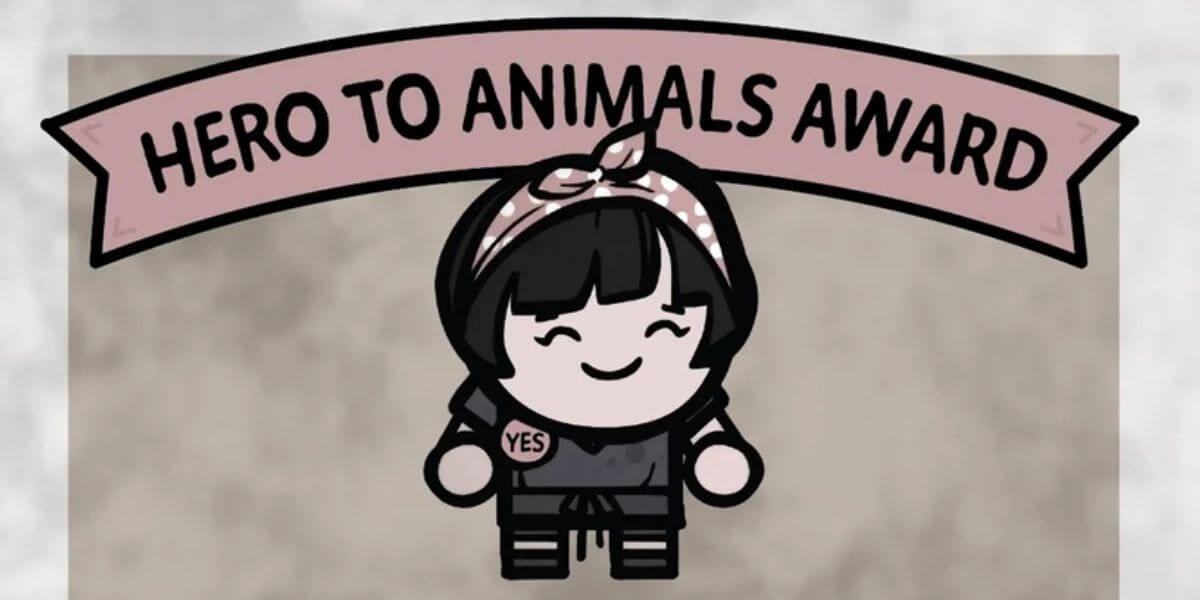
The People for the Ethical Treatment of Animals (PETA) has officially announced that it is conferring its prestigious Hero to Animals Award upon Tracy Newkirk, a non-playable character (NPC) in the 2026 video game Mewgenics. This marks a significant moment in the intersection of digital media and social advocacy, as the organization recognizes a virtual entity for her role in promoting animal rights and challenging the concept of speciesism within a simulated environment. Tracy Newkirk, who serves as a shopkeeper at the P-Mart in the game’s fictional Boon County, has gained attention for her outspoken dialogue regarding the treatment of cats, which the game’s mechanics often treat as commodities for breeding and combat.
The decision to honor a digital character comes as Mewgenics, the long-awaited roguelike title from developer Edmund McMillen, reaches a global audience. While the game itself involves chaotic elements of feline mutation, survival, and tactical battling, the character of Tracy stands as a philosophical counterpoint to the player’s primary activities. According to PETA, Tracy’s unwavering commitment to "educating the ignorant" and her insistence on using the term "animal companion" over "pet" aligns with the organization’s core mission to dismantle human-supremacist attitudes toward non-human animals.
The Philosophical Framework of Tracy Newkirk
In the narrative landscape of Mewgenics, players navigate a world where cats are bred for specific traits, often leading to genetic instability and physical suffering for the sake of utility or aesthetic appeal. Amidst this backdrop, Tracy Newkirk operates the P-Mart, a location where players often go to trade or manage resources. However, Tracy’s interactions with the player are defined by her advocacy. She explicitly critiques the "bigoted speciesist agenda" she perceives in common language and asserts that all animals deserve rights equal to those of humans.
PETA’s leadership has noted the character’s unique position within the game. Although the character shares a name with PETA Founder Ingrid Newkirk and PETA President Tracy Reiman, the organization has clarified that there is no official relation, though they speculate the character may have been inspired by their real-world advocacy efforts. By awarding Tracy the Hero to Animals Award, PETA highlights her "rogue-like advocacy" and her refusal to remain silent while animals are treated as inventory. The award serves as a symbolic gesture to encourage players to reflect on the ethical implications of animal exploitation, even within a virtual space.
Historical Context: PETA and the Mewgenics Development Team
The relationship between PETA and the creators of Mewgenics, specifically Edmund McMillen, spans over a decade and a half. This history is rooted in a cycle of parody and mutual recognition within the gaming industry. In 2010, following the release of the hit indie title Super Meat Boy, PETA launched a parody game titled Super Tofu Boy. The parody was designed to highlight the cruelty of the industrial meat complex by replacing the protagonist, a sentient cube of meat, with a block of tofu.
The response from the development team at the time was unexpectedly positive. Edmund McMillen publicly stated that the parody was a "major high point" for him personally, viewing it as a sign of the game’s cultural impact. In a move of recursive irony, the developers eventually added Super Tofu Boy as an unlockable character in the original Super Meat Boy game. However, PETA noted at the time that the character was not portrayed in a particularly flattering or scientifically accurate light regarding the benefits of soy.
The inclusion of Tracy Newkirk in Mewgenics appears to be a more nuanced evolution of this relationship. While McMillen’s games are known for their dark humor, gross-out aesthetics, and "body horror" themes, they often touch upon themes of trauma, religion, and ethics. The developers themselves have acknowledged the "questionable moral dilemma" inherent in the game’s breeding mechanics, admitting that it feels "weird" to breed creatures for enjoyment when those creatures suffer shorter lifespans or physical ailments due to player intervention.
The Reality of Animal Breeding and Homelessness
The advocacy presented by Tracy Newkirk in Mewgenics mirrors a very real crisis in the physical world. PETA has used the occasion of this award to draw attention to the statistics surrounding feline welfare and the pet trade. According to industry data and shelter reports, millions of cats struggle to survive on the streets globally, and millions more enter animal shelters annually.
In the United States alone, approximately 6 to 8 million animals enter shelters every year. Of these, roughly half are cats. While adoption rates have seen fluctuations, a significant number of these animals are euthanized due to a lack of available homes and resources. PETA argues that the breeding of animals—whether in a video game or through professional breeders—exacerbates this problem. Every kitten bred for sale or specific traits effectively takes a potential home away from a cat waiting in a shelter.
Furthermore, the "commodification" of cats that Tracy Newkirk opposes in Boon County is a direct parallel to the real-world "breathing-impaired" breeds. Certain pedigree cats, such as Persians or Scottish Folds, are bred for physical characteristics that cause chronic health issues, including respiratory distress and joint pain. By highlighting Tracy’s dialogue, PETA aims to remind the gaming community that animals are individuals with needs, not products to be customized for human entertainment.
Analysis of Implications for the Gaming Industry
The recognition of Tracy Newkirk marks a growing trend where advocacy groups engage with digital environments to reach younger, tech-savvy demographics. Video games have increasingly become platforms for social and political discourse. Titles like Stray, which allowed players to navigate a city as a homeless cat, previously garnered praise from animal welfare groups for fostering empathy toward stray animals.
PETA’s move to award an NPC suggests that the impact of a character’s "message" can transcend the boundaries of the game’s code. For developers, the inclusion of characters like Tracy provides a layer of self-awareness and social commentary that enriches the game world. It forces players to confront the morality of their in-game actions, such as breeding "disposable" cats for battle, by providing a voice that speaks for the victims of those systems.
Industry analysts suggest that this form of "meta-activism" is effective because it meets audiences where they spend a significant portion of their leisure time. Rather than relying solely on traditional advertisements or protests, PETA’s engagement with Mewgenics allows the organization to participate in the cultural conversation surrounding a major game release.
Official Responses and Public Reaction
While the developers of Mewgenics have not issued a formal press release regarding the award as of mid-March 2026, the social media interaction between the gaming community and PETA has been robust. On platforms like X (formerly Twitter), PETA’s announcement has sparked debates regarding the ethics of "virtual breeding" and the role of NPCs in shaping player perspective.
Supporters of the move argue that Tracy Newkirk is a rare example of a character who challenges the player’s basic objectives, providing a necessary ethical "speed bump" in an otherwise chaotic game. Critics, however, view the award as a publicity stunt, questioning the efficacy of honoring a character that exists only in software. Regardless of the stance, the award has successfully brought the term "speciesism" into the gaming lexicon, prompting players to investigate the meaning behind Tracy’s dialogue.
Conclusion: Lessons from Boon County
The Hero to Animals Award for Tracy Newkirk serves as a bridge between the absurdist world of Mewgenics and the urgent realities of animal rights advocacy. Through Tracy, the game acknowledges that even in a world of bugs, loot, and mutations, the fundamental rights of living beings—or their digital counterparts—should not be ignored.
PETA’s message to the players of Mewgenics is clear: while the game offers a space for exploration and strategy, the real-world treatment of animals should never be a game. The organization urges individuals to adopt from shelters rather than buying from breeders or pet stores, emphasizing that adoption is the only compassionate option for those prepared to care for an animal companion. As Mewgenics continues to grow in popularity, the presence of Tracy Newkirk ensures that the conversation about animal welfare remains a permanent fixture of the Boon County experience, reminding everyone that animals are individuals, not inventory.
