

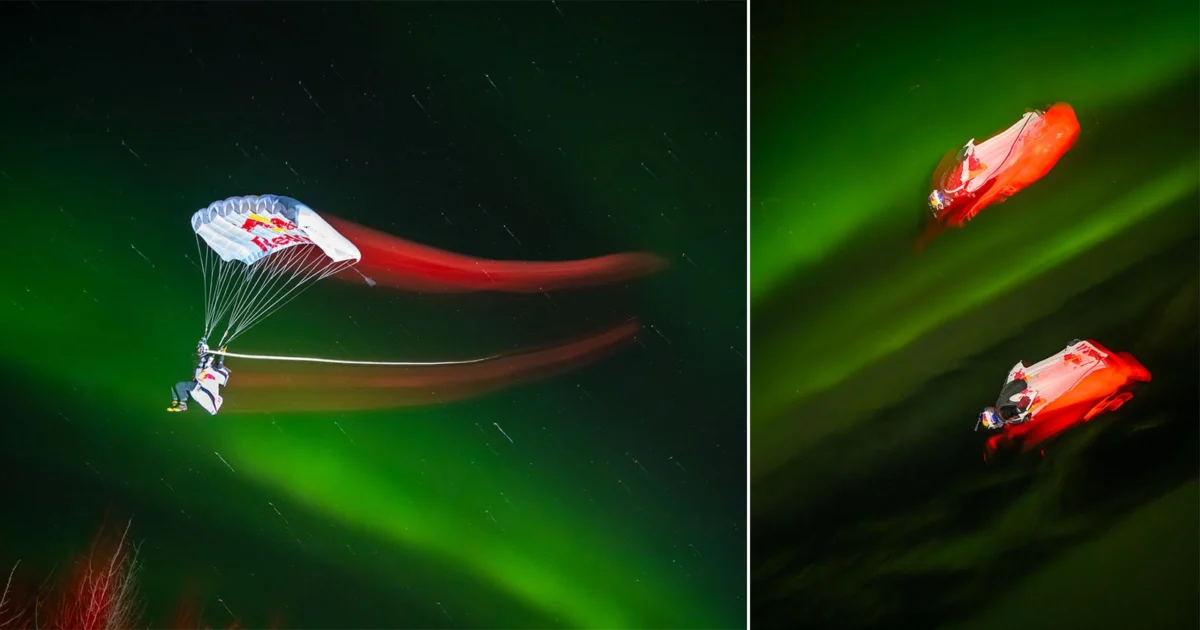
In a convergence of high-altitude athletics and advanced photographic engineering, the Red Bull Air Force has successfully completed an unprecedented wingsuit flight beneath the Aurora Borealis in the skies over Palmer, Alaska. The project, which culminated on March 23, 2026, represents the fulfillment of a four-year technical ambition to document human flight against the backdrop of one of nature’s most elusive atmospheric phenomena. Led by veteran photographer Michael Clark and a team of elite aerial athletes, the mission required overcoming extreme sub-zero temperatures, complex lighting synchronization, and the inherent unpredictability of solar activity.
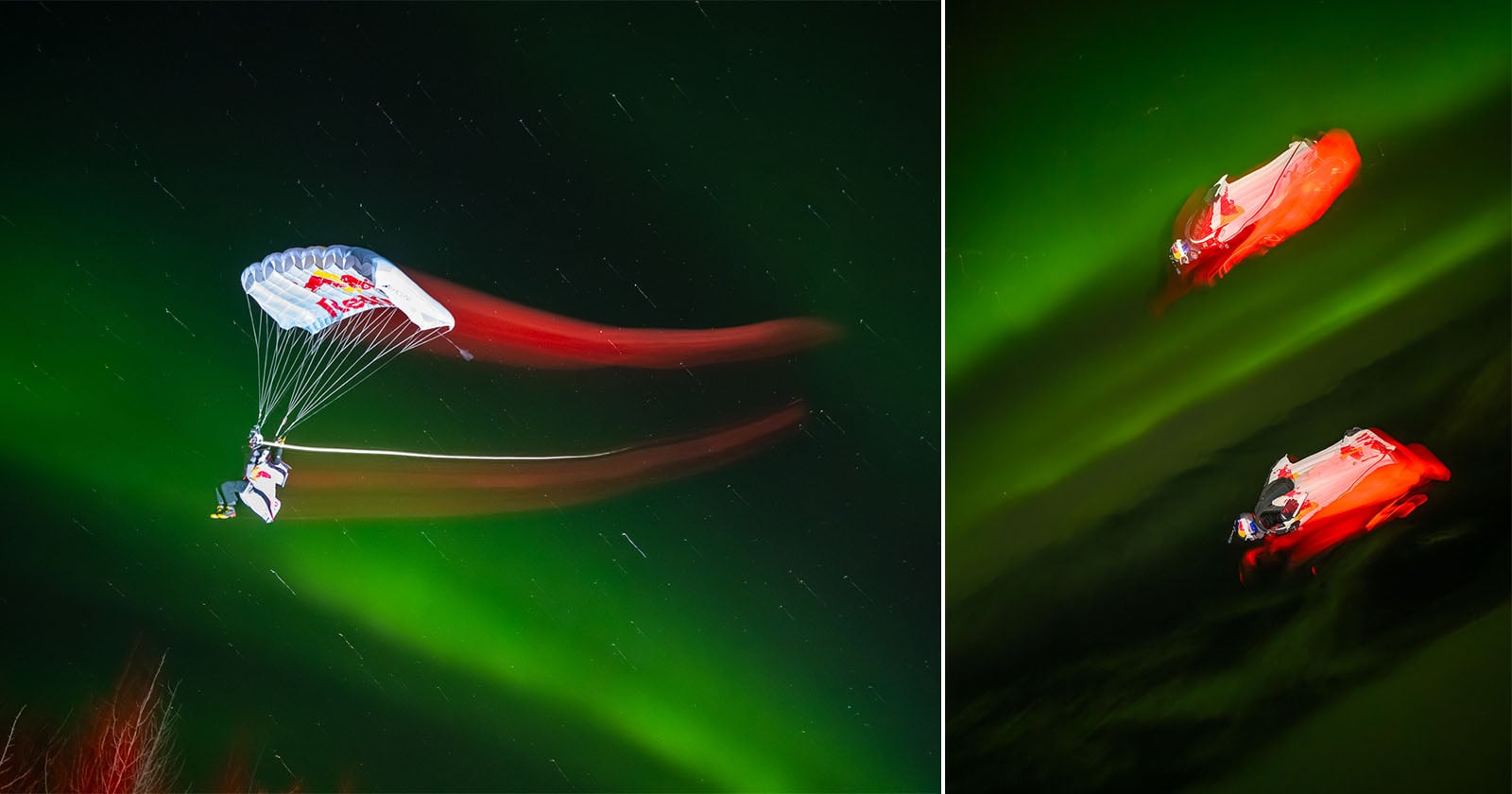
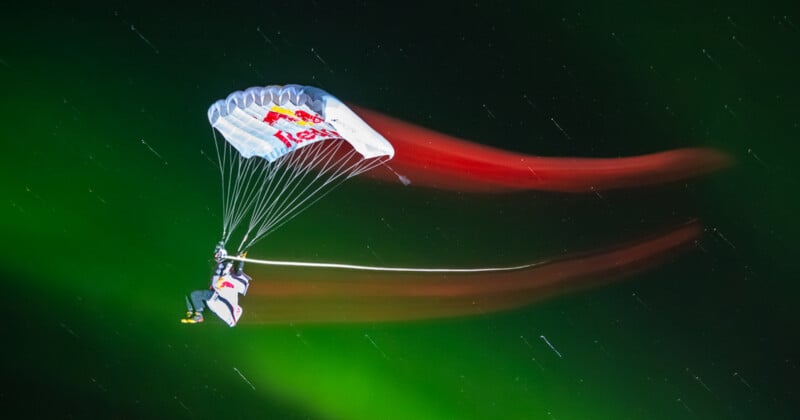
The primary objective of the mission was to capture high-resolution imagery of wingsuit skydivers as they descended through the night sky, illuminated by both the natural glow of the Northern Lights and integrated LED systems. The resulting images, which depict skydivers trailing streaks of red light against a shimmering green celestial curtain, mark a significant milestone in action sports photography. This achievement is not merely a feat of physical daring but a testament to the meticulous application of physics and optical science in extreme environments.
The Genesis of a Four-Year Ambition
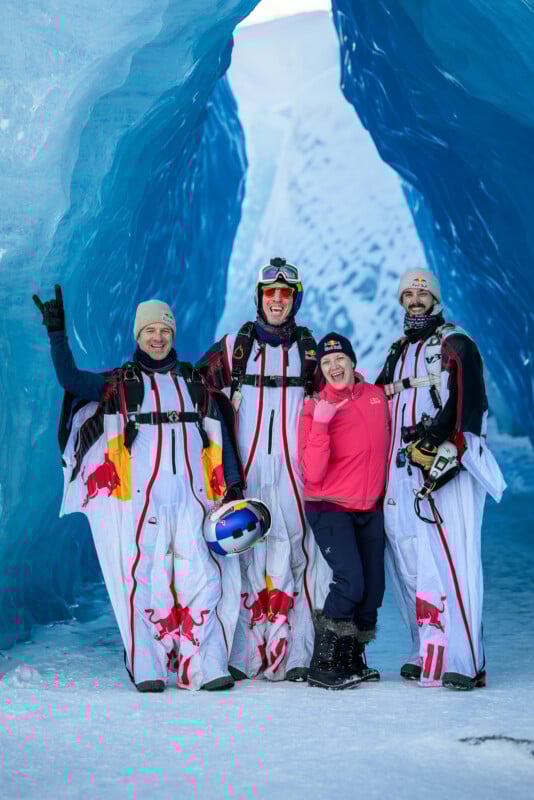
The concept for the "Northern Flights" project originated with Jeff Provenzano, a prominent member of the Red Bull Air Force. Provenzano, who has completed thousands of jumps across the globe, sought a definitive way to conclude his mission of skydiving in all 50 U.S. states. Alaska, the final state on his list, presented the ultimate challenge: a night jump under the Aurora Borealis.
To realize this vision, Provenzano approached Michael Clark, an award-winning photographer known for his ability to document high-risk adventure sports. Clark’s background is uniquely suited to such a task; holding a Bachelor of Science in Physics from the University of Texas at Austin, he approaches photography with an analytical rigor that allows him to solve complex technical puzzles. Provenzano also enlisted Jon DeVore, the captain of the Red Bull Air Force and an Alaska native, to manage the local logistics and safety protocols required for a high-altitude night jump in the Arctic wilderness.
The project faced significant delays over a four-year period. The primary obstacles were the three variables required for success: clear weather, manageable wind speeds at jump altitude, and high auroral activity. In the Arctic, these three conditions rarely align. Multiple expeditions were planned and subsequently canceled as the team waited for a "solar window" that would provide a sufficiently bright aurora to be captured by camera sensors without the use of artificial daylight.
Technical Innovation and the Physics of Light
Capturing sharp images of a subject moving at terminal velocity in near-total darkness is a fundamental challenge in optics. Wingsuit skydivers typically travel at speeds of approximately 120 miles per hour (193 km/h). Under normal circumstances, photographing the Aurora Borealis requires long exposure times, often ranging from one to twenty seconds, to allow enough light to hit the sensor. However, a long exposure of a fast-moving skydiver would result in nothing more than a faint, unrecognizable blur.
To solve this, Clark and his team utilized a technique known as "dragging the shutter." This involves using a long exposure to capture the ambient light of the aurora while simultaneously using a high-speed flash (strobe) to "freeze" the motion of the athletes.
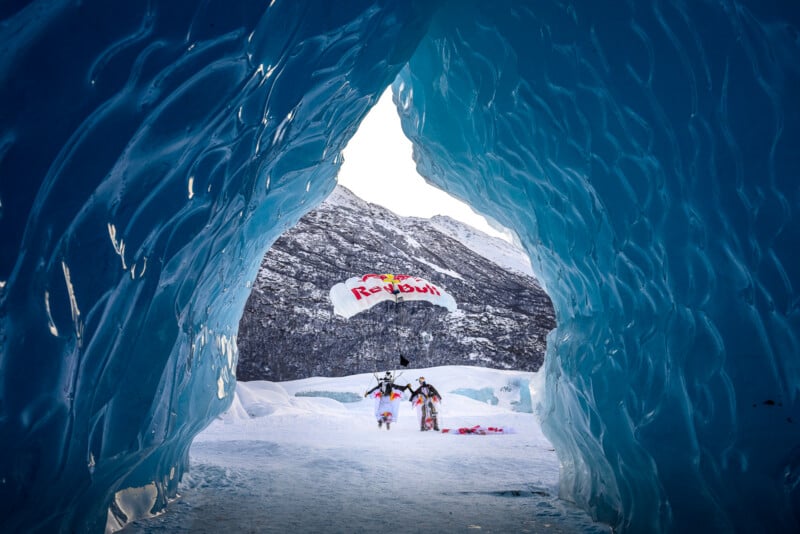
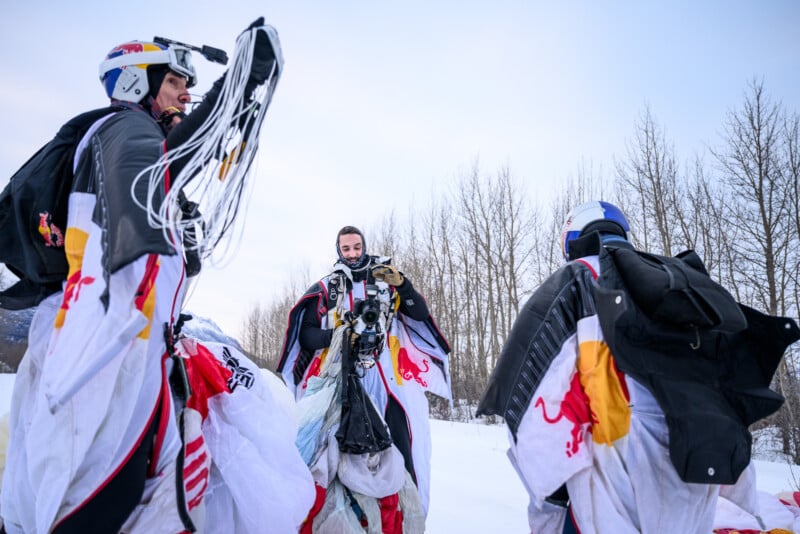
The aerial photography was handled by Mike Brewer, an accomplished skydiver and photographer who jumped alongside Provenzano and DeVore. Brewer was equipped with a Nikon Z6 mirrorless camera and a Nikkor 20mm f/1.8 lens. To illuminate the divers, a small Nikon SB-400 speedlight was mounted to Brewer’s helmet. This setup allowed Brewer to maintain a stable composition while falling through the air, triggering the flash at the precise moment to render the divers in sharp detail against the long-exposure background of the stars and the aurora.
On the ground, Clark and photographer Kien Quan utilized Nikon Z8 cameras paired with heavy-duty, battery-powered strobes. They focused on the "swoop" landings—the final stage of the flight where skydivers glide just feet above the ground at high speeds. By using 1.3-second exposures, Clark was able to capture the motion blur of the LED lights attached to the suits, creating a sense of dynamic movement, while the strobes ensured the athletes’ forms remained distinct.
Environmental Constraints and Safety Protocols
The mission took place near the Knik Glacier, a region known for its dramatic ice formations and extreme weather. At the jump altitude of several thousand feet, temperatures plummeted to -21°F (-29°C). When factoring in the wind chill generated by falling at 120 mph, the athletes were exposed to temperatures effectively exceeding -100°F.
Such extreme cold poses a dual threat: it compromises the physical dexterity of the skydivers and rapidly depletes the lithium-ion batteries used in cameras and lighting equipment. To mitigate these risks, the team utilized specialized thermal gear and kept all electronic equipment in heated enclosures until the moment of the jump.
Safety was the paramount concern. Night skydiving is inherently more dangerous than daytime jumps due to the lack of visual depth perception and the difficulty of spotting landing zones. The skydivers wore suits embedded with LED strips—red for Provenzano and DeVore, and various colors for other team members. These lights served two purposes: they allowed the divers to maintain visual contact with one another to avoid mid-air collisions, and they provided the "light trails" that became a central aesthetic element of the photography.
Chronology of the Final Descent
The successful mission on March 23, 2026, followed a series of test jumps conducted during the twilight hours. These tests allowed the team to calibrate their equipment and ensure that the LED brightness did not overpower the camera sensors.
- 22:00 Hours: The team monitors NOAA space weather forecasts, confirming a surge in geomagnetic activity (a K-index of 4 or higher), indicating a high probability of a visible aurora.
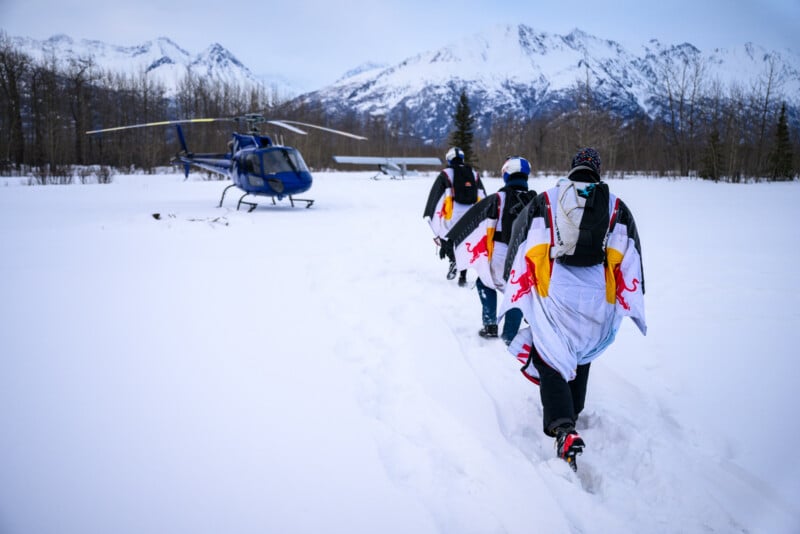
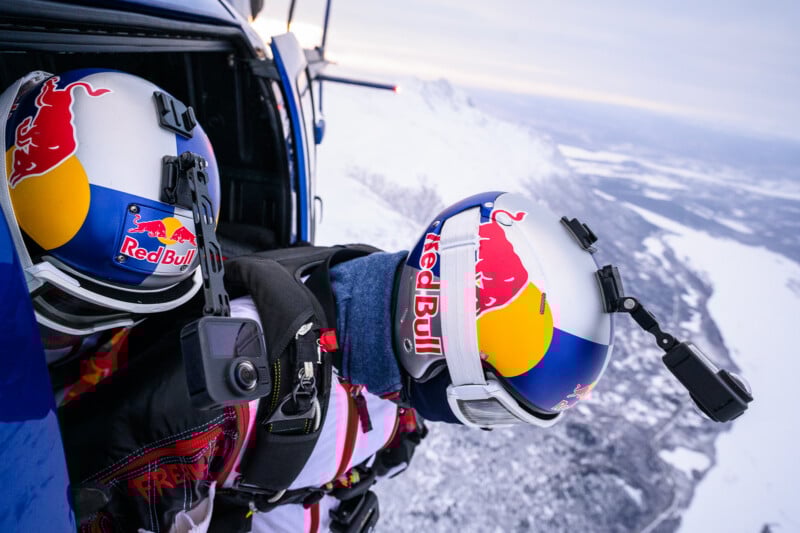
- 23:30 Hours: The helicopter, a high-performance Airbus H125, departs from a base near Palmer, Alaska, carrying Provenzano, DeVore, and Brewer.
- 00:15 Hours: The aircraft reaches the drop zone altitude. The cabin lights are dimmed to preserve the athletes’ night vision.
- 00:20 Hours: The jump is initiated. As the divers exit the aircraft, the Aurora Borealis intensifies, displaying vibrant green and purple hues across the horizon.
- 00:22 Hours: In freefall, Brewer maneuvers into position, capturing the air-to-air sequences. The red LEDs on the wingsuits create a "fire-like" trail, an effect the team had not fully anticipated until reviewing the playback.
- 00:25 Hours: The parachutes are deployed. The divers navigate toward the Knik Glacier landing zone, where Clark and Quan are positioned with ground-based strobes.
- 00:30 Hours: The team successfully lands on the frozen terrain. Immediate review of the digital files confirms that the synchronization of flash and ambient light was successful.
Analysis of Implications and Artistic Impact
The "Northern Flights" project represents a shift in the capabilities of modern digital sensors. Ten years ago, the "noise" generated by high-ISO settings would have made these images unusable. The high dynamic range of the Nikon Z-series cameras allowed Clark to preserve detail in the dark shadows of the Alaskan landscape while preventing the bright curtains of the aurora from becoming overexposed.
Beyond the technical achievement, the project highlights the evolving nature of brand-sponsored content. Red Bull has long been a patron of "impossible" stunts, but this mission emphasizes a move toward high-art aesthetics. The collaboration between a physicist-photographer and elite athletes suggests that the future of action sports media lies in the intersection of extreme physical performance and sophisticated scientific execution.
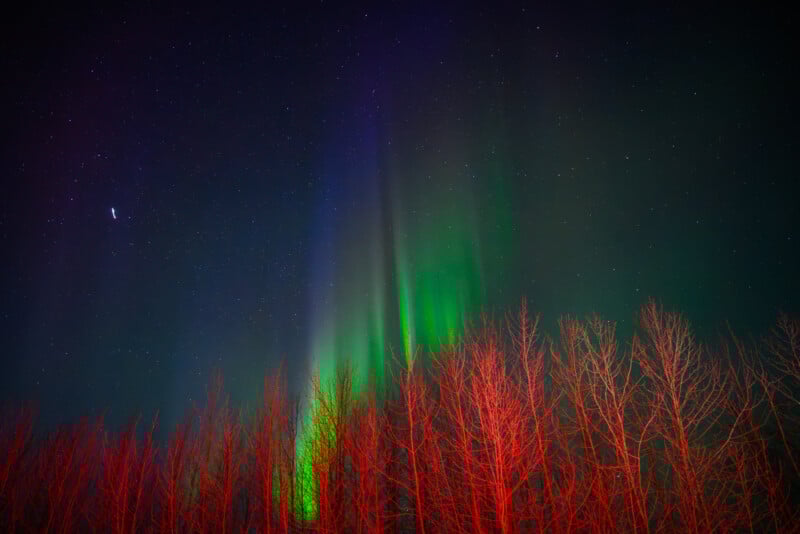
Michael Clark’s reflection on the project underscores this sentiment. He noted that while he has spent thirty years documenting the limits of human capability, it is rare for a final result to exceed the original conceptual vision. The "fire on ice" aesthetic created by the red LEDs against the green aurora was a serendipitous discovery that added a layer of surrealism to the factual documentation of the jump.
Broader Context: The Science of the Aurora
The success of the mission was also tied to the current solar cycle. As the sun approaches "Solar Maximum"—a period of peak activity in its 11-year cycle—geomagnetic storms become more frequent. These storms send charged particles into the Earth’s atmosphere, where they collide with gas atoms, releasing energy in the form of light. The green light seen in Clark’s photos is caused by oxygen molecules at altitudes of about 60 miles, while the rarer reds and purples are produced by nitrogen and high-altitude oxygen.
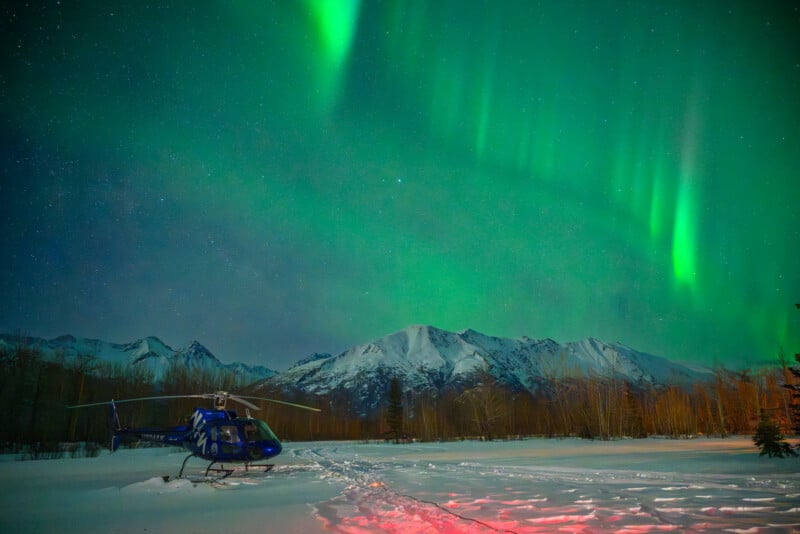
The ability to predict these events has improved with satellite monitoring, but the "Northern Flights" team still had to contend with the "micro-weather" of Alaska, where clouds can obscure a brilliant aurora in a matter of minutes. The successful capture of these images serves as a rare data point where human technology and celestial mechanics aligned perfectly.
As the images circulate globally, they are expected to influence both the photography industry and the adventure tourism sector in Alaska. The project demonstrates that with sufficient planning and technical expertise, the "impossible" shot is merely a matter of waiting for the right light and having the courage to jump into the dark.
