


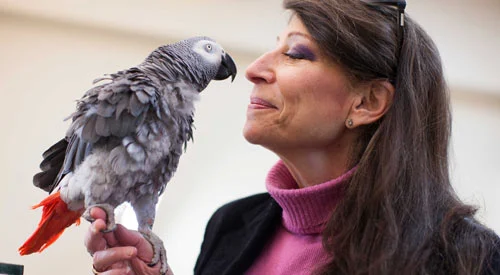
The recent account from Dr. Irene Pepperberg, a distinguished avian cognition researcher affiliated with The Alex Foundation, details her challenging return to the United States following an extended period of being stranded in Dubai. Her journey, culminating in a safe arrival on March 9, 2023, underscores the complexities and anxieties of international travel disruptions compounded by geopolitical instability and bureaucratic hurdles. While Dr. Pepperberg’s professional commitments initially brought her to Dubai, it was ultimately the unexpected intervention of private philanthropy that facilitated her urgent departure from a region experiencing significant security alerts.
Heightened Geopolitical Tensions and Travel Disruptions
Dr. Pepperberg’s predicament began in late February 2023, when what was intended to be a routine professional trip to Dubai was abruptly extended due to widespread flight cancellations. The narrative suggests a backdrop of heightened regional instability, with the researcher experiencing "nightly alerts…to ‘Shelter in place’" and the perception of being in a "war zone." While specific large-scale military engagements directly impacting Dubai International Airport (DXB) were not widely reported by international media during this precise period (late February to early March 2023), the broader Middle East region has been characterized by ongoing geopolitical complexities, including drone and missile threats from non-state actors in neighboring areas. Such persistent tensions can lead to elevated security postures, precautionary measures, and significant disruptions to air travel and daily life, even in major global hubs like Dubai. Airlines, in response to perceived risks or operational constraints, often adjust schedules, leading to cascading cancellations that can leave travelers in precarious situations.
During the period of Dr. Pepperberg’s stranding, a combination of factors likely contributed to the travel chaos. Airlines operating in or through the region often face dynamic challenges, including airspace restrictions, crew availability issues, and heightened security protocols, all of which can lead to cancellations. The global aviation industry, still navigating post-pandemic recovery, also grappled with capacity limitations and unpredictable demand shifts, further complicating rebooking processes. Dr. Pepperberg’s initial airline, Qatar Airways, found its flights from Dubai to Doha—a critical transit hub for onward travel to the U.S.—entirely grounded, indicating significant operational impediments specific to certain routes or carriers.
A Labyrinth of Bureaucracy: The Quest for Repatriation
The initial phase of Dr. Pepperberg’s ordeal was marked by a frustrating cycle of daily flight reschedulings followed by cancellations. Her attempts to secure assistance from official channels, specifically the U.S. State Department, revealed a common bureaucratic challenge faced by citizens abroad during crises. Despite daily contact with "extremely friendly" representatives, the State Department proved "totally unhelpful" in providing tangible solutions for her repatriation.
A notable incident involved a late-afternoon call from the State Department offering a flight to Dulles International Airport (IAD) in the U.S. Dr. Pepperberg was instructed to prepare for departure and await an email with flight details. However, four and a half hours later, no such email arrived. Subsequent attempts to follow up highlighted a systemic disconnect: the representative explained that she had spoken with personnel from an "input" desk, responsible for gathering information, while the flight offer originated from a separate "processing" desk, with "no connection existed between the two desks." This bureaucratic fragmentation left Dr. Pepperberg without crucial information and ultimately without the promised flight, forcing her to extend her hotel stay yet again. Such operational silos within large government agencies can create significant communication gaps, hindering efficient crisis response and assistance to individual citizens.
Adding to the financial burden, Dr. Pepperberg discovered that the United Arab Emirates’ offer to cover hotel and food expenses for stranded travelers applied exclusively to passengers flying on Emirates Airlines. As a Qatar Airways passenger, she was ineligible for this assistance, necessitating self-funded accommodation and meals. This policy highlights the varying levels of support available to travelers depending on their chosen airline and nationality, a critical detail often overlooked by those planning international trips. To mitigate costs, Dr. Pepperberg resorted to purchasing groceries from a local supermarket rather than dining at the hotel restaurant, a testament to the unexpected financial pressures of being stranded.
Maintaining Connections Amidst Isolation
Despite the isolation and uncertainty, Dr. Pepperberg made concerted efforts to maintain both personal and professional connections. She stayed in regular contact with her Dubai colleagues, ensuring their safety and well-being amidst the ongoing security alerts. Friends in the U.S. also attempted to assist, but their efforts to contact the State Department yielded similar results: polite but ultimately ineffectual responses.
A poignant detail in her account is the video call she made to her African Grey parrot, Griffin, back in the U.S. This act underscores the deep bond between the researcher and her subject, and her concern that Griffin might perceive her prolonged absence as abandonment. Such personal touches provide a human dimension to the often-impersonal nature of crisis situations. Professionally, Dr. Pepperberg endeavored to continue her work, reviewing papers, transcribing data from falcon studies, and reading journal articles, all while closely monitoring news updates from the BBC, which she deemed the "only reliable news source" during her ordeal. The exorbitant phone bill, exceeding $1,200, further illustrates the significant, unforeseen costs associated with prolonged international communication during a crisis.
The Turning Point: Philanthropic Intervention

The breakthrough in Dr. Pepperberg’s repatriation efforts came from an unexpected source: private philanthropy. A donor to The Alex Foundation, contacting her for routine tax paperwork, learned of her predicament. Their immediate and unequivocal response—"Do whatever you have to do to get out and we’ll cover the expense!"—marked a critical turning point. This generous offer provided Dr. Pepperberg with the financial flexibility to explore options previously deemed unaffordable.
Initially, options remained limited. Discussions with the donors included the possibility of ground travel to Oman, a 10.5-hour drive, which was presented as a viable route for British citizens due to U.K.-chartered evacuation flights from Oman. However, as a U.S. citizen, this avenue offered no advantage. This highlights how nationality can significantly impact evacuation routes and assistance during international crises, with some nations having more robust or specific repatriation mechanisms than others. The U.S. government, despite public reports, had primarily focused on evacuating embassy and consulate staff and their families, leaving private citizens to navigate the complex situation largely on their own. This often leads to criticism regarding the perceived disparity in support provided by governments to different categories of citizens abroad.
The situation changed when an airline alert indicated that Emirates would soon resume direct commercial flights to a limited number of U.S. cities. Acting swiftly, Dr. Pepperberg accessed the Emirates website and secured the only available seat: a business class flight to New York City scheduled for Sunday, March 9th. The significant cost of the business class ticket would have been prohibitive under normal circumstances, but with the donors’ backing, she could proceed with the booking. This act of private sponsorship proved instrumental, offering a "light at the end of the tunnel" and a direct path home that government assistance had failed to provide. The role of private individuals and philanthropic organizations in filling critical gaps during international emergencies is a recurrent theme in disaster relief and humanitarian efforts.
The Journey Home and Lingering Impact
Even with a confirmed flight, the journey home was not without its final anxieties. On Friday, March 7th, at 7 a.m., a "huge explosion" rocked the vicinity of the hotel. Despite the building’s excellent soundproofing, the force of the blast was undeniable. News reports later confirmed that something on the periphery of Dubai International Airport had been hit, either by a drone or shrapnel from an interception, leading to a temporary closure of the airport. This incident underscored the very real and immediate dangers that had prompted the security alerts and travel disruptions. Fortunately, the airport closure lasted only a few hours, preventing further delays to her critical flight.
The boarding process itself presented additional hurdles. While Emirates typically allows check-in 48 hours in advance, Dr. Pepperberg was only permitted to do a partial check-in 12 hours prior and could not obtain her boarding pass until her arrival at the airport. This uncertainty about check-in procedures and exact timing added to her stress. Deciding to arrive early, she navigated the vast airport, eventually finding assistance from a "wonderfully helpful woman" who recognized her distress and arranged for personal assistance, including a wheelchair, which Dr. Pepperberg, by then, was too stressed to refuse. The perks of business class, including access to an elegant lounge, provided a brief respite before boarding. Once airborne, with Wi-Fi connectivity, she was finally able to notify concerned friends and colleagues of her departure.
Reaching U.S. soil was a profound relief, even with the subsequent steps of customs, another TSA security check (fortunately during a period of minimal lines despite a government shutdown), a lengthy layover in NYC, and connecting flights to Boston and then home. The primary relief was no longer being in a "war zone."
Broader Implications and Future Considerations
Dr. Pepperberg’s experience highlights several significant implications for international travel, emergency response, and the conduct of scientific research in volatile regions. Her month following repatriation was consumed with rescheduling numerous appointments and addressing delayed tasks, indicative of the ripple effect such disruptions have on professional and personal lives. The lingering psychological impact, described as "a wee bit PTSD-y," underscores the mental toll of prolonged uncertainty and perceived threat. This personal testimony provides a valuable perspective on the human cost of geopolitical instability, emphasizing the resilience required by individuals caught in such circumstances.
The ongoing communication with her Dubai colleagues, who remain safe but stressed, points to the continued challenges faced by those living and working in affected regions. The discussion about finding ways to conclude ongoing studies without Dr. Pepperberg needing to return next year suggests a potential shift in international research collaboration strategies, favoring remote methodologies or alternative locations to mitigate future risks.
This incident also shines a light on the critical role of private funding and individual generosity in providing crucial support when official channels are insufficient. While governments have a responsibility to assist their citizens abroad, the capacity and efficacy of such assistance can vary significantly, leaving individuals vulnerable. The Alex Foundation’s donors exemplify how private entities can offer essential lifelines in emergency situations, bridging gaps in public services and ensuring the safety of individuals engaged in vital work.
As Dr. Pepperberg prepares to resume blogging about her lab and scientific endeavors, her account serves as a compelling reminder of the unpredictable nature of international travel and the profound impact of global events on individual lives, even in seemingly distant professional pursuits. Her safe return, facilitated by both her perseverance and the generosity of others, underscores the intricate web of personal, professional, and geopolitical factors that shape our increasingly interconnected world.
