


ARLINGTON, VA – Smart Animal Training Systems recently unveiled a new compact version of its acclaimed Pet Tutor automated treat dispenser at the annual Clicker Expo, held several weeks ago in Arlington, Virginia. The introduction of this smaller feeder marks a notable development in the realm of positive reinforcement animal training, addressing critical user needs for portability, space efficiency, and streamlined operations. The event, a cornerstone for professional animal trainers and enthusiasts, served as an ideal platform for the debut of this innovative device, drawing considerable interest from attendees seeking advanced tools to enhance their training methodologies.
The Clicker Expo: A Hub for Innovation in Animal Training
Clicker Expo stands as a premier annual gathering for individuals dedicated to the science and art of positive reinforcement training. Organized by Karen Pryor ClickerTraining, the expo convenes leading experts, researchers, and practitioners from around the globe to share insights, present new research, and demonstrate cutting-edge techniques. Its mission is to advance humane and effective animal training through education, collaboration, and the showcasing of innovative products. Attendees, who typically include professional dog trainers, animal behaviorists, veterinary professionals, and dedicated pet owners, view the event as an essential opportunity for professional development, networking, and discovering the latest advancements in the field. The expo’s exhibition hall is a vital component, often featuring new technologies and training aids designed to optimize learning for animals and improve the efficiency of their human counterparts. The buzz surrounding new product releases, particularly those from established players like Smart Animal Training Systems, is a consistent highlight, underscoring the event’s role as a barometer for industry trends and future directions in animal care.
Smart Animal Training Systems and the Pet Tutor Ecosystem
Smart Animal Training Systems has established itself as a frontrunner in developing technology-driven solutions for animal training. Their flagship product, the Pet Tutor, is an automated treat dispenser designed to deliver rewards precisely and consistently, critical elements for effective positive reinforcement. This device allows trainers to remotely dispense treats, enabling them to maintain optimal positioning, focus entirely on the animal’s behavior, and eliminate the potential for handler-induced cues or delays in reward delivery. The Pet Tutor’s ability to provide immediate and consistent reinforcement has made it an indispensable tool for a wide range of applications, from basic obedience and trick training to complex behavior modification and cooperative care protocols. Its integration into training regimens has been lauded by professionals for its capacity to reduce human error, accelerate learning, and build stronger, more positive associations for animals during training sessions. The system typically includes features such as adjustable dispensing rates, sound and light cues to mark desired behaviors, and remote control capabilities, all contributing to a more precise and efficient training experience.
The Debut of the Compact Pet Tutor: The "Shorty"
The recent Clicker Expo saw the unofficial preview of the new, smaller version of the Pet Tutor, affectionately referred to as the "Shorty Pet Tutor" based on initial product descriptions. While company representatives, including Wes and Amanda from Smart Animal Training Systems, were on hand to demonstrate the new device, the primary distinction from its larger predecessor lies solely in its reduced physical footprint. This design choice, though seemingly minor, addresses a significant demand within the training community for more portable and less obtrusive equipment. The compact feeder, while maintaining the core functionalities and technological sophistication of the original, offers a more discreet and convenient option for a diverse array of training scenarios. Its initial appearance at the expo generated considerable excitement, with many attendees, including prominent figures in the training world, expressing keen interest in its potential applications. The immediate positive reception underscores the industry’s continuous pursuit of tools that combine advanced functionality with practical usability.
Addressing Key User Needs: Portability, Space, and Efficiency
The development of the compact Pet Tutor directly responds to several critical requirements voiced by professional trainers and dedicated pet owners:
-
Enhanced Portability for Dynamic Training Environments: For trainers who frequently travel with their animals to competitions, workshops, or client homes, the portability of equipment is paramount. The original Pet Tutor, while highly effective, could sometimes be cumbersome to transport, especially when combined with other essential training gear. The "Shorty" model significantly alleviates this challenge, allowing it to be easily tucked into travel bags, vehicle compartments, or smaller carrying cases. This enhanced mobility means trainers can consistently utilize their preferred reward delivery system, maintaining continuity in training methods regardless of location. The convenience factor is particularly beneficial for those engaged in outdoor training, public access work for service animals, or when space is at a premium in shared training facilities.
-
Optimized Space Utilization, Especially in Crates and Smaller Settings: Many training protocols, particularly those involving initial introductions, behavior modification in new environments, or specific conditioning exercises, require the use of crates or confined spaces. In such settings, every inch counts. The smaller Pet Tutor takes up considerably less room within a crate, which is a significant advantage for dogs of all sizes, but particularly for smaller breeds where space is limited. This allows for more comfortable positioning for the animal and reduces the likelihood of the feeder itself becoming a distraction or obstacle. Furthermore, for pet owners in apartments or smaller homes, a compact device is less intrusive and easier to integrate into everyday living spaces, facilitating consistent training without clutter.
-
Reduced Waste and Streamlined Operations: The capacity of the original Pet Tutor, while excellent for extended training sessions or multiple animals, often meant that for shorter, focused sessions or single-dog households, a significant portion of treats might remain unused. This could lead to food waste or the need for regular emptying and refilling, adding a minor but persistent logistical task. The compact feeder, with its presumably smaller treat reservoir, inherently reduces the potential for waste, as trainers are less likely to overfill it for brief sessions. This streamlining contributes to greater efficiency, allowing trainers to focus more on the animal’s behavior and less on equipment management, ultimately saving time and resources. This thoughtful design consideration reflects a deeper understanding of trainers’ daily workflows and the practicalities of managing training resources.
Expert Endorsement: Dr. Deborah Jones’s Initial Assessment
Among the prominent figures to express enthusiasm for the new compact feeder was Dr. Deborah Jones, a highly respected professional in the animal training community. Dr. Jones, a retired psychology professor, has dedicated over 25 years to positive reinforcement-based animal training, authored 12 books on dog training, and contributed to numerous DVD series. Her expertise spans multiple breeds and high-level titles in disciplines such as agility, rally, and obedience. Currently, she instructs online training classes and webinars at Fenzi Dog Sports Academy, underscoring her influence and practical experience.
Dr. Jones reported an immediate attraction to the smaller device at Clicker Expo, describing it as a "shiny new object." Her initial, somewhat anecdotal, observation of its "cuteness" evolved into a more pragmatic appreciation of its benefits. She highlighted its utility for her frequent travels, emphasizing how the compact size allows her to easily integrate the Pet Tutor into her already packed vehicle, ensuring her dogs have a familiar and consistent training aid in new environments. Her early access to the "Shorty" model positioned her as an influential early adopter, providing valuable feedback that aligns with the broader needs of the training community. This expert endorsement lends significant credibility to the practical advantages of the compact design.

The Pet Tutor in Practice: Streamlining Training Protocols
The fundamental utility of the Pet Tutor, irrespective of its size, lies in its ability to streamline complex training protocols. Dr. Jones consistently emphasizes how the device enhances efficiency by serving multiple critical functions:
- Precision Timing as a Marker: The Pet Tutor’s light and beeping sound effectively replace a traditional clicker as a conditioned reinforcer (marker signal). This allows trainers to precisely mark the exact moment of desired behavior, which is crucial for clear communication with the animal. The automated nature ensures consistency in the marker’s delivery, removing any variability that might arise from manual clicking.
- Automated and Consistent Food Delivery: Following the marker, the immediate and automatic delivery of food eliminates the need for trainers to manually reach for treats, reducing fumbling, dropping, or delays. This automation allows the trainer’s hands to remain free to guide the animal, manage props, or interact with the environment, maintaining an uninterrupted flow in the training session. The consistency of food delivery also reinforces the positive association with the marker signal.
- Enhanced Focus on Animal Behavior: By automating reward delivery, the Pet Tutor frees the trainer’s cognitive load, allowing them to concentrate more intently on observing the animal’s subtle body language, assessing their understanding, and making real-time adjustments to the training plan. This heightened focus leads to more nuanced and effective training interventions.
Fostering Cooperative Care and Canine Consent
One of the most impactful applications of the Pet Tutor, particularly the new compact version, is in cooperative care work. Cooperative care is a progressive approach to animal handling where animals are trained to willingly participate in their own care procedures, such as grooming, veterinary examinations, and medication administration. This approach prioritizes the animal’s emotional well-being and reduces stress, fear, and anxiety often associated with these necessary interactions.
Dr. Jones is a vocal proponent of cooperative care and outlines two foundational rules she adheres to:
- Freedom to Leave: Animals must always have an escape route or an option to disengage if they feel uncomfortable or overwhelmed. This provides them with a sense of agency and control.
- Behavior as Feedback: Any decision by the animal to leave is interpreted as direct feedback, signaling that the training intensity or approach needs adjustment. This establishes a two-way communication channel, where the trainer "listens" to the animal’s cues.
This methodology forms the bedrock of "consent" in progressive dog training. By ensuring an animal always has the option to "opt-out," trainers build trust and a strong positive emotional response to handling. Paradoxically, once animals understand they can leave, they often choose to stay, demonstrating genuine cooperation rather than forced compliance. When they do choose to leave, it serves as an invaluable indicator that the trainer has inadvertently pushed too far or too fast, prompting a necessary recalibration of the training plan.
The Pet Tutor significantly facilitates cooperative care by automating reinforcement. This allows the trainer to keep their primary focus on the physical procedure or handling technique, while the animal receives rapid, consistent rewards for their cooperation. The device eliminates the logistical challenge of simultaneously performing a procedure and manually delivering treats, making it easier to maintain precise timing and positive associations. This seamless reward delivery is instrumental in conditioning animals to accept various forms of touch and handling, transforming potentially stressful experiences into positive ones.
Case Study: Pixel’s Introduction to the Pet Tutor
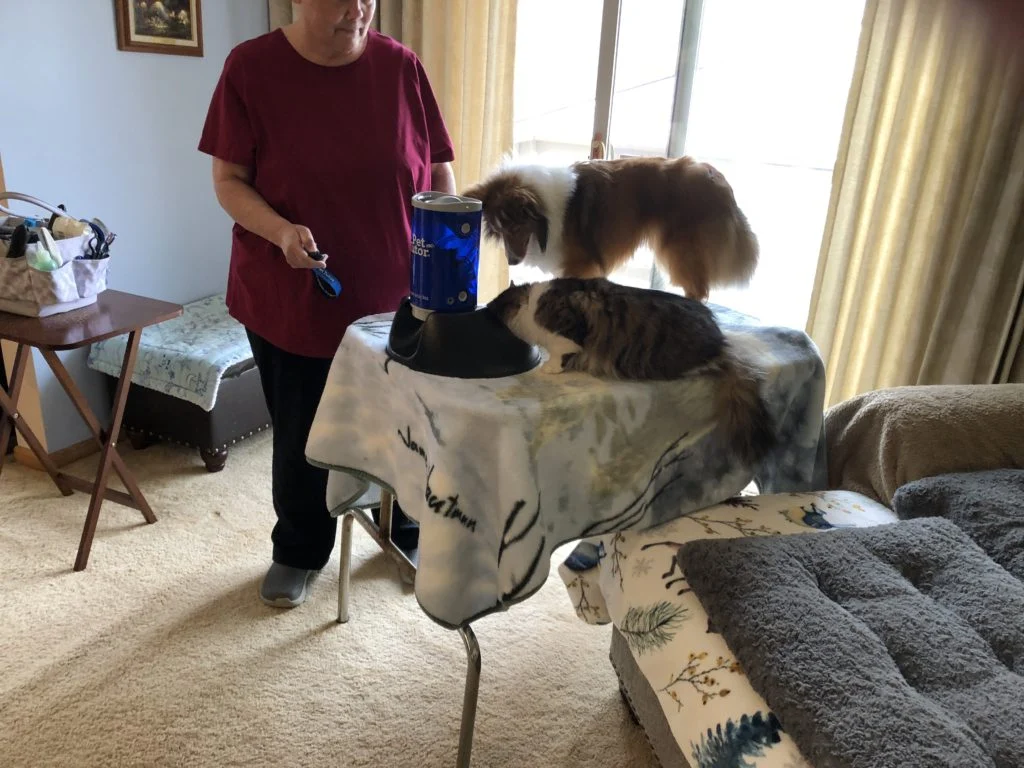
Dr. Jones provided a practical demonstration of the Pet Tutor’s utility through videos documenting the introduction of a small dog named Pixel to the device and subsequent cooperative care conditioning. In the initial introduction, the Pet Tutor was strategically placed on a table to create a non-threatening environment, ensuring Pixel’s first interaction was positive and stress-free. This setup reinforced the understanding that treats appeared simply by waiting, without direct interaction with the feeder, thereby preventing any potential resource guarding or frustration with the device itself.
A subsequent video illustrated the use of the Pet Tutor for conditioning Pixel to accept touch. The process involved a clear sequence: touch, followed immediately by the Pet Tutor dispensing treats. This established "touch" as a reliable predictor of something positive. A key moment in the video occurred at the 11-second mark, where Pixel jumped off the grooming table after a touch to his outside hip. Dr. Jones interpreted this action as direct feedback, indicating that the specific touch was "too much" for Pixel at that stage. In response, she immediately adjusted her approach, making subsequent repetitions easier and less intrusive. This real-world example vividly demonstrates the principles of cooperative care and consent: recognizing the animal’s right to disengage and adapting the training based on their communication. The Pet Tutor’s automated reward system allowed Dr. Jones to focus entirely on Pixel’s body language and adjust her handling in real-time, underscoring its value in sensitive cooperative care work.
Broader Implications and Market Impact
The introduction of the compact Pet Tutor aligns with broader trends in the burgeoning pet technology market, which prioritizes convenience, efficiency, and enhanced animal welfare. The global pet tech market is experiencing significant growth, driven by increasing pet ownership, humanization of pets, and technological advancements. Devices that automate aspects of pet care, training, and monitoring are becoming increasingly popular. The "Shorty" Pet Tutor taps into this demand by offering a more user-friendly and versatile product within an established and respected brand.
- Impact on Training Professionals: The smaller feeder provides trainers with a more flexible tool, suitable for a wider array of clients and training environments. Its portability means that even complex behavioral interventions can be supported by consistent, automated reinforcement in various settings, from home visits to outdoor training classes.
- Accessibility for Pet Owners: For the average pet owner, a compact, easy-to-use device makes advanced positive reinforcement techniques more accessible and less intimidating. It simplifies the process of reward delivery, allowing owners to focus on bonding with their pets and understanding their behavior, rather than struggling with manual treat dispensing. This could lead to broader adoption of effective, humane training methods.
- Future Outlook: The trend towards miniaturization and user-centric design in pet tech is likely to continue. The success of the compact Pet Tutor may pave the way for further innovations in remote training solutions, personalized pet care devices, and integrated smart systems that support both pet well-being and owner convenience.
Resources for Enhanced Pet Care: Dr. Jones’s Cooperative Care Channel
Further underscoring the commitment to advancing humane training and animal welfare, Dr. Deborah Jones has recently launched a dedicated YouTube channel titled "Cooperative Care with Deb Jones." This channel is designed to serve as a valuable public resource, offering a growing library of short training videos. These videos provide practical, step-by-step guidance to help pet owners and trainers prepare their animals for a variety of grooming and veterinary procedures, all within the framework of cooperative care and positive reinforcement. The channel acts as a direct complement to tools like the Pet Tutor, demonstrating how such devices can be effectively integrated into real-world applications to reduce stress and build positive associations for pets during essential care. The initiative reflects a broader movement within the animal training community to democratize knowledge and empower pet owners with the skills and understanding necessary for optimal animal welfare.
In conclusion, the unveiling of the compact Pet Tutor at Clicker Expo represents a significant, albeit subtle, advancement in positive reinforcement training technology. By addressing practical user needs for portability, space efficiency, and streamlined operations, Smart Animal Training Systems has further solidified the Pet Tutor’s role as an indispensable tool for trainers and pet owners alike. Coupled with expert endorsement from figures like Dr. Deborah Jones and the growing emphasis on cooperative care and canine consent, this innovation contributes to a future where animal training is not only more effective but also more humane, accessible, and deeply respectful of an animal’s emotional well-being.
