


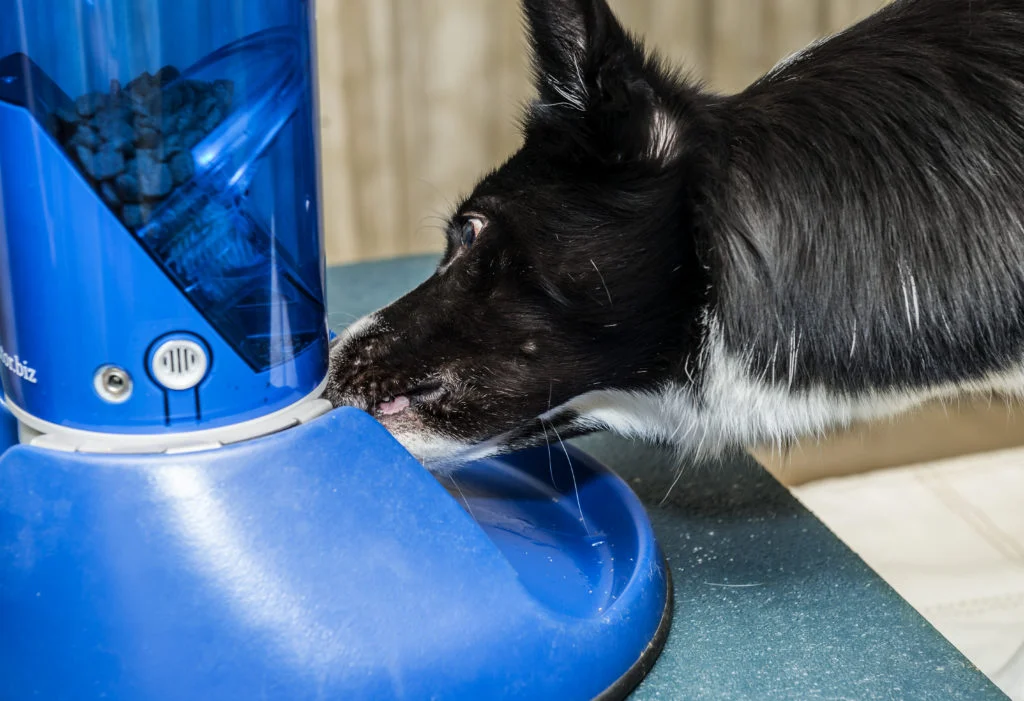
When introducing a canine companion to a sophisticated remote treat dispenser like the Pet Tutor, trainers are presented with a unique opportunity to establish a foundational principle: maintaining a physical distance from the feeder is not just acceptable, but highly advantageous. This approach, while initially appearing counterintuitive to many dog owners who might naturally assume closer proximity to a food source is inherently positive, is in fact a cornerstone for effective and balanced behavioral conditioning. The rationale behind this methodology is rooted in preventing potential behavioral issues that can arise from a dog’s over-identification of the feeder as an object to be physically manipulated, rather than a neutral device that merely delivers a consequence for desired actions.
The Paradigm Shift: From Proximity to Performance
The common assumption among dog owners is that a dog should be in close proximity to a food source, particularly one that dispenses treats. However, for advanced training tools like the Pet Tutor, this can become a significant impediment to learning. Dogs, being intelligent problem-solvers, are accustomed to interacting with various puzzle toys to obtain food. It is an honest and natural mistake for a dog to perceive a remote feeder as just another puzzle requiring physical engagement – nudging, pawing, or even attempting to "solve" the device itself. This misinterpretation shifts the dog’s focus from the intended behavior to the mechanism of food delivery, leading to fixation on the feeder rather than on the trainer’s cues or the desired action.
The objective with a remote feeder is to transform it into a simple, neutral food delivery device that is activated after the desired behavior has been executed. This distinction is critical for establishing clear communication in training. If a dog becomes obsessed with the feeder, its attention is diverted, and its cognitive resources are tied up in trying to interact with the device. This can hinder its ability to process training cues, learn new behaviors, and generalize skills in different environments. The goal is to ensure the dog understands that its actions lead to reinforcement, not its physical interaction with the dispensing mechanism.
The Science Behind the Strategy
The efficacy of this distance-based training approach is firmly grounded in principles of canine psychology and learning theory, particularly operant conditioning and stimulus control.
-
Operant Conditioning and Stimulus Control: In operant conditioning, a behavior is strengthened or weakened by its consequences. When a dog learns that performing a specific action (e.g., sitting, staying, looking at the trainer) leads to the activation of the Pet Tutor and the subsequent delivery of a treat, it strengthens that specific behavior. If, however, the dog believes that touching or investigating the feeder is what triggers the reward, it will prioritize interacting with the device over executing the desired behavior. By establishing distance, trainers ensure that the feeder acts as a secondary reinforcer, a neutral delivery system, rather than a primary stimulus for interaction. This fosters robust stimulus control, meaning the dog learns to respond to specific cues in a predictable manner, regardless of the physical presence of the feeder.
-
Avoiding Resource Guarding Tendencies: While not directly resource guarding in the traditional sense, an intense fixation on the feeder can manifest as anxiety or frustration if the dog cannot access or manipulate the device. By decoupling the dog’s physical proximity from the reward, trainers can mitigate the development of obsessive behaviors around food resources. This promotes a calmer, more confident dog less prone to agitation around food delivery systems.
-
Cognitive Load and Focus: A dog that is highly focused on a physical object, particularly one associated with food, experiences a significant cognitive load. This preoccupation can reduce its capacity to absorb new information or respond effectively to environmental cues. By teaching the dog to maintain distance, its cognitive resources are freed up to concentrate on the training task at hand, leading to faster learning and better retention of new behaviors. The feeder becomes a predictable, non-threatening element in the environment, allowing the dog to direct its attention where it is most needed – on the trainer and the task.
A Phased Approach: Establishing Distance and Independence
Successfully implementing this strategy involves a structured, multi-phase approach designed to gradually condition the dog to view the Pet Tutor as a passive dispenser rather than an interactive toy. This chronology of steps, as advocated by experts like Dr. Deborah Jones, ensures a clear and positive learning experience.
-
Phase 1: Initial Setup – Redefining the Reward Zone
The initial setup is paramount. Instead of placing the feeder directly on the ground or in a position easily accessible for physical interaction, it should be elevated. This elevation makes direct contact with the feeder challenging or impossible for the dog. Crucially, the feeder should be positioned so that treats fall directly onto the ground, not into a bowl attached to the device. Dogs are naturally inclined to gravitate towards the source of food. By making the ground the immediate point of treat retrieval, rather than the feeder itself, trainers subtly introduce a spatial separation between the device and the reward location. This simple adjustment begins to decouple the idea of "feeder equals food source" from "ground equals food source." -
Phase 2: Reinforcing Retreat – The First Steps Away
Once the physical setup is established, the next step involves actively reinforcing any movement away from the feeder. Initially, this might seem counterintuitive to both dog and owner. For dogs that have a history of trying to interact directly with the Pet Tutor, like Dr. Jones’s dog Star, who would practically "climb inside it if she could" during grooming sessions, this phase can be particularly challenging. Star’s strong desire to stick her nose into the machine highlighted the deeply ingrained habit of associating proximity with reward.The trainer’s role here is to observe keenly and release treats the moment the dog displays even a slight movement away from the feeder. This could be a head turn, a step back, or even just a shift in weight. The goal is to make "backing away" a reinforced behavior. As the dog begins to understand this new contingency, the criteria for reinforcement can be gradually increased, rewarding larger distances or more sustained periods of being away from the device. The video demonstrating Star’s ability to catch treats mid-air after backing away serves as a powerful testament to the effectiveness of this technique and her impressive adaptation to the new rules. This seemingly difficult lesson—moving away from the immediate source of food—is incredibly valuable, teaching the dog self-control and focus.
-
Phase 3: Introducing a Designated Station – Generalizing Distance
Once the dog consistently maintains a small distance from the feeder, the training progresses to introducing a designated "station," such as a dog bed or a mat. This station should be positioned a short distance away from the Pet Tutor. The objective is to further reinforce the lesson that desired behaviors, performed away from the feeder, lead to reinforcement.The process begins by reinforcing the dog for moving towards the mat and stepping onto it. Gradually, the criteria evolve to include lying down on the mat and remaining there for increasing durations. This not only reinforces the concept of distance from the feeder but also teaches a valuable "place" command, which has broad applications in various training scenarios. By the end of this phase, the dog learns that settling on its mat, at a distance from the feeder, consistently "pays off." This generalizes the learning, demonstrating that performing specific, requested behaviors in a designated area, rather than interacting with the food dispenser, is the key to earning rewards.
Expert Insight: Dr. Deborah Jones, Ph.D. on Behavior and Training
Dr. Deborah Jones, Ph.D., a retired psychology professor and a seasoned animal trainer with over 25 years of experience, is a prominent advocate for positive reinforcement-based methods. Her extensive background, including authoring 12 books on dog training and developing multiple DVD series, lends significant weight to her recommendations. Dr. Jones’s insights into the subtleties of canine learning underscore the importance of precision in training, especially when introducing new tools.
Her observations with dogs like Star highlight a common challenge: dogs are exceptionally good at finding patterns. If the pattern they perceive is "physical interaction with the feeder equals food," then that is the behavior they will offer. Dr. Jones emphasizes that the Pet Tutor, while a powerful tool, must be introduced in a way that aligns with the overarching goal of teaching desired behaviors, not fostering a reliance on physical proximity to a food source. Her philosophy centers on empowering the dog to understand that its own actions and choices are what lead to positive outcomes, thereby building confidence and reliability. Her work at Fenzidogsportsacademy.com and k9infocus.com reflects her commitment to sharing these effective, humane training strategies.
Case Study: Star’s Journey to Feeder Independence
The experience with Star serves as a compelling case study. Her initial inclination to "stick her nose up into the machine" and even attempt to "climb inside it" during grooming sessions illustrated a strong, established behavior pattern. This fixation, if left unaddressed, could have limited the Pet Tutor’s effectiveness as a versatile training aid. By strategically changing the setup to make the feeder less accessible and then systematically reinforcing Star for backing away, Dr. Jones successfully reconditioned Star’s interaction with the device.
The visual evidence, including the image of Star with her nose initially close to the feeder and the video showing her adeptly catching treats mid-air after backing away, vividly demonstrates the transformation. Star’s ability to adapt and learn this new contingency highlights the intelligence and adaptability of dogs, provided the training methodology is clear, consistent, and scientifically sound. This shift not only resolved the issue of feeder obsession but also opened doors for Star to engage more effectively in other training exercises, proving the foundational value of this distance-based approach.
Broader Implications for Canine Training and Well-being
The implications of teaching feeder independence extend far beyond the immediate interaction with a treat dispenser, impacting various aspects of canine training and overall well-being.
-
Enhanced Learning & Focus: A dog that is not fixated on the feeder is better equipped to learn complex behaviors. Its attention is directed towards the trainer, the environment, and the task at hand, leading to more efficient learning sessions and stronger retention of skills. This foundational skill improves the dog’s ability to generalize behaviors to new environments and under varying distractions.
-
Reduced Anxiety & Frustration: By preventing the development of obsessive behaviors around food delivery, this method contributes to a calmer, less anxious dog. Frustration can arise when a dog tries to manipulate a feeder without success. By establishing the feeder as a neutral, reliable delivery system, such frustrations are largely avoided, leading to a more positive training experience for both dog and owner.
-
Versatility of the Pet Tutor: Once feeder independence is established, the Pet Tutor becomes an incredibly versatile tool. It can be strategically placed to reinforce behaviors in challenging scenarios where direct hand-feeding might be difficult or counterproductive. Examples include:
- Reactivity Training: Reinforcing calm behavior when another dog or trigger is present, without the trainer needing to move.
- Separation Anxiety: Delivering treats for calm duration in a crate or designated area when the owner is absent.
- Crate Training: Making the crate a highly rewarding place by delivering treats remotely.
- Grooming & Veterinary Visits: Reinforcing cooperative behaviors during potentially stressful events.
- Distance Work: Teaching complex obedience commands from afar.
-
Owner Empowerment: This structured approach empowers owners with a clear, science-backed methodology. It provides a framework for understanding their dog’s learning process and troubleshooting potential issues. It shifts the focus from merely giving treats to strategically using reinforcement to shape desirable behaviors.
The Future of Remote Reinforcement
The integration of technology into animal training, exemplified by tools like the Pet Tutor, represents a significant advancement. These devices offer unprecedented precision and timing in delivering reinforcement, which are critical components of effective operant conditioning. However, as Dr. Jones’s guidance illustrates, the effectiveness of these tools is not inherent but depends entirely on the methodology applied. A sophisticated device, without a sound training strategy, can be misused or lead to unintended behavioral outcomes. The principle of teaching feeder independence ensures that these innovative tools are utilized to their fullest potential, fostering truly independent, focused, and well-behaved canine companions.
In conclusion, the seemingly counterintuitive instruction to "step away from the feeder" is, in fact, a sophisticated and highly effective strategy for maximizing the benefits of remote treat dispensers. By meticulously introducing the Pet Tutor as a neutral delivery system rather than an interactive puzzle, trainers can prevent fixation, reduce anxiety, and enhance the dog’s ability to learn and generalize new behaviors. This foundational understanding that a dog’s desired behavior, not its interaction with the device, leads to reinforcement, unlocks the full potential of smart training feeders, paving the way for more efficient, positive, and enduring training outcomes across a myriad of situations.
