

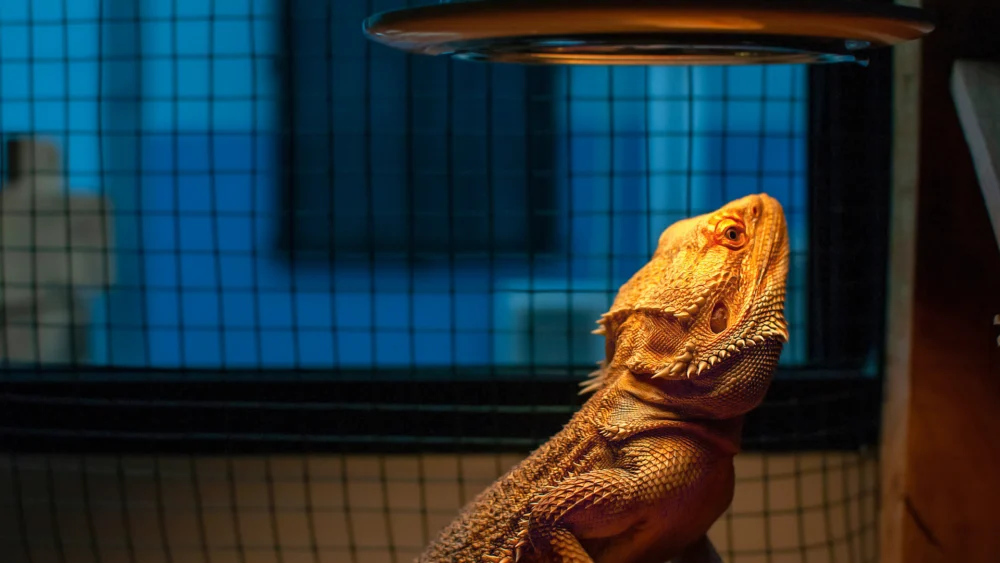
In the evolving landscape of exotic animal medicine, the role of artificial lighting has transitioned from a supplemental husbandry concern to a cornerstone of preventative health and physiological stability. On January 30, 2026, Dr. Mark Mitchell, a distinguished Professor of Zoological Medicine at Louisiana State University and Director of the Wildlife Hospital of Louisiana, provided a comprehensive evidentiary update on the necessity and risks associated with ultraviolet B (UVB) radiation in captive exotic species. This update marks a significant shift in clinical recommendations, moving away from generalized "full-spectrum" claims toward a more nuanced, metered approach to lighting for a diverse range of taxa including reptiles, amphibians, birds, and small mammals.
The core of the discussion centers on the concept of "full-spectrum" lighting, a term that has historically been used by manufacturers to describe lighting systems that attempt to mimic the natural solar output. While the sun provides a continuous spectrum of ultraviolet, visible, and infrared light, artificial systems often struggle to replicate this balance. Dr. Mitchell’s presentation focused specifically on the ultraviolet B range, emphasizing that for many captive species, this radiation is not merely a luxury but a biological requirement for metabolic homeostasis.
The Physics and Categorization of Ultraviolet Radiation
To understand the clinical implications of lighting, one must first categorize the electromagnetic spectrum. Ultraviolet radiation is defined by wavelengths shorter than those of visible light but longer than X-rays. In the context of vertebrate health, the spectrum is divided into three primary categories based on wavelength and biological impact.
Ultraviolet C (UVC) consists of the shortest wavelengths, measuring less than 280 nanometers (nm). While these rays are largely filtered out by the Earth’s atmosphere in nature, they are highly germicidal in artificial applications. In the veterinary and hobbyist sectors, UVC is frequently employed to control pathogens in aquatic systems. However, direct exposure to UVC is hazardous to vertebrate tissues.
Ultraviolet B (UVB) occupies the medium range, between 280 and 315 nm. This specific band is the primary driver of Vitamin D3 synthesis in the skin. Without adequate exposure to UVB, many exotic species cannot properly regulate calcium, leading to debilitating conditions such as metabolic bone disease (MBD).
Ultraviolet A (UVA) represents the longest rays, ranging from 315 to 380 nm. Often referred to as "black light," UVA is visible to many reptiles and birds, influencing their perception of the environment, social signaling, and foraging behaviors. While UVA does not facilitate Vitamin D3 synthesis, it is considered essential for psychological well-being and the regulation of natural behaviors.
The Biological Mechanism of Vitamin D3 Synthesis
The primary reason veterinarians advocate for UVB lighting is its role as a catalyst for the synthesis of Vitamin D3, a critical hormone in calcium metabolism. The process is a complex, multi-stage photosynthetic and thermal reaction. It begins when 7-dehydrocholesterol in the skin is exposed to UVB radiation, converting it into pre-vitamin D3.
This pre-vitamin D3 then undergoes a temperature-dependent conversion into Vitamin D3 (cholecalciferol). This stage highlights the importance of the "basking spot" in a captive environment, where light and heat must work in tandem. Once synthesized, the hormone is transported to the liver, where it is hydroxylated into 25-hydroxyvitamin D3. The final conversion occurs in the kidneys, resulting in 1,25-dihydroxyvitamin D3, the active form of the hormone that facilitates the absorption of calcium from the gastrointestinal tract.
Research cited by Dr. Mitchell indicates that the benefits of Vitamin D3 extend beyond skeletal health. In various reptile species, optimal levels of this hormone have been directly correlated with increased reproductive success, improved immune function, and higher survival rates in neonates.
Expanding the Scope: Beyond Diurnal Reptiles
Historically, UVB lighting was considered a requirement only for diurnal (day-active) lizards and turtles, such as bearded dragons and red-eared sliders. However, recent scientific inquiries have challenged these limitations. Dr. Mitchell noted that carnivorous reptiles, including various snake species, and crepuscular reptiles, such as leopard geckos, show measurable increases in circulating Vitamin D concentrations following UVB exposure.
Perhaps the most significant shift in contemporary exotic medicine is the recognition of UVB requirements in small mammals. Species such as rabbits, guinea pigs, and chinchillas—animals that have traditionally been kept in indoor environments without specialized lighting—have been found to benefit significantly from UVB exposure. These findings suggest that the veterinary community must re-evaluate the husbandry standards for nearly all indoor-housed exotic vertebrates to ensure their physiological needs are being met.
The only notable exception currently documented is the ball python (Python regius), which in one study did not show the same Vitamin D3 response to UVB as other species. However, Dr. Mitchell cautioned that this outlier might be a result of specific study designs rather than a definitive biological lack of need, and further research is required.
Commercial Lighting and the Measurement Gap
A critical takeaway for practitioners and pet owners is that not all "full-spectrum" bulbs are effective. Commercial lighting technology has advanced from simple fluorescent tubes to include compact fluorescent bulbs and mercury vapor bulbs. While these newer options can produce high levels of UVB, their output is often inconsistent between brands and even between individual units of the same model.
The intensity of UVB radiation is subject to the inverse square law; as the distance between the bulb and the animal increases, the radiation intensity drops significantly. Furthermore, materials like glass and fine mesh screens can deflect or filter out up to 100% of UVB rays, rendering the lighting useless if placed outside a glass enclosure.
To manage these variables, Dr. Mitchell emphasizes the use of radiometers and photometers. Veterinarians and advanced keepers are increasingly using these tools to measure the actual microwatts of UVB per square centimeter (µW/cm²) at the level of the animal. This data-driven approach allows for the precise placement of bulbs and the timely replacement of equipment, as UVB output typically decays long before the bulb’s visible light fails.
Adverse Effects: The Risk of Overexposure
The title of the update, "Sunburned!", serves as a warning that more light is not always better. Artificial UVB sources, particularly if placed too close to the animal or if the wrong type of bulb is used, can cause significant tissue damage.
Photokeratitis—essentially a sunburn of the cornea—has been documented in reptiles exposed to intense, unregulated artificial UVB. Symptoms include swelling of the eyelids, squinting, and a refusal to eat. While Dr. Mitchell noted that removing the light source often resolves the issue, the potential for long-term ocular damage remains.
Furthermore, there is emerging concern regarding the development of squamous cell carcinoma (skin cancer) in certain species, such as bearded dragons, when subjected to chronic, high-intensity artificial radiation. This highlights the need for a balanced approach to lighting that provides the benefits of Vitamin D3 synthesis without the risks of oncogenesis or tissue degradation.
Clinical Recommendations and Future Outlook
Based on the current body of evidence, Dr. Mitchell has proposed a conservative but effective protocol for UVB exposure. Rather than leaving high-intensity UVB lights on for the entirety of the 12-hour day-night cycle, he recommends a restricted exposure window of approximately two hours per day.
This "metered" approach is designed to provide sufficient radiation for the photosynthetic conversion of Vitamin D3 while minimizing the cumulative risk of skin and eye damage. This recommendation represents a middle ground in the ongoing debate between "constant exposure" and "no exposure" for certain sensitive or crepuscular species.
As the Director of the Wildlife Hospital of Louisiana, Dr. Mitchell’s work continues to bridge the gap between wildlife epidemiology and clinical pet care. His "One Health" perspective suggests that understanding the environmental requirements of these animals is not just about individual pet health, but about a broader understanding of how light and environment influence vertebrate biology across species.
The presentation concluded with a call for continued research. As the veterinary community gains access to better diagnostic tools and more precise lighting technology, the standards for exotic animal husbandry will continue to refine. For now, the evidence is clear: UVB is a vital component of exotic animal health, but it must be administered with the same precision and caution as any medical treatment.
This program has been approved by the American Association of Veterinary State Boards (AAVSB) and the Registry of Approved Continuing Education (RACE), providing one hour of continuing education credit for veterinarians and technicians. This accreditation underscores the clinical importance of the topic and the necessity for veterinary professionals to remain current on the latest lighting science to ensure the welfare of the exotic species in their care.
