

The Evolution of Ultraviolet Lighting in Veterinary Medicine
The history of captive exotic animal care has long been shadowed by nutritional and environmental deficiencies, most notably Metabolic Bone Disease (MBD) and nutritional secondary hyperparathyroidism. For decades, the veterinary community has understood that many exotic species require ultraviolet radiation to synthesize Vitamin D3, which in turn facilitates the absorption of dietary calcium. However, early recommendations were often based on anecdotal evidence or simplified "rule of thumb" guidelines that failed to account for the nuanced requirements of specific species.
The "Sunburned!" webinar represents a significant shift toward a more granular, data-driven approach. In the late 20th century, lighting for exotic pets was often limited to incandescent bulbs that provided heat but negligible UVB. The subsequent introduction of fluorescent tubes and mercury vapor bulbs marked a turning point, yet the industry lacked standardized measurements for output and safety. Today, the integration of specialized tools such as the Solarmeter 6.5 UVB Index meter and the categorization of species into "Ferguson Zones" have revolutionized how veterinarians approach environmental design. This webinar synthesizes these advancements, offering an update on how modern technology can be harnessed to mimic the natural solar environment without causing tissue damage or "sunburn" in sensitive species.
Technical Specifications and the Role of RACE Approval
The American Association of Veterinary State Boards established the RACE program to simplify the process of identifying high-quality continuing education. For a program like "Sunburned!" to receive RACE approval, it must undergo a rigorous review process to ensure that the content is scientifically sound, free from commercial bias, and relevant to the practice of veterinary medicine. The provision of one hour of CE credit is particularly significant for veterinary technicians and clinicians who must meet annual or biennial requirements to maintain their professional licensure.
Participants in the webinar are required to complete a post-test to demonstrate their mastery of the material. The structure allows for three attempts to pass the assessment, ensuring that the core concepts—such as the inverse square law of light, the impact of mesh screening on UVB penetration, and the degradation of UVB output over the life of a bulb—are fully understood. Upon successful completion, professionals receive a certificate that serves as official documentation of their commitment to maintaining current standards in exotic animal welfare.
Scientific Context: The Biological Necessity of UVB
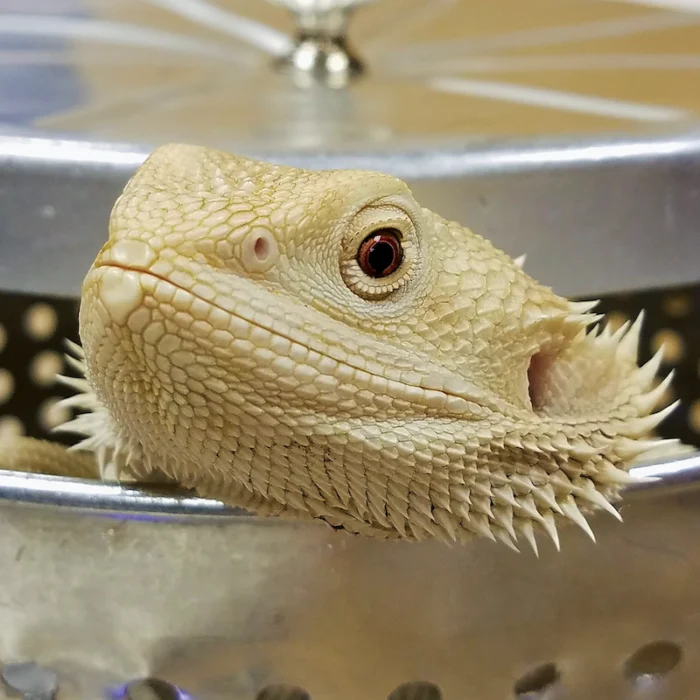
To understand the weight of the "Sunburned!" update, one must look at the biological data supporting UVB requirements. Ultraviolet B radiation, specifically in the wavelength range of 290 to 315 nanometers, is the catalyst for the conversion of 7-dehydrocholesterol in the skin to pre-vitamin D3. In many reptiles, such as the widely kept Bearded Dragon (Pogona vitticeps) or the Green Iguana (Iguana iguana), dietary Vitamin D3 is poorly absorbed, making cutaneous synthesis the primary, and often only, reliable source of this vital hormone.
Supporting data from recent herpetological studies suggests that improper UVB levels do not merely result in bone deformities. Vitamin D3 receptors are found throughout the body, including the immune system, the reproductive tract, and the cardiovascular system. Chronic under-exposure can lead to suppressed immune function and reproductive failure, while over-exposure—the "sunburn" aspect of the webinar’s title—can cause photokeratoconjunctivitis (inflammation of the cornea and conjunctiva) and skin necrosis. The webinar addresses these dual risks, providing a balanced perspective on achieving the "Goldilocks zone" of lighting—neither too little nor too much.
Chronology of Husbandry Advancements
The timeline of UVB research in the veterinary sector has accelerated rapidly over the last fifteen years:
- 2005–2010: Increased availability of high-output (HO) T5 fluorescent lamps, which provided deeper penetration and more consistent UVB levels than older T8 technology.
- 2010: The landmark study by Dr. Gary Ferguson and his team was published, establishing "Ferguson Zones." This system categorized reptiles into four groups based on their sun-basking behavior, providing a blueprint for UV Index (UVI) targets.
- 2015: The widespread adoption of the UV Index (UVI) over microwatts per square centimeter (µW/cm²) as the standard unit of measurement in clinical and hobbyist settings.
- 2020–Present: Emergence of LED UVB technology and a greater focus on the "full spectrum" approach, including the role of UVA in behavior and the importance of infrared radiation for thermal regulation.
The LafeberVet webinar situates itself at the forefront of this chronology, interpreting the latest 2023 and 2024 findings for the clinical practitioner.
Official Responses and Professional Implications
Leading figures in the Association of Reptile and Amphibian Veterinarians (ARAV) and the Association of Avian Veterinarians (AAV) have frequently emphasized that environmental mismanagement remains the leading cause of morbidity in exotic patients. While official statements regarding this specific webinar highlight its utility for CE credits, the broader implication recognized by the veterinary community is the reduction of preventable disease.
Dr. J. G. Lafeber, through the LafeberVet platform, has historically advocated for the "preventive medicine" model. By educating veterinarians on how to troubleshoot a client’s home lighting setup, the webinar empowers practitioners to intervene before a patient develops irreversible skeletal damage. This proactive approach is increasingly seen as the gold standard in exotic animal practice, shifting the veterinarian’s role from one of emergency intervention to one of environmental consultancy.
Broader Impact on Global Husbandry Standards
The influence of "Sunburned!" extends beyond the individual veterinarian’s office. As this evidence-based information permeates the profession, it influences the manufacturing standards of lighting companies and the advice given by pet retailers. When veterinarians are equipped with the latest data on UVB degradation—for instance, the fact that some bulbs may still produce visible light while emitting zero therapeutic UVB—they can provide life-saving recommendations to pet owners regarding the replacement cycles of equipment.
Furthermore, the webinar addresses the "captive" element of exotic species care. In a zoo or sanctuary setting, providing adequate UVB for a 200-pound Aldabra tortoise or a flighted macaw presents vastly different challenges than a terrarium-based lizard. The principles of the webinar apply across these scales, emphasizing that the laws of physics and biology remain constant regardless of the patient’s size.
Implications for Future Research and Education
As the "Sunburned!" webinar becomes a staple in the continuing education library of LafeberVet, it sets a precedent for how specialized topics should be handled: with a mix of academic rigor and practical application. The requirement for membership to access these materials ensures that the information is disseminated within a professional framework, where it can be properly interpreted by those with the medical background to apply it.
The transition toward evidence-based updates reflects a maturing of the exotic veterinary field. It moves away from the "trial and error" methods of the past and toward a future where the environmental needs of a captive animal are calculated with the same precision as a pharmaceutical dosage. As more jurisdictions recognize RACE-approved credits, the global standard for exotic care rises, ultimately leading to longer, healthier lives for the animals in human care.
In conclusion, the "Sunburned!" webinar is more than a simple lecture; it is a critical update on the intersection of technology, biology, and clinical practice. By providing veterinarians with an evidence-based framework for UVB lighting, the program addresses one of the most complex and misunderstood aspects of exotic animal husbandry. Through the rigorous standards of the AAVSB RACE program, this educational initiative ensures that the next generation of veterinary care is grounded in scientific fact, protecting patients from the invisible dangers of both light deficiency and excess.
