


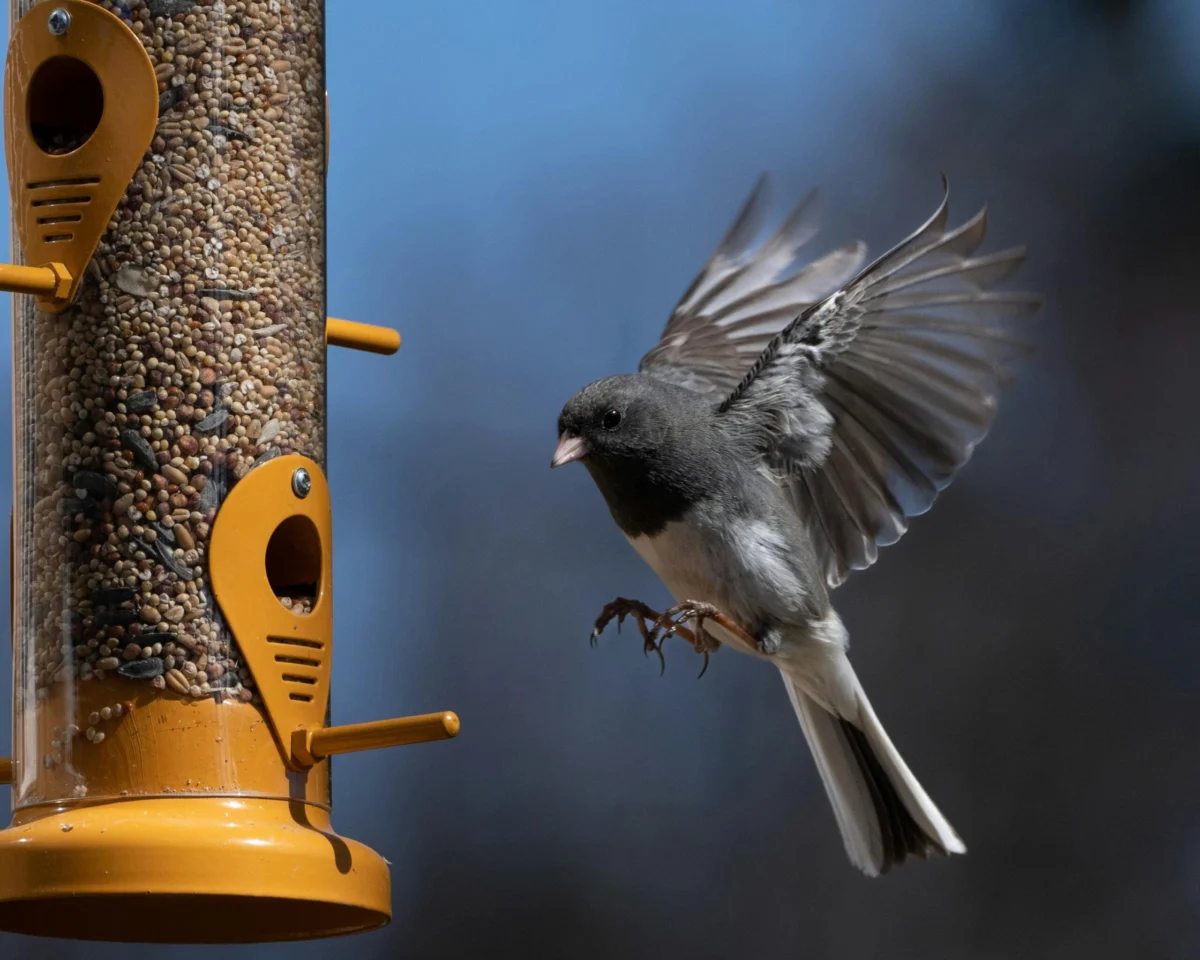
The seemingly instantaneous appearance of birds at a newly refilled feeder can feel like a small miracle. Within moments of topping up the bird feeder, a flurry of feathered visitors seems to materialize from nowhere, an enchanting spectacle that often leaves observers wondering if these creatures possess an almost psychic ability to sense a fresh meal. While birds are not psychic, their sophisticated methods of locating food sources are, in fact, a testament to their remarkable observational skills, intelligence, and complex social awareness. This phenomenon offers a fascinating glimpse into the intricate ways avian species navigate their environment to secure sustenance, particularly during times when natural food sources may be scarce.
The Multifaceted Strategy of Feeder Discovery
The rapid convergence of birds upon a refilled feeder is not a random occurrence, but rather the result of a finely tuned system that relies on several key factors: keen eyesight, robust memory, and astute social learning. Birds possess exceptional visual acuity, enabling them to spot feeders and any associated movement from considerable distances. Furthermore, they possess a remarkable capacity to remember the locations of reliable food sources from previous visits. Perhaps most importantly, they are highly attuned to the behavior of their own kind, noticing when other birds begin to feed and often joining the gathering. While sight, memory, and social cues form the primary pathways to a feeder, secondary cues such as sound and general activity can also play a supporting role in confirming the presence of food. This interplay of senses and behaviors explains the seemingly magical speed with which avian populations materialize around a replenished feeder.
The Power of Avian Vision: More Than Meets the Eye
Contrary to a common misconception, most backyard birds do not rely on a highly developed sense of smell to locate food. Instead, their primary tool is their exceptional eyesight, which is far more acute than that of humans in many respects. Birds can detect subtle changes in their surroundings from afar, and the act of refilling a bird feeder often involves a series of visual signals that are immediately apparent to them.
When a bird enthusiast tops up a feeder, several visual elements change:
- The Refill Itself: The physical act of adding seed or suet creates movement and a change in the feeder’s appearance. Birds perched on nearby trees, fences, or rooftops can easily observe this activity.
- The Presence of the Feeder: Many feeders are designed with bright colors or reflective surfaces that can catch a bird’s eye, even from a distance.
- The Appearance of New Food: The fresh, often lighter-colored seeds or suet are visually distinct from the surrounding environment and from empty feeder trays.
Some species of birds even possess the ability to see ultraviolet (UV) light. This capability can make seeds and feeders appear even more visually striking against natural backgrounds, enhancing their detectability. Studies have shown that certain birdseed formulations, particularly those containing ingredients that reflect UV light, may be more attractive to birds due to this visual enhancement. This visual dominance is a critical factor in their ability to quickly identify potential food sources in their territory.
Debunking the Scent Myth: The Limited Role of Olfaction
While the idea that birds might smell their food is appealing, the reality for most common backyard species is quite different. Compared to mammals, many birds have a relatively underdeveloped sense of smell. This means that the aroma of birdseed, while perhaps pleasant to humans, is unlikely to be the primary attractant for them from a significant distance.
However, it is important to note that scent can play a role in specific circumstances and for certain species. For example, some ground-feeding birds or those with more specialized diets might utilize scent to a greater degree. In the context of typical garden and backyard feeders, however, the overwhelming consensus among ornithologists is that birds are primarily drawn by what they see, remember, or observe in others, rather than by olfactory cues. The rapid arrival of birds at a feeder is far more likely attributable to a visual confirmation of food availability or the presence of other feeding birds.
The Remarkable Power of Avian Memory
Birds possess surprisingly robust memories, particularly when it comes to locating reliable food sources. Once a bird has discovered a feeder that consistently provides sustenance, it will remember its location and return to check it regularly, even if it is temporarily empty. This learned association between a specific location and the reward of food is crucial for their survival, especially during the lean months of winter.

Birds quickly learn to associate:
- Specific Locations: They commit to memory the exact spot where they found food.
- Visual Cues: They recognize the feeder’s design, color, and immediate surroundings.
- Routines: They may learn the times of day when a feeder is typically refilled, particularly if a consistent pattern is established by the feeder’s owner.
This ability to recall food locations is particularly vital during winter when natural food sources, such as insects, berries, and seeds, become scarce. A bird that remembers a dependable feeder can significantly increase its chances of survival by having a consistent source of energy. This explains why, when you refill a feeder, birds that may have been in the vicinity, perhaps checking other less fruitful spots, will quickly converge on the now-refreshed source. They are not appearing out of thin air; they are returning to a known, reliable resource.
Social Learning: The Flock Mentality at the Feeder
Birds are inherently social creatures, and this social behavior plays a significant role in how they discover and utilize food sources. They don’t just observe their environment; they keenly observe each other. When one bird finds a feeder and begins to feed, this activity serves as a powerful beacon to other birds in the area.
This phenomenon, known as local enhancement, allows birds to efficiently locate food by observing the success of their conspecifics. When a bird lands on a feeder and begins to eat, it signals to others that a food source is present and accessible. This can trigger a cascade effect:
- Visual Detection of Activity: Birds perched at a distance can see the congregation of other birds at the feeder.
- Following Movement: They are naturally drawn to the movement and activity associated with feeding.
- Vocalizations and Calls: Some species may also respond to the calls or alarm signals of other birds, which can indicate the presence of food or potential danger.
This social learning is especially pronounced in common feeder species such as tits, finches, sparrows, and starlings, which often forage in flocks. The discovery of a feeder by a single individual can rapidly lead to a much larger gathering as others follow suit, creating the impression of a sudden, widespread awareness of the food source. This indirect communication allows birds to exploit new food opportunities much more efficiently than if each individual had to rely solely on its own independent discovery.
The Subtle Influence of Sound and Activity
While sight, memory, and social cues are the primary drivers of feeder discovery, sound and activity can act as reinforcing signals. The subtle rattle of seeds as they fall into the feeder tray, the gentle swaying of the feeder in the breeze, or the chirps and calls of other feeding birds can all provide additional confirmation that food is indeed available.
These auditory and kinetic cues serve to reinforce what birds are already perceiving visually or have learned through memory. They act as secondary confirmations, helping to solidify the bird’s decision to approach and feed. In essence, these elements contribute to a comprehensive sensory information network that birds utilize to ensure their foraging success.
The Instantaneous Arrival: A Product of Constant Vigilance
The sensation that birds arrive the very second you step away from the feeder is a testament to their constant state of vigilance and their efficient foraging strategies. This rapid response is typically due to:
- Proximity: Many birds are already in the vicinity, actively foraging or resting in nearby trees and shrubs. They are not far away; they are simply waiting for the opportunity.
- Observational Readiness: Birds are constantly scanning their environment for potential food sources and threats. The refilling of the feeder presents a new, positive stimulus that immediately captures their attention.
- Established Routines: Birds that regularly visit feeders often have established patterns of checking known food locations throughout the day. Refilling the feeder simply transforms it from an "empty but worth checking" location to an "actively feeding" one.
Birds spend a significant portion of their day moving between known food sources, meticulously checking each one. The act of refilling the feeder is not necessarily the discovery of a new food source, but rather the re-activation of a previously known and trusted one. This efficient cycle of checking and feeding means that as soon as the opportunity arises, birds are quick to capitalize on it.

Enhancing Feeder Accessibility for Avian Visitors
For those who wish to attract more birds to their feeders and encourage more frequent visits, a few practical steps can significantly enhance discoverability and appeal:
- Strategic Placement: Position feeders in visible locations, preferably within sight of natural perches like trees or shrubs. This allows birds to easily spot the feeder from a safe vantage point.
- Variety of Food: Offering a diverse range of seeds, nuts, and suet can attract a wider variety of species. Different birds have different dietary preferences, and variety increases the likelihood of appealing to a broader avian community.
- Regular Maintenance: Keeping feeders clean and consistently filled is crucial. Birds learn to rely on predictable sources, and a well-maintained feeder signals reliability.
- Water Source: Providing a nearby water source, such as a bird bath, can further enhance the attractiveness of your garden as a feeding and resting spot.
- Natural Habitat: Incorporating native plants that provide natural food sources and shelter will create a more inviting habitat for birds, increasing the overall likelihood of feeder visits.
The Question of Dependence: A Balanced Perspective
A common concern among bird feeders is whether these artificial food sources lead to dependence. However, extensive research and long-term observations indicate that most birds do not become solely reliant on feeders. Bird feeders typically serve as a supplement to natural food sources, rather than a complete replacement. Birds continue to engage in their natural foraging behaviors, seeking out insects, seeds, berries, and other sustenance from their environment.
While birds can adapt quickly if a feeder is removed, consistent feeding is particularly beneficial during challenging weather conditions, such as prolonged cold spells or droughts, when natural food availability is severely limited. In these instances, predictable feeders can play a critical role in helping bird populations survive.
A Window into Avian Intelligence and Adaptability
The seemingly simple act of birds flocking to a refilled feeder is, in reality, a complex interplay of highly developed senses and cognitive abilities. It is a vivid demonstration of their observational prowess, their capacity for learning and memory, and their intricate social dynamics. When birds arrive so promptly after a feeder is replenished, it is not a result of magic, but rather a culmination of:
- Exceptional eyesight: Detecting visual cues from afar.
- Powerful memory: Recalling the location of reliable food sources.
- Social learning: Observing and following the behavior of other birds.
- Constant environmental scanning: Being attuned to changes and opportunities.
Observing this behavior offers a profound insight into how birds interact with and navigate their world. It is one of the quiet, yet deeply rewarding, pleasures of engaging with nature, serving as a gentle reminder that even the most familiar garden visitors are perpetually engaged in a process of observation, learning, and adaptation. Their ability to consistently locate and utilize resources in their environment speaks volumes about their intelligence and their remarkable resilience.
Do Birds Recognize Their Human Benefactors?
While birds may not recognize individual humans in the same way we recognize faces, many species can, over time, learn to associate specific individuals, places, and routines with the availability of food and a sense of safety. A bird that regularly receives food from a particular person might become less wary of that individual, especially if the person approaches calmly and consistently. Some bird species are particularly adept at learning these associations. This learned behavior can influence how closely individual birds approach, even if they don’t possess a deep understanding of human identity. Essentially, they learn: this person = food = low threat, a practical association that facilitates their feeding behavior.
Bird Feeder FAQs: Addressing Common Queries
Do birds find feeders by smell?
No, for most common backyard birds, smell is not the primary method. They rely on sight, memory, and observing other birds.
How long does it take birds to find a new feeder?
The time it takes for birds to discover a new feeder can vary significantly. Factors such as feeder visibility, the type of food offered, and the density and activity of local bird populations can influence this. It can range from a few hours for highly visible feeders in active bird areas to several weeks for feeders placed in more secluded locations or in areas with less bird traffic.
Do birds remember feeder locations?
Yes, many bird species possess a remarkable ability to remember reliable feeding spots. They will revisit these locations regularly, even if the feeder is temporarily empty, demonstrating the strength of their spatial memory. This is a critical survival mechanism, especially during seasons when natural food is scarce.
