

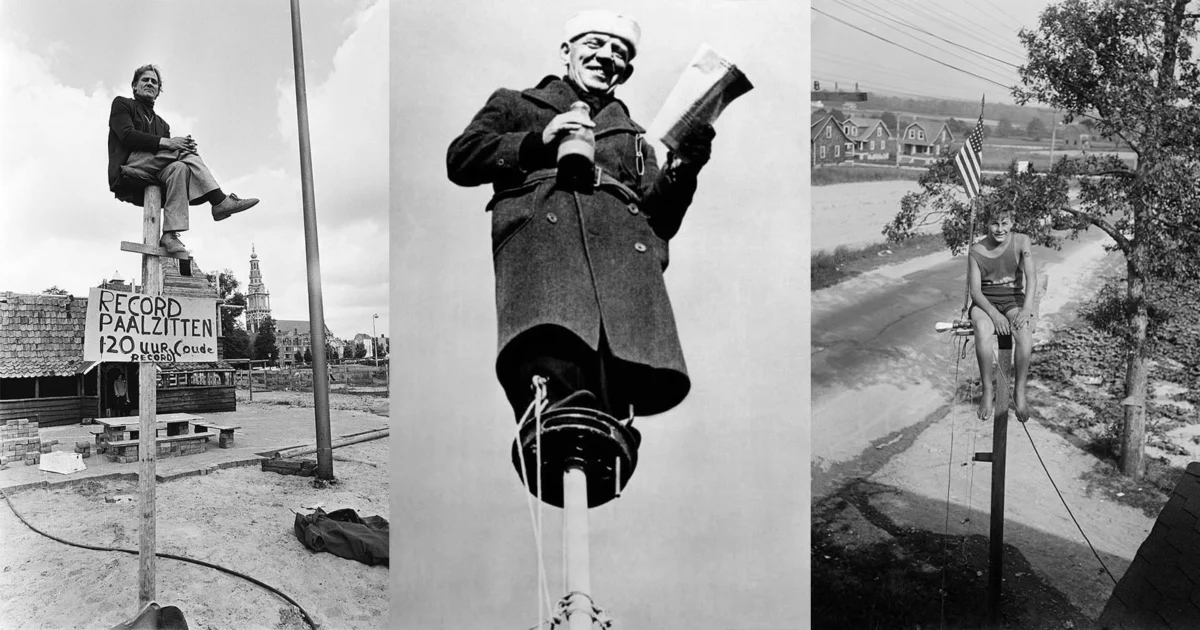
In the pantheon of human eccentricity, few fads capture the zeitgeist of the early 20th century quite like pole sitting. While the modern era is defined by digital "challenges" and viral trends like the 2011 planking craze, the 1920s saw a much more vertical and physically grueling form of public spectacle. At its height, pole sitting was not merely a prank but a professionalized test of endurance that drew tens of thousands of spectators, commanded significant sponsorship fees, and pushed the limits of human physiology. It was a phenomenon born of the "Roaring Twenties," an era of unprecedented economic prosperity and a desperate, post-war hunger for distraction and novelty.
The Genesis of a Vertical Phenomenon
The credit for igniting this unusual craze belongs almost exclusively to Alvin "Shipwreck" Kelly. A former sailor and professional stuntman, Kelly inaugurated the trend in 1924. The story goes that Kelly was dared by a friend to sit atop a flagpole as a publicity stunt for a local theater in Newark, New Jersey. Kelly didn’t just accept the dare; he transformed it into a record-breaking performance, remaining perched for 13 hours and 13 minutes.
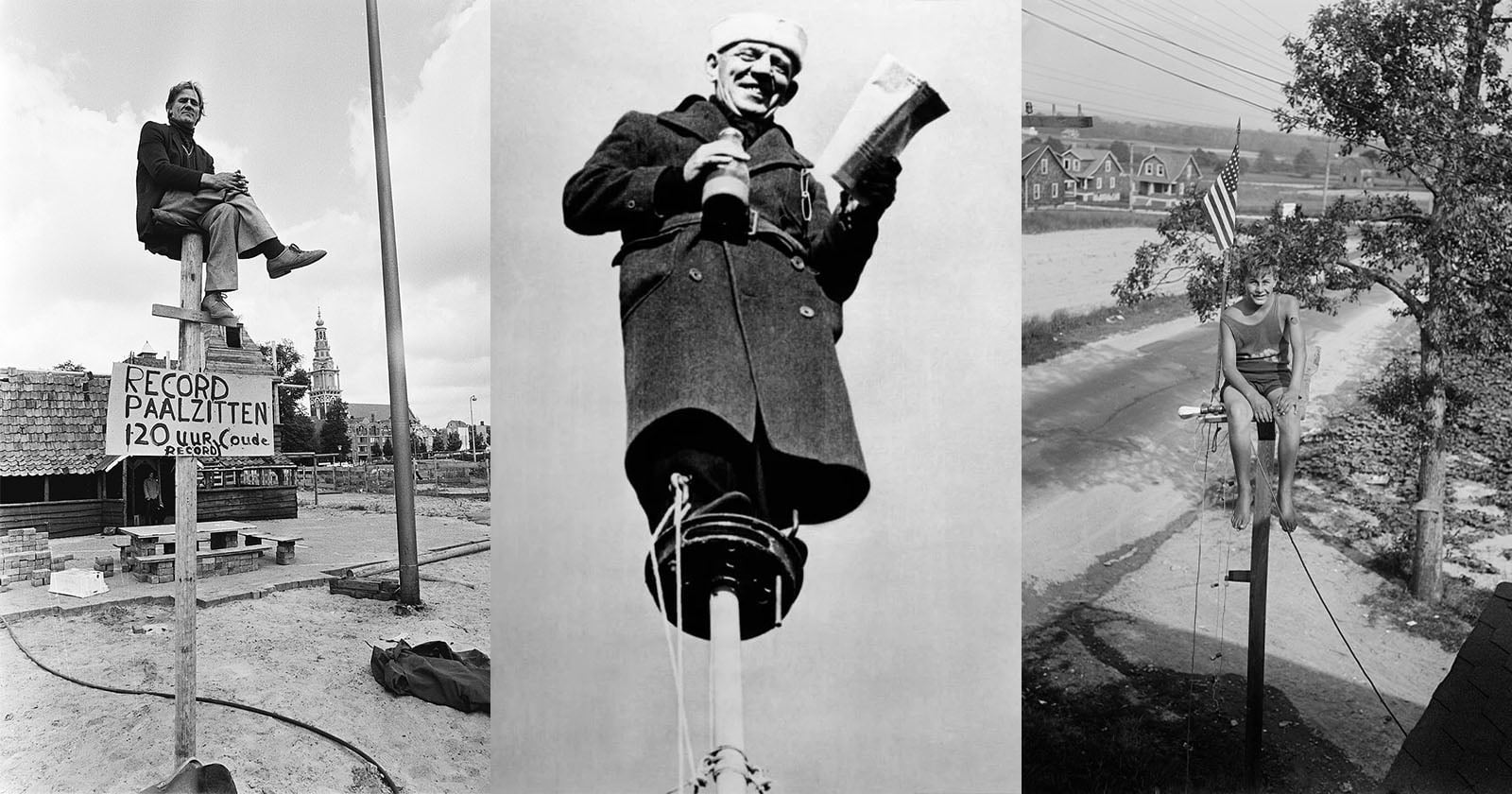
The public reaction was immediate and overwhelming. In an age before television, the sight of a man defying gravity and common sense while perched on a small wooden platform atop a skyscraper or a shipyard mast was a powerful visual. Kelly soon realized that his ability to remain stationary at high altitudes was a marketable skill. He began taking commissions from hotels, amusement parks, and local businesses, charging fees to sit on poles for days at a time to attract crowds.
The Enigma of "Shipwreck" Kelly
Alvin Kelly was as much a self-promoter as he was an endurance artist. His nickname, "Shipwreck," was a core part of his brand, though the origins of the moniker remained shrouded in the tall tales he frequently spun for reporters. Kelly claimed to have survived five different shipwrecks and two airplane crashes without sustaining a single injury. Most audaciously, he often hinted that he had been a survivor of the RMS Titanic disaster in 1912, a claim that historians and Titanic researchers have largely dismissed as a fabrication intended to bolster his legend of invincibility.
Regardless of the veracity of his past, Kelly’s skill on the pole was undeniable. He developed a rigorous system to maintain his health and sanity while suspended hundreds of feet in the air. To sustain his body, he consumed a diet primarily of liquids, which were hoisted up to him in buckets. To perform mundane tasks, he became an expert at balancing; historical photographs famously capture him reading the morning newspaper, shaving, or even brushing his teeth while standing on a platform no larger than a dinner plate.
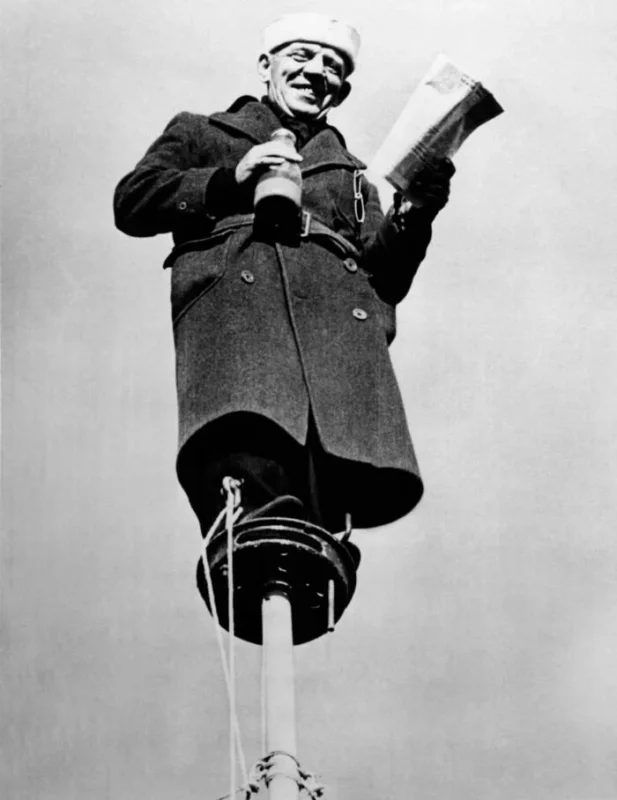
Perhaps his most ingenious invention was his method for sleeping. Kelly would not lie down; instead, he remained seated and hooked his thumbs into holes drilled into the pole shaft. If he began to lean or sway in his sleep, the sharp pain in his thumbs would snap him back to an upright position without fully waking him, preventing a fatal fall. This "thumb-lock" technique allowed him to reach milestones that were previously thought impossible.
The Competitive Escalation of the 1920s
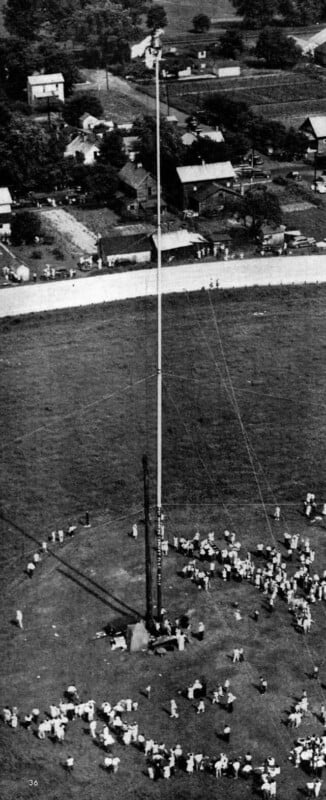
As Kelly’s fame grew, so did the number of challengers eager to claim his crown. By the mid-to-late 1920s, pole sitting had evolved into a competitive sport with records that were constantly being shattered. In 1929, Kelly reclaimed his dominance by sitting on a flagpole in Atlantic City for 49 days. The event was a media circus, with the boardwalk below crowded by tourists who paid a few cents each to look through telescopes at the "man on the stick."
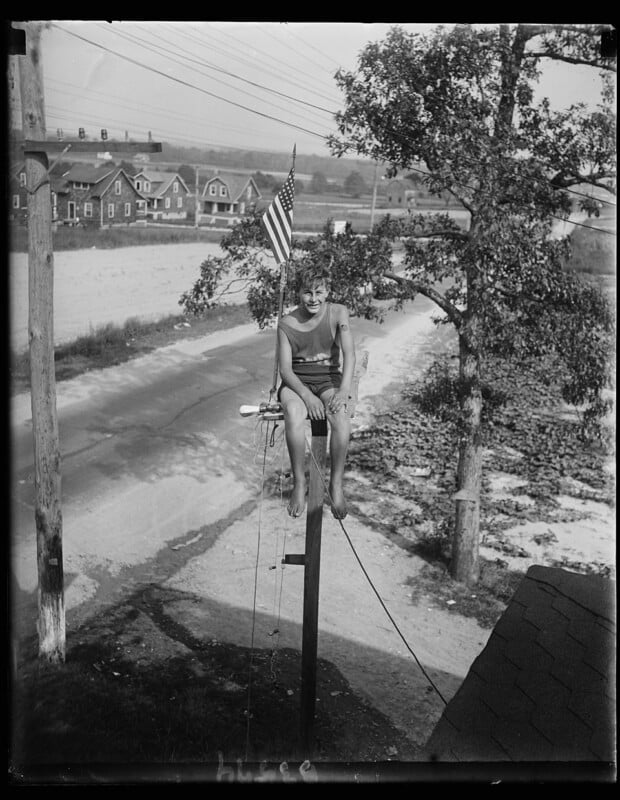
The craze even extended to the youth of America. In 1929, 14-year-old William Ruppert of Baltimore set a juvenile record by staying aloft for 23 days. Shortly thereafter, another youth, Avon Foreman, set a new benchmark for his age group by sitting for 10 days in front of a crowd of thousands. The fad had become so pervasive that municipal authorities in some cities began to express concern over the safety of the participants and the "corrupting" influence of such idle spectacles on the public work ethic.
Rivalry and Excess: The Case of Richard "Dixie" Blandy
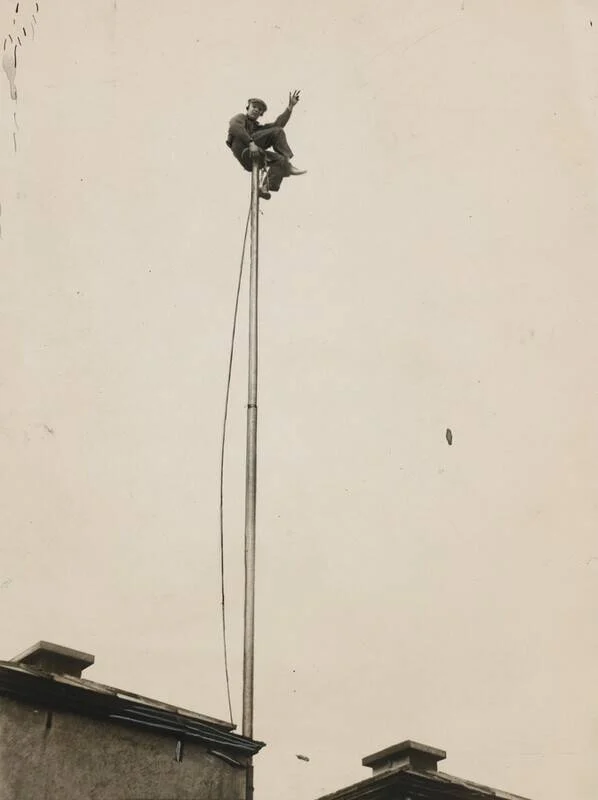
No great era of competition is complete without a fierce rivalry, and for Kelly, that rival was Richard "Dixie" Blandy. If Kelly was the disciplined professional, Blandy was the flamboyant daredevil who brought a sense of "Roaring Twenties" excess to the heights. Blandy is best remembered for a staggering 125-day sitting in which he combined endurance with high-altitude vice.
Reports from the era indicate that during this single stint, Blandy consumed 92 bottles of whiskey and smoked an average of three packs of cigarettes every day—all while perched 200 feet above the ground. Blandy’s performances were designed to shock and entertain, pushing the narrative that a man could live a "normal," if somewhat debauched, life while completely detached from the earth. His feats highlighted the darker, more desperate side of the fad: the lengths to which individuals would go to maintain public relevance and secure a paycheck.
The Economic Collapse and the Death of the Fad
The end of the pole-sitting craze was as swift as its rise, dictated by the harsh realities of the global economy. The Wall Street Crash of October 1929 and the subsequent Great Depression shifted the public’s priorities almost overnight. In a world where millions were struggling to find food and housing, the sight of a man sitting on a pole for weeks at a time no longer seemed whimsical or impressive; it seemed like a grotesque waste of resources and effort.
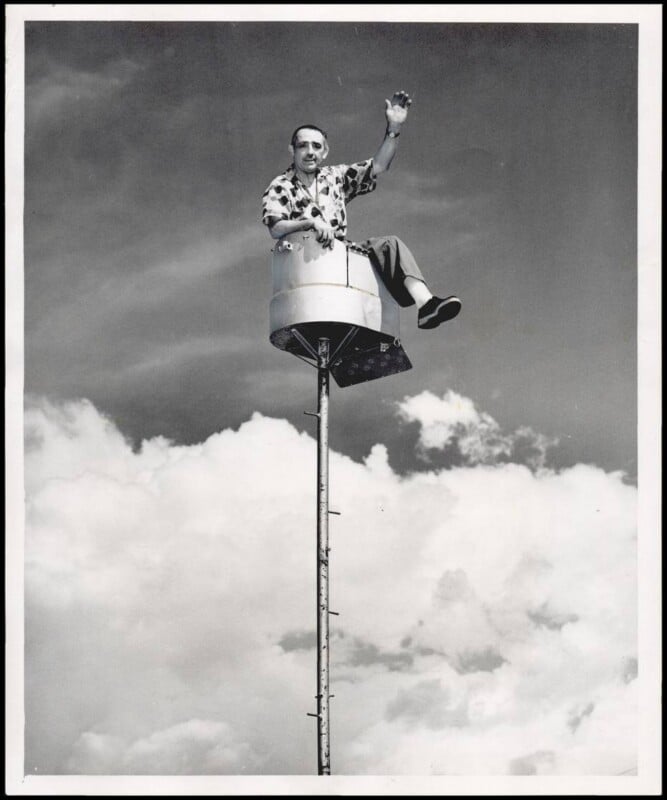
By the early 1930s, the sponsorship money had dried up. Kelly, once a national celebrity, found himself struggling for work. He attempted various comebacks, but the magic of the 1920s had vanished. When Kelly died in 1952, he was found on a sidewalk in New York City, clutching a scrapbook of his old newspaper clippings. He had been living in poverty, a relic of an era that the world had moved past.
Post-War Resurgence and Commercialization
While the original fad died in 1929, pole sitting saw periodic, albeit more commercialized, revivals in the decades that followed. In 1946, as the world emerged from World War II, a couple decided to leverage the old stunt for matrimonial publicity. They held their wedding ceremony atop a 176-foot pole, selling tickets to 1,700 spectators who watched from below. The event was covered by LIFE magazine, signaling a shift in pole sitting from a pure endurance test to a staged media event.
The 1950s introduced a new motivation for the sport: the consumer prize. In Phoenix, Arizona, a man named John Roller spent 212 days atop a 40-foot pole in an attempt to win a Ford Fairlane 500 Skyliner. Roller’s experience was far more psychological than the physical stunts of the 1920s. He documented the extreme loneliness and the mental toll of the isolation, even composing a song titled "Flagpole Rock" to pass the time. Upon descending, Roller told The Arizona Republic, "I never worked so hard in my whole life as while I was up there," reflecting a change in how participants viewed the "leisure" of the act.
International Adaptation: The Dutch Tradition of Paalzitten
While pole sitting faded into a historical footnote in the United States, it found a second life and a more structured form in the Netherlands. Known as Paalzitten, the practice became a competitive sport in the 1970s. Unlike the American version, which focused on height and individual celebrity, Dutch Paalzitten is often done over water.
In the Dutch version, participants sit on wooden poles with small seats and backrests, competing to see who can stay up the longest. The rules are strict, allowing for very few breaks. While it remains a niche activity, it represents the evolution of the fad into a cultural tradition, stripped of the 1920s-era "Shipwreck" showmanship and replaced with a quiet, stoic form of endurance that persists in rural festivals to this day.
Analysis: The Psychology of the Perch
What drove thousands of people to watch a man sit on a pole, and what drove the men to do it? Psychologically, pole sitting represents an early form of "attention economy." In the 1920s, mass circulation newspapers and newsreels were the primary sources of information. A man on a pole was a perfect visual for these mediums—static, easy to photograph, and inherently dramatic.
From the perspective of the participants, it was a way to achieve "stardom" without traditional talent. It required no education, no athletic prowess in the traditional sense, and no specialized equipment. It required only the sheer, stubborn will to remain uncomfortable longer than anyone else. In this sense, Alvin Kelly and his peers were the spiritual ancestors of modern influencers and reality TV stars who trade physical or emotional vulnerability for public attention.
Legacy and Modern Implications
Today, the legacy of pole sitting lives on in the Guinness World Records and the occasional viral stunt, but its significance as a cultural touchstone has faded. It serves as a reminder of the strange ways in which human beings seek to distinguish themselves. Whether it was the whiskey-soaked stunts of Dixie Blandy or the "thumb-lock" sleep of Shipwreck Kelly, these men occupied a unique space in history where the sky was literally the limit for those seeking fame.
As we look back at the grainy photographs of men reading newspapers 200 feet in the air, we see a reflection of our own modern obsession with being "seen." The poles have been replaced by digital platforms, and the telescopes have been replaced by smartphones, but the fundamental human desire to stand—or sit—above the crowd remains unchanged. The 1920s pole-sitting craze was not just a bizarre fad; it was a precursor to the modern age of spectacle, proving that if someone stays in one place long enough and high enough, the world will eventually stop and look up.
