

Every bird perch a parrot steps on is not merely a resting place but a fundamental component of its long-term health, influencing everything from physical agility to psychological well-being. Far from being a trivial accessory, the choice and arrangement of perches within a bird’s environment profoundly impact its musculoskeletal system, prevent chronic foot conditions, and provide essential mental stimulation. As avian veterinary science advances, the understanding of optimal perching strategies has evolved, moving beyond simple dowels to embrace a diverse array of materials, textures, and diameters that mimic the complexities of a bird’s natural habitat. This comprehensive approach is now recognized as indispensable for preventing common ailments and fostering a thriving captive parrot population.
The Foundational Role of Perches in Avian Health
For companion parrots, perches serve as the primary interface with their environment, supporting them for nearly every waking moment. Unlike humans, who benefit from varied terrains and footwear, a bird’s feet are constantly gripping. Without appropriate variation, this continuous pressure can lead to significant health issues. The analogy to human footwear is apt: just as poorly designed shoes can lead to discomfort, blisters, and long-term orthopedic problems, inadequate perches can inflict chronic pain and severe conditions on a bird’s delicate feet.
The implications of improper perching are extensive. Foremost among concerns is pododermatitis, commonly known as "bumblefoot." This inflammatory condition, ranging from mild redness to severe ulceration, infection, and even bone involvement, is frequently exacerbated by perches that are too smooth, too hard, or of uniform diameter. Such perches fail to distribute weight evenly, concentrating pressure on specific areas of the foot. A study published in the Journal of Avian Medicine and Surgery highlighted the prevalence of foot lesions in captive birds, directly correlating their occurrence with cage enrichment, or lack thereof, particularly regarding perch diversity. Furthermore, a bird’s grip strength and agility are maintained through the subtle muscle adjustments required by varied surfaces. Monotonous perching environments can lead to muscle atrophy, joint stiffness, and a diminished quality of life.
Evolution of Avian Care: From Basic Cages to Enriched Habitats
The history of companion bird keeping, particularly parrots, has seen a significant transformation in understanding their needs. Early practices often prioritized owner convenience over avian welfare, with basic wire cages and uniform dowel perches being the norm. These dowels, typically smooth and perfectly round, offered no variation in surface or diameter, a stark contrast to the irregular branches birds encounter in the wild. As avian medicine gained prominence in the latter half of the 20th century, research began to shed light on the specific physiological and psychological requirements of captive birds.
Veterinary professionals and certified avian behaviorists increasingly advocated for environmental enrichment, recognizing that a bird’s habitat must stimulate its natural behaviors. The shift from "cage" to "aviary" or "habitat" reflects this evolving perspective. The importance of perches, once underestimated, moved to the forefront of discussions on avian welfare, alongside nutrition, mental stimulation, and social interaction. This chronology underscores a growing scientific understanding that captive environments, including perching provisions, must actively mitigate the challenges of domestication rather than merely containing the animal.

The Science of Avian Biomechanics and Foot Health
A bird’s foot is a marvel of evolutionary engineering, designed for grasping, climbing, and intricate manipulation. The unique structure, with its specialized tendons and muscles, allows for both powerful clamping and delicate movements. When a bird perches, its toes flex, distributing its body weight across multiple contact points. On a natural branch, these contact points continuously shift due as the branch’s diameter and texture vary. This constant, subtle adjustment acts as a natural exercise, engaging different muscle groups and promoting healthy circulation.
Conversely, a uniform perch forces the foot into a single, unchanging position. This sustained pressure on the same areas can impede blood flow, leading to tissue damage and the initiation of bumblefoot. Avian experts emphasize that the ideal perch allows the bird’s toes to wrap comfortably around it, with the tips of the longest toes barely touching or slightly overlapping. Crucially, the toe joints should be slightly bent, not flat or over-extended. Research into avian locomotion and foot morphology provides clear evidence that diversity in perch diameter and texture is paramount for maintaining healthy tendons, ligaments, and skin integrity. Without this variation, the risk of pressure sores, arthritis, and other debilitating foot conditions significantly increases, often requiring costly and intensive veterinary intervention.
Perch Materials: Navigating Safe and Stimulating Choices
The selection of perch materials is a critical decision, balancing safety, durability, and enrichment. Not all materials are created equal, and some common options can pose serious health risks.
Recommended Materials:
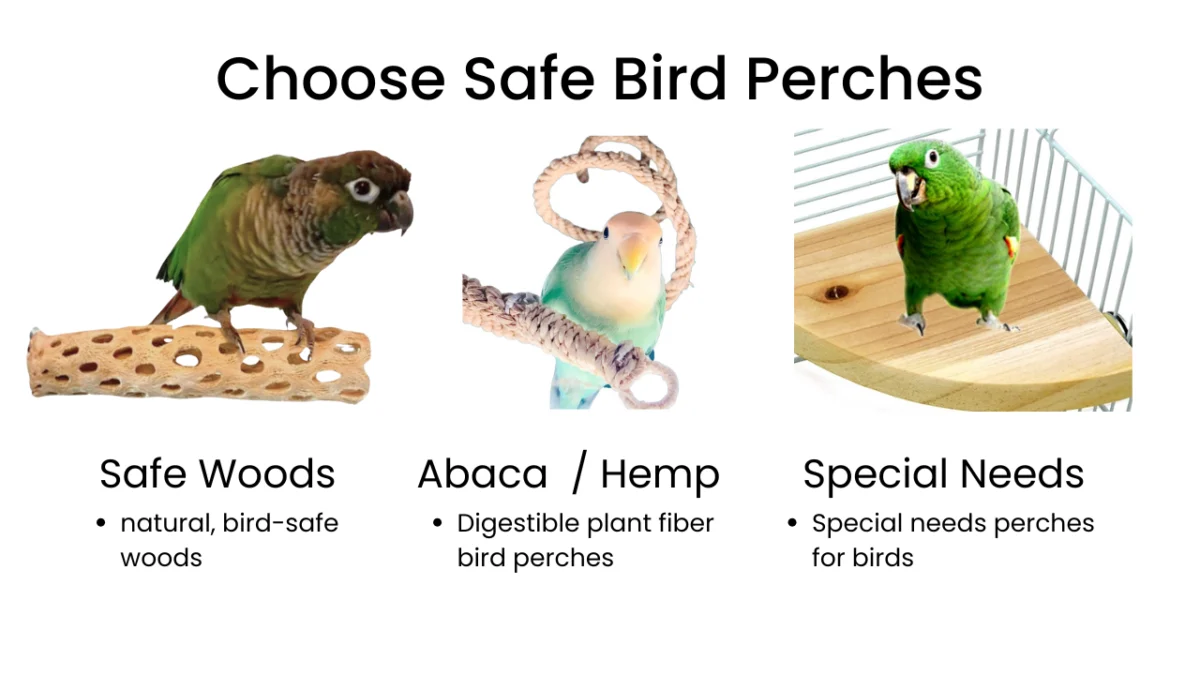
- Natural Wood Branches: These are widely considered the gold standard due to their inherent irregularities in shape, diameter, and texture. Species like Manzanita, Java Wood, Dragonwood, and Grapevine are highly favored. They offer excellent grip, encourage natural chewing behaviors (which is beneficial for beak health), and provide varied foot stimulation. It is crucial that any natural wood branches are non-toxic, untreated, and thoroughly cleaned and disinfected before introduction into the cage. Sourcing from reputable avian suppliers ensures safety from pesticides and pathogens.
- Abaca or Hemp Rope Perches: Unlike cotton, abaca (a type of banana fiber) and hemp are natural, durable fibers that are less prone to unraveling into long strands that can be ingested or cause crop impactions. These perches offer a soft, textured surface that can be comfortable for resting and provide excellent climbing opportunities. Regular inspection for fraying is essential, and any damaged sections should be promptly removed or replaced.
- Mineral and Calcium Perches: Designed to provide essential minerals while also offering a rough surface for beak conditioning and foot health. These should be used in moderation and placed strategically, as constant use of a very abrasive surface can also cause foot irritation. They are not intended as primary resting perches.
- PVC (Polyvinyl Chloride) Perches: While not natural, medical-grade PVC can be a safe and easily cleanable option, particularly for birds with specific health needs or for use in quarantine setups. They offer a smooth, non-porous surface that resists bacterial growth. However, they lack the texture variation of natural wood and should only form a small part of a diverse perch collection.
Materials to Avoid or Use with Extreme Caution:
- Treated, Painted, or Resin-Coated Woods: Any wood treated with chemicals, paints, or resins can be toxic if ingested by a curious parrot. The chemicals can leach into the bird’s system, leading to poisoning. Always ensure wood is natural and untreated.
- Dowels (Uniform Diameter Perches): While historically common, dowel perches are now strongly discouraged as the sole perching option. Their perfectly smooth, uniform diameter fails to provide the necessary variation for foot health, significantly increasing the risk of bumblefoot and joint issues. They can be used minimally as a transitional or temporary perch, but never as the primary perching solution.
- Concrete or Cement Perches: Often marketed for nail and beak trimming, these perches are typically too hard and abrasive for continuous use. They can contribute to pressure sores, calluses, and even skin breakdown if a bird spends too much time on them. If used, they should be placed low in the cage, away from primary resting spots, and for limited periods.
- Cotton Rope Perches: Despite their soft appearance, cotton ropes are notorious for fraying into fine strands that birds can ingest. These strands can accumulate in the crop, forming an indigestible wad that can lead to impaction, infection, and often requires surgical removal. This is a significant and well-documented hazard, making cotton rope perches a high-risk item.
- Plastic Perches (excluding medical-grade PVC): Many cheap plastic perches are smooth, slippery, and offer no grip or texture. They can contribute to foot problems and are often made from plastics that are not food-safe or durable for long-term avian use.
Optimizing Perch Configuration: Size, Shape, and Placement

Creating an ideal perching environment involves thoughtful consideration of size, shape, and strategic placement within the cage. The goal is to encourage movement, exercise, and mental engagement, mirroring the dynamic perching habits of wild birds.
- Diameter Diversity: The most critical aspect is varying perch diameters. A good rule of thumb is that a bird should be able to comfortably wrap its toes around the perch, with the front and back toes not quite touching. For smaller birds like cockatiels, diameters might range from 0.5 to 1 inch; for larger parrots like macaws, 1.5 to 3 inches or more. Incorporating perches of varying thicknesses ensures that different muscles are engaged and pressure points on the foot are constantly shifting.
- Texture Variety: Beyond diameter, texture is vital. Smooth surfaces (like some PVC or polished wood) offer different sensory input than rougher, bark-covered natural branches, or fibrous rope perches. This sensory diversity contributes to mental stimulation and provides different tactile experiences for the feet.
- Strategic Placement: Perches should be arranged to encourage climbing, stretching, and movement throughout the cage.
- High Perches: A primary sleeping perch should be placed at the highest comfortable point in the cage, offering a sense of security. This perch should be particularly comfortable and stable.
- Mid-Level Perches: These should be placed to encourage exploration and access to toys, food, and water. They can be angled or positioned to create pathways.
- Low Perches: A perch near the bottom of the cage can provide a safe spot for foraging or playing with floor toys.
- Avoid Overcrowding: While variety is key, overcrowding the cage with too many perches can restrict flight and movement. There should be ample space for the bird to stretch its wings and maneuver.
- Food and Water Access: Perches should be positioned near food and water dishes, but not directly above them, to prevent contamination from droppings.
- Window and View: If the cage is near a window, consider a perch that allows the bird to observe its surroundings, providing mental enrichment.
- Rotation: Regularly rotating the types and positions of perches can prevent boredom and continue to challenge the bird’s physical and mental faculties.
Maintenance and Hygiene: Essential for Longevity
Even the best perches require diligent cleaning and maintenance to remain safe and hygienic. Birds frequently defecate on their perches and may wipe their beaks on them, making them breeding grounds for bacteria and fungi.
- Regular Cleaning: Perches should be cleaned weekly, or more frequently if visibly soiled. Natural wood perches can be scrubbed with a stiff brush and bird-safe disinfectant (e.g., diluted bleach solution followed by thorough rinsing and drying, or specialized avian disinfectants). They must be completely dry before returning to the cage to prevent mold growth.
- Deep Cleaning/Sterilization: Periodically, natural wood perches may benefit from a more thorough cleaning or even baking in an oven (at a low temperature, around 250°F for 30-45 minutes) to sterilize them, especially if they have become particularly soiled or if a bird has been ill.
- Inspection for Wear: Regularly inspect all perches for signs of wear and tear, such as splinters, sharp edges, or fraying on rope perches. Damaged perches should be immediately repaired or replaced to prevent injury or ingestion of hazardous materials.
- Replacement: Over time, natural wood perches may become smooth from constant use or heavily chewed, reducing their textural benefits. They should be replaced as needed to maintain optimal enrichment.
Expert Perspectives and Broader Implications
Leading avian veterinarians and behaviorists are unanimous in their advocacy for diverse and appropriate perching. Dr. Susan O’Malley, a prominent avian veterinarian, often stresses that "foot health is paramount to a bird’s overall welfare. A bird with sore feet is a bird in chronic pain, impacting its ability to eat, play, and interact." Similarly, certified avian behaviorists highlight the link between environmental enrichment, including varied perches, and the prevention of behavioral issues like feather plucking or aggression, noting that a physically comfortable and mentally stimulated bird is less prone to stress-induced behaviors.
The implications of proper perch selection extend beyond individual bird health to the broader field of companion avian welfare. Educating bird owners on these critical aspects is essential to reduce the incidence of preventable diseases and improve the quality of life for countless captive parrots. Veterinary clinics frequently report treating bumblefoot and other foot ailments that could have been avoided with better perching provisions, underscoring the economic burden on owners and the suffering endured by birds. As research continues to uncover the intricate needs of different avian species, the recommendations for optimal perching will undoubtedly become even more refined, solidifying its place as a cornerstone of responsible bird ownership.
Conclusion
The humble bird perch, often overlooked, holds immense power over a parrot’s health and happiness. By understanding the biomechanics of avian feet, the risks associated with unsuitable materials, and the benefits of diverse textures and strategic placement, bird owners can transform their birds’ living spaces from mere enclosures into dynamic, enriching environments. The commitment to providing varied, safe, and hygienic perches is not just a recommendation; it is a fundamental responsibility that directly contributes to the prevention of chronic disease, the promotion of natural behaviors, and ultimately, the flourishing of these intelligent and sensitive companions. As we continue to refine our approach to avian care, the emphasis on perching will remain a vital testament to our evolving understanding of parrot welfare.
