


The landscape of animal ownership and aviculture in the United States is currently facing a transformative period, driven by a surge in legislative activity at the local, state, and federal levels. For bird owners, breeders, and exhibitors, the act of monitoring these legal developments has shifted from a secondary concern to a primary necessity for the survival of their practice. The American Federation of Aviculture (AFA) and similar advocacy groups have noted a significant increase in the introduction of "Bills"—proposed laws that often carry implications far beyond their initial summaries. As the legal framework surrounding animal welfare becomes more complex, understanding the nuances of the legislative process, the influence of lobbying organizations, and the distinction between various types of legal mandates is essential for anyone involved in the keeping of avian species.
The Mechanics of Modern Legislation and the Role of Lobbying
In a historical context, legislation was defined simply as the proposing of a law. In the contemporary political environment, however, this process is significantly more multifaceted. Most modern legislation begins as a "Bill," a draft of a law that includes an introductory summary explaining its intent, the proposed enforcement mechanisms, and the projected impact on the community. While these summaries are designed to provide clarity, legal experts and aviculture advocates warn that they can often be misleading, masking broader regulatory reach behind palatable language.
A critical factor in the proliferation of these bills is the role of professional lobbying. Many legislative proposals do not originate within the offices of elected representatives but are instead drafted by external organizations. Specifically, animal rights and animal welfare groups with robust lobbying arms frequently present pre-written bills to legislators for introduction into the state or federal systems. While these organizations often frame their agendas as being in the public interest, their goals may not align with the needs of pet owners or the scientific requirements of avian conservation. The AFA has identified a growing trend where bills are designed to restrict the keeping of pet birds, breeder birds, and exhibit birds under the guise of general animal welfare improvements.
Distinguishing Between Laws, Ordinances, and Regulations
To navigate the legislative landscape effectively, stakeholders must distinguish between different types of legal instruments. A primary distinction exists between state or federal laws and local "ordinances." Local ordinances, which are passed by city councils or county boards, are typically civil rather than criminal in nature. For example, if a resident violates a local ordinance regarding property maintenance or animal limits, they are usually subject to fines or civil court proceedings rather than criminal arrest. However, persistent non-compliance can lead to a judge issuing orders that carry more severe penalties, such as being held in contempt of court.
Furthermore, there is a significant difference between a "law" and a "regulation." While laws and ordinances require a formal vote by elected officials—such as the U.S. Congress, state General Assemblies, or city councils—regulations are the specific rules written to implement those laws. Regulations are often managed by administrative agencies, such as the United States Department of Agriculture (USDA) or the U.S. Fish and Wildlife Service (USFWS). While these agencies must follow a public process to change regulations, such as adding a species to the Endangered Species Act (ESA), these changes do not require a direct vote from the legislature. This administrative layer adds a level of complexity to monitoring efforts, as a single law can result in hundreds of pages of restrictive regulations.
The Chronology of Avian Regulation and the Animal Welfare Act
The history of avian regulation in the United States is marked by long periods of stability followed by rapid shifts in federal oversight. A key milestone in this timeline is the Animal Welfare Act (AWA), originally passed in 1966. For decades, birds were largely excluded from the specific regulatory oversight applied to mammals under the AWA. However, a significant legal shift occurred in the early 2000s, leading to a lengthy process of rule-making by the USDA’s Animal and Plant Health Inspection Service (APHIS).
In 2023 and 2024, new federal standards for the humane handling, care, treatment, and transportation of birds were formally implemented. This transition represents a major chronological turning point for the industry. The implementation of these rules followed years of litigation and public comment periods, highlighting how long-term legislative and legal battles eventually manifest as daily operational requirements for bird owners. This history demonstrates that a lack of engagement during the early stages of a bill or a regulatory proposal can lead to irreversible changes decades later.
Data-Driven Impact: The "Slippery Slope" of Numerical Limits
One of the most pressing concerns for aviculturists is the introduction of "limit laws" or numerical restrictions on animal ownership. These often begin as ordinances aimed at controlling the population of dogs and cats in urban areas. While a law limiting a household to six dogs might seem reasonable to the general public, the language of such ordinances is frequently amended to include "all animals" or specific categories like "birds, hamsters, and fish."
Consider the data regarding avian breeding: a professional canary or finch breeder may maintain dozens of pairs to ensure genetic diversity and the health of the lineage. If a local ordinance intended for dogs is expanded to include birds, that breeder suddenly finds themselves in violation of the law. This creates a "slippery slope" where legislation designed for one species is inadvertently or intentionally applied to others. According to industry data, there are approximately 5.7 million households in the United States that own birds. The economic impact of the bird-keeping community—including feed, veterinary care, and equipment—is a multi-billion dollar industry. Restrictive legislation not only affects individual hobbyists but also threatens the economic stability of the broader pet industry.
Analysis of Implications: The Global and Local Connection
The AFA Legislative Committee, alongside other animal interest groups, emphasizes that no piece of legislation should be viewed in isolation. A recurring strategy in legislative advocacy is the "copycat" effect. When a restrictive law is passed in one state or municipality, it serves as a blueprint for other regions. For example, a "circus prohibition act" in a small city might seem irrelevant to a parrot owner. However, if the wording of that act defines "exotic animals" broadly enough, it can be used as precedent to restrict the public exhibition of birds at educational events or even the private ownership of certain species.
The implications of these laws extend to conservation efforts. Many bird species are primarily sustained through private aviculture. If legislative hurdles make it impossible for private breeders to maintain populations, the risk of species extinction increases, particularly for birds whose natural habitats are under threat. Therefore, monitoring legislation is not merely a matter of protecting a hobby; it is a vital component of biodiversity preservation.
Official Responses and the Path Toward Advocacy
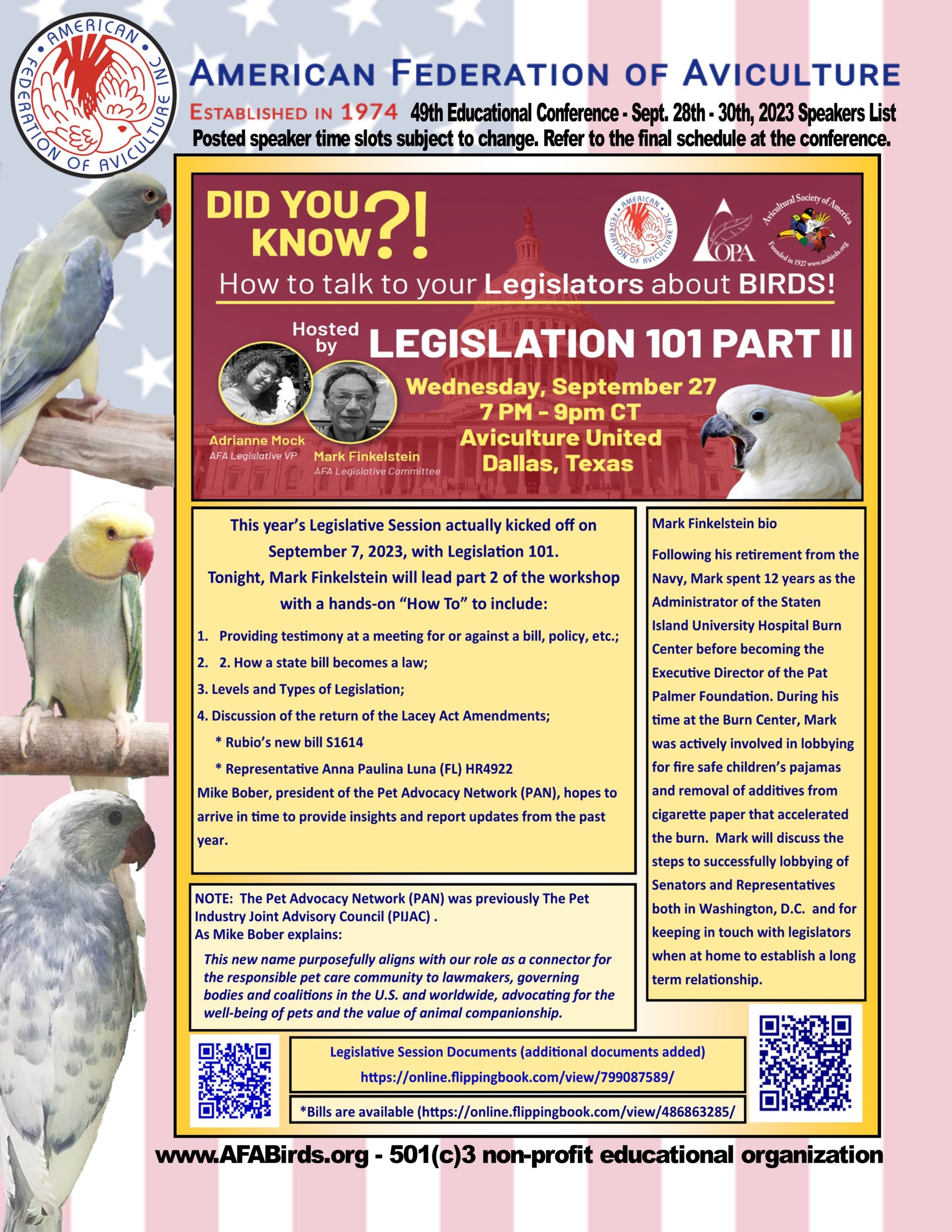
In response to the "astounding" amount of anti-animal use bills being introduced, the AFA has called for a more educated and proactive constituency. The organization has developed resources such as the "Legislation 101" training course to help bird owners understand how to read bills and communicate with their representatives. The official stance of the AFA is that bird owners must move beyond reactive measures and become part of the legislative process itself.
Legal analysts suggest that the best defense against restrictive legislation is the inclusion of "carve-outs" or specific exemptions for responsible aviculturists. However, these exemptions are only possible if the community is aware of the bill during its initial drafting or committee phases. Once a bill reaches a full vote, the opportunity for nuanced amendment is often lost.
Conclusion: The Necessity of Vigilance
The future of bird ownership in the United States is increasingly dictated by the halls of government rather than the cages of breeders. As lobbying organizations continue to push for broader restrictions, the responsibility falls on the aviculture community to remain informed and vocal. By understanding the distinction between laws and regulations, recognizing the influence of special interest groups, and monitoring the "insinuations" within bill verbiage, bird owners can protect their rights and the welfare of the animals they keep.
The AFA’s "Current Legislative Issues" tracking serves as a frontline defense, but it requires the active participation of individuals at the local level. Whether it is a minor change to a county ordinance or a major shift in USDA policy, every legislative move has the potential to ripple through the avian community. In an era of rapid legal change, vigilance is the only way to ensure that birds remain a vibrant part of human lives and that the expertise of aviculturists continues to contribute to the global understanding of these complex and beautiful creatures.
