

For a significant portion of the avian population kept as companions, the seemingly innocuous act of residing indoors, often near windows that filter crucial ultraviolet B (UVB) radiation, inadvertently creates a profound health deficit. This guide addresses the pressing question of whether specialized avian lighting is merely a luxury or an indispensable component of proper bird husbandry, particularly for those wondering about the necessity and safety of such illumination. It is directly relevant to bird owners whose companions exhibit strong grip, vibrant plumage, stable temperament, and coordinated flight, suggesting a current state of wellness, yet still requires ongoing maintenance. For others observing subtle declines in these areas, a re-evaluation of environmental lighting is critically important.
The Unseen Disconnect: Birds and Indoor Environments
Avian species, through millennia of evolution, have developed a sophisticated physiological system intricately linked to natural sunlight. The sun’s spectrum, particularly its UVB wavelengths, plays a pivotal role in the synthesis of Vitamin D3, a prohormone essential for numerous bodily functions. When birds are brought into indoor environments, even those considered "bright" by human standards, this fundamental connection is often severed. Standard incandescent or fluorescent bulbs, along with the glass in windows, effectively block the vital UVB rays. This phenomenon creates a significant environmental discrepancy between a bird’s evolutionary needs and its captive reality.
For a bird accustomed to unfiltered outdoor light, the transition indoors represents a profound ecological shift. While a room may appear brilliantly lit, the crucial component for endogenous Vitamin D3 production is absent. This often leads to a subtle, yet progressive, decline in health that can easily be misattributed or overlooked until severe symptoms manifest. The inherent biological mechanism that converts precursors in the skin and preen gland secretions into active Vitamin D3 is rendered inactive without adequate UVB exposure, regardless of dietary quality.
The Science of Light: How UVB Fuels Avian Health
The primary function of UVB light in avian physiology is the photobiosynthesis of Vitamin D3 (cholecalciferol). When UVB radiation, specifically within the 290-315 nanometer (nm) range, strikes the bird’s skin or the preen gland secretions on its feathers, it converts 7-dehydrocholesterol into pre-vitamin D3. This pre-vitamin D3 is then thermally isomerized into Vitamin D3, which is subsequently absorbed and transported to the liver. In the liver, it is hydroxylated to 25-hydroxyvitamin D3, and then further hydroxylated in the kidneys to its active form, 1,25-dihydroxyvitamin D3 (calcitriol).
Calcitriol is a potent hormone that regulates calcium and phosphorus homeostasis in the body. Its functions include:
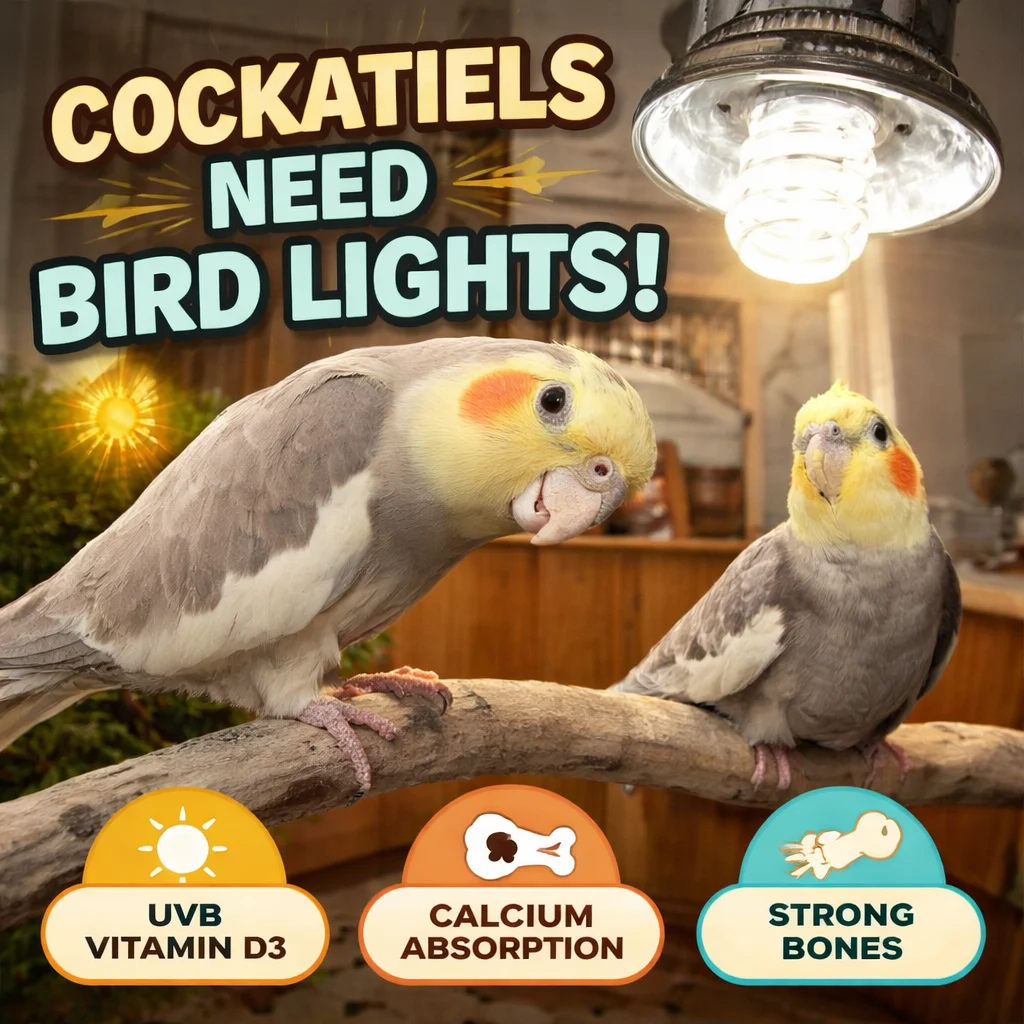
- Calcium Absorption: Facilitating the absorption of dietary calcium from the gut. Without sufficient calcitriol, even a calcium-rich diet cannot be effectively utilized, leading to calcium deficiency.
- Bone Mineralization: Promoting the proper deposition of calcium and phosphorus into bone tissue, ensuring skeletal strength and integrity.
- Renal Calcium Reabsorption: Minimizing calcium loss through the kidneys.
- Immune System Modulation: Playing a role in immune cell function and inflammatory responses.
- Cell Growth and Differentiation: Influencing various cellular processes throughout the body.
The scientific understanding of this process has evolved significantly over the past few decades. Early avian care often focused solely on dietary calcium supplementation, sometimes leading to an oversupply that could be harmful if not properly metabolized. The recognition that oral Vitamin D3 supplementation can also carry risks (such as hypervitaminosis D) and may not fully replicate the benefits of photobiosynthesized D3 has further underscored the importance of appropriate UVB exposure. Researchers and avian veterinarians now widely acknowledge that natural synthesis is the preferred and most physiologically appropriate pathway for Vitamin D3 production in birds.
Beyond Bones: The Multifaceted Benefits of Proper Lighting
While the role of UVB in bone health is well-established, its influence extends far beyond the skeletal system. A bird’s overall vitality, including its mood, feather quality, and reproductive success, is intimately linked to adequate light exposure.
- Mood and Behavior: Light plays a critical role in regulating circadian rhythms and the production of neurohormones like serotonin. Birds exposed to appropriate light cycles often exhibit more stable temperaments, reduced stress behaviors (such as feather plucking in some cases), and increased activity levels. Seasonal affective disorder, while not formally diagnosed in birds, can manifest as lethargy or irritability during periods of reduced natural light, particularly in winter months.
- Feather Quality and Vibrancy: Healthy feather growth and pigmentation are energy-intensive processes that rely on a well-functioning metabolic system, supported by Vitamin D3. Birds with optimal Vitamin D3 levels often display more vibrant, well-structured plumage, indicative of overall health. Conversely, dull, brittle, or discolored feathers can sometimes be an early indicator of underlying nutritional or metabolic deficiencies, including those related to inadequate light.
- Reproductive Health: For breeding birds, Vitamin D3 is absolutely critical. It influences calcium mobilization for eggshell formation, fertility, and the overall reproductive cycle. Deficiency can lead to thin-shelled eggs, egg-binding (dystocia), reduced clutch sizes, and even infertility. The ability to produce strong, viable offspring is significantly compromised without sufficient Vitamin D3.
- Immune Function: Emerging research suggests a broader role for Vitamin D3 in modulating the avian immune system. Adequate levels may enhance a bird’s resistance to infections and support a robust immune response, contributing to overall disease prevention.
The Perils of Deficiency: Recognizing the Subtle Signs
The onset of Vitamin D3 deficiency and subsequent calcium imbalance is rarely dramatic. Instead, it typically manifests subtly, making early detection challenging for the untrained eye. Birds are masters at masking weakness, a survival instinct honed in the wild to avoid predation. By the time overt symptoms appear, the deficiency may have been progressing for months, causing significant internal damage.
A quick diagnostic overview reveals common indicators:
| If your bird… | What It Often Means |
|---|---|
| Sits near a bright window but gets no direct sunlight | Glass effectively blocks UVB radiation, preventing Vitamin D3 synthesis. The visual brightness of a room does not equate to the biologically active wavelengths needed for usable Vitamin D3 production. |
| Seems dull, less active, or irritable in winter | Reduced natural light exposure during shorter winter days can disrupt circadian rhythms and impact calcium metabolism. This can lead to behavioral changes and a general malaise, often mistaken for simple "winter blues." |
| Has a strong diet but still shows weaker grip or feather decline | Despite consuming a high-quality, calcium-rich diet, the absence of light-dependent Vitamin D3 activation means calcium cannot be properly absorbed or utilized, leading to musculoskeletal weakness and poor feather condition. |
| Exhibits tremors, uncoordinated flight, or falls frequently | These are advanced signs of hypocalcemia (low blood calcium), often a direct result of chronic Vitamin D3 deficiency. This can lead to muscle spasms, neurological issues, and severe bone fragility. |
| Develops soft or pliable bones, swollen joints, or fractures easily | These are hallmarks of Metabolic Bone Disease (MBD), a debilitating condition where bones become demineralized due to prolonged calcium deficiency. This is a severe, life-threatening consequence of inadequate UVB. |
| Experiences egg-binding or produces thin-shelled eggs | In breeding females, insufficient calcium mobilization due to Vitamin D3 deficiency severely impairs egg production, leading to difficulties in passing eggs or producing eggs with compromised shell integrity. |
These symptoms underscore the insidious nature of light deficiency. Early signs might include slightly decreased activity, a subtle shift in feather sheen, or a less robust grip. Over time, these progress to more serious conditions like MBD, which can result in irreversible skeletal deformities, pain, and significantly reduced quality of life. In severe cases, particularly with egg-binding or acute hypocalcemia, the condition can be rapidly fatal. This highlights the critical importance of proactive, preventive measures rather than reactive treatment of advanced disease.
Addressing Misconceptions: Safety and Efficacy of Avian UVB Lamps
The introduction of specialized avian UVB lighting has been a game-changer for indoor bird husbandry. However, like any powerful tool, it must be used correctly to be beneficial and safe. Misinformation often circulates regarding the dangers of UV exposure, leading some owners to avoid these essential lights.
-
"Are bird lights dangerous?"
Used incorrectly, any source of UV radiation can be harmful. Just as excessive sun exposure is detrimental to humans, prolonged or improperly positioned UV light can cause tissue damage to birds, affecting eyes and skin. However, avian-specific UVB lights are meticulously designed to mimic the short, controlled bursts of natural UVB exposure a bird would receive in the wild, without the harmful UVC spectrum. The key to safety lies in adhering to manufacturer guidelines and veterinary recommendations regarding distance, duration, and proper fixture type. More light is not automatically better; optimal exposure is paramount. -
"Can too much UV cause cancer?"
Yes, excessive UV exposure over prolonged periods can indeed damage cellular DNA, leading to tissue damage and an increased risk of certain cancers. This is a well-documented risk across many species, including birds. To mitigate this risk, UVB exposure for birds should be limited to short, daily sessions, typically ranging from 1 to 3 hours. Implementing an automatic timer is an invaluable tool to ensure consistent, safe exposure without the risk of accidental overexposure, protecting both the bird and the owner from potential harm. The light fixture itself should be designed to prevent direct eye contact for prolonged periods, and birds should always have an area within their enclosure where they can retreat from the light if desired, mimicking natural shade.
Implementing a Light Strategy: Best Practices for Owners
Establishing an effective lighting regimen for an indoor bird requires careful planning and adherence to best practices. This "3-Step Light Reset" provides a structured approach:
- Select the Right Bulb: Not all "full spectrum" lights are created equal. Many merely emit a broader range of visible light but lack the critical UVB wavelengths. Look for bulbs specifically labeled as "avian UVB" or "reptile UVB" that specify a UVB output (e.g., 5.0% or 6.0%). Reputable brands will provide detailed spectral data. Avoid bulbs designed for horticulture or general household use, as these do not provide the correct spectrum or intensity for Vitamin D3 synthesis in birds. Linear fluorescent tubes are often preferred over compact fluorescent bulbs due to better light distribution and typically higher, more consistent UVB output across their length.
- Determine Optimal Distance and Placement: The effective range of UVB light is limited. The ideal distance from the bulb to the bird’s perch or primary activity area is crucial and varies by bulb type and wattage. Generally, this range is between 6 to 18 inches (15 to 45 cm). Always consult the bulb manufacturer’s recommendations. The light should be positioned above the cage, not through cage bars (which can filter UVB), and should provide a "hot spot" of UVB where the bird can bask, while also allowing areas of shade. The fixture should not be placed over food or water dishes to prevent UV degradation of nutrients or water quality.
- Establish a Consistent Schedule: As discussed, moderation is key. A daily exposure of 1 to 3 hours is generally recommended. Utilizing a reliable automatic timer is essential for maintaining consistency and preventing accidental overexposure. The light should be turned on during the bird’s most active period of the day. Remember that UVB bulbs have a limited lifespan for their UVB output, even if they continue to emit visible light. Most manufacturers recommend replacing them every 6 to 12 months to ensure effective UVB delivery. Mark the replacement date on the bulb itself for easy tracking.
Expert Consensus and Industry Standards
The understanding of UVB’s importance for avian health is now widely accepted within the avian veterinary community and among reputable bird welfare organizations. Leading avian veterinarians frequently emphasize the need for appropriate environmental enrichment, with UVB lighting being a cornerstone. Dr. Susan O’Malley, a prominent avian veterinarian, often states, "UVB lighting is not optional for indoor birds; it is as fundamental as a proper diet and clean water. We see a dramatic reduction in metabolic bone disease and other related conditions in practices where owners implement correct lighting." Organizations like the Association of Avian Veterinarians (AAV) and various parrot welfare societies actively promote education on this topic, providing guidelines for responsible pet bird ownership that include provisions for UVB. The development of specialized avian lighting products has been driven by this growing scientific consensus, reflecting a paradigm shift in captive avian care from merely sustaining life to promoting optimal well-being.
Measuring Success: Observing Improvements and Long-Term Wellness
Improvements resulting from proper UVB light integration are typically gradual, reflecting the physiological processes being supported rather than an immediate "switch-flip" effect. Owners should observe their birds for a range of positive changes over several weeks or months:
- Increased Activity and Playfulness: A bird with improved calcium metabolism and regulated circadian rhythms will often exhibit more energy, engage in play, and explore its environment more readily.
- Enhanced Appetite and Digestion: A healthier metabolic state can lead to better nutrient absorption and overall digestive efficiency.
- Improved Feather Condition: Feathers may appear brighter, smoother, and more vibrant, with less dullness or stress barring.
- Stronger Grip and Coordination: Enhanced bone density and muscle strength, resulting from proper calcium utilization, can lead to a noticeably stronger grip and more confident, coordinated movement and flight.
- More Stable Mood and Reduced Stress Behaviors: A well-regulated circadian rhythm and optimal neurochemical balance can contribute to a calmer, more contented bird, potentially reducing behaviors like excessive screaming or feather plucking (if not medically driven).
These observations serve as a testament to the profound impact of appropriate lighting on a bird’s overall physiology and quality of life. Regular veterinary check-ups remain essential to monitor health parameters, and blood tests can, in some cases, confirm improved Vitamin D3 levels, though clinical signs are often the primary indicators for owners.
The Broader Implications: A Paradigm Shift in Avian Care
The widespread adoption of appropriate UVB lighting represents more than just a husbandry tip; it signifies a maturing understanding of avian biology and a commitment to higher standards of animal welfare. The implications extend to:
- Reduced Veterinary Costs: Preventive measures, such as proper lighting, significantly reduce the incidence of preventable diseases like Metabolic Bone Disease, which can be costly and challenging to treat. This translates to lower long-term veterinary expenses for bird owners.
- Enhanced Longevity and Quality of Life: By addressing a fundamental biological need, birds are more likely to live longer, healthier, and happier lives, fulfilling their potential as companion animals.
- Ethical Pet Ownership: Providing essential environmental components like UVB lighting moves beyond basic survival to ensuring a life that closely approximates a bird’s natural biological requirements, reflecting a deeper ethical responsibility of pet ownership.
- Future Research: Continued research into optimal UVB dosages for different avian species, the interaction of light with diet, and the full spectrum of non-skeletal benefits of Vitamin D3 will further refine best practices in avian care.
Key Takeaways:
- UVB is Non-Negotiable: Indoor environments fundamentally lack the UVB radiation necessary for a bird’s Vitamin D3 synthesis.
- Health Implications are Broad: Insufficient UVB leads to calcium malabsorption, impacting bone health (Metabolic Bone Disease), feather quality, immune function, mood, and reproductive success.
- Safety Through Correct Use: Avian UVB lights are safe and effective when used at the correct distance, for appropriate durations (1-3 hours daily), and with proper fixtures and timers. Overexposure is harmful.
- Prevention Over Reaction: Addressing light deficiency proactively prevents severe health crises that are often difficult and costly to treat.
- Gradual, Observable Improvements: Owners can expect to see positive changes in their bird’s activity, feather vibrancy, grip strength, and overall demeanor over time, indicating improved physiological function.
By integrating scientifically sound lighting solutions into daily care routines, bird owners can bridge the gap between their pets’ natural biological needs and the realities of indoor living, ensuring a foundation for robust health and well-being.
Other Helpful Resources:
- Why Winter is Hard On Bones: A detailed explanation of how seasonal light loss affects avian bone health and calcium utilization.
- Complete Calcium + Magnesium + D3 Support: Information on dietary supplementation that complements, but does not replace, the need for proper UVB exposure.
