

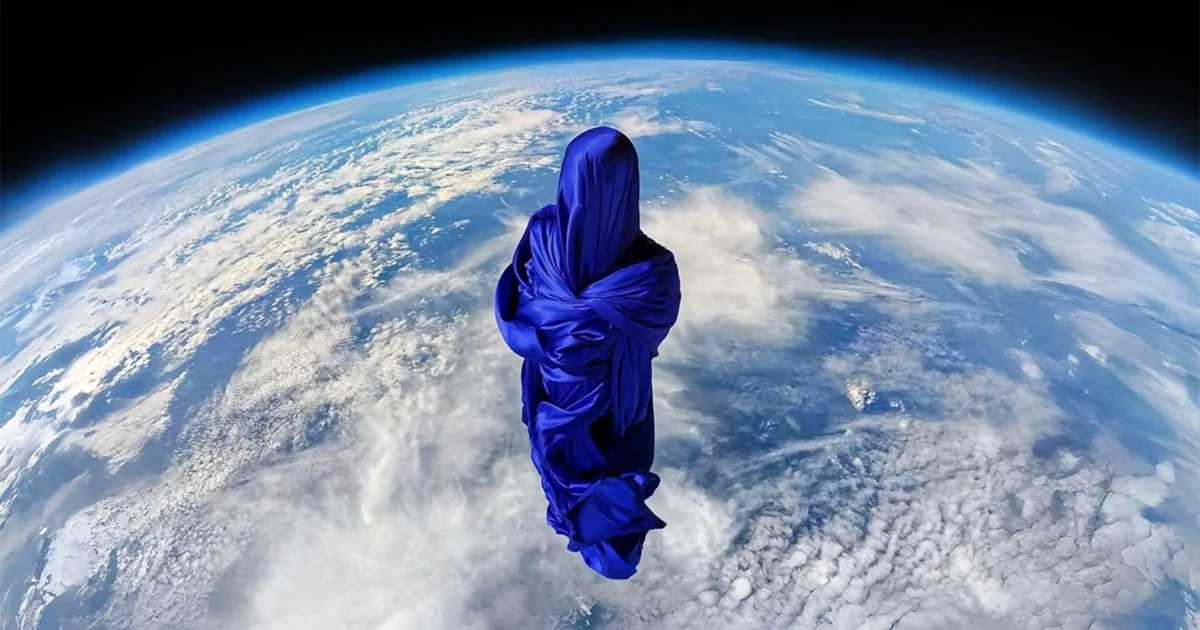
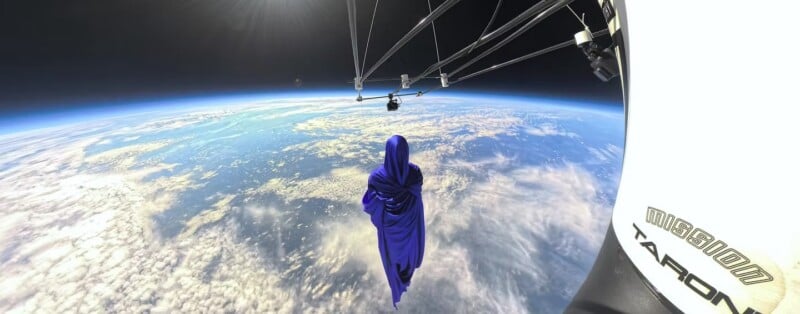
This ambitious endeavor, a collaboration between the Canadian-based Dorothy Project and the renowned Italian silk weaver Taroni, represents a significant milestone in the burgeoning field of space art. By lofting a life-sized, human-like figure draped in ethereal blue silk into the upper reaches of the atmosphere, the team has succeeded in creating a visual narrative that juxtaposes the fragility of the human form against the vast, inhospitable vacuum of the cosmos. The resulting footage, captured in ultra-high-definition 11K resolution, provides a surreal perspective on Earth, designed to provoke deep philosophical reflection on the nature of existence and environmental stewardship.
The Artistic Vision of Mission Taroni
At its core, Mission Taroni is an exploration of the intersection between material science and metaphysical inquiry. The Dorothy Project describes the mission as an invitation to rethink the human relationship with creation. By shaping matter—in this case, high-quality Italian silk—and placing it in an alien environment, the artists aim to shift the viewer’s perspective on life and the planet.
The project draws direct inspiration from the works of Christo and Jeanne-Claude, the legendary artist duo known for their massive environmental installations that "wrapped" landmarks like the Reichstag in Berlin and the Pont-Neuf in Paris. Similarly, Mission Taroni wraps a conceptual human silhouette in fabric, but instead of a terrestrial landmark, the backdrop is the curvature of the Earth and the "infinite blackness" of space.
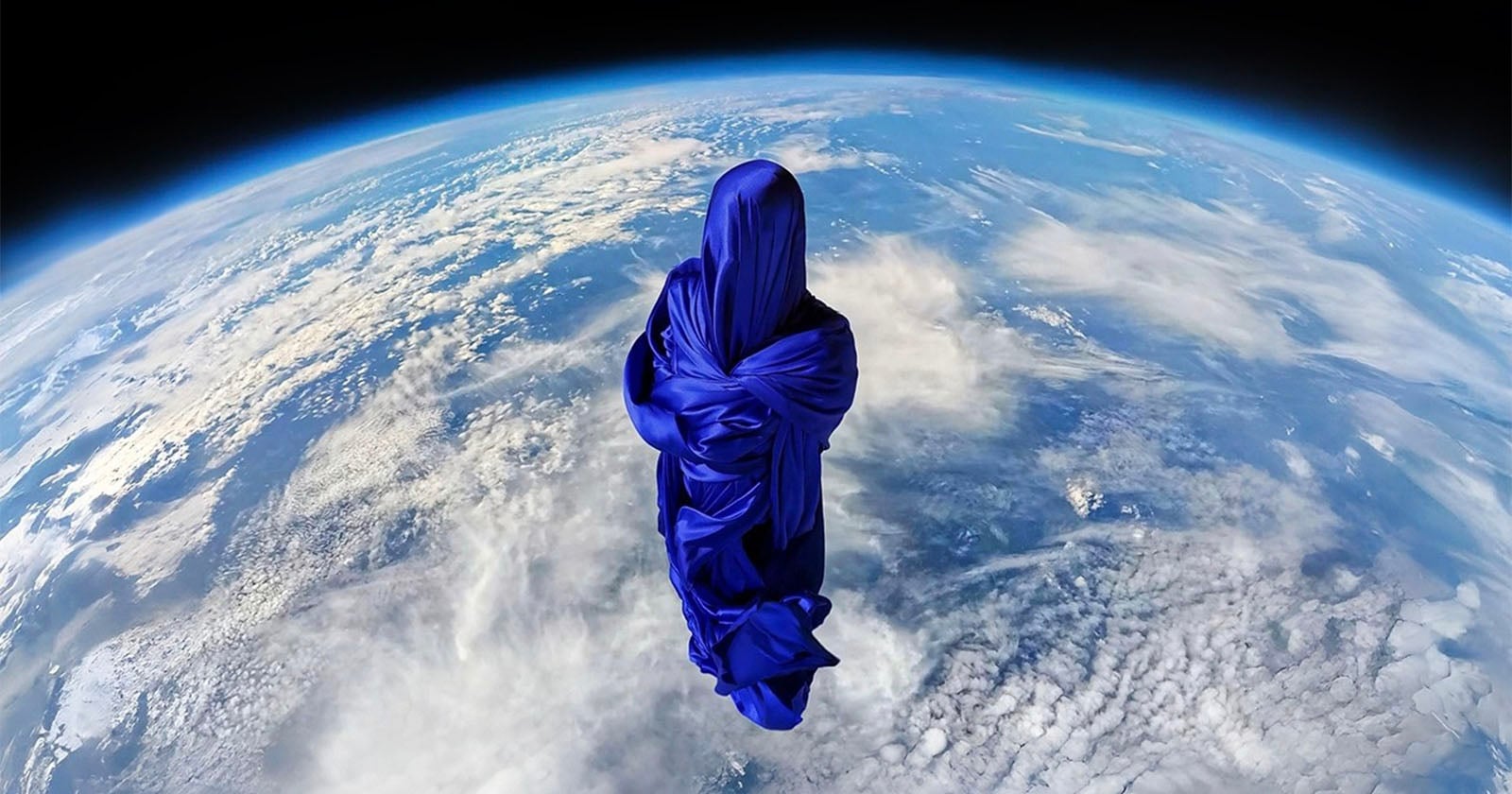
According to spokespeople for The Dorothy Project, the silhouette serves as a "ghostly" reminder of the ephemeral nature of the human body. When viewed alongside a planet that is the result of 3.5 billion years of evolution, the contrast highlights what the team calls "cosmic insignificance." However, this insignificance is paired with a call for collective responsibility, urging viewers to recognize the Earth as our only habitat and to protect the living beings that reside within it.
Technical Engineering and the Dorothy 8 Rig
Achieving these cinematic results required more than just artistic vision; it necessitated rigorous aerospace engineering. The centerpiece of the mission’s hardware is the "Dorothy 8" rig, a custom-engineered platform that took eight months of intensive research and development to bring to fruition.
The structure is a 24-kilogram (52-pound) aluminum frame designed to withstand the violent physical stresses of a stratospheric ascent. During the launch and the eventual burst of the high-altitude balloon, the rig is capable of enduring forces up to 7Gs. This level of durability is essential for protecting the sensitive optical equipment housed within.
The imaging suite is anchored by a heavily modified Insta360 Titan, a professional-grade cinematic VR camera. The Titan is known for its eight Micro Four Thirds sensors, which allow for the capture of 11K monoscopic or 10K 3D video. To provide additional angles and backup footage, the team also integrated two Insta360 X4 cameras and an Insta360 Ace Pro 2. This multi-camera array ensures a full 360-degree field of view, allowing viewers to see the silk sculpture and the Earth simultaneously without any blind spots.
To ensure the mission’s success in the face of hardware failure, the Dorothy 8 rig is controlled by dual redundant onboard computers. These systems operate in parallel; should the primary computer experience a malfunction due to cosmic radiation or extreme cold, the secondary system is designed to take over seamlessly, ensuring that data logging and camera control remain uninterrupted.
Overcoming the Extremes of the Stratosphere
Operating electronics at an altitude of 20 miles (approximately 32 kilometers) presents a host of environmental challenges that would render standard consumer equipment useless. At this height, the atmosphere is thin, offering little protection from the sun’s thermal radiation, while the ambient temperature remains well below freezing.
One of the most critical engineering feats of Mission Taroni was the implementation of thermal management. The cameras and the rig were treated with a specialized space-grade coating, the same material used by engineers on the International Space Station (ISS). This coating is vital for managing the "thermal swing"—the difference in temperature between the side of the rig facing the sun and the side in the shade.
In the stratosphere, this swing can reach a staggering 120 degrees Celsius (248 degrees Fahrenheit). Without the specialized paint to optimize thermal absorption and emission, the cameras would either overheat and shut down or freeze and suffer permanent sensor damage. The coating allows the rig to maintain a stable internal temperature, preserving the integrity of the high-bitrate video files being recorded to the onboard storage.
Inspiring the Overview Effect
A primary objective of the Dorothy Project is to recreate and share the "Overview Effect." This term, coined by space philosopher Frank White in 1987, describes the cognitive shift reported by many astronauts during spaceflight. When viewing the Earth from orbit, astronauts often experience a profound sense of "worldview shift," characterized by an overwhelming realization of the planet’s fragility, the lack of visible borders, and the necessity for global unity.
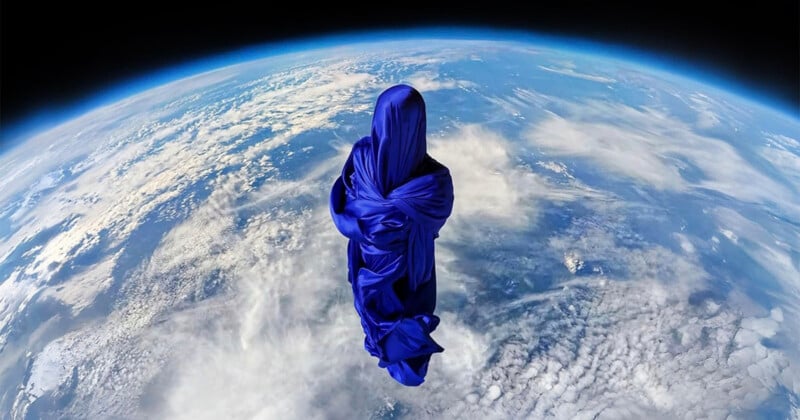
By placing a human-like figure in the frame, Mission Taroni provides a sense of scale and relatability that traditional satellite imagery lacks. The "dancing" motion of the silk, caught in the subtle vibrations and air currents of the upper atmosphere, mimics the fluid movements of a human diver or dancer. This visual tether allows the audience to project themselves into the scene, potentially triggering a version of the Overview Effect from the comfort of their own screens.
The project leaders believe that by making this experience accessible to the public through immersive media, they can foster a more empathetic and environmentally conscious global society. The footage is not merely intended for short-form social media consumption but is being prepared for use in high-end documentaries and immersive science-fiction films, where its 11K resolution can be fully appreciated on large-format screens.
Chronology of Development and Previous Milestones
Mission Taroni is the latest evolution in a series of high-altitude tests conducted by the Dorothy Project. The timeline of the project shows a steady progression in both technical capability and artistic complexity:
- Early R&D Phase: The team spent several years experimenting with high-altitude ballooning and stabilization platforms to minimize the "shimmer" and "shake" often associated with stratospheric footage.
- October 2025: The Dorothy Project successfully deployed an 11K ultra-high-definition 360-degree camera system to the edge of space. This mission served as a proof-of-concept for the imaging technology, capturing what experts described as some of the most precise images of the Earth’s curvature ever recorded at that altitude.
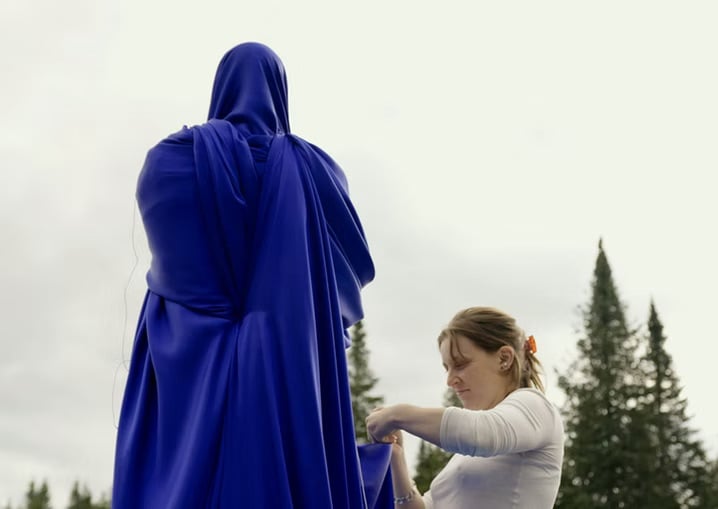
- The Taroni Partnership: Following the success of the 2025 launch, the team partnered with Taroni to introduce the element of "material art." Taroni, a company with a long history of providing silk for high-fashion houses in Italy, provided a fabric that was both lightweight enough for the flight and visually striking enough to catch the light at high altitudes.
- Mission Taroni Launch: The most recent mission integrated the human-like sculpture and the Dorothy 8 rig, marking the culmination of eight months of specific development for this installation.
Broader Implications for Art and Science
The success of Mission Taroni highlights a growing trend where private artistic collectives utilize aerospace technology to create "space-based" content. As launch costs decrease and camera technology becomes more robust, the stratosphere is becoming a new canvas for creative expression.
From a scientific perspective, the mission provides valuable data on how consumer-grade camera sensors, albeit modified, perform in near-space conditions over extended periods. The use of the Insta360 Titan in such an environment demonstrates the potential for high-resolution VR to be used in future meteorological or atmospheric research missions, providing a more "human" view of weather patterns and atmospheric layers.
From a cultural perspective, the Dorothy Project’s work sits at the vanguard of "New Space" aesthetics. It moves away from the purely utilitarian or military-industrial imagery of the 20th-century space race and toward a more poetic, inclusive, and reflective use of the heavens. By superimposing art onto the planet, the mission asks a fundamental question: If we can reach the stars, what are we bringing with us? The answer provided by Mission Taroni is a blend of heritage (the Italian silk), technology (the 11K cameras), and a renewed sense of wonder.
The footage and photographs from Mission Taroni are expected to be featured in upcoming international exhibitions and film festivals. As the Dorothy Project continues its work, it remains focused on the power of the image to transform human consciousness, using the edge of space as the ultimate gallery.
