


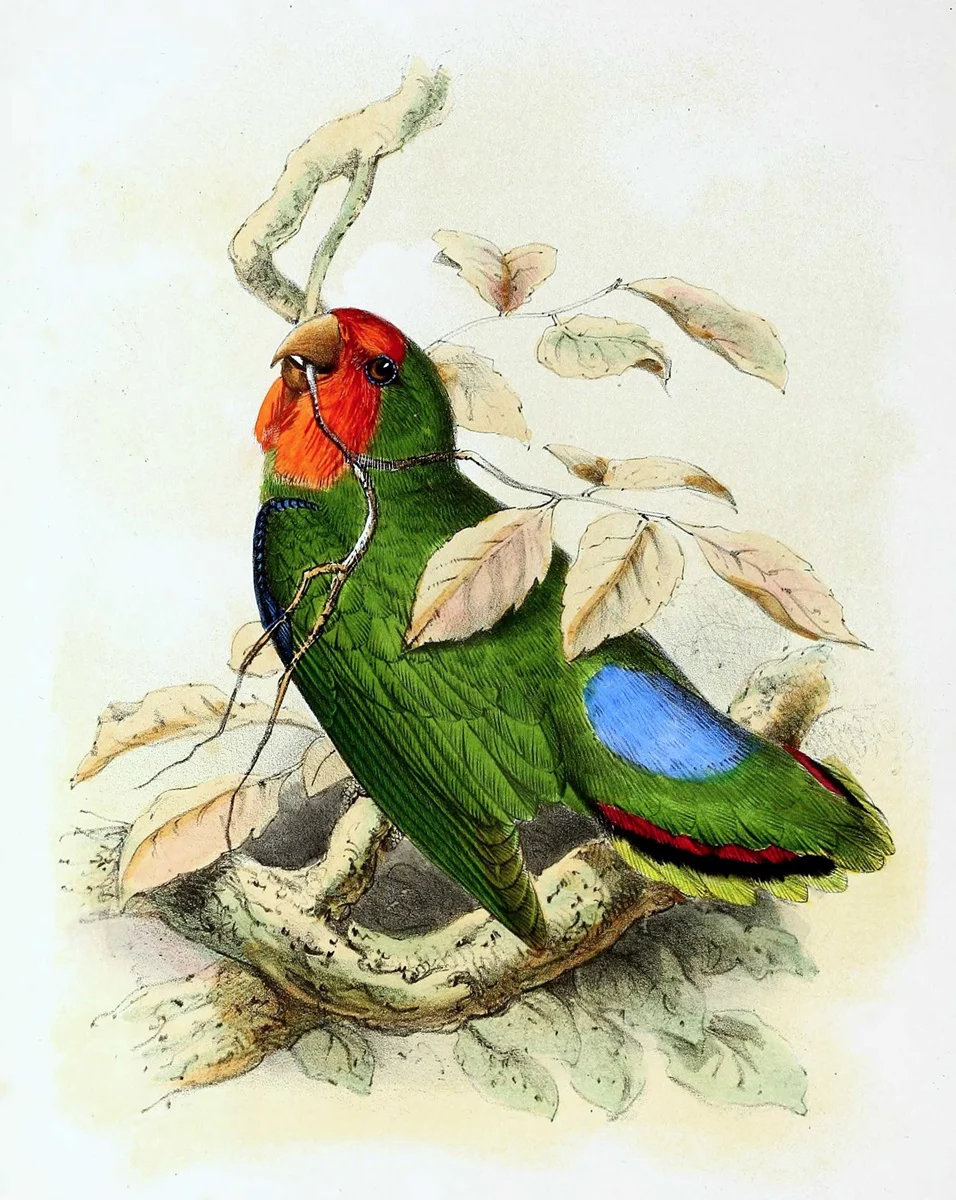
The Agapornis pullarius, more commonly known as the Red-headed Lovebird or Red-faced Lovebird, stands as a captivating yet often overlooked member of the popular lovebird genus. Unlike many of its congeners, which have achieved widespread fame as companion parrots, this species remains a rarity in aviculture, primarily due to its inherently stress-prone nature and specific environmental requirements. This comprehensive overview delves into the natural history, ecological challenges, and intricate avicultural considerations surrounding this distinctive African parrot, offering insights into its unique place within both the wild ecosystem and the specialized world of ornithology.
Nomenclature and Classification: The Lovebird Lineage
The genus Agapornis, derived from the Greek words ‘agape’ (love) and ‘ornis’ (bird), aptly describes the strong pair bonds exhibited by these small, social parrots. Comprising nine distinct species, eight of which are native to the African continent and one to Madagascar, lovebirds are renowned for their vibrant plumage, energetic demeanor, and complex social interactions. Among these, Agapornis pullarius occupies a unique niche. Its scientific name, pullarius, is believed to refer to its "chicken-like" or "pullet-like" appearance, perhaps alluding to its robust, compact form. While other lovebird species like the Peach-faced Lovebird (Agapornis roseicollis) and Fischer’s Lovebird (Agapornis fischeri) have become staples in the pet trade due to their adaptability and charming personalities, the Red-headed Lovebird presents a far greater challenge for captive environments.
Natural Habitat and Geographic Distribution
The Red-headed Lovebird’s natural range spans a broad, albeit patchy, band across tropical sub-Saharan and Central Africa. Its distribution extends from western nations like Guinea, Sierra Leone, Liberia, Ivory Coast, Ghana, Togo, and Benin, eastward through Nigeria, Cameroon, the Central African Republic, Congo, the Democratic Republic of Congo, Uganda, and reaching as far as Ethiopia. This expansive territory underscores its adaptability to various microclimates within its preferred habitat type.
Primarily a denizen of tropical lowland savannahs, A. pullarius favors open woodlands, clearings, and the edges of primary forests rather than dense, unbroken canopy. It thrives in areas characterized by scattered trees, particularly oil palm plantations and cultivated lands, which paradoxically contribute to both its survival and its conflict with human populations. The species is largely sedentary within its range, though local movements may occur in response to food availability or seasonal changes. Red-headed Lovebirds typically travel in pairs or small flocks, occasionally gathering in groups of a few dozen birds. They are generally found at altitudes below 2,000 meters (approximately 6,550 feet), preferring the lower elevations of their tropical environments. Their reliance on specific tree species for roosting and foraging, coupled with their preference for open areas, defines their ecological niche.
Conservation Status and Escalating Threats
Despite its wide distribution, the International Union for Conservation of Nature (IUCN) Red List currently classifies Agapornis pullarius as a species of "Least Concern." However, this broad classification can be misleading, as the IUCN itself acknowledges that the species is locally uncommon throughout much of its natural range. Recent data and expert observations suggest a worrying trend: the global population is unfortunately likely decreasing. This decline is attributed to a confluence of significant anthropogenic pressures, posing a long-term threat to the species’ viability.
Foremost among these threats is habitat destruction. Rapid deforestation driven by agricultural expansion, logging, and urbanization across Central and West Africa directly encroaches upon the Red-headed Lovebird’s preferred savannah and woodland habitats. As pristine environments are converted into farmland or human settlements, the birds lose critical nesting sites, food sources, and safe roosting areas.

Another significant challenge arises from conflict with agricultural communities. As a predominantly seed-eating species, Agapornis pullarius frequently targets agricultural crops, particularly millet, oil palm, and various cultivated grains. This behavior leads to its perception as a pest by local farmers, resulting in culling and other deterrent measures that further impact population numbers. The economic necessity of crop protection often outweighs conservation concerns at the local level.
Perhaps one of the most insidious threats is the capture for the illegal pet trade. While rarely seen in mainstream aviculture, a substantial number of Red-headed Lovebirds have historically been extracted from the wild for the exotic bird market. A sobering 2018 study highlighted that almost 40,000 Red-headed Lovebirds were exported from their native ranges since 1975. This large-scale removal of individuals, often through unsustainable trapping methods, places immense pressure on wild populations, particularly when combined with high mortality rates during capture and transport. The global demand for exotic pets, even for species considered "difficult" to keep, continues to fuel this illicit trade.
Parr & Juniper (2010), in their authoritative work "Parrots: A Guide to Parrots of the World," corroborate these concerns, stating: "Abundance also varies owing to nomadic habits, but a genuine overall decline appears to have occurred in many areas this century. Trapped for live bird trade with large numbers in captivity outside range." This observation underscores the complex interplay of natural population dynamics and human-induced pressures. While the species is listed on CITES Appendix II, meaning international trade is regulated to prevent overexploitation, enforcement challenges and the existence of black markets continue to undermine these protective measures. The long-term implication is that while the species may not face immediate extinction, its localized declines could lead to fragmentation and genetic isolation, increasing its vulnerability to future environmental shifts.
Physical Characteristics and Identification
The Red-headed Lovebird is a visually striking parrot, small in stature but vibrant in coloration. Adults typically measure up to 15 cm (6 inches) in length and weigh around 45 grams, making them one of the smaller lovebird species. Their plumage is dominated by a brilliant emerald green on the body, providing excellent camouflage amidst the foliage of their natural habitat. The most distinguishing feature, from which it derives its common name, is the vivid scarlet red that adorns the face and extends over the crown and nape, creating a striking mask. This vibrant red also colors the beak, which is relatively stout and sharply curved. A dash of iridescent blue is present on the lower back and rump, while the tail feathers exhibit a small band of red, adding another layer of complexity to its aesthetic.
Sexual dimorphism is a notable characteristic in Agapornis pullarius, allowing for visual differentiation between males and females. While males display an intense, almost fiery scarlet on their faces and beaks, females exhibit a paler, more orange-red hue. This difference, though subtle, is consistent and serves as a reliable indicator for experienced observers.
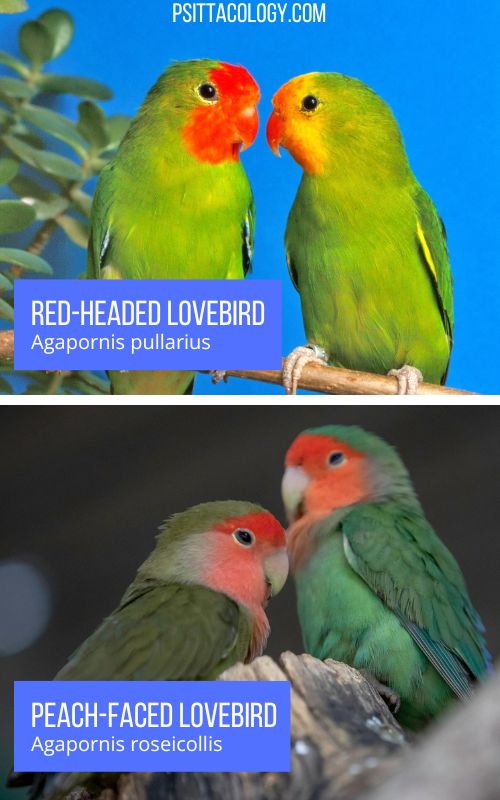
The Red-headed Lovebird shares some superficial similarities with the more commonly encountered Peach-faced Lovebird (Agapornis roseicollis). However, careful observation reveals key distinctions. While A. roseicollis features a prominent peach-colored mask, its beak is typically a pale beige or horn color, contrasting sharply with the bright red beak of A. pullarius. This beak coloration is arguably the most straightforward diagnostic feature.
Two subspecies of the Red-headed Lovebird are recognized:
- Agapornis pullarius pullarius: The nominate subspecies, found throughout most of the species’ range.
- Agapornis pullarius ugandae: Found in parts of Uganda and neighboring areas, characterized by minor differences in plumage coloration, often a slightly darker green body, and potentially a more restricted red on the face. These distinctions are subtle and often require close examination.
Diet and Foraging Behavior in the Wild
Like many psittacine species, Red-headed Lovebirds are primarily granivorous, with a strong preference for grass seeds. Their diet in the wild is diverse and opportunistic, adapting to seasonal availability of food resources. They are particularly fond of the seeds of various wild grasses, which constitute a significant portion of their daily intake. Their feeding habits extend to cultivated crops, making them a perceived pest in agricultural regions. Millet, a staple grain in many African countries, is a favored food source, leading to direct conflict with farmers.

Beyond seeds, these lovebirds supplement their diet with a variety of wild fruits, including figs and guava, when available. They may also consume berries, flower nectar, and occasionally insects or their larvae, particularly during breeding seasons when increased protein is required. Their foraging behavior involves deftly plucking seeds from grass heads, often clinging to slender stalks, or feeding on fallen fruits. The specific composition of their diet can vary geographically, reflecting the local flora.
Aviculture: The Red-headed Lovebird in Captivity
The Red-headed Lovebird stands in stark contrast to its more common Agapornis cousins within the avicultural world. It is rarely kept as a pet and is primarily found in the collections of highly dedicated and experienced parrot enthusiasts or specialized zoos, often within conservation breeding programs. The main impediment to its widespread popularity is its exceptionally nervous and stress-prone disposition. Wild-caught individuals, in particular, are notorious for succumbing to stress, sometimes dying from seemingly minor disturbances such as sudden loud noises, unfamiliar environments, or the presence of boisterous cage mates. This sensitivity makes them unsuitable for typical companion parrot roles, as they rarely become tame or enjoy human interaction. The emphasis for A. pullarius in captivity is strictly "look, but don’t touch."
Housing Requirements:
For those few experienced aviculturists who successfully acquire captive-bred Red-headed Lovebirds, providing an appropriate housing environment is paramount. A heated aviary is ideal, offering ample space for flight and exploration while protecting them from temperature fluctuations. Given their stress-prone nature, solitary housing or keeping them in extremely compatible, established pairs is often recommended to minimize inter-bird aggression or anxiety. If housed in a mixed-species aviary, careful consideration must be given to selecting only the most docile and quiet neighbors, as any disruption can trigger severe stress.
For indoor keeping, a generously sized cage is essential, with dimensions of at least 80 cm (30 inches) wide, ensuring sufficient room for movement. Bar spacing should be narrow, around 1.25 cm (0.5 inches), to prevent escape or injury. The cage interior must be furnished with a variety of natural wood perches of varying diameters, promoting foot health and exercise. Providing privacy elements, such as dense foliage or secluded nesting boxes, can also help reduce stress.
Captive Diet:
Historically, many Red-headed Lovebird keepers have relied on dry or sprouted seed mixes. However, in line with modern avian veterinary recommendations for most parrot species, a high-quality pelleted diet is now considered the superior nutritional foundation. Pellets offer a balanced and complete dietary profile, mitigating the selective feeding habits often observed with seed mixes.
Supplementing the daily pellet intake, a diverse array of fresh foods is crucial. This includes an abundance of fresh vegetables, particularly leafy greens (kale, spinach, romaine), bell peppers, carrots, broccoli, and peas. A moderate amount of fresh fruits, such as apples, berries, and citrus, can also be offered. Sprouted seeds are excellent for their nutritional value and digestibility. Cooked grains (e.g., quinoa, brown rice) and select foraged weeds (e.g., dandelion greens, chickweed, plantain, ensuring they are pesticide-free) can further enrich the diet. During breeding seasons or periods of high energy expenditure, additional protein sources like boiled egg or mealworms are highly beneficial. Constant access to fresh, clean water is non-negotiable.
Enrichment:
Due to their intelligence and propensity for boredom, enrichment is critical for the mental and physical well-being of Red-headed Lovebirds. However, given their extreme sensitivity to stress, new items must be introduced gradually and thoughtfully to avoid startling them.
Essential enrichment elements include:
- Chew Toys: An ample supply of natural branches (e.g., eucalyptus, willow, apple wood) for chewing helps maintain beak health and provides mental stimulation.
- Foraging Opportunities: Hiding food in puzzle toys or within natural substrates encourages natural foraging behaviors, preventing boredom and promoting activity.
- Bathing: Regular opportunities for bathing, either through a shallow water dish or misting, are important for feather health.
- Privacy: Providing secluded spots within the aviary or cage allows the birds to retreat when feeling stressed or overwhelmed.
- Variety: Regularly rotating toys and perches, while introducing new items cautiously, keeps their environment stimulating without causing undue anxiety.
Noise Level:
Compared to many other parrot species, the Red-headed Lovebird is considered relatively quiet. Its calls are generally shrill but not excessively loud or continuous. However, like all psittacines, they can become vocal when agitated, alarmed, or seeking attention, and their shrill calls can be piercing in such instances. Recordings of their vocalizations can be explored on platforms like Xeno-Canto to understand their auditory characteristics better.
Reproduction and Breeding Challenges
In their wild habitat, Red-headed Lovebirds time their breeding activities to coincide with the rainy season, when food resources are most abundant. Their nesting habits are particularly distinctive and contribute significantly to their difficulty in captive breeding. Unlike many parrots that favor tree hollows, A. pullarius primarily nests in arboreal (tree-dwelling) termite or ant nests. The female meticulously burrows into these large, robust structures, excavating a cavity and then reinforcing it with plant materials like grass leaves to create a secure nest chamber. Occasionally, they may also utilize ground nests or abandoned woodpecker hollows. Once the nest is prepared, the female typically lays a clutch of up to six eggs.
The unique nesting preference and the species’ inherent nervousness make successful captive breeding of Red-headed Lovebirds notoriously challenging. Replicating the precise conditions of a termite mound, which offers specific thermal insulation and structural integrity, is difficult. Dedicated aviculturists have experimented with various solutions, with some success reported using nest boxes constructed from cork, which mimics some of the natural insulation and burrowing opportunities. The interview with successful breeder Dominique Veeckmans highlights the specialized knowledge and persistence required. Even with optimized conditions, low fertility rates, chick mortality, and parental abandonment remain common issues, underscoring the delicate balance needed to encourage reproduction in this sensitive species.
The Broader Context: Lovebirds, Pet Trade, and Conservation
The story of the Red-headed Lovebird serves as a poignant reminder of the complex relationship between humans and wildlife. While other lovebird species have thrived in aviculture, becoming symbols of companionship and beauty, Agapornis pullarius remains a species best appreciated in its natural habitat or by highly specialized experts. Its continued decline in the wild due to habitat loss, agricultural conflict, and the persistent illegal pet trade highlights the urgent need for robust conservation strategies.
These strategies must encompass habitat protection, sustainable land management practices that mitigate human-wildlife conflict, and stringent enforcement against illegal wildlife trade. For the avicultural community, the emphasis must shift towards supporting captive-bred populations of species that genuinely thrive in human care, thereby reducing the demand for wild-caught birds. Responsible aviculture can play a role in conservation by establishing viable breeding programs for endangered species and by educating the public about the challenges faced by sensitive species like the Red-headed Lovebird.
In conclusion, the Red-headed Lovebird, Agapornis pullarius, is a testament to nature’s intricate design—a small parrot of striking beauty and profound ecological significance. Its unique adaptations, coupled with its vulnerability to human pressures, underscore the critical importance of understanding and protecting species that may not fit neatly into conventional avicultural molds. Its future hinges on a concerted global effort to safeguard its natural environment and to promote a more ethical and sustainable approach to our interactions with the world’s diverse avian fauna.
