


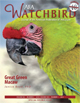
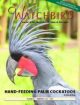
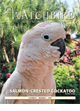
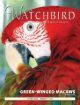
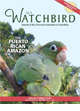
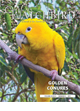
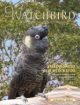
The American Federation of Aviculture (AFA) has completed a monumental archival project, documenting over four decades of avian science, husbandry, and conservation through its flagship publication, Watchbird. This digital repository, spanning from the inaugural issue in 1974 to the combined volumes of 2014 and 2015, serves as a primary historical record for the global avicultural community. By centralizing these records, the AFA provides a longitudinal view of the evolution of captive bird management, the development of avian veterinary medicine, and the shifting landscape of international wildlife legislation. The archive, which includes Volume 1 through Volume 42, represents the collective wisdom of thousands of researchers, veterinarians, and professional breeders, offering an unparalleled resource for modern ornithologists and conservationists.
Historical Context and the Founding of the AFA
To understand the significance of the Watchbird archive, one must look at the climate of the early 1970s. During this period, the United States faced significant challenges regarding the importation of exotic birds, exacerbated by the outbreak of Exotic Newcastle Disease (END). The resulting government-mandated depopulation of thousands of birds and the temporary cessation of imports created a crisis for bird keepers and breeders. In 1974, a group of dedicated individuals formed the American Federation of Aviculture to provide a unified voice for bird owners and to promote the welfare of birds through education and captive breeding.

Watchbird was established as the primary vehicle for this education. The first volume, published in 1974, was a modest but vital step toward professionalizing the hobby. At its inception, the magazine focused heavily on basic husbandry and the immediate need to establish self-sustaining captive populations to offset the reliance on wild-caught imports. As the archive demonstrates, the publication quickly evolved from a newsletter-style format into a sophisticated journal that bridged the gap between academic ornithology and practical aviculture.
Chronological Evolution of Avicultural Science
The Watchbird archive is structured into distinct eras that reflect the broader trends in the scientific and legislative communities. By analyzing the progression from Volume 1 to Volume 42, researchers can track the maturation of the field.
The Formative Years (1974–1979)
Volumes 1 through 6 characterize an era of discovery and crisis management. Articles from this period frequently addressed the mechanics of quarantine, the basics of parrot nutrition, and the initial efforts to breed species that were then common in the pet trade but poorly understood biologically. The 1974 issues (Vol. 1, No. 1 and 2) are particularly significant as they established the AFA’s mission: to ensure that aviculture remains a viable and respected endeavor through the sharing of data.

The Expansion of Captive Breeding (1980–1989)
Throughout the 1980s (Volumes 7 through 16), the archive reveals a surge in successful captive breeding reports. This decade saw the introduction of more sophisticated incubation technologies and the refinement of hand-rearing techniques. The magazine began to feature detailed "first breeding" accounts, which were essential for establishing protocols for rare species. It was also during this time that the AFA began to take a more active role in legislative affairs, documenting the impact of the Convention on International Trade in Endangered Species of Wild Fauna and Flora (CITES) on the avicultural community.

The Rise of Avian Medicine (1990–1999)
Volumes 17 through 26 represent a turning point in the professionalization of avian veterinary care. During the 1990s, Watchbird became a critical platform for veterinarians to share findings on emerging diseases such as Psittacine Beak and Feather Disease (PBFD) and Proventricular Dilatation Disease (PDD). The archive shows an increasing number of peer-reviewed-style articles focusing on anatomy, physiology, and surgical techniques. This decade also saw the passage of the Wild Bird Conservation Act (WBCA) of 1992, an event heavily documented and debated within the pages of the magazine.
The Conservation and Digital Transition (2000–2015)
In the new millennium (Volumes 27 through 42), the focus of Watchbird shifted significantly toward global conservation initiatives. The AFA began funding more in-situ projects, and the magazine reflected this by publishing reports from field researchers working in Central and South America, Africa, and Australasia. The final volumes in the archive, particularly the 2014-2015 combined issues (Vol. 41 & 42), illustrate the integration of modern genetics into aviculture and the increasing importance of digital data sharing.
Supporting Data and Technical Contributions
The Watchbird archive contains more than 200 individual issues, representing tens of thousands of pages of technical data. A statistical analysis of the archive’s content reveals several key areas of contribution:

- Species Profiles: Over 500 unique avian species have been profiled, with detailed information on their natural history, dietary requirements, and reproductive behaviors.
- Veterinary Research: The archive contains hundreds of clinical reports that have contributed to the standard of care in avian medicine today.
- Legislative Tracking: Watchbird has maintained a continuous record of federal and state regulations affecting bird ownership, providing a historical roadmap of animal rights and welfare legislation in the United States.
- Conservation Funding: Through the promotion of the AFA’s conservation grants, the magazine has helped facilitate the distribution of hundreds of thousands of dollars to protect endangered species in the wild.
The data found in the 1980s volumes regarding the diet of psittacines, for example, laid the groundwork for the development of formulated pellet diets, which have significantly increased the lifespan of captive birds. Similarly, the documentation of DNA sexing techniques in the early 1990s volumes revolutionized the breeding of monomorphic species, allowing for more efficient and successful conservation programs.
Inferred Industry Reactions and Professional Impact
While the archive itself is a factual repository, the implications of its release have resonated throughout the scientific community. Leading aviculturists and ornithologists have long advocated for the preservation of these records. The consensus among related parties is that the Watchbird archive is not merely a collection of "hobbyist" articles, but a critical secondary source for biological data.
Experts in the field suggest that the availability of these older volumes allows modern researchers to avoid "reinventing the wheel." For instance, a researcher working on the recovery of the Thick-billed Parrot can look back at the 1970s and 1980s issues of Watchbird to find detailed observations from individuals who worked with the species when it was more common in captive settings. The inferred reaction from the academic community is one of appreciation for the AFA’s commitment to maintaining the integrity of these historical records.
Furthermore, the archive serves as a defense against the loss of specialized knowledge. As the founding generation of modern aviculture ages, the written records they left in Watchbird become the primary means of transferring their expertise to younger generations.

Broader Impact and Future Implications
The digitization of the Watchbird archive from 1974 to 2015 has several far-reaching implications for the future of bird conservation and management.
Educational Resource for New Professionals
For students of veterinary medicine and zoology, the archive provides a case study in the evolution of a scientific discipline. It offers a transparent look at how theories are tested, how mistakes are corrected, and how consensus is reached within a specialized community.
Benchmarking Conservation Progress
By comparing the status of species as reported in the 1970s with their status today, conservationists can use the archive to benchmark the success of various recovery programs. Species that were once listed as "frequent" in the early volumes may now be "critically endangered," highlighting the urgent need for the very captive breeding programs the AFA has championed for decades.

Legislative and Advocacy Tool
The archive provides a factual basis for advocacy. When new regulations are proposed, the AFA and other organizations can point to forty years of documented success in captive breeding and responsible ownership to argue for balanced legislation that protects both birds and the rights of those who care for them.
Bridging the Gap Between In-Situ and Ex-Situ Conservation
The Watchbird archive reinforces the "One Plan Approach" to conservation, which integrates captive breeding (ex-situ) with wild population management (in-situ). The publication has consistently argued that these two fields are not mutually exclusive but are, in fact, essential partners in preventing avian extinction.

Conclusion
The AFA Watchbird digital archive is a testament to the dedication of the American Federation of Aviculture to its founding principles. By preserving Volume 1 through Volume 42, the organization has ensured that four decades of hard-won knowledge will remain accessible to those who seek to understand and protect the world’s avian species. As the archive moves into the future, it continues to serve as a vital link between the history of aviculture and the ongoing efforts to ensure a future for birds in both the wild and in human care. The project stands as a definitive resource for anyone dedicated to the science and art of aviculture, providing a comprehensive foundation for the next generation of avian stewards.
