


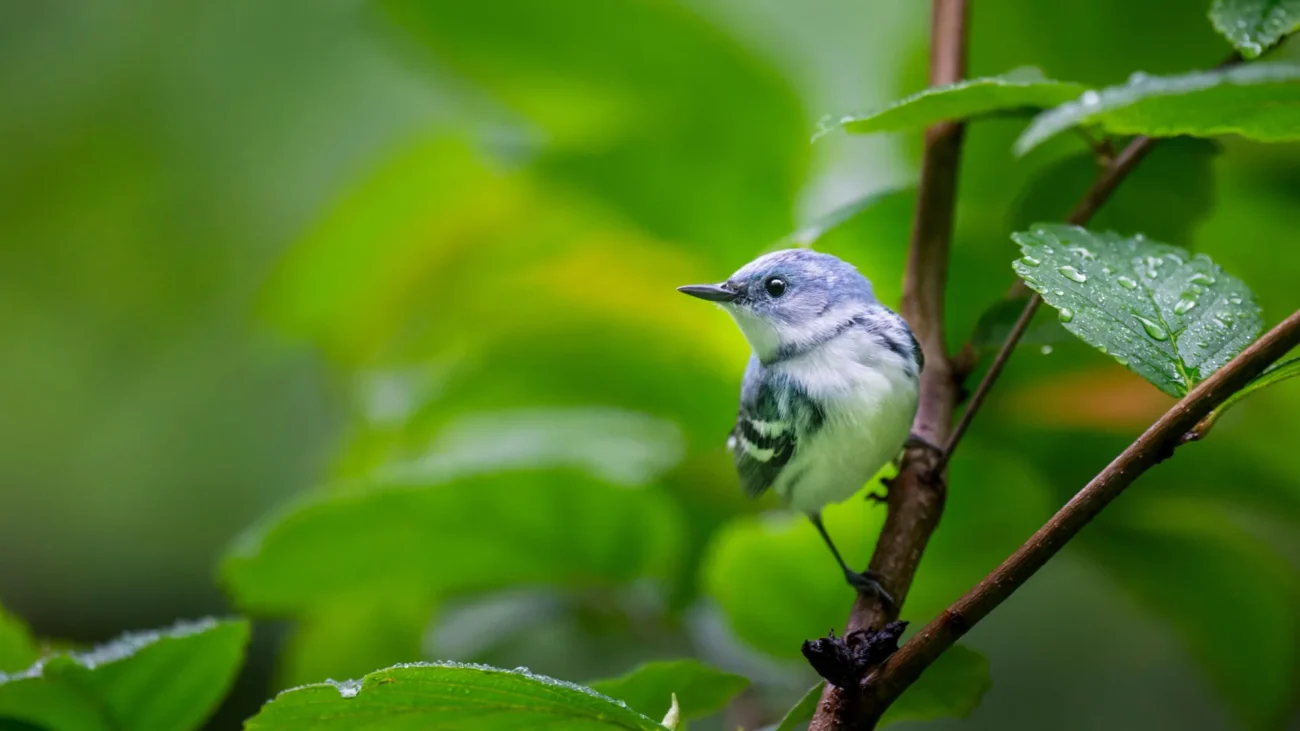
The familiar melodies of Wood Thrushes and a vibrant chorus of warblers returning to parks and backyards across eastern North America each spring belie a profound dependency on distant lands. For the majority of their annual cycle, these beloved avian travelers rely on the dense, often remote, and increasingly imperiled forests of Central America. A landmark study, meticulously compiled by the Wildlife Conservation Society (WCS) and the Cornell Lab of Ornithology (Cornell Lab), underscores the irreplaceable role these vital ecosystems play in sustaining migratory bird populations that bridge two continents. Published in the esteemed journal Biological Conservation, the research highlights the urgent need for conservation efforts that extend far beyond national borders.
The Five Great Forests: A Crucial Wintering Ground and Migratory Superhighway
The study focuses on a critical ecological corridor, encompassing what are known as the Five Great Forests of Central America. This vast expanse, stretching from the southern reaches of Mexico through Guatemala, Belize, Honduras, Nicaragua, Costa Rica, Panama, and into northern Colombia, forms an unbroken chain of vital habitat. Collectively, these forests are not merely tropical wilderness; they represent a crucial nexus for avian migration, a lifeline that sustains a significant portion of North America’s migratory bird species for more than half of the year. Researchers utilized an unprecedented dataset, drawing from millions of bird sightings meticulously logged by citizen scientists and ornithologists on the Cornell Lab’s global eBird platform. This granular, weekly distribution data allowed for an unparalleled understanding of how these birds utilize these Central American landscapes.
The findings reveal a staggering concentration of avian life. The research indicates that these Five Great Forests collectively provide essential habitat for an estimated one-tenth to nearly one-half of the global populations of 40 distinct migratory species. This is particularly concerning given that many of these species are among the fastest declining bird populations in North America, facing a precarious future.
Anna Lello-Smith, a lead author of the study and a conservation scientist at WCS, emphasized the direct causal link between events in Central America and the health of North American bird populations. "What happens in Central America directly affects the birds we love in the United States and Canada," Lello-Smith stated. "These forests aren’t just tropical wilderness — they’re at the heart of migration, sustaining many of our birds for more than half the year. They provide the food and shelter that allow Wood Thrushes, Magnolia Warblers, and so many others to return north to fill our spring with song and color."
The five key forest regions identified are:
- Selva Maya: Spanning parts of Mexico, Guatemala, and Belize, this ancient forest is a biodiversity hotspot.
- Moskitia: Located in Honduras and Nicaragua, this vast lowland rainforest is renowned for its immense ecological significance.
- Indio Maíz-Tortuguero: This transboundary region between Nicaragua and Costa Rica encompasses vital wetlands and rainforests.
- La Amistad: A UNESCO World Heritage site straddling Costa Rica and Panama, it showcases incredible altitudinal diversity.
- Darién: The easternmost stretch of Panama, bordering Colombia, this region is a critical bottleneck for migratory species.
Together, these contiguous forest systems create an ecological corridor of roughly 250,000 square kilometers, a size comparable to the state of Virginia. Beyond migratory songbirds, these forests are also critical refuges for iconic species such as jaguars, tapirs, and scarlet macaws, underscoring their broader importance for global biodiversity. For birds undertaking arduous migrations spanning thousands of miles, these forests serve as indispensable resting and wintering grounds, providing the energy reserves necessary for their arduous journeys.
Viviana Ruiz-Gutierrez, Director of Conservation Science at the Cornell Lab of Ornithology and a co-author of the study, described the sheer density of migratory birds within these areas. "Every fall, billions of birds pour south through the narrow land bridge of Central America," Ruiz-Gutierrez remarked. "The density of migratory warblers, flycatchers, and vireos crowded into these five forests is astounding, and means that each hectare protected there safeguards a disproportionate number of birds."
A Looming Crisis: Rapid Deforestation Threatens Critical Habitat
Despite their immense ecological value, these vital forest ecosystems are under severe threat from rapid deforestation. The primary driver of this destruction is the relentless expansion of illegal cattle ranching, which has already decimated millions of acres. The scale of this loss is staggering; in the Moskitia region alone, nearly one-third of the forest has vanished in a mere two decades. This rate of habitat loss has profound implications for the migratory species that depend on these forests.
Jeremy Radachowsky, Regional Director for WCS’s Mesoamerica Program, articulated the dire consequences of continued deforestation. "If we lose the last great forests of Central America — and we are — we lose the birds that define our eastern forests in North America," Radachowsky warned. "But by supporting rural communities, governments, and conservation partners on the ground, we can still turn the tide."
Fortunately, a growing movement of Indigenous and local communities across Central America is actively engaged in crucial conservation efforts. These communities are at the forefront of restoring damaged lands, implementing strategies to prevent forest fires, and reviving traditional, bird-friendly livelihoods such as sustainable allspice and cacao production. These endeavors are often undertaken at significant personal risk, yet they remain absolutely essential for preserving the remaining forest habitats.
"Imagine the possibility of linking with those efforts," urged Ruiz-Gutierrez, highlighting the potential for amplified impact. "So that we can work together across the Americas to bring back our shared migratory birds."
Bridging Continents: Mapping "Sister Landscapes" for Collaborative Conservation
For years, the fragmented nature of conservation efforts has been hampered by a lack of precise data detailing how migratory birds connect disparate habitats and communities throughout their annual cycles. Recognizing this critical knowledge gap, researchers have developed a framework to foster more effective cross-border conservation initiatives.
Leveraging the extensive data from eBird and the established methodologies of Partners in Flight, the research team mapped "stewardship connections." This concept identifies regions in North America where specific bird species, those dependent on the Five Great Forests for their wintering grounds, congregate to breed. These identified North American regions are now referred to as "sister landscapes," as they are inextricably linked by the same bird populations at different points in their annual migration.
The study reveals significant stewardship connections between the Five Great Forests and several key North American forest regions. These include:
- The Appalachian Mountains: A critical breeding ground for many species that winter in the Selva Maya and La Amistad.
- The Mississippi River Delta: An important migratory corridor and breeding area for species utilizing the Moskitia and Indio Maíz-Tortuguero regions.
- The Great Lakes Region: A vital breeding territory for species that spend their winters in the Darién and the westernmost parts of the Five Great Forests.
- New England: A significant breeding ground for numerous warbler species that rely on the entirety of the Five Great Forests.
- The landscapes surrounding New York City: Demonstrating how even urban-adjacent areas can be crucial breeding territories for species with extensive migratory ranges.
These "sister landscape" designations highlight a shared responsibility for the conservation of these migratory birds. What occurs in the breeding grounds of North America directly impacts the survival of birds in their wintering grounds in Central America, and vice versa.
The Intertwined Fate of Forests and Feathered Friends
In essence, the Five Great Forests of Central America function as the tropical counterparts to North America’s eastern forests. They provide sanctuary for the same suite of forest-dependent bird species, including Scarlet Tanagers, Kentucky Warblers, Golden-winged Warblers, and Broad-winged Hawks, during the months when these birds are absent from their breeding territories. The safeguarding of these crucial wintering and stopover habitats is therefore not merely a matter of regional conservation but an imperative for ensuring the continued return of these species to North America each spring.
The implications of this research are far-reaching. The study provides concrete data to support the argument that conservation investments in Central America yield disproportionately large returns for bird populations across the entire Western Hemisphere.
"Every hectare we protect in Central America has ripple effects for birds and people across the hemisphere," Lello-Smith emphasized. "The forests that sustain thrushes and warblers also support communities. If you love watching your birds come back each spring, we invite you to discover the tropical forests they call home for most of the year — and help protect them."
This sentiment underscores a crucial paradigm shift in conservation thinking: understanding that the health of ecosystems on one continent is intrinsically linked to the health of ecosystems on another. The future of North America’s spring bird song is inextricably tied to the preservation of Central America’s "Great Forests," a testament to the profound and enduring connections forged by nature’s migratory marvels. Continued international collaboration, informed by robust scientific data, is paramount to securing a future where both birds and the vital forests they depend on can thrive.
