



The Giorgi Companies, Inc., a major player in the North American mushroom and food processing industry, has officially announced a comprehensive ban on all forms of animal testing. This decision follows a series of high-level discussions with scientists and representatives from People for the Ethical Treatment of Animals (PETA). The policy change affects all subsidiaries under the corporate umbrella, including the Giorgi Mushroom Company, Giorgio Foods, Inc., and Giorgio Fresh Co. The move marks a significant shift for the Pennsylvania-based conglomerate, which had previously utilized animal-based research to validate health claims and nutritional benefits of its products.
By implementing this new directive, The Giorgi Companies has committed to a strict protocol that prohibits the conducting, commissioning, funding, or supporting of experiments on animals. The decision was reached after PETA identified what it described as "loopholes" in the company’s prior animal welfare guidelines. These loopholes had allowed for indirect support of third-party laboratory studies involving animals. In addition to the internal policy overhaul, the company has officially joined PETA’s "Eat Without Experiments" program, a certification initiative designed to help consumers identify food and beverage brands that have renounced animal experimentation in their research and development processes.
The Evolution of Corporate Research Policies
The Giorgi Companies, headquartered in Blandon, Pennsylvania, with significant operations in Wilmington, Delaware, has long been a leader in the mushroom industry. For decades, the company has invested in research to explore the medicinal and nutritional properties of fungi. However, the methods used to secure this data have come under increasing scrutiny as consumer preferences shift toward ethical sourcing and cruelty-free production.
According to reports from PETA, the dialogue between the advocacy group and the food giant began when PETA scientists reviewed publicly available research papers and corporate filings. They discovered that while The Giorgi Companies did not necessarily operate its own animal laboratories, it had provided financial backing and product samples for external academic and commercial studies that utilized animal models. These studies were often aimed at proving the efficacy of mushroom extracts in treating or preventing chronic human conditions, such as cancer and neurodegenerative diseases.
Following several months of negotiations, the company agreed that such testing was no longer compatible with its corporate values or the expectations of its customer base. The newly ratified policy states: “The Giorgi Companies, Inc. (including Giorgi Mushroom Company, Giorgio Foods, Inc., and Giorgio Fresh Co.), does not conduct, commission, or fund animal or human research or testing.” This blanket prohibition is intended to ensure that no part of the company’s research budget contributes to the use of animals in laboratory settings.
A History of Animal-Based Mushroom Research
The transition to a cruelty-free research model follows a history of experiments that PETA and other animal welfare advocates have characterized as unnecessary and cruel. In the years leading up to this policy change, mushroom-based research funded or supported by the industry often involved rodents.
One specific area of research involved the study of white button mushrooms and their impact on Alzheimer’s disease. In these experiments, mice were genetically engineered to carry pathology associated with the disease. These mice were fed mushroom-enriched diets and then subjected to behavioral tests, such as being forced to swim through water mazes to assess their memory and cognitive function. At the conclusion of these tests, the animals were typically killed and dissected so that researchers could examine brain tissue.
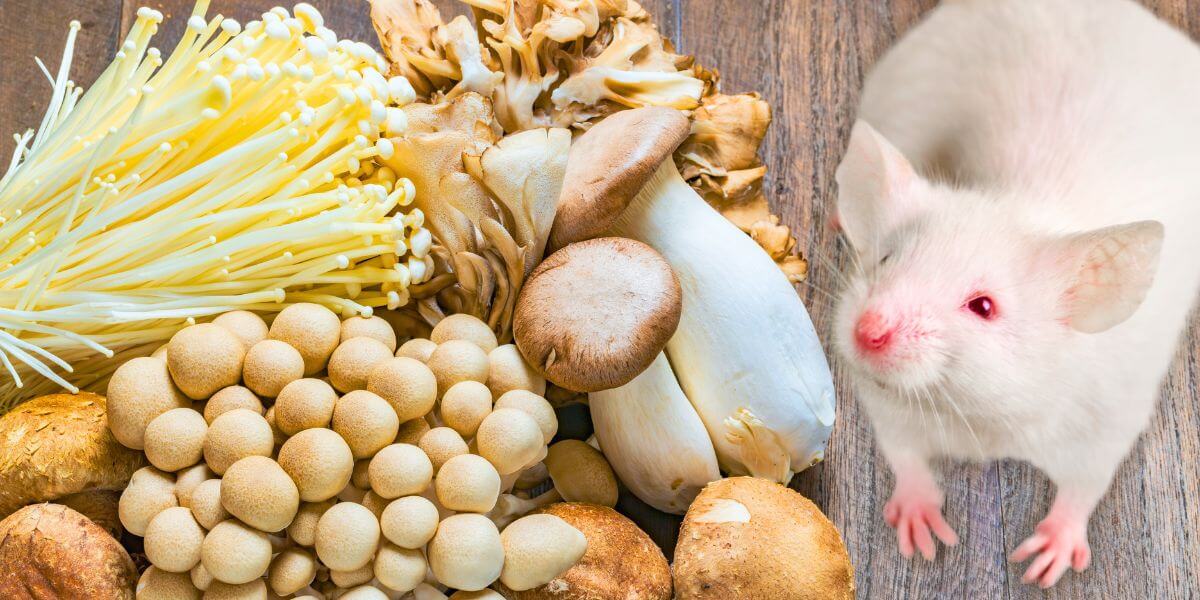
Other studies supported by the industry involved the injection of cancer cells into immunodeficient mice. Researchers would then administer mushroom extracts to observe if the fungal compounds could inhibit tumor growth. Additionally, metabolic studies were conducted where mice were fed mushrooms before being subjected to periods of starvation and glucose injections to monitor blood sugar responses.
PETA argued that these experiments were not only ethically problematic but also scientifically flawed. The organization maintains that the physiological differences between mice and humans often lead to "false positives" in research, where results seen in rodents fail to replicate in human clinical trials. By ending support for these methods, The Giorgi Companies is pivoting toward modern, non-animal research methodologies, such as in vitro testing using human cell cultures and advanced computer modeling.
Joining the "Eat Without Experiments" Initiative
The Giorgi Companies’ inclusion in the "Eat Without Experiments" program is a strategic move to bolster its reputation among ethical consumers. This program serves as a database and a labeling guide for shoppers who wish to avoid supporting companies that engage in animal testing for food products.
As part of the program, The Giorgi Companies has signed a formal pledge. This pledge is a legally binding commitment to remain animal-test-free in perpetuity. This transparency is becoming increasingly important in the food industry, where "health-conscious" and "ethical" are no longer just buzzwords but are significant drivers of market share. For a company like Giorgio Fresh, which supplies mushrooms to major grocery chains across the United States, this certification provides a competitive advantage in the organic and plant-based sectors.
The Broader Industry Context
The decision by The Giorgi Companies reflects a growing trend among global food and beverage corporations. PETA has successfully lobbied several other major industry players to adopt similar policies over the last decade. Notable examples include Mondelēz International, the parent company of Oreo, and the Campbell Soup Company.
The movement away from animal testing in the food sector is driven by several factors:
- Technological Advancement: The development of organs-on-a-chip, high-throughput screening, and sophisticated AI algorithms has provided researchers with more accurate ways to predict human biological responses than traditional animal models.
- Regulatory Shifts: Regulatory bodies like the U.S. Food and Drug Administration (FDA) have begun to signal a move away from mandatory animal testing. The FDA Modernization Act 2.0, signed into law in late 2022, allows for the use of alternatives to animal testing for drug and food additive safety assessments.
- Consumer Pressure: Social media and increased transparency in supply chains have empowered consumers to demand higher ethical standards. A 2023 market survey indicated that over 60% of Gen Z and Millennial consumers prioritize "cruelty-free" labels when making purchasing decisions.
Implications for the Mushroom Industry
As one of the largest mushroom producers in the world, The Giorgi Companies’ policy shift is likely to have a ripple effect throughout the agricultural sector. Mushrooms are increasingly being marketed as "superfoods" and "meat alternatives." Because these products are naturally occurring and have been consumed for millennia, the need for invasive testing to prove their safety is often viewed as redundant.
Industry analysts suggest that this move will encourage other mushroom growers to audit their own research partnerships. If the industry’s leaders move toward human-relevant, non-animal data, it sets a new standard for how nutritional science is conducted in the 21st century.

Furthermore, this decision removes a significant PR risk. For large-scale producers, the revelation of animal cruelty within their supply or research chain can lead to boycotts and loss of retail partnerships. By proactively closing loopholes and partnering with PETA, The Giorgi Companies has insulated itself from such controversies.
Future Outlook and Continuing Advocacy
While PETA has celebrated the victory with The Giorgi Companies, the organization has indicated that its work is far from over. In the announcement regarding the Giorgi policy change, PETA also issued a call to action targeting Wegmans Food Markets.
Wegmans, a prominent regional supermarket chain, has been criticized by animal rights groups for its continued funding of certain animal-based research projects. PETA is urging Wegmans to follow the lead of The Giorgi Companies and join the "Eat Without Experiments" program. The advocacy group argues that retailers have a responsibility to ensure that the house-brand products they sell are not developed through the suffering of animals.
The Giorgi Companies’ transition serves as a blueprint for how corporate entities and advocacy groups can find common ground. Rather than a purely adversarial relationship, the "discussions" cited by both parties suggest a collaborative approach to updating legacy policies for a modern era.
Conclusion
The Giorgi Companies’ ban on animal testing represents a landmark moment for the Pennsylvania agricultural community and the broader food industry. By eliminating support for experiments on mice and other animals, the company has aligned its research and development strategies with contemporary ethical standards and scientific advancements.
As the Giorgi Mushroom Company and its affiliates move forward, their research focus will likely shift toward human clinical trials and advanced laboratory simulations that provide more accurate data for consumer health. This move not only saves thousands of animals from laboratory use but also signals to the global market that the future of food science is cruelty-free. The success of this policy change will be monitored by both animal welfare advocates and industry competitors as the demand for ethical transparency continues to reshape the global food landscape.
