



The Giorgi Companies, Inc., a prominent leader in the North American mushroom production and food processing industry, has officially announced a comprehensive ban on all animal testing across its entire corporate structure. This decision follows a series of high-level discussions with scientists and representatives from People for the Ethical Treatment of Animals (PETA). The policy change applies to all subsidiaries under the parent company’s umbrella, including the Giorgi Mushroom Company, Giorgio Foods, Inc., and Giorgio Fresh Co. By implementing this ban, the Pennsylvania-based enterprise joins an increasing number of global food and beverage corporations that have committed to eliminating animal experimentation from their research and development protocols.
The shift in policy marks the culmination of an investigative process initiated by PETA, which sought to identify and close "loopholes" in the company’s previous animal welfare guidelines. While The Giorgi Companies had existing standards, PETA’s scientific staff discovered that the previous framework allowed for the support of third-party experiments that utilized animals to test the health benefits of mushroom derivatives. Following these revelations, the company engaged in a collaborative dialogue with the advocacy group, ultimately agreeing to a total prohibition of conducting, commissioning, or funding any form of animal or human research or testing.
Evolution of the Corporate Research Policy
The transition to a cruelty-free research model was prompted by the identification of specific laboratory practices previously supported by the company. Historical data indicated that the organization had provided backing for studies involving a variety of animal models to investigate the medicinal properties of mushrooms. These experiments were often aimed at establishing scientific evidence for health claims related to cancer prevention, cognitive health, and metabolic regulation.
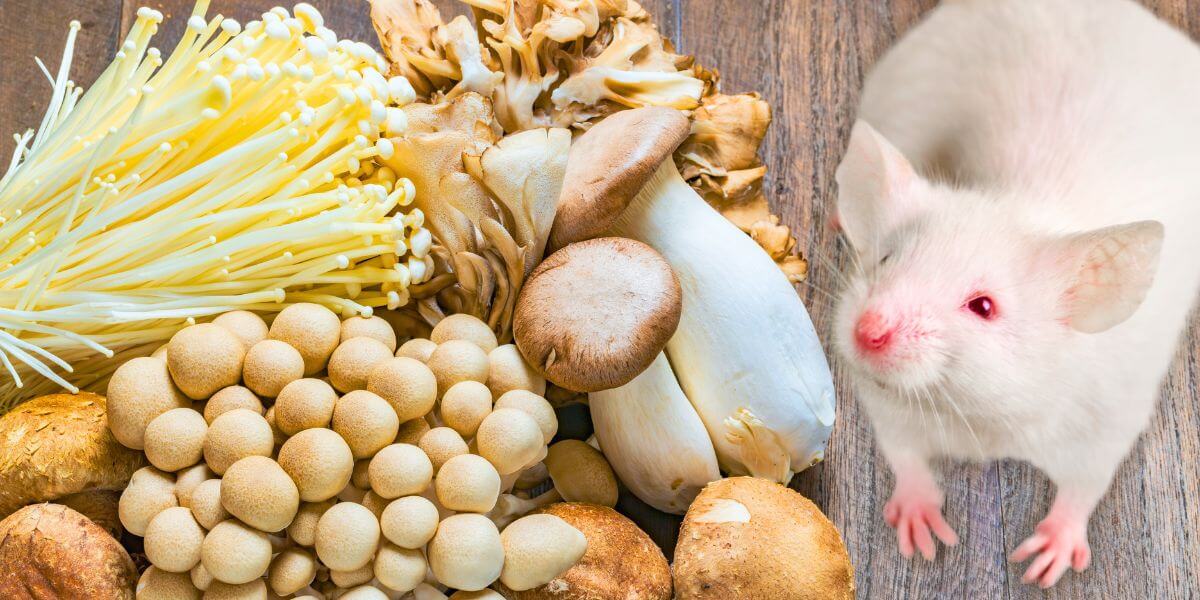
One notable area of past research involved the use of genetically modified mice. In these studies, mice were bred with specific immunodeficiencies and subsequently injected with human cancer cells. Researchers then administered mushroom extracts to the animals to monitor tumor growth or regression. These protocols typically ended with the animals being euthanized for dissection and tissue analysis.
Another significant area of investigation concerned neurodegenerative diseases, specifically Alzheimer’s disease. Mice were bred to develop pathologies similar to human Alzheimer’s and were fed white button mushrooms to determine if the fungi could mitigate cognitive decline. As part of the behavioral testing, these mice were subjected to the Morris water maze, a procedure where animals are forced to swim in a tank of water to find a submerged platform, a process designed to measure spatial learning and memory. Like the cancer studies, these experiments concluded with the termination of the subjects for neurological examination.
Furthermore, metabolic studies were conducted where mushrooms were fed to mice before the animals were subjected to periods of starvation. These mice were then injected with glucose to measure blood sugar responses before being killed for further internal study. The new policy enacted by The Giorgi Companies explicitly forbids any future participation in or funding of such methodologies, signaling a definitive break from traditional animal-based nutritional science.
Integration into the Eat Without Experiments Program
In addition to the internal policy update, The Giorgi Companies has officially joined PETA’s "Eat Without Experiments" program. This initiative serves as a consumer-facing platform designed to help shoppers identify food and beverage brands that have pledged to remain free from animal testing. By joining this program, the company provides a public guarantee that it will not conduct, fund, commission, or allow animal testing for any purpose, including the substantiation of nutritional health claims.
The "Eat Without Experiments" program has gained significant traction in recent years as consumer demand for ethical transparency increases. Major industry players, including Mondelēz International (the maker of OREO) and the Campbell Soup Company, have previously adopted similar stances. The inclusion of The Giorgi Companies is particularly significant due to its dominant position in the mushroom industry. Headquartered in Blandon, Pennsylvania, and maintaining operations in Wilmington, Delaware, the company is a primary supplier for major grocery chains and food service providers across the United States.
Background and Industry Context
The Giorgi Companies operates within the heart of the American mushroom industry. Berks County and the surrounding regions in Pennsylvania are responsible for nearly 60% of all mushroom production in the United States, often referred to as the "Mushroom Capital of the World." As a major stakeholder in this regional economy, Giorgi’s policy shift is expected to have a ripple effect across the agricultural sector.
Historically, food companies have utilized animal testing to obtain the "generally recognized as safe" (GRAS) status for new ingredients or to provide a scientific basis for marketing claims regarding disease prevention. However, the scientific community is increasingly questioning the validity of animal models for human nutritional outcomes. Differences in metabolism, lifespan, and physiology between rodents and humans often mean that results observed in a laboratory setting do not translate accurately to human health.
The move toward "New Approach Methodologies" (NAMs) is becoming the new standard in food science. These modern techniques include in vitro testing using human cell cultures, sophisticated computer modeling (in silico), and human clinical trials, which are considered the gold standard for nutritional research. By pivoting away from animal models, The Giorgi Companies is aligning itself with contemporary scientific trends that prioritize human-relevant data.
Official Statements and Corporate Stance
The Giorgi Companies has released an official statement confirming the policy update, which serves as the new standard for all internal and external research initiatives. The statement reads: "The Giorgi Companies, Inc. (including Giorgi Mushroom Company, Giorgio Foods, Inc., and Giorgio Fresh Co.), does not conduct, commission, or fund animal or human research or testing."
PETA has characterized this move as a major victory for animal welfare. The organization’s laboratory investigations department noted that the willingness of a major agricultural producer to engage in these discussions reflects a shifting corporate culture. "PETA keeps racking up the wins for animals as mushroom grower and food packer The Giorgi Companies, Inc. has cut off support for all animal testing after discussions with PETA," the organization stated in its announcement.

Industry analysts suggest that this move is also a strategic response to Environmental, Social, and Governance (ESG) criteria, which are increasingly used by investors and consumers to evaluate a company’s ethical impact. By eliminating animal testing, The Giorgi Companies reduces its reputational risk and appeals to a growing demographic of ethically conscious consumers.
Broader Implications for the Food Industry
The decision by The Giorgi Companies is part of a broader momentum within the global food supply chain. As more companies adopt these policies, the pressure mounts on remaining holdouts to justify their continued use of animal experimentation. PETA has already identified its next targets in the retail and production sectors, specifically calling on Wegmans Food Markets to follow suit and join the "Eat Without Experiments" program.
The campaign against food-related animal testing focuses on the argument that these tests are not required by law. Unlike the pharmaceutical industry, where certain animal trials are currently mandated by regulatory bodies like the FDA, food companies often have the discretion to choose alternative research methods. Advocacy groups argue that because mushrooms and other common food items have been consumed safely for millennia, invasive animal testing to prove incremental health benefits is ethically unjustifiable and scientifically redundant.
The chronology of these corporate shifts suggests a permanent change in how the food industry approaches research and development. From the early 2000s, when the first major soft drink manufacturers ended animal testing, to the current era where large-scale agricultural producers like Giorgi are joining the movement, the trend is toward total transparency and the elimination of animal models.
As The Giorgi Companies implements these changes, the focus will likely shift to how the company substantiates its future health and wellness claims. Industry experts anticipate an increase in the use of human-based observational studies and clinical trials involving volunteers, which provide direct data on human physiological responses to mushroom consumption without the ethical complications of animal research.
This landmark decision by one of the nation’s largest mushroom producers underscores the effectiveness of corporate engagement by advocacy groups and highlights a significant evolution in the intersection of animal welfare, food science, and corporate responsibility. The Giorgi Companies’ new policy is now in immediate effect, marking a new chapter for the brand as it positions itself as a leader in ethical food production.
